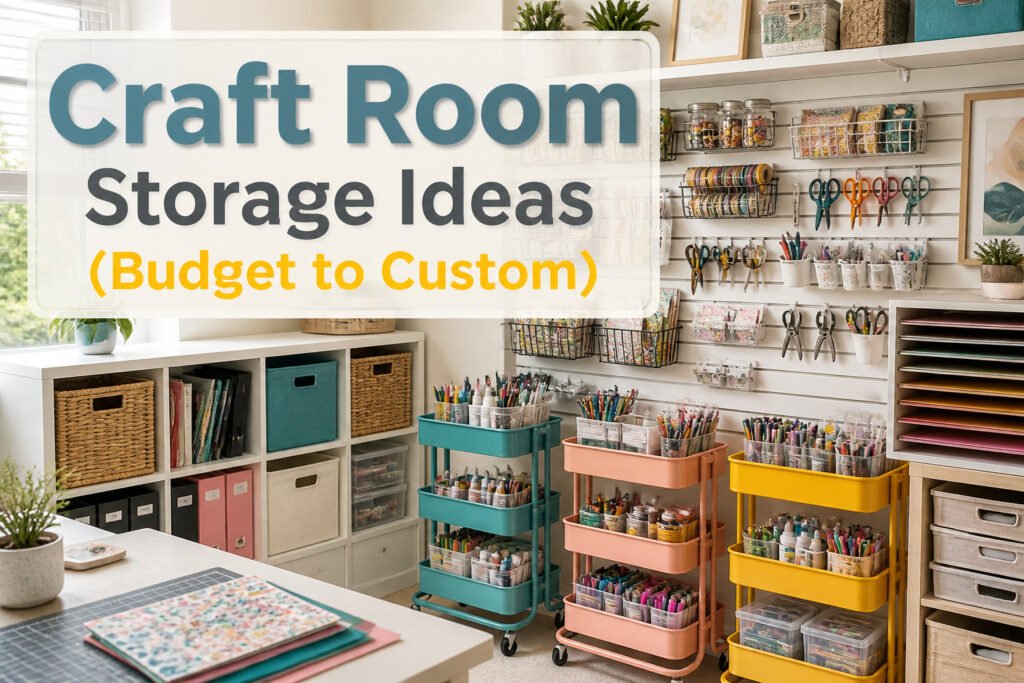
The right craft room storage idea depends on how long you plan to stay in the space and how much weight you are willing to hang. Most of these solutions run from free upcycled jars to custom slatwall systems, but the deciding factor is usually whether you can drill into the walls. Renters who cannot will end up with IKEA KALLAX units braced to baseboards or rolling carts that stay mobile, while owners can mount pegboard with proper standoffs and load slatwall to roughly 75–100 pounds per linear foot. Either way, the detail that ruins most setups is guessed wrong depth: twelve to fourteen inches is the practical range for standard bins, and anything deeper swallows supplies into shadow.
1. Shelves and Cubbies
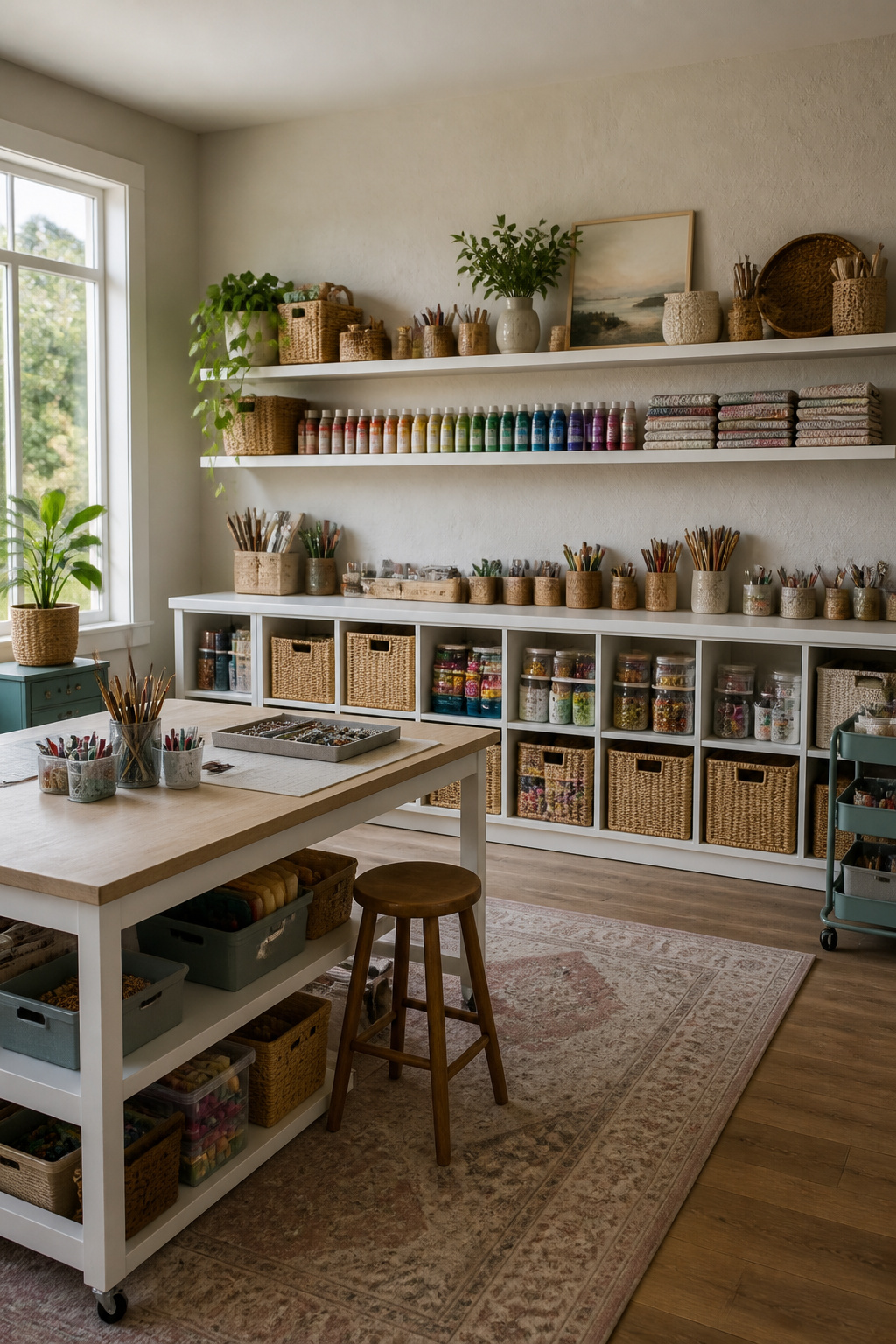
Wall-mounted shelves and freestanding bookcases are usually the first thing people picture for craft room storage ideas, and for good reason. They put supplies where you can actually see them, which matters more than most organizers admit. A shelf at eye level keeps paint tubes or fabric stacks from becoming archaeology; you pull what you need and you know what you have.
Open cubbies take this further by breaking the wall into manageable zones. Woven bins or fabric drawers drop right in and hide the chaos of half-used skeins and scrap paper, while jars and trays on the open surfaces keep brushes and buttons visible as working inventory. The catch is backing. Small items, beads especially, will find the gap between a bin and the wall and vanish. Solid backing matters for anything that can slip through or tip backward.
Depth is where people guess wrong. Twelve to fourteen inches is the practical range for standard storage bins; shallower and the bin overhangs, deeper and you lose things in shadow. The other common mistake is mounting too high. If you need a step stool to reach the second shelf, you will fill that shelf with supplies you forget you own. Keep the zone you touch daily between hip and shoulder height, and put the long-term storage lower or higher where it belongs.
2. IKEA Storage Systems
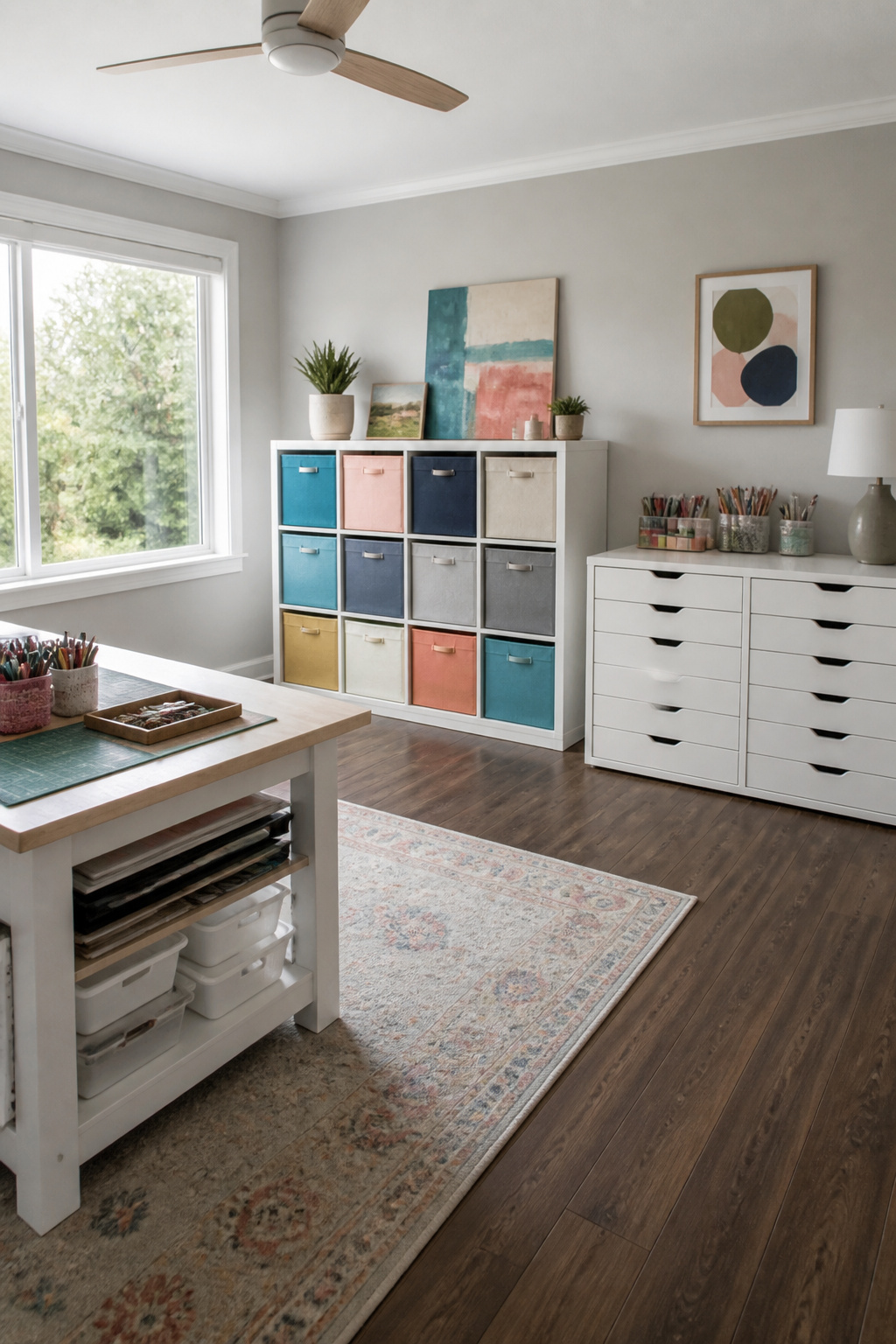
IKEA’s modular storage lines keep showing up in craft rooms because they let you build exactly what you need and take it apart when the lease ends. The KALLAX cube units and ALEX drawer systems are the two that come up most often, and both ship flat and assemble with a hex key. The 13-inch cube opening in KALLAX fits standard fabric bins without forcing them, which sounds minor until you have twenty minutes to clear a project off the dining table and every bin grabs on the frame.
The real difference is what happens after year two. ALEX drawers run on metal slides that hold up fine; the KALLAX shelves will start to bow if you load them with heavy bottles or dense material stacks. For paper, fabric, and lightweight tools the sagging is negligible. For clay, resin, or glass supplies you will want to stay under the weight limit or plan on replacing the unit in three to four years.
Renters who cannot drill into walls have another option. Hardware stores stock brackets that hook KALLAX units together vertically or anchor them to baseboards without touching drywall. It is not as rigid as a stud mount, but it keeps a tall unit from tipping when you pull a loaded bin from the top row.
3. Stackable Plastic Drawer Units

The 12-by-12 plastic drawer units sold at Target, Walmart, and hardware stores are the closest thing to a default paper storage system. IRIS is the brand most commonly stocked, and their wide carts fit scrapbook paper flat without curling the edges. Stack four of them and they stay stable; stack six and the plastic starts to bow outward at the seam. Weight is the real problem on the bottom unit. The casters on these carts are molded plastic housings around small rollers, not real hardware casters, and a full tower of paper plus beads plus tools will crack the housing or snap the stem. Plan to either keep the tower short or set the bottom unit on a fixed base and stack only above it.
Shallow drawers beat deep ones for anything smaller than a paper stack. Deep drawers swallow glue sticks, washi tape, and hole punches into piles you dig through; shallow drawers keep supplies visible in one layer. IRIS makes shallow configurations, though you may need to order them rather than find them on the shelf. For bottles or paintbrushes that roll, a simple grid tray or an accessory insert keeps them upright without sliding. A shallow drawer with a divider beats a deep drawer with a label every time; the label does not stop the contents from becoming a pile.
4. Pegboards
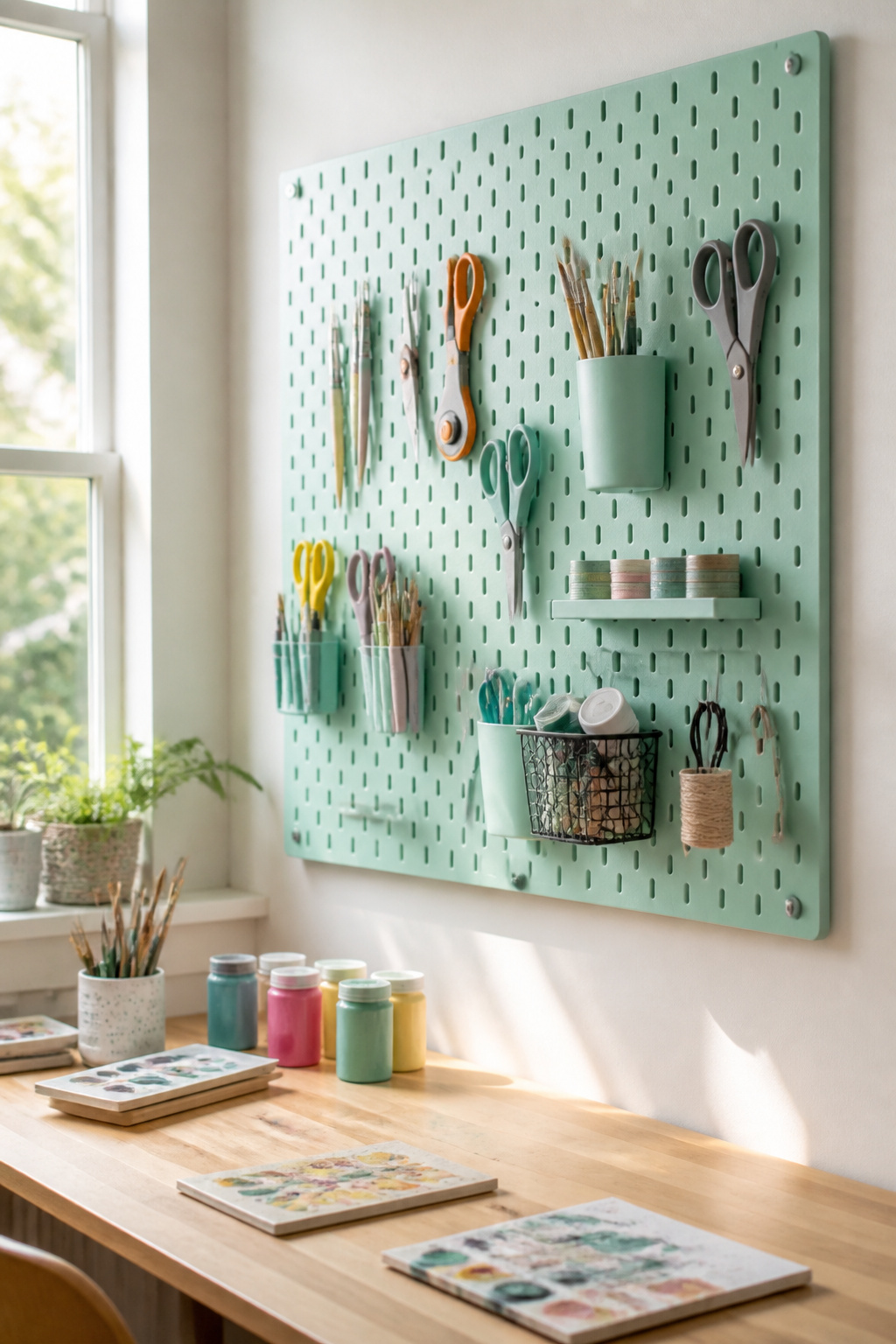
Mount pegboard with standoffs so the hooks can seat fully into the holes. Without that quarter-inch gap behind the panel, the curved wire backs jam against the wall and the hook head sits proud, ready to dump your scissors every time you brush by.
Standard panels run 1/4-inch hole spacing, which is forgiving when you rearrange. Hooks project about two inches from the face, enough for scissors and rotary cutters but not so deep that a loaded bin blocks your light. Painted metal pegboard chips less than Masonite over time. The Masonite face flakes where you pull hooks in and out, and once the raw edge shows, the whole panel looks tired. Metal costs more upfront but survives moves between rentals without swelling at the corners.
If you are renting, a single 24-by-48-inch panel over a desk gives you wall storage you can take down and patch later. Lean toward metal if you plan to keep the setup for more than a couple of years.
5. Clear Bins

Clear bins earn their shelf space by letting you spot what you need without pulling half a dozen lids off first. That visibility matters most when you are mid-project and the glue is already drying. Uniform bin size matters more than matching color for keeping a craft wall from looking chaotic; a shelf of identical rectangles reads as intentional even if the contents are a jumble of yarn and beads.
The catch is that clear plastic does not stay clear forever. After a few years in a sunny room or near a heat vent, the walls fog and the faces scratch from sliding against each other. You will still see the silhouette of what is inside, but the crisp detail fades. Budget for replacement rather than expecting a lifetime buy.
If you are working with an IKEA KALLAX unit, the 11-by-11 inch bins at Dollar Tree slide in with no gap to waste. That exact fit turns a generic cube into compartmented storage without a custom price.
6. Rolling Carts
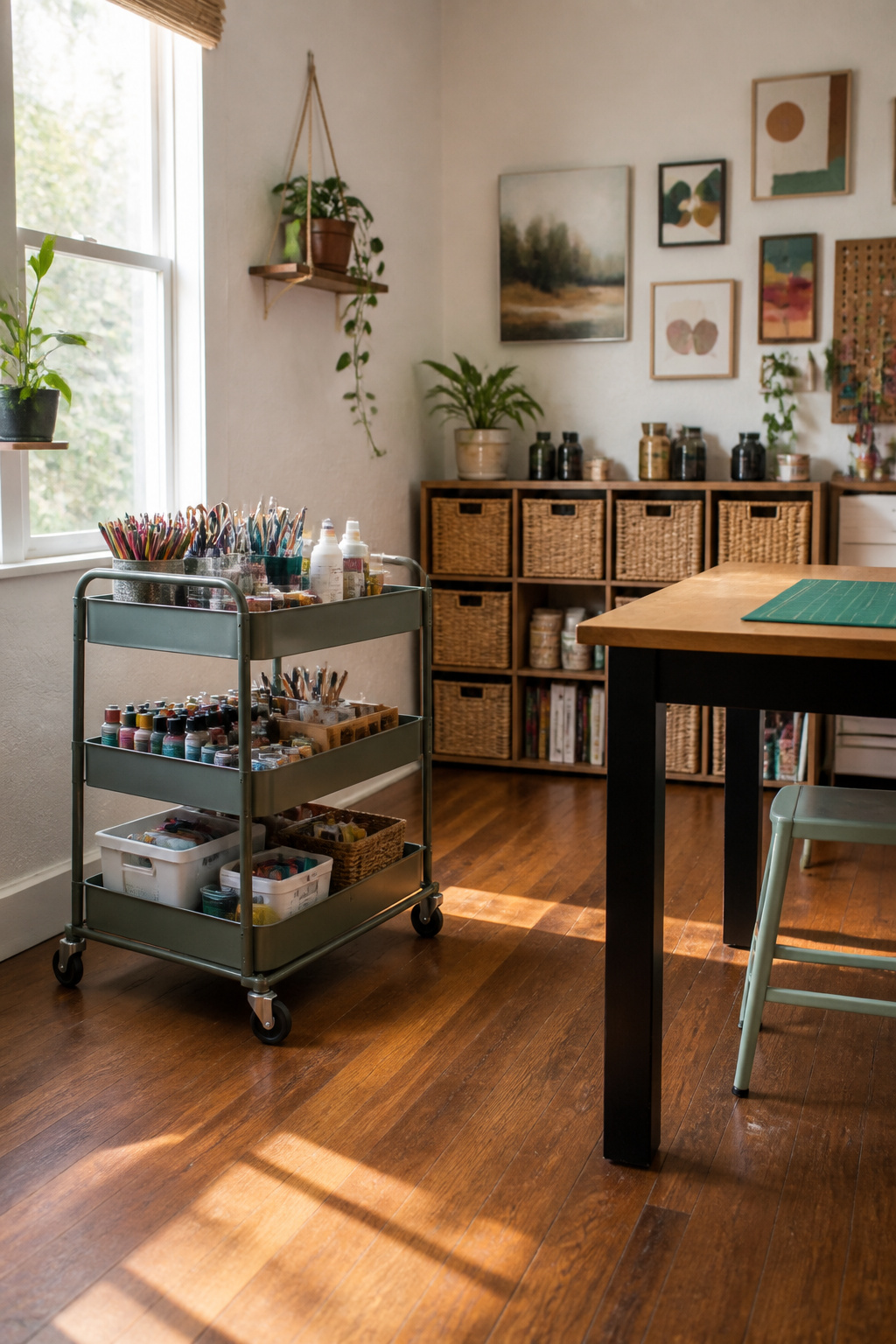
The three-tier metal cart you see in every craft room photo is almost always an IKEA RASKOG or one of the dozens of imitations that followed it. They roll well on hard floors and fit into gaps too narrow for a bookshelf, which is why they have stayed popular since about 2012. What the product pages do not advertise is that the center pole begins to bow once you load the middle and bottom tiers with paper stock. Card stock, paper stacks, and magazines all collect in that center column of gravity, and after a few months of normal use the pole takes a permanent curve. The cart still rolls, but the tiers no longer sit flat and drawers or bins you add later will catch.
Weight limits are another quiet gap in the specifications. Manufacturers typically rate these carts by total load, not by tier, which matters because the bottom shelf carries the cumulative weight of everything above it. If you use one as a portable workstation, lock only the back two casters and leave the front pair free to pivot. Most imitations ship with two locking wheels, not four, so check the hardware before you plan a setup that depends on staying put. The RASKOG itself locks on two.
For paper storage specifically, the Iris wide carts handle 12-by-12-inch scrapbook paper without the center-pole problem, though they sacrifice the open-tier flexibility. A file cart that slides under your desk, like the one sold at The Container Store, keeps loose sheets flat and out of the way when you are not using them. The RASKOG wins for tools and active projects. It fails for archives.
7. Upcycled Containers
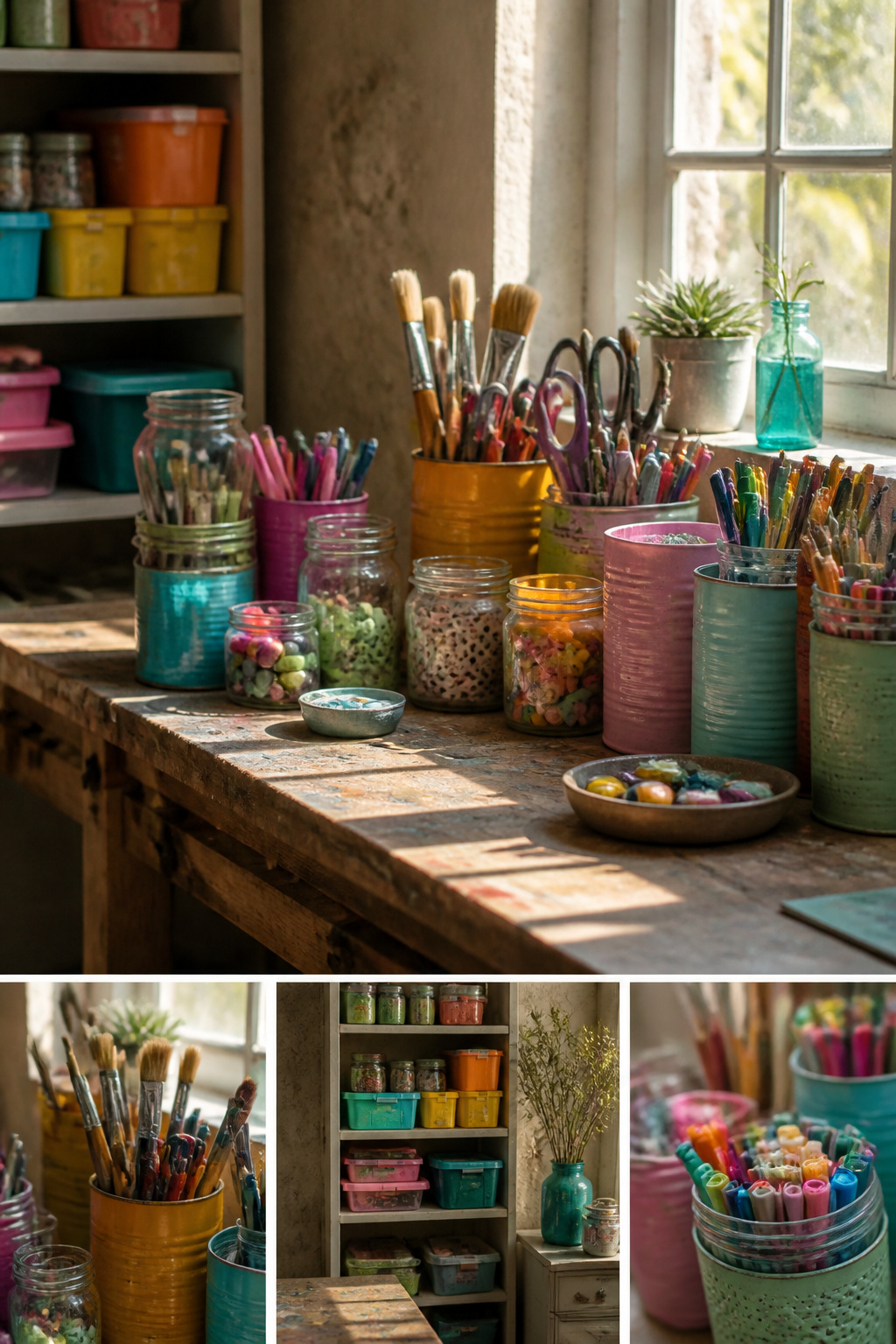
Glass jars, cleaned tin cans, and plastic tubs you already own will handle most small-supply storage if you match the lid to the contents. A jar that once held jam seals well enough for beads and sequins because the threaded ring presses the lid flat; loose snap lids let humidity in and beads tarnish. Tin cans take paint without priming and hold markers or brushes upright, but they dent if you drop them full of buttons, so keep them off the work surface edge. Plastic tubs are where people trip up: that tub that held curry powder or garlic will keep the smell for months, and the beads inside pick it up. Wash with baking soda paste, let it sit overnight, and still check before you commit anything porous to it.
Uniform shape matters more than matching material. A shelf of random-height jars and squat tubs leaves dead space between them; six identical cans or four same-diameter jars stack and line up tight. Label adhesive is the other place reuse fails. Paper labels on glass soak off in hot water, but the plastic film labels on grocery tubs leave a gummy stripe that collects dust and eventually slides off. Remove it completely with rubbing alcohol or leave the tub unlabeled and write on painter’s tape instead.
8. Labeling Systems
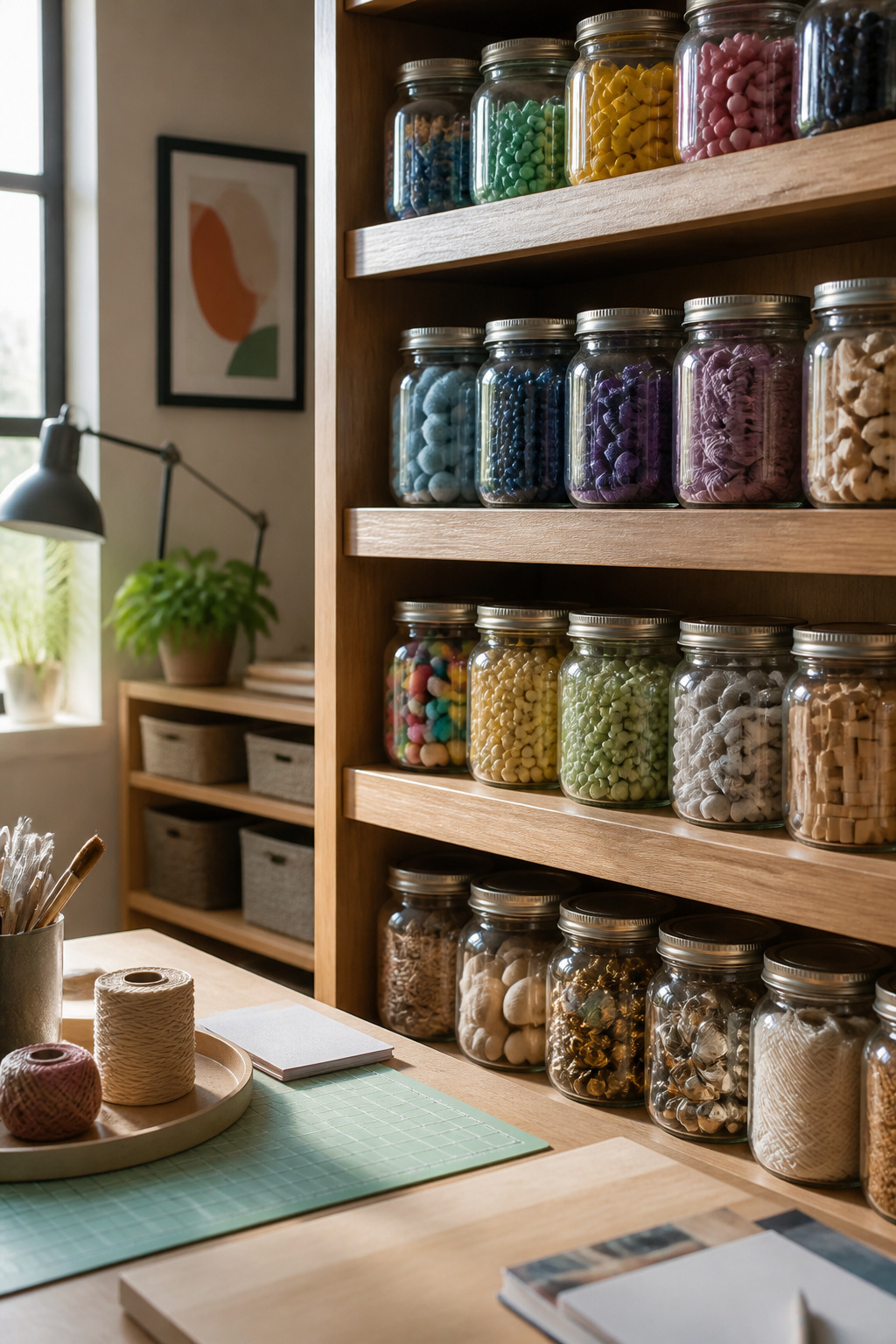
A label that peels off six months later is worse than none at all, so start with the adhesive before you pick the font. Heat-activated vinyl labels look crisp on canning jars, but the bond softens above a radiator or near a sunny window. For anything near a heat source, stick with pressure-sensitive adhesive or plain paper labels tucked into BCO Label Holders.
Printed labels from a Cricut or label maker win for permanent homes, vinyl rolls sorted by HTV versus adhesive, color families inside acrylic bins. Handwriting wins for containers that change jobs season to season, a jar that held sequins in March and holds beads by June. The printed label becomes a lie; a strip of painter’s tape with a Sharpie mark peels clean when the contents shift, no residue, no scraping.
For small sewing notions in a 16-drawer cabinet, print the label and tape it to the inside of the drawer pull. It stays readable, stays flat, and you reprint only when the drawer changes purpose.
9. Craft Caddies

A rotating caddy keeps the tools you are actually using upright and within reach, which matters more than it sounds. The Deflecto rotating caddy is the one you will see in most craft aisles, with a center well deep enough for scissors, tape runners, and glue sticks and perimeter slots sized for pens, markers, and blending brushes. It turns 360 degrees, so nothing ends up behind you where you forget it exists.
The center well fills fast. If you load it with tall items, the shorter ones in the outer ring disappear behind them, and you are back to hunting. Keep the center for your three or four tallest tools, or skip the caddy and use a slimmer tool tray with a silicone insert instead. It takes less desk and forces you to choose what deserves prime space.
A caddy becomes clutter the moment it holds supplies you used once and never touched again. The rotation stops helping when you stop rotating it; the thing just sits there collecting washi tape you meant to sort later. Most of these units also tip in a car if you try to travel with them, so they are bench tools, not portable kits.
10. Drawer Organizers

Shallow drawers are where craft supplies go to tangle, and most standard craft drawers run about 1.5 inches deep exactly. That depth fits silverware trays from thrift stores better than it fits the craft-specific versions sold at hobby stores, and the thrift route usually costs less.
Adjustable dividers sound flexible until you open the drawer and find them slipped sideways, creating one wide canyon where five sorted slots used to be. The pressure-fit ones fail fastest; the screw-mounted kind hold but leave holes if you reconfigure. Custom-cut foam gets recommended often for lining the whole drawer, but it wastes space at the edges and compresses unevenly over time, so your markers end up leaning.
Wooden slats cut to length and glued into place solve the slipping problem permanently. Old cigar boxes with their own compartments also drop straight into deeper drawers, and thrifted Tupperware trays spin on a lazy Susan for supplies you reach for constantly. The matching-set look some people want comes easier from painting mismift thrift finds in one color than from buying coordinated new organizers that cost three times as much.
11. Shoe Racks for Rolls
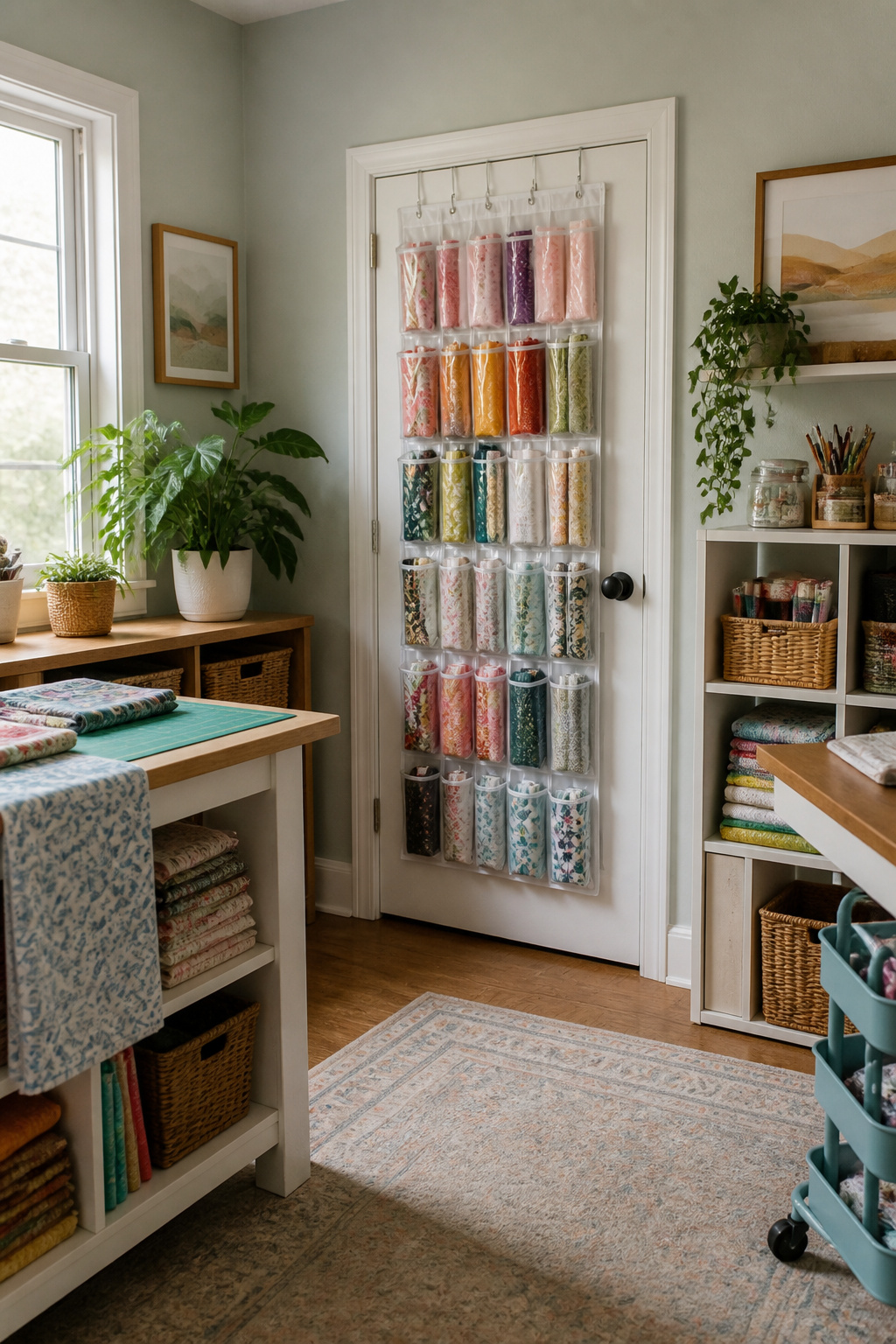
A standard over-door shoe organizer runs about 4 inches deep per pocket, which happens to hug a vinyl roll or a bolt of fabric without crushing it. The clear plastic ones win over mesh here: you can see the print at a glance, and the material does not slide through the grid every time you reach past it.
The hooks are the part nobody checks until the trim is dented. Metal brackets on a hollow-core door will leave marks in soft wood, and the weight adds up faster than you would expect. Keep the load under 15 pounds or the door starts to sag on its hinges, especially on older frames that were never hung to carry a closet’s worth of supplies.
Freestanding shoe racks work the same trick if you are renting and the door is not yours to risk. Turn one sideways and the tiers cradle wrapping paper rolls with the ends free, so you are not unstacking bins to find the one pattern you need.
12. Hardware Storage Cases
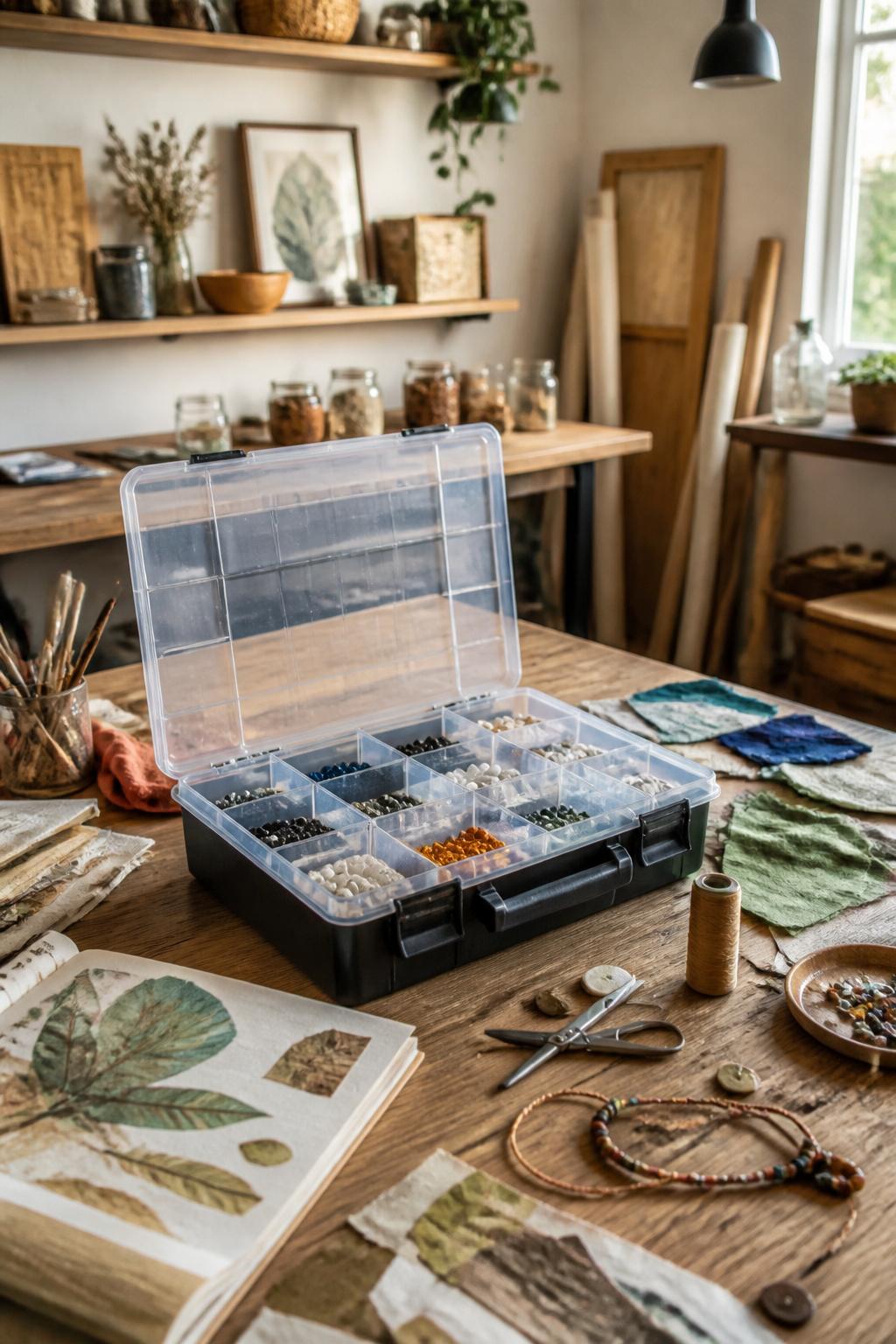
The hardware store cases with small fixed compartments run about half the price of craft-branded versions, and the difference is mostly in the latch. A single plastic flip-latch on a cheap case will crack at the hinge in a year of regular opening; the better ones use a metal hasp or a dual-latch system that stays closed when the case gets knocked off the table. You feel it immediately when you snap one shut next to the other.
Fixed dividers keep beads sorted but waste space on anything irregular. A bag of mixed buttons leaves half the slots partially filled, and you end up storing air. Removable cups solve this until they don’t: the round-bottom ones tip when you slide the case from a shelf, spilling sequins into the wrong channels. Square-based cups with a slight lip on top nest against each other and stay upright.
Fishing tackle boxes use the same grid format with better waterproofing around the seal. For paper crafts or dry storage that feature is overkill, but if you work near a sink or carry supplies to classes, the gasket edge keeps humidity from swelling seed beads or rusting metal findings. The tradeoff is bulk; tackle boxes are deeper than you need for flat items and take more drawer space.
13. Old Furniture Repurposed
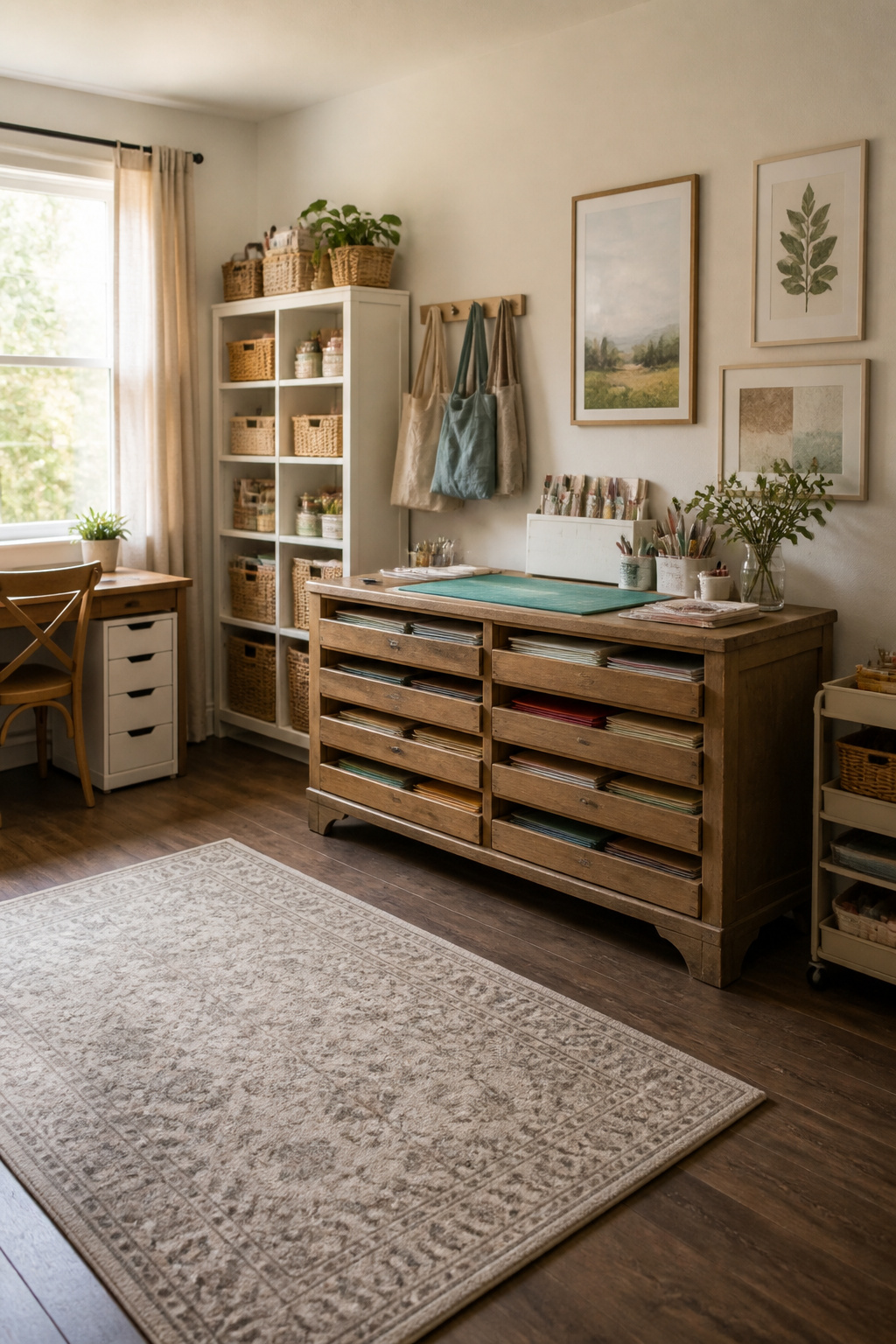
A dresser with drawers deep enough for 12 × 12 paper stacks solves the bulk of craft storage without a single trip to a big-box store. Sideboards work for the same reason: wide, flat surfaces for active projects and cabinets below for machines or bins. Desks with their original small drawers suit stamps, thread spools, and hand tools you reach for constantly.
The weight catches people off guard. A solid wood dresser from the sixties can clear two hundred pounds empty, and hauling it up narrow stairs to a spare-bedroom craft space is a job for two people plus a dolly you rent by the hour. Measure the landing before you commit. If the piece wobbles, a pack of adjustable furniture levelers costs under ten dollars and fixes most uneven floors in five minutes.
Particle board from the 1980s swells at the first humidity spike and crumbles when you load a drawer. You want to check the underside of a drawer or the back panel before you buy. Solid wood holds screws for added dividers; particle board lets go without warning. A desk that looks sturdy can turn into a sagging, splintered regret by the second season.
14. Tins and Jars

Metal tins and glass jars collected from the kitchen are some of the most reliable craft storage you can set up for almost nothing. The catch is rust on tin lids if you live anywhere humid. A thin coat of clear nail polish on the inside rim buys you a few years, but in coastal climates you are better off moving paper goods out of tins entirely and using them for buttons, washi tape, and other non-porous items instead.
For glass, the mouth width needs to let your hand in clean, not just the jar opening. A standard mason jar works for pens and brushes; for pom-poms, bobbins, or anything you fish for, you want at least 70mm so you are not tipping the whole jar to get the last few. This is where Bonne Maman jam jars earn their keep: the 82mm lid matches lids from most bulk spice suppliers, so you can buy a flat of replacements and keep every jar in the same stackable footprint. One lid size across the whole shelf means you are not playing tower collapse every time you need a refill.
15. Baskets
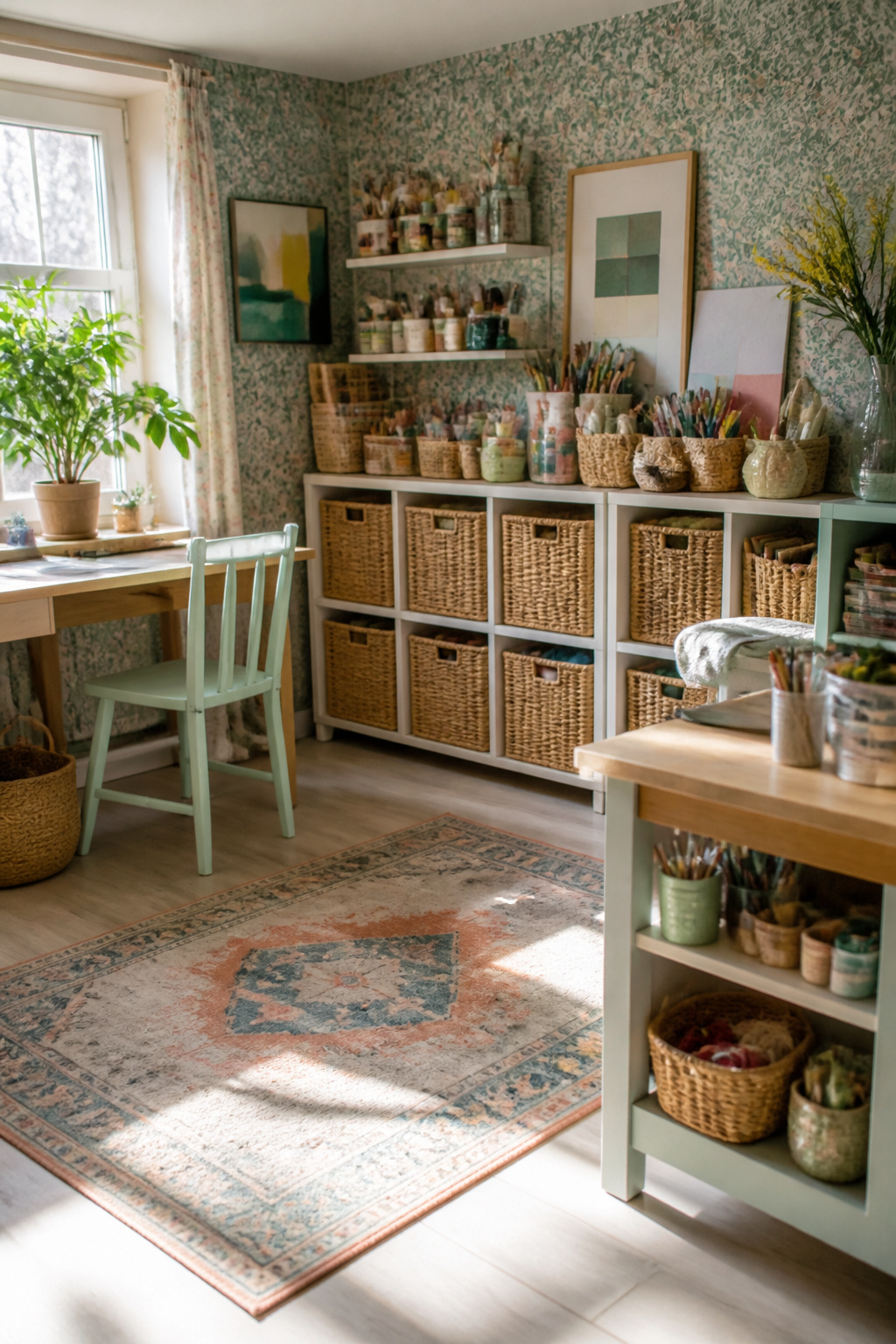
Baskets sort supplies by task, not by item, which is why you grab the whole thing and carry it to your workspace. Woven bins hide the mess of half-used paint tubes and loose brushes, but open weave lets beads and pins slip straight through to the shelf below. Wire baskets solve that for small objects, though anything under an inch can still wedge into the gaps. Fabric bins from lines like Pottery Barn Kids hold reams of printer paper and keep a busy wall from looking chaotic, but a glue spill on natural fiber is usually permanent. Synthetic wicker wipes clean and holds its shape through years of shoving in and out of cubes. For shelves above eye level, handles matter more than material. Reaching blind for a bin with no grip means you either climb or leave it. What makes shelving look intentional is not matching every basket to the same weave or finish, but keeping the shape uniform. A row of identical rectangles in mixed materials reads as planned; the same materials in clashing heights and depths reads as leftover.
16. Carts with Drawers
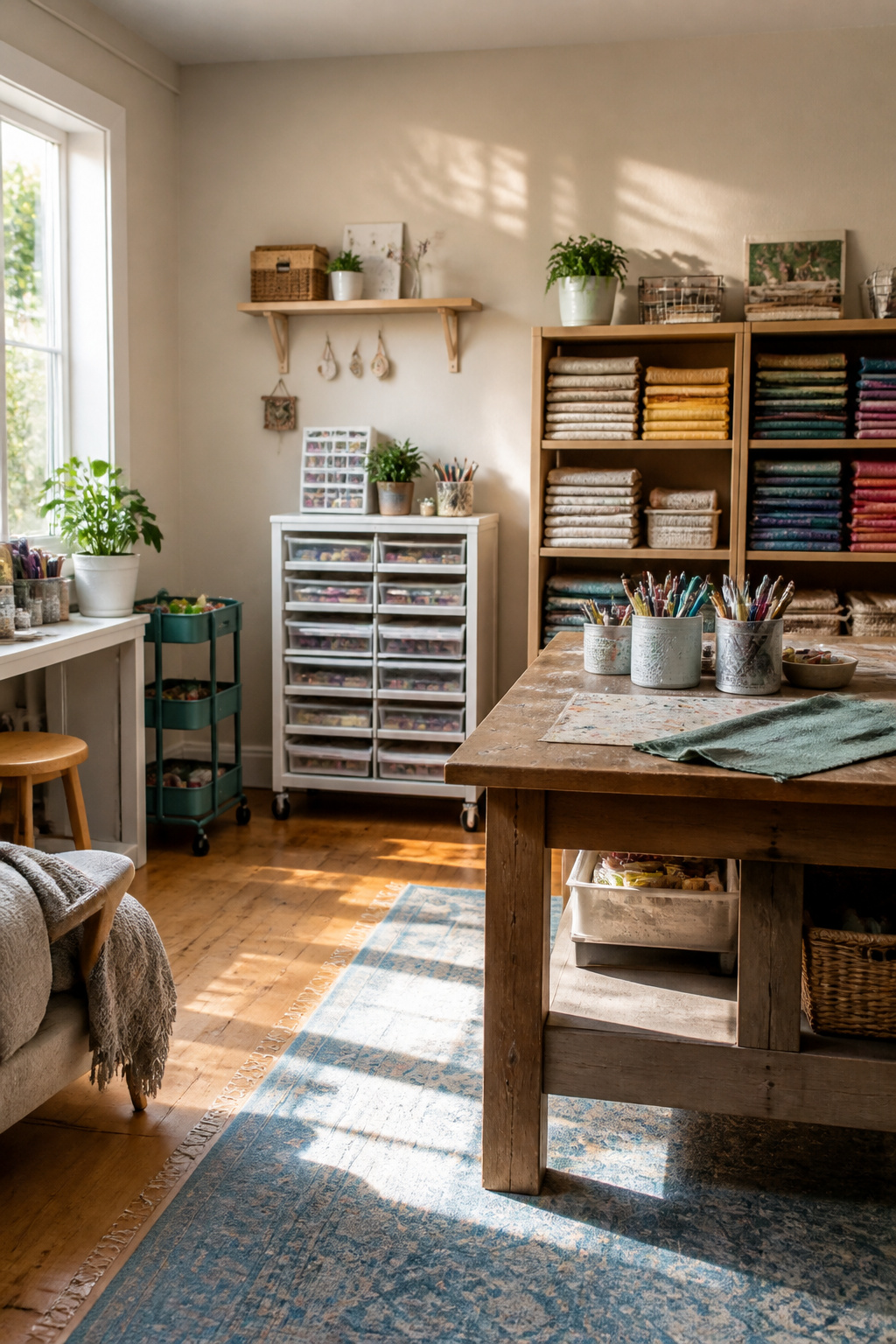
Rolling carts with enclosed drawers keep paper, beads, and half-finished pieces from collecting dust or sliding off mid-project. The drawer stop mechanism matters more than most people check for; without it, pulling the top drawer turns the whole cart into a lever that tips toward you once it is loaded. Test this before you buy, or you will end up bracing the cart with your knee every time you reach for supplies.
Locking casters sound like a must, but they matter most on uneven floors or if you park the cart beside a desk that you lean against. On level vinyl or hardwood, unlocked wheels let you roll the cart closer without standing, which is useful more often than you would expect. The 12-inch width fits in the dead space beside most standard desks, the gap where nothing else goes.
These carts weigh significantly more than open-tier versions once the drawers fill up. A loaded drawer cart can hit forty or fifty pounds fast, and that weight sits low, so you do not feel it until you try to roll it across a threshold or lift it into a car. If you plan to move your storage between rooms or take it to a craft group, the heavier build is a real limit you will notice immediately.
17. Vertical Storage Solutions
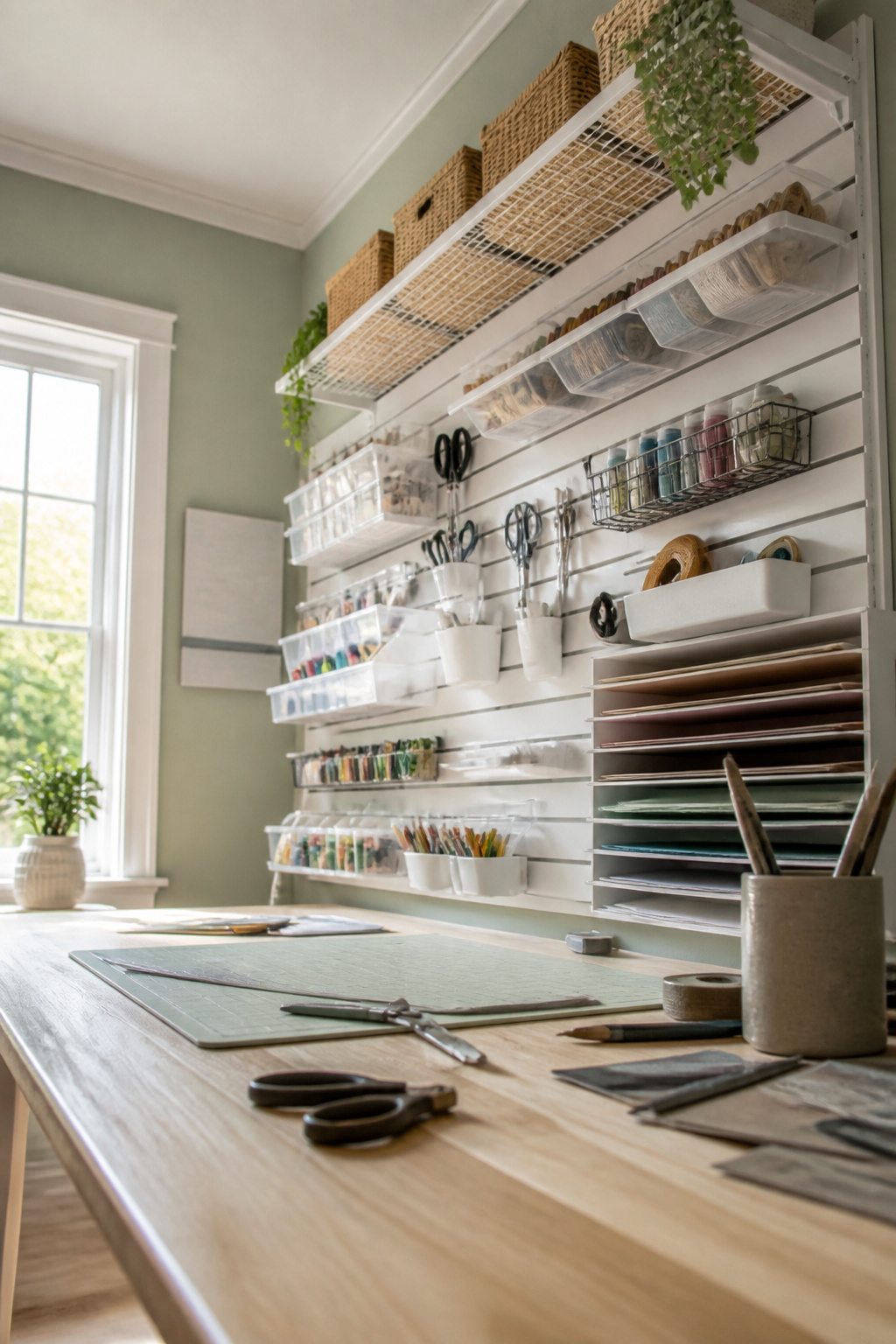
Wall-mounted systems that go beyond the classic pegboard give you more load-bearing options and a cleaner look. Slatwall, the same channel-and-panel system you see in retail stores, uses horizontal grooves that accept brackets, bins, and hooks. You will need to hit studs with lag bolts or use heavy-duty toggle anchors; a properly mounted slatwall panel holds roughly 75–100 pounds per linear foot. Grid systems, made from wire mesh panels, are lighter and cheaper but top out around 30–40 pounds per foot, and they need concrete sleeve anchors or toggle bolts rather than simple screws. Rail systems run a single horizontal track, usually aluminum, with vertical standards that lock in place. They hide their mounting points behind the rail itself, which matters if your lease prohibits visible holes or if you are patching later.
The common error is mounting everything at standing height and stopping there. You end up with a crowded band of tools between your shoulders and waist, while the wall from your knees to the floor sits empty. That lower zone is where shallow bins, paper storage, or rarely-used equipment should live. Bend down to reach them, yes, but the trade is real square footage you already paid for. In rentals, slatwall and grid panels can be removed in one piece, rail systems leave only a thin line of holes, and both beat dozens of individual anchor points when your security deposit is on the line.
18. Craft Cabinets
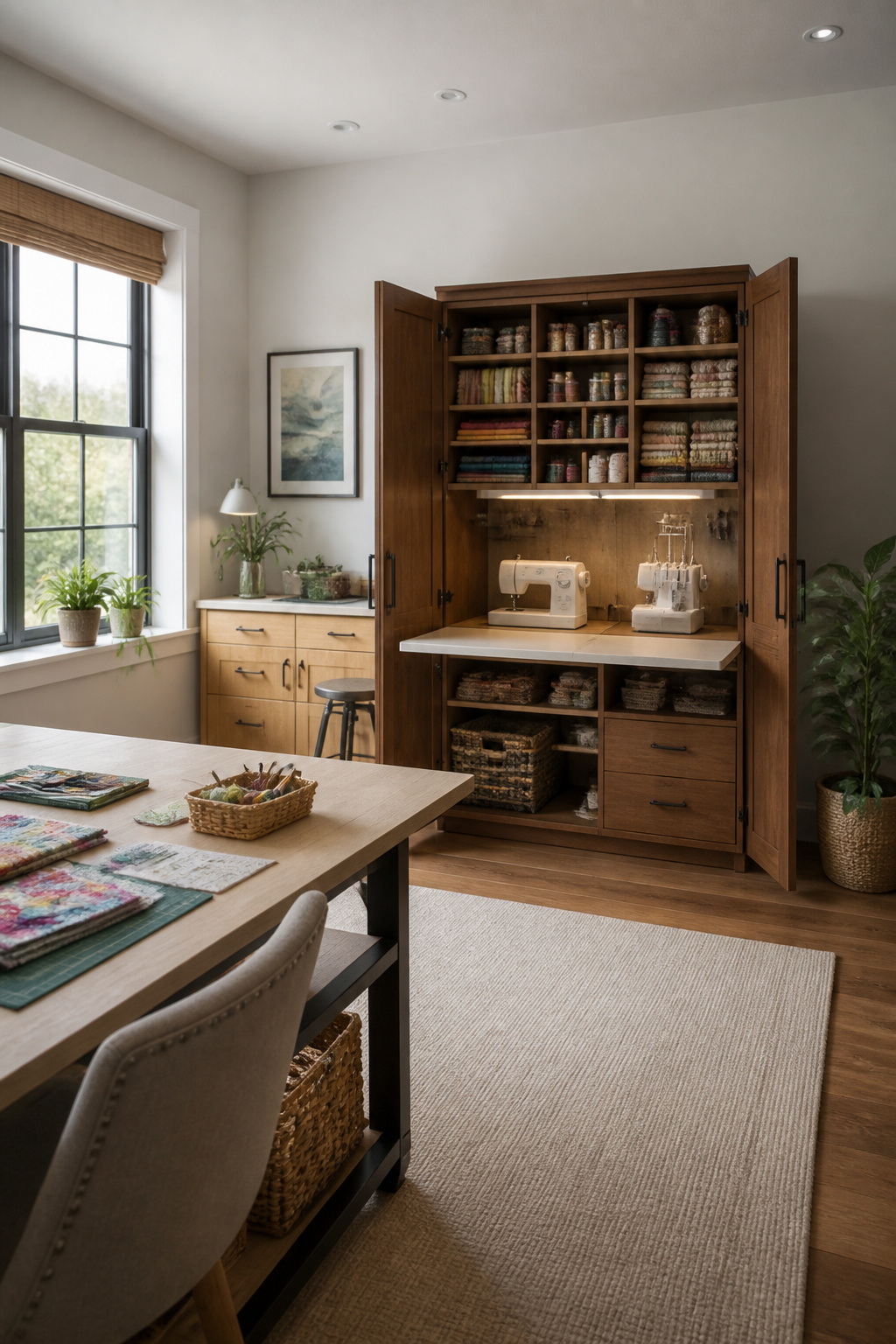
Enclosed craft cabinets fold out to a 36-inch work surface when open, which matches standard desk height and saves you from hunching over a kitchen table. Most units are designed around a machine niche sized for a Cricut, sewing machine, or serger, so measure your gear before you order. The catch is weight: these ship at roughly 100 pounds, and freight returns run into the hundreds if the dimensions are wrong. Wall anchoring is non-negotiable on most models once the leaf is extended, because the center of gravity shifts forward and a loaded cabinet can tip. If you rent, check whether your lease allows the hardware or whether you will need a freestanding stabilizer instead.
19. DIY Storage Builds
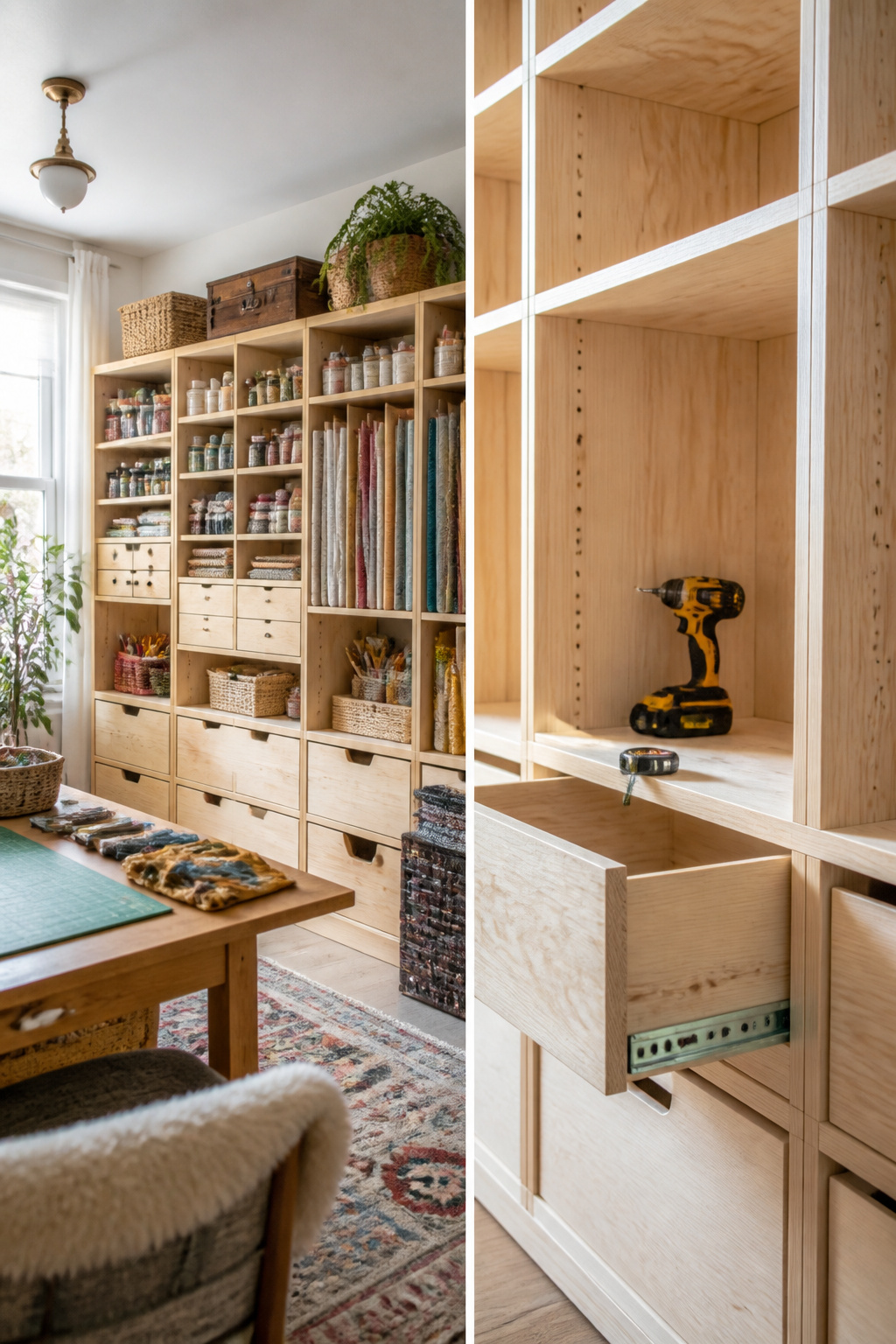
A basic wall unit built from pine and plywood runs about $40 in materials if you already own a circular saw, or closer to $80 once you factor in a speed square, clamps, and the drill bits you will snap on the first pocket hole. Measure your actual supplies before you cut. A standard bin is not a standard bin. The twelve-by-twelve paper stack you bought last year is twelve and an eighth once the wrapper is on, and that eighth inch turns a neat row into a jammed drawer that never slides right.
The cuts take one Saturday, assembly the next, and the third weekend is for re-cutting the shelf that came out crooked because you trusted the factory edge of the plywood instead of squaring it yourself. Paint adds two days of drying that the tutorials never count.
You do not need a miter saw. A circular saw with a straightedge guide and a Kreg jig for the joints will build anything in this category. The mistake that costs the most time is designing around store dimensions instead of the tubes and rolls already on your table.
20. Shoe Cubbies for Fabric

The 12-pair shoe cubby you already see at Target and Home Depot becomes something else entirely when you turn it on its side. The 7-inch cube depth fits a folded fat quarter with no overhang, which is why quilters started doing this years ago. Lay the unit horizontally and each cube holds a small stack; stand it vertical and you get taller columns that work better for yardage folded in thirds.
Horizontal stacking lets you pull one fabric without disturbing the rest. Vertical columns show more print at a glance but tend to lean once you get past four or five layers deep. Either way, skip the backless wire-frame versions. The crossbars sag under quilting cotton after a few months, and the whole grid starts to parallelogram on you. Target’s 25-cube unit gets adapted so often because the composite board backing actually holds its shape, but even that one needs to sit against a wall or the weight pushes the uprights outward.
Paper crafters use the same footprint for 12 x 12 sheets standing upright in a row. The height clears most standard shelves, so you can slide a whole cubby unit into an existing closet system rather than building around it.
21. Magnetic Strips
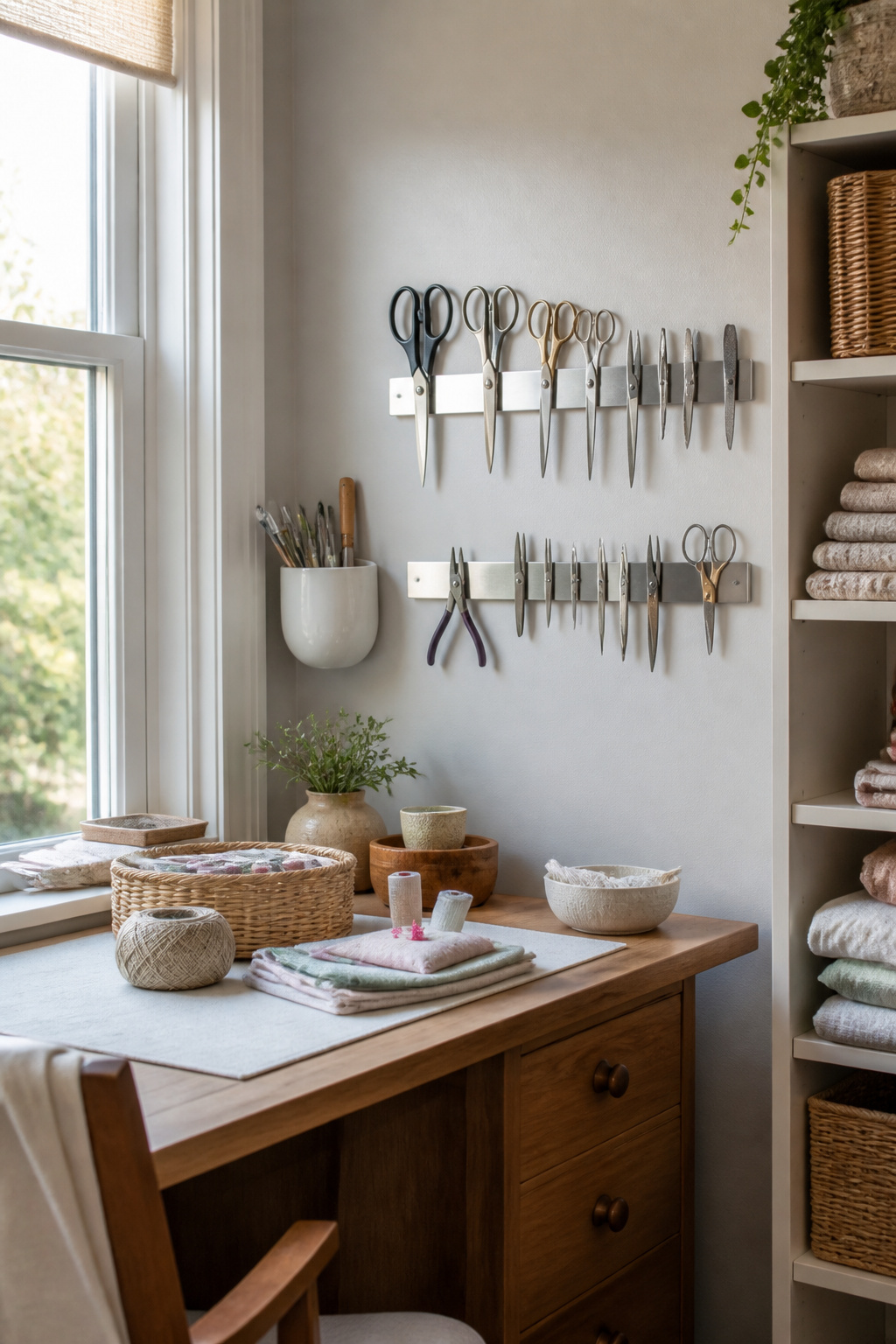
Wall-mounted magnetic bars turn a strip of unused wall into a home for every metal tool you reach for ten times a session. The cheap ones hold tweezers and paper clips fine, but scissors need a strip rated for heavier pull or they slide down and take paint with them. Stainless steel tools are the frustrating exception: the alloy weakens magnetic grip, so budget strips barely register on them and you will waste money testing which ones fall.
Electronic cutting tools are another matter. Store them on magnetic strips and you risk corrupting the calibration or memory; the safe move is a drawer or shelf at arm’s length from any magnet.
The mistake that still gets made is mounting these strips above the desk where the monitor sits. The field does not have to touch the screen to skew color or put dead bands in an LCD. Measure a handspan past the monitor edge before you drill, or you will troubleshoot display problems that have nothing to do with the machine.
22. Lazy Susans

A 12-inch diameter fits most craft tables without stealing elbow room, and that is the size to measure for before buying anything. Two-tier versions look like they double your space, but the center column wastes the middle where you would drop your hand for the thing you use most. Weight distribution matters more than bearing quality in the cheap ones: load the rim evenly or the spin drags and tips. Thrift store cake stands work until they do not. The bearing seizes from glue dust and paint flakes working down into the race, usually mid-project, and then you are prying jars off a stuck plate. Spend the fifteen dollars on a purpose-built turntable with a sealed base, or keep the vintage stand for display and out of the work zone.
23. Under-Bed Storage

Flat containers slide under a bed frame and turn that dust-collecting gap into storage for seasonal supplies you touch twice a year. A 5–7 inch height clears most bed frames without fighting the slats, and two 40-inch containers sit side by side under a queen with room to pull either out without shifting the other. Wheels help on hard flooring where a container glides out with one hand, but on carpet they snag fibers and eventually jam; skip them if your bedroom is wall-to-wall. A clear top beats opaque every time for holiday materials, because spotting the red-and-green paper without unstacking is the difference between grabbing it and leaving it there another year.
24. Wall-Mounted Racks
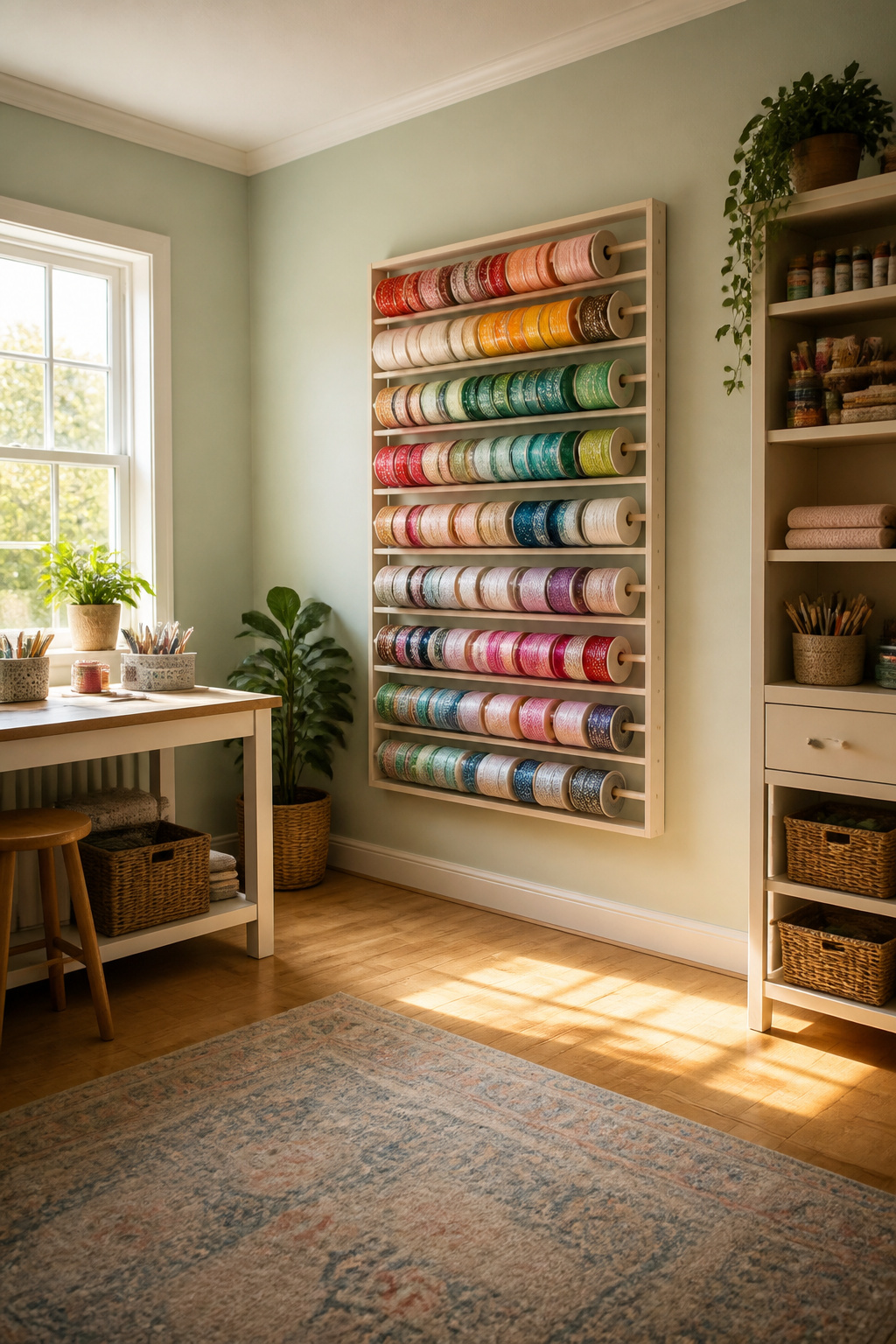
Wall-mounted racks earn their space only when the bracket spacing is right. Space brackets no more than 16 inches apart on a ribbon rack, or the bar bows under the weight of full spools and the rolls slide to the center sag. Adhesive mounts work for empty racks on painted drywall, but add paper or tools and the pull becomes leverage that peels the strip free in a humid room. Screw into studs, or use proper toggle anchors if you must go into hollow wall.
Paper racks need deeper arms than ribbon racks because a ream of cardstock carries its weight forward; arms shorter than six inches let the stack tip when you pull one sheet. Ribbon spools stay put on shallower arms because the weight sits centered on the bar.
For hand tools, a towel bar with S-hooks costs half what a dedicated craft-tool rack runs. The bar mounts the same way, and the hooks let you move pliers or scissors wherever you need the gap filled. The finish rusts faster in a bathroom, but in dry craft room air it holds up for years.
25. Tackle Boxes for Beads
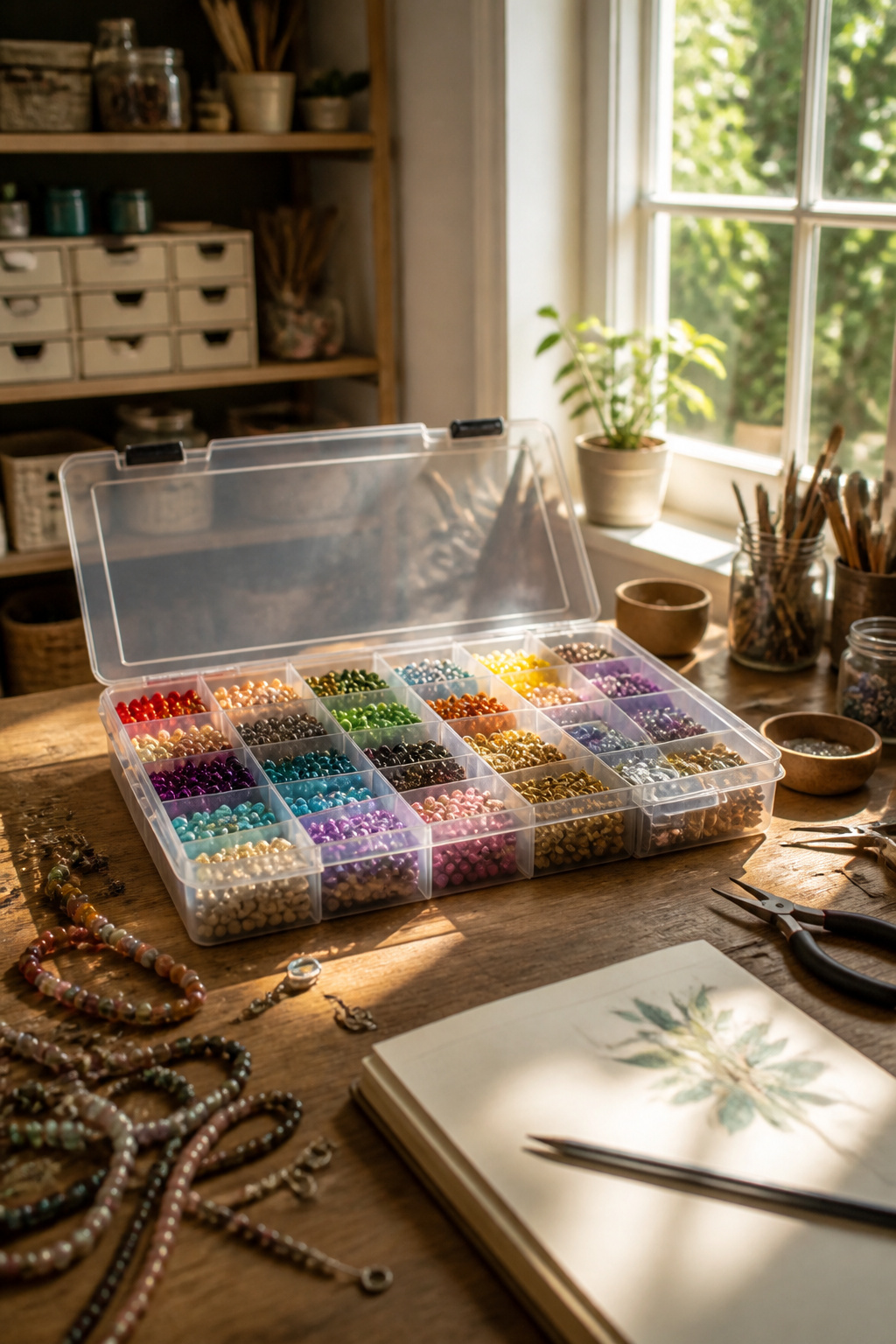
Fishing tackle boxes and hardware organizers handle beads and findings better than most craft-store options because they are built for abuse. The gasket seal around the lid is the detail that matters: it keeps a spilled bottle of dye or a knocked-over coffee from ruining a whole color-sorted collection. Plano-style boxes stack in stable towers because the feet lock into recesses on the lid below; the knockoffs that save you three or four dollars usually skip this, so a stack of four leans and slides.
Fixed compartments are the tradeoff. A hardware case sized for screws will leave dead air around seed beads, and you cannot move dividers to fit a tube of bugles or a spool of wire. You work with the grid you are given, or you buy a second box with smaller cells.
Translucent lids beat opaque every time. You spot the cobalt section without unlatching anything, which matters when you are comparing five nearly identical shades of blue. Opaque metal or solid plastic looks tidier on a shelf, but it adds friction to every project; you open, close, open again, and the sorting time adds up.
26. Craft Tables with Storage

A craft table with built-in storage only works if you can actually sit at it. Thirty inches is the height that keeps most people comfortable for seated work, and anything lower than that will have you hunched inside of an hour. The problem is that shelves or drawers where your legs want to go turn that thirty-inch surface into a standing-only zone. You see this mistake in a lot of beginner builds: a deep lower shelf looks generous until you realize your knees are hitting it.
Drop-leaf designs trade away more stability than people expect. The hinge hardware and the cantilevered weight mean these tables rack sideways under any real pressure, so if you cut fabric or press hard with a bone folder, you will notice the wobble.
The classic budget workaround is two cube storage units with a hollow-core door laid across the top. It costs under a hundred dollars and fills a Saturday afternoon. It also moves when you lean on it, because hollow-core doors flex and the units underneath were never meant to connect to each other. For light paper work it holds up; for sewing or anything with a rotary cutter, you will want to brace it to the wall or add a proper top.
27. Old Suitcases
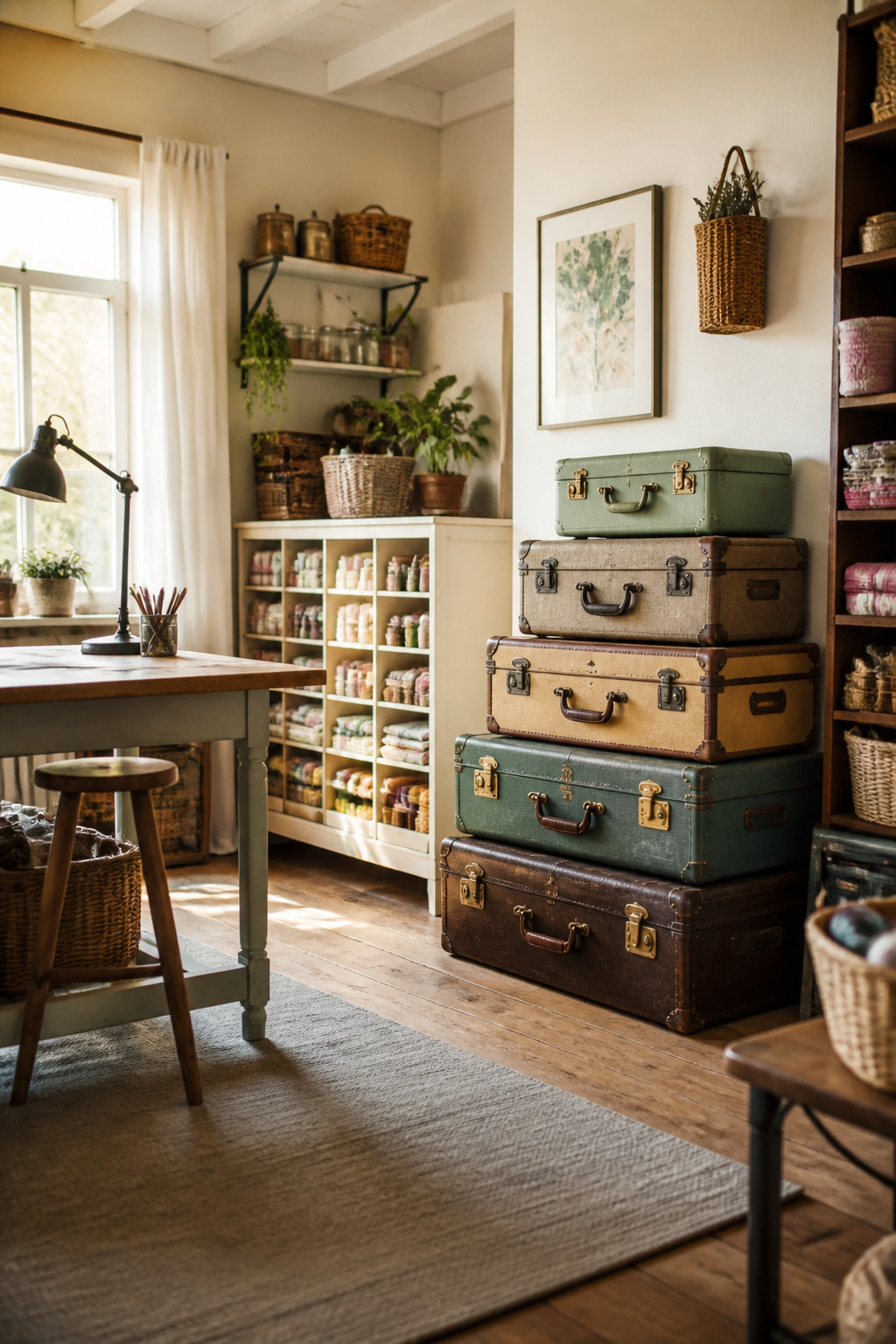
A stack of vintage suitcases looks like storage, but old lining materials hold odors for decades and will pass them on to anything they touch. Air them out in open shade for several days before you commit fabric or yarn to them.
Leather cases are the riskiest choice for long-term storage. Leather stays slightly porous, so it holds humidity against whatever is inside. In a basement craft room or anywhere the air is heavy, that moisture will eventually rot paper goods or mildew fabric. Hard-sided cases with canvas or vulcanized fiber bodies breathe a little better and are easier to wipe down with a vinegar solution.
Stacking empty suitcases is another place they fail. The corner hardware and feet on vintage cases are not load-bearing. A tall stack will crush the lower corners and can warp the frame enough that the latches no longer meet. If you want height, use a shelf unit and set the cases side by side.
A 24-inch Pullman case fits standard 12-inch shelf depth with the hinge side out. Smaller train cases, the kind with the lift-out tray, run closer to 14 inches deep and will overhang or have to sit sideways. Measure before you hunt; sellers rarely list depth accurately.
28. Spice Racks for Small Items
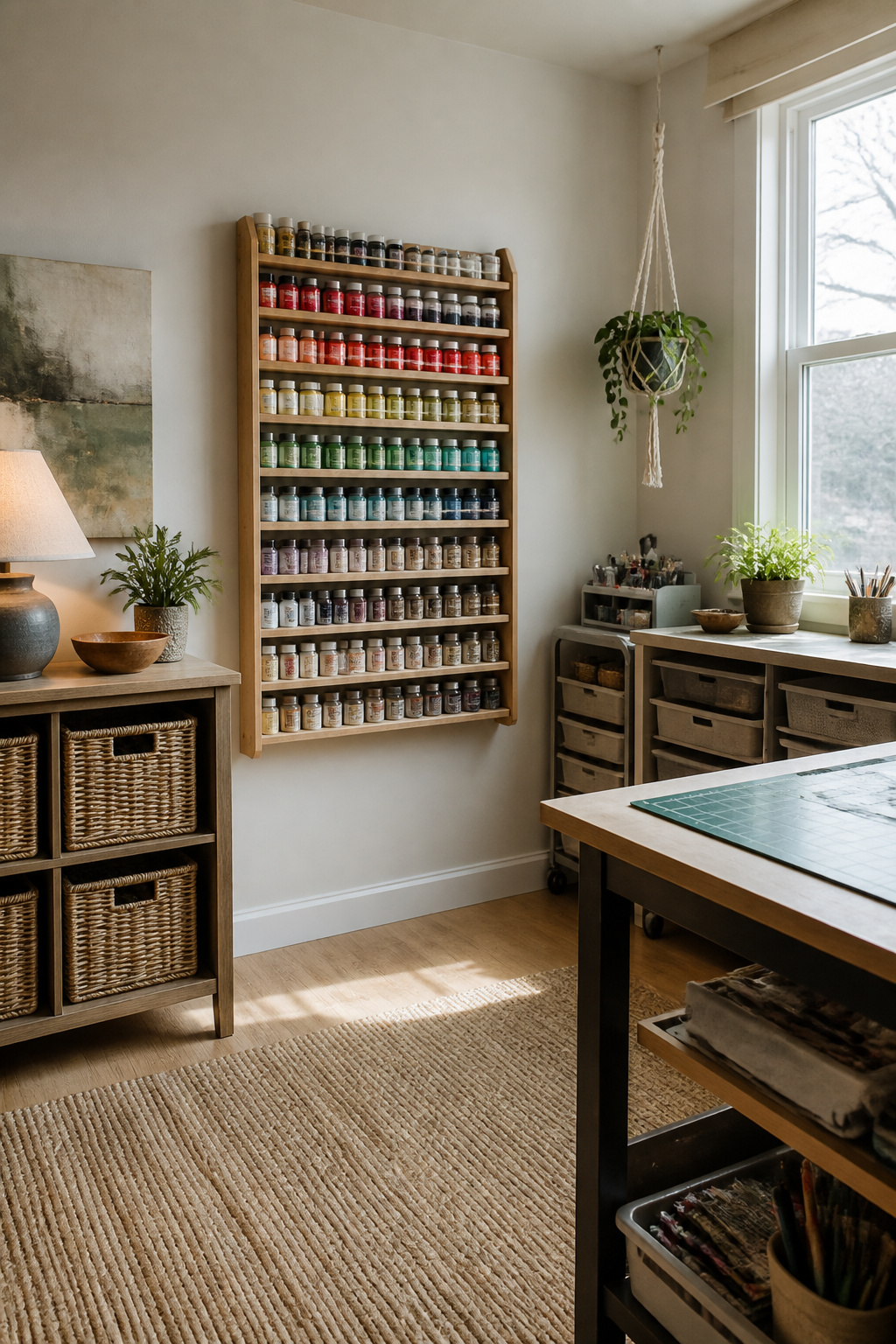
A wall-mounted spice rack lands in the sweet spot for beads, ink pads, and small bottles if you watch the jar size. Most standard spice jars measure about two inches across, which fits seed beads and sequins fine but blocks anything wider. The BEKVAM rack from IKEA shows up in a lot of craft rooms for exactly this reason: shallow stepped shelves keep short bottles visible, and the wood takes paint if you want it to match your wall.
Tiered racks are where visibility dies. Once the front row sits higher than the back, you are lifting jars to see labels, which undoes the point of open storage. If you already own one, reserve it for items you grab by color or shape rather than reading the label.
Magnetic tins solve a different problem. They stick to any steel strip or sheet and let you flick through metal dies fast, since the die stays visible on the lid. Plastic bottles do not cling, so the same system fails for ink refills or liquid glues unless you transfer contents to a metal tin first, and that is only worth the effort for supplies you reach for constantly.
29. Cigar Boxes
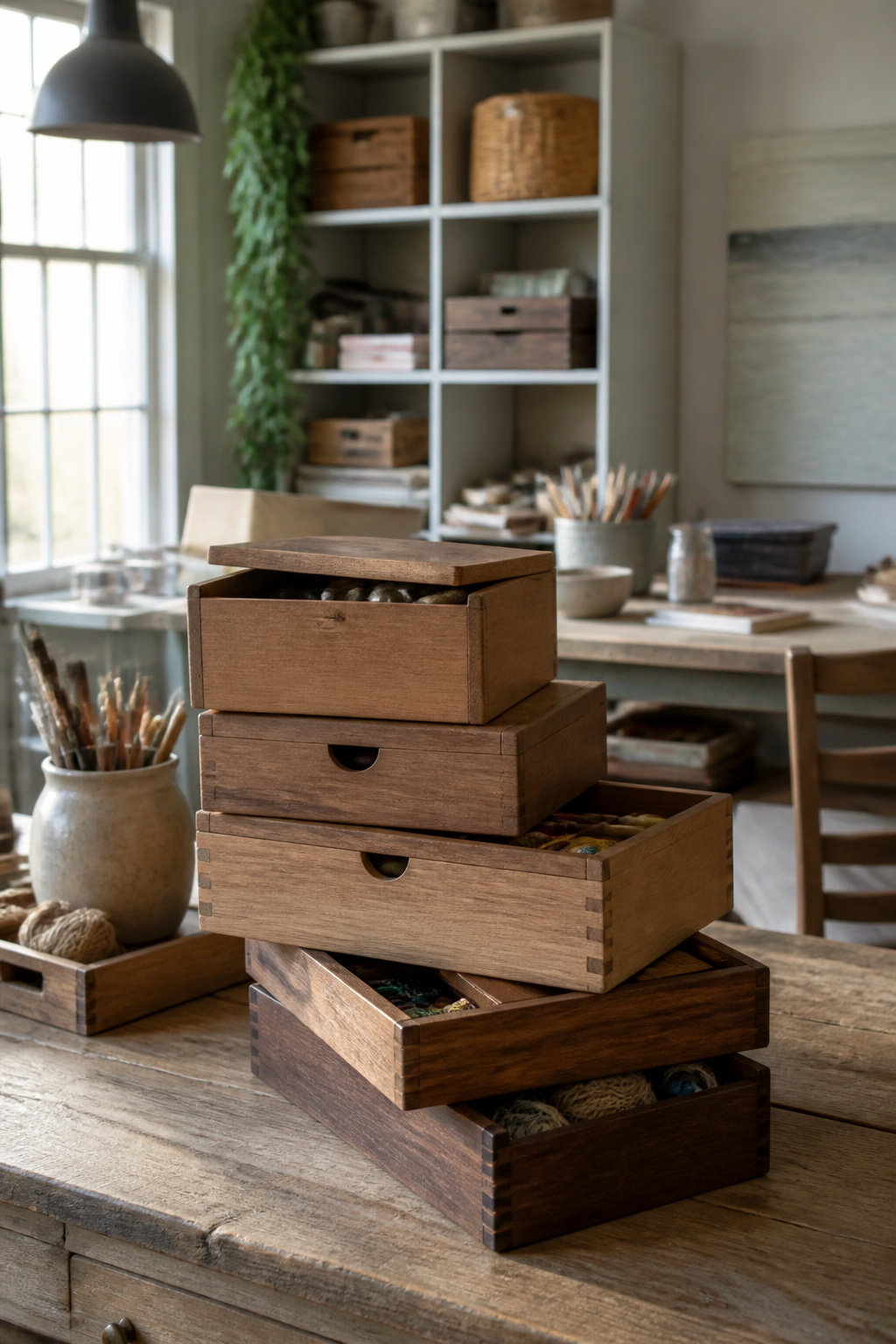
Wooden cigar boxes stack well because the exteriors are built to a uniform size, so you can line up a row on a shelf without the wobble that mismatched thrift-store boxes bring. The interior is where you need to look before you fill them. Spanish cedar lining smells pleasant to most people, but that same aromatic oil resists adhesive, so labels stuck to the inside will peel, and the scent can transfer to stamp pads you store there long-term.
The hinge tells you whether the box is for use or just for looks. Decorative boxes from craft stores often have small brass hinges that twist loose after a dozen openings. Cigar-box hinges are longer, sometimes the full depth of the lid, and they stay straight because they were meant to be opened several times a day.
Free boxes from a local shop are the cheapest source, though you may need to air them out for a week or two before they come inside. The tobacco smell lingers longer in summer humidity, so a garage shelf works better than a closet for that waiting period. Once they are neutral, they hold paperclips, clear stamp sets, small stencils, dies, and embossing folders as neatly as anything you would pay for, and the wood takes a handwritten label on the outside without the adhesion fight the inside gives you.
30. Plastic Clamshell Packaging
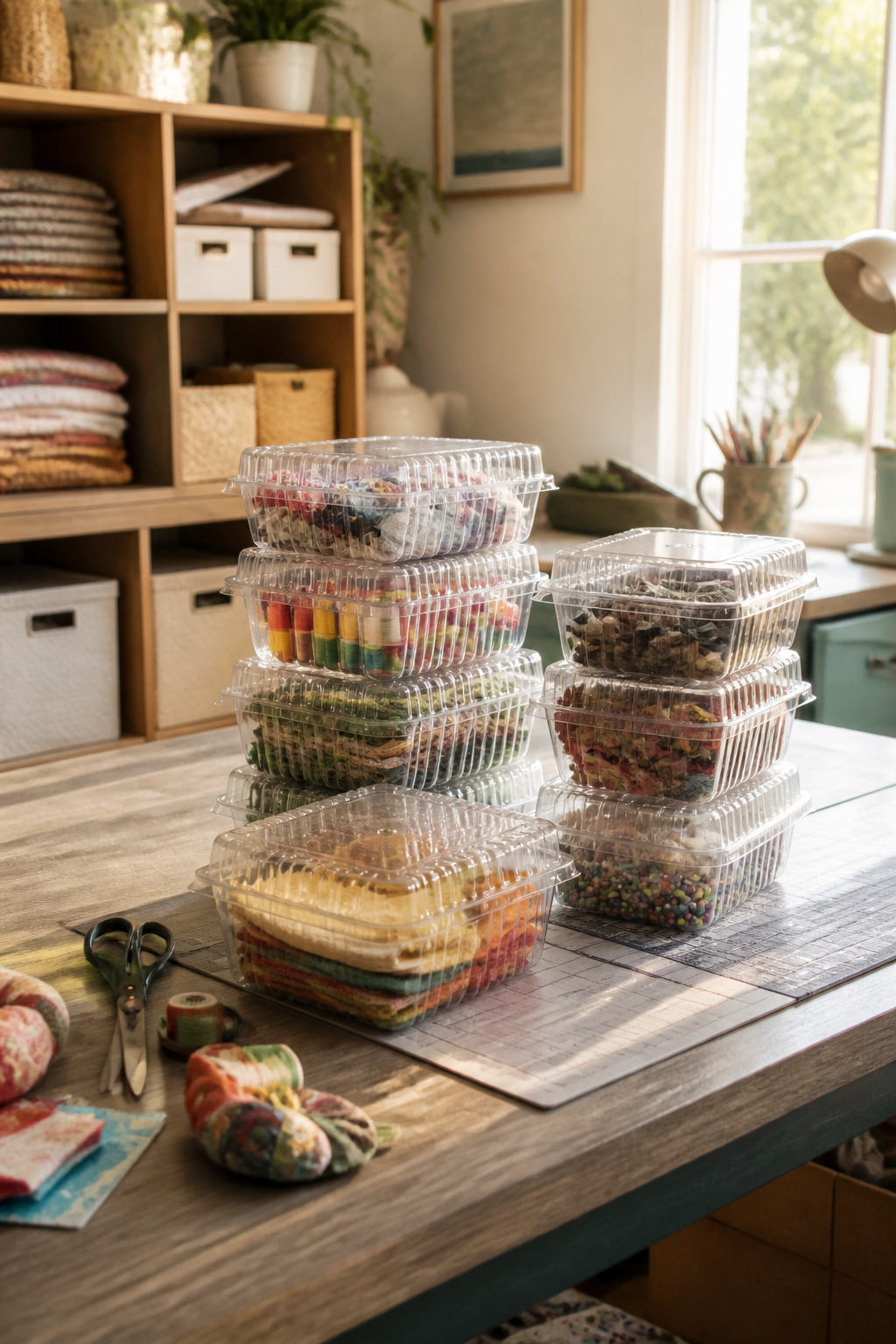
The clear hinged boxes that hold everything from scissors to fishing lures at checkout are worth saving once the product is out. The snap closure is the weak point: after a few years of opening and closing, it cracks or goes slack, and then the box won’t stay shut in a stack. A flat top matters more than the brand when you are piling these four or five high; a ridge or bubble on the lid throws the whole tower off level.
What this format does better than a bin or a bag is hold a project in progress. You drop in the half-finished piece, the thread, the pattern, snap it closed, and nothing drifts. Bead retailers sell nearly identical boxes new, and the price is low enough that scavenging is optional. The distinction to check is the hinge. A living hinge, the thin plastic strip molded right into the box, will fatigue and split. A pinned metal hinge lasts longer and opens flatter. If you are buying new for something you will open daily, the pinned hinge is worth the small extra cost.
What Budget Storage Actually Costs
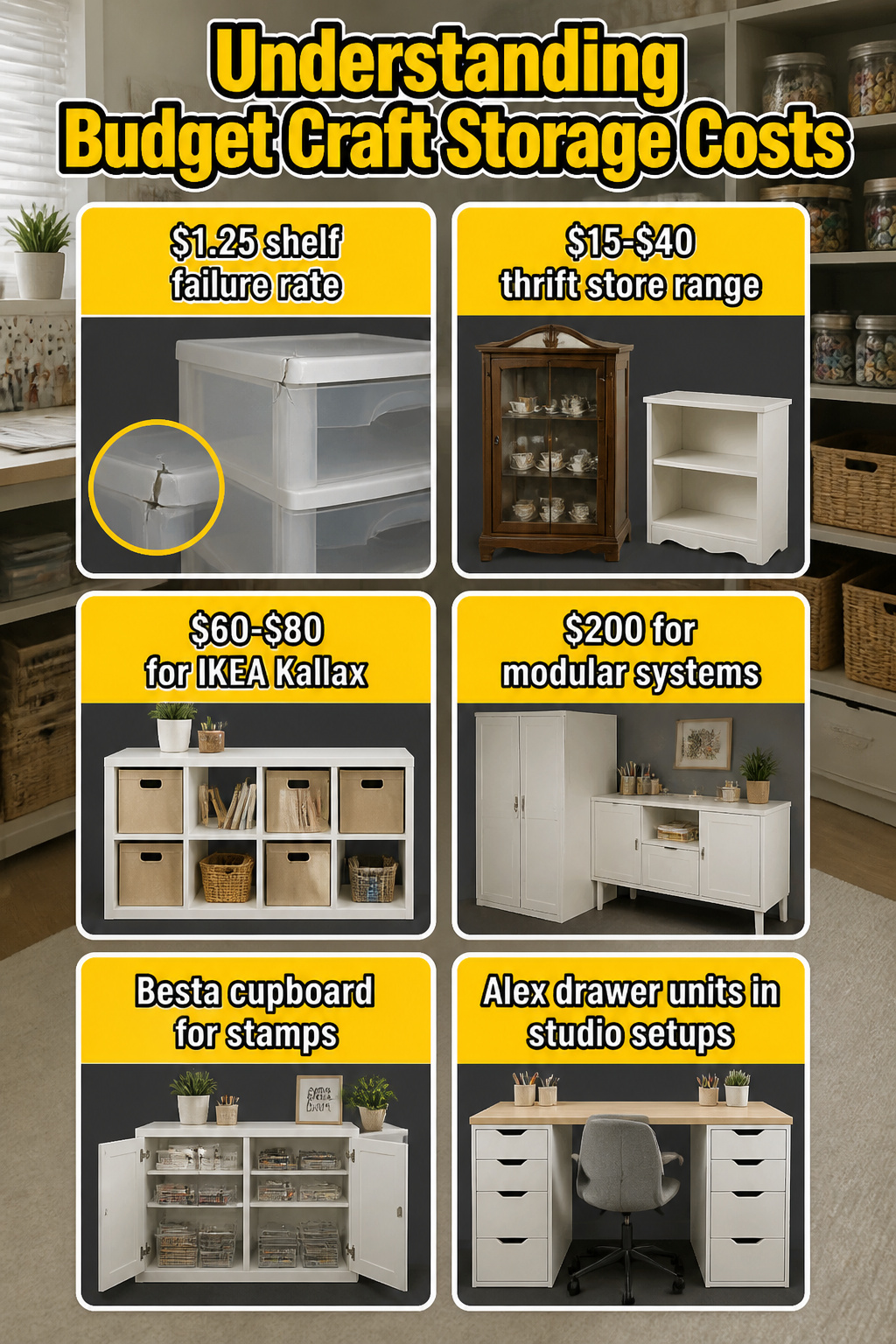
Dollar Tree bins crack at the corners within six months of holding anything heavier than embroidery floss, and the lids stop seating around month eight. That is the real cost of the $1.25 shelf: replacing it twice in a year, which puts a three-drawer unit at about the same spend as a basic Akro-Mils hardware drawer that lasts.
Thrift stores used to be the reliable undercut, but the china cabinets and small shelf units that rank as "budget craft storage" now run $15 to $40 in most markets. At that point, a new Kallax from IKEA at $60 to $80 with eight cubes and a flat surface on top starts to make sense, especially if you need the unit to sit level and hold weight without wobbling. The $200 threshold is where IKEA systems like PAX or Besta become competitive with building from plywood and hardware store brackets, once you factor in your time and the tools you may not own.
The Besta cupboard for stamps and the Alex drawer units that come up in studio setups both sit in this range, and they are modular enough to move with you. That matters more for renters than the built-in look of wall-to-wall shelving, which runs higher and stays with the landlord.
Clear Versus Opaque
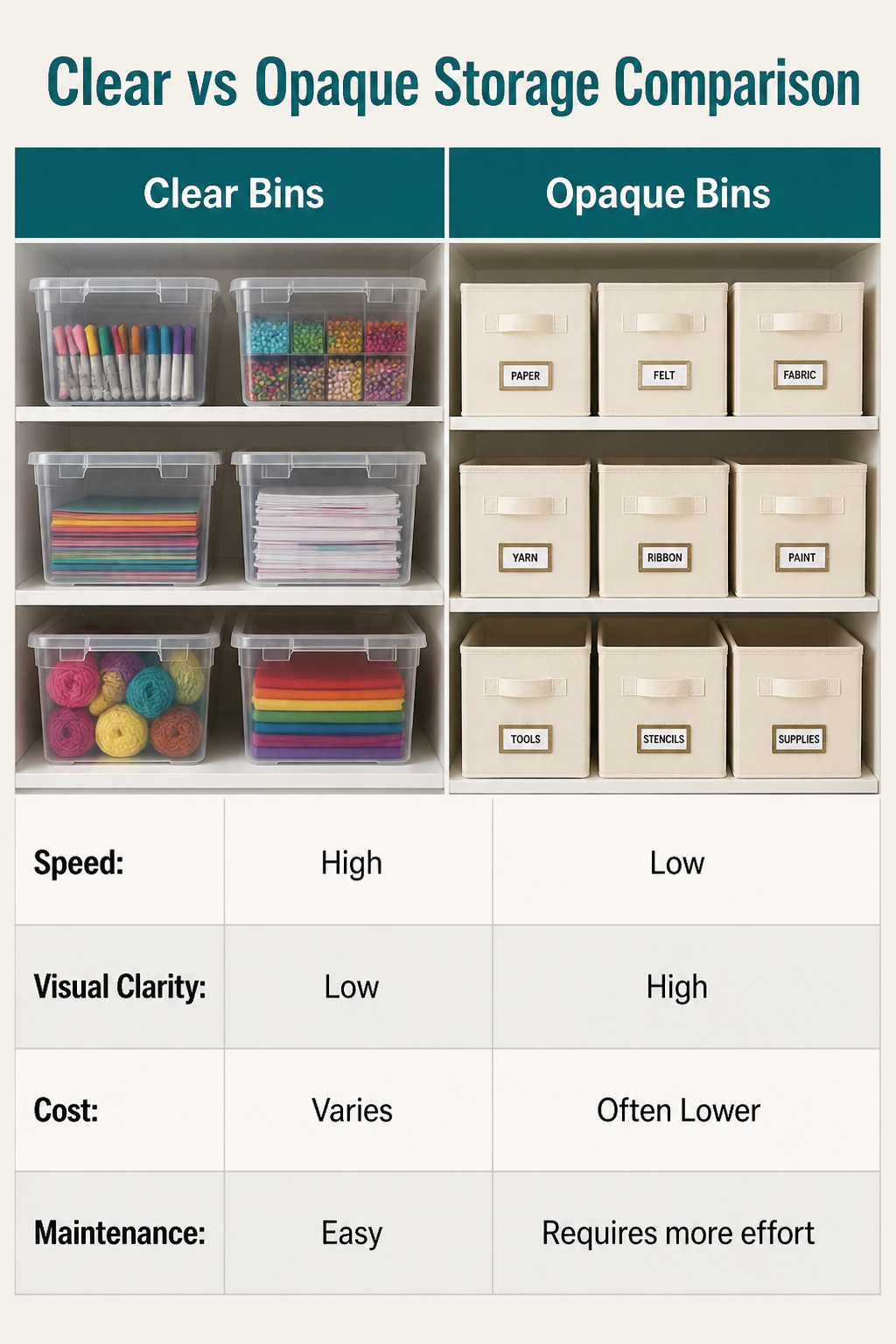
Clear bins win when you need speed. You grab the right paper stack or bead case without pulling half a shelf out, and that glance-at-it workflow matters on a Saturday afternoon when you have three hours before dinner. The tradeoff is what you see: every half-empty bag, every color that clashes with its neighbor, every project you abandoned in March.
Opaque bins buy you visual calm. Canvas bins from Pottery Barn Kids on a bookcase hide reams of paper and yards of felt so the room reads as tidy even when the contents are not. That matters in a craft corner that shares space with a home office or guest bed. The cost is the hunt: you lift, you open, you hope the label matches what is actually inside.
The middle path is a labeled opaque bin with a clear window. You get the clean face from the front and a strip of visibility where it counts. If you already own clear stackable containers, keep them for active supplies and move the overflow into solid bins on higher shelves. The split keeps daily materials findable and long-term stock out of sight.
When to Move Seasonal Items Out
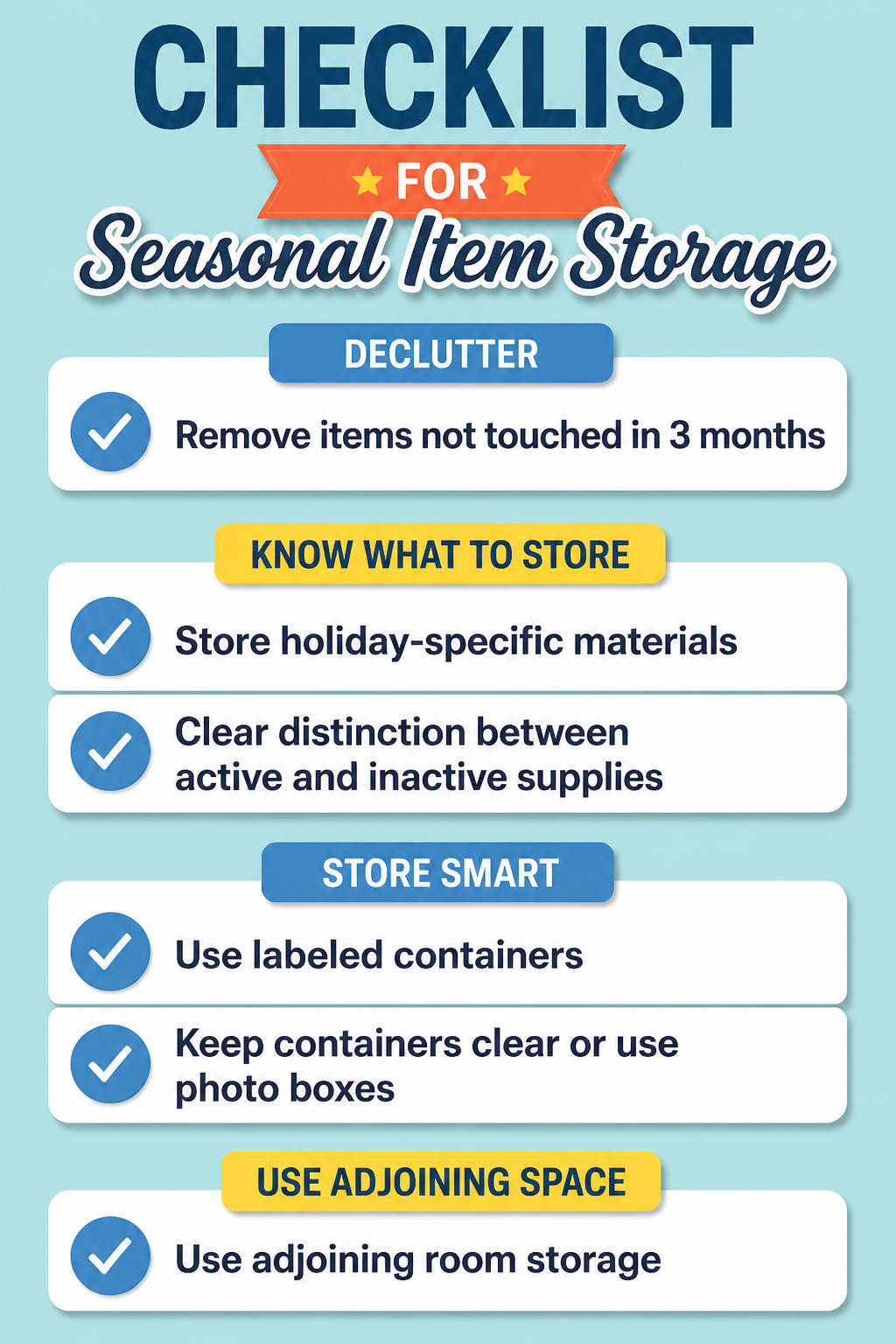
The threshold is simple: if you have not touched it in three months, it belongs under the bed or in a closet, not in your craft room. Holiday stamps, wreath forms, and specialty papers for Valentine’s or Halloween projects are the usual suspects. They sit on shelves, taking up real estate you need for the supplies you reach for every weekend.
The mistake is storing active and inactive supplies together. A bin of Easter ribbon mixed with your everyday twine means you sort through bunnies in July. Keep them apart. Use clear stackable containers for anything that moves out of the room; you need to see contents without hauling the bin into the light. Label the short side and the lid both, because under-bed containers get shuffled. Photo boxes work for flat items and cost less than plastic, though you lose the see-through advantage, so labeling matters more.
If your craft room has no closet, adjoining room storage is worth the short walk. The time you spend fetching a seasonal bin twice a year is less than the time you lose digging past it daily.
Renting With a Craft Room

Wall anchors are where renters lose their security deposits. Toggle bolts and plastic expansion anchors leave holes large enough that a landlord will notice, and spackle never quite matches the texture. If you are going to mount anything, French cleats hung on existing studs or adhesive-backed strips rated for the actual weight do the least damage and come away clean. The strips fail on textured walls and anything over a few pounds, so test before you trust them with a full pegboard of tools.
Freestanding units beat mounted storage in most rental craft rooms. An Alex drawer unit on casters or a Besta cupboard you can slide against the wall stores stamps, dies, and bulk supplies without a single hole. You lose the vertical space, but you gain the ability to rearrange when the lease changes or when you realize your washi tape collection outgrew the wall box you hung in year one.
Negotiating with a landlord for exceptions works better than most renters expect, especially if you offer to patch professionally or leave the improvement in place. A mounted pegboard system in a dedicated craft room reads as an upgrade to some owners, particularly if you use the Ikea system with its clean edges rather than raw Masonite. Get permission in writing, and photograph the wall condition before you start. The same documentation you keep for your own project records becomes evidence if the deposit dispute goes south.
A Weekend Setup That Stays Sorted

The fastest way to stall a Saturday project is to buy containers first. You end up with three bins too tall for the shelf and a drawer organizer that fits nothing you actually own. Sort everything into piles on the floor first, measure your space second, shop third. Paint supplies with paint supplies, stickers with stickers, sewing gear in its own heap. Once you see the true volume of each category, the right clear bin or stackable square becomes obvious.
A clear bin you can read from across the room beats an opaque one with a perfect label, though labels still matter for the boxes you can’t see into. The rule is simple: if you have to open it to know what’s inside, it needs a label. Stick to those labels once they are on. They only work as rules if you treat them like rules.
The one-hour weekly reset matters more than the initial sort. Spend that hour putting tools back in their labeled homes and checking that nothing has wandered into the wrong clear container. Skip three weeks and you are back to opening every drawer to find your rotary cutter.
Stackable containers buy you vertical space on shelves or in closets, and keeping current-project materials in one portable bin keeps the work surface usable. Past projects and scraps go into another bin entirely, so finished work does not colonize the space meant for what is next.
Frequently Asked Questions
What are the best storage solutions for a small craft room?
Put shelves and cubbies at eye level between your hip and shoulders so you actually use what you own, and keep the wall working lower down with shallow bins or paper storage. Rolling carts fit gaps too narrow for bookcases, and vertical systems like slatwall or grid panels carry serious load without eating floor space. The common mistake is mounting everything at standing height and leaving the zone from your knees to the floor empty.
How can I organize craft supplies on a budget?
Start with containers you already have: glass jars seal beads and sequins tight, tin cans hold markers upright after a quick coat of paint, and plastic tubs work once you scrub out food odors with baking soda. Dollar Tree sells 11-by-11 inch bins that slide straight into IKEA KALLAX cubes with no wasted gap. Thrifted silverware trays beat craft-store drawer organizers on price, and painting mismatched finds one color gives you the matching look for the cost of a single can.
What are some DIY craft storage ideas?
Pegboard mounted with standoffs keeps hooks seated fully so they do not dump your scissors; metal panels outlast Masonite if you plan to move the setup between rentals. Old dressers and sideboards handle 12-by-12 paper stacks without a store run, though you should check the underside for solid wood and not 1980s particle board that swells and crumbles. Wooden slats cut to length and glued into drawers stop organizer slip for good, and cigar boxes drop straight in as ready-made compartments.