
A master bedroom refresh can run from a $30 gallon of paint to built-in wardrobes you leave behind, and the right spend depends on whether you own the walls. Renters get the most mileage from soft finishes and freestanding pieces that read intentional without a single hole, while owners see the calmest payoff from invisible storage and architectural upgrades that stay with the house. The one detail that separates a finished room from a furniture showroom is the bed itself. Over thirty years of your life will pass in it, so everything else, paint color to rug placement, arranges itself around that choice.
1. Comfort Begins with the Bed
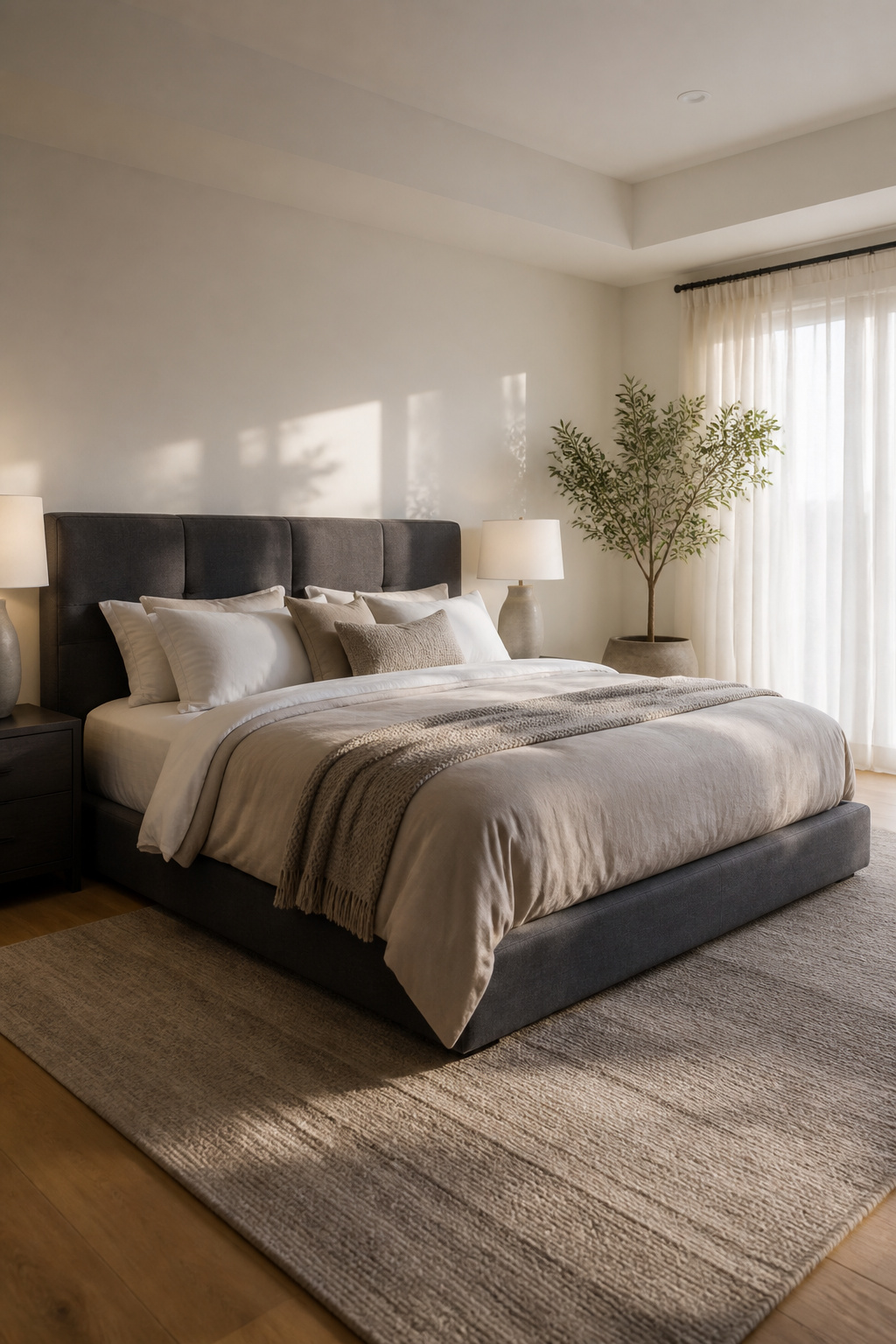
You spend over thirty years in bed across a lifetime, which makes the bed the only place to start when you refresh a master bedroom. Everything else, paint color to rug placement, arranges itself around it.
An upholstered platform bed anchors the room without demanding a new mattress or box spring. The lower profile keeps the space feeling open, and the padded headboard gives you something to lean against when you read or watch a late show. For renters, it solves the problem of a room that still feels unfinished no matter what you hang on the walls. For first-home owners, it reads as intentional furniture rather than a placeholder.
Pick for comfort first, then style. Test the headboard height against how you actually sit up in bed, not how the display looks. On a real budget, neutral upholstery in charcoal linen, warm taupe, or oatmeal buys you the most flexibility when you swap bedding or move to a new place. A performance fabric handles daily wear better if you have kids or pets climbing in on weekend mornings.
2. Style with Soft Finishes
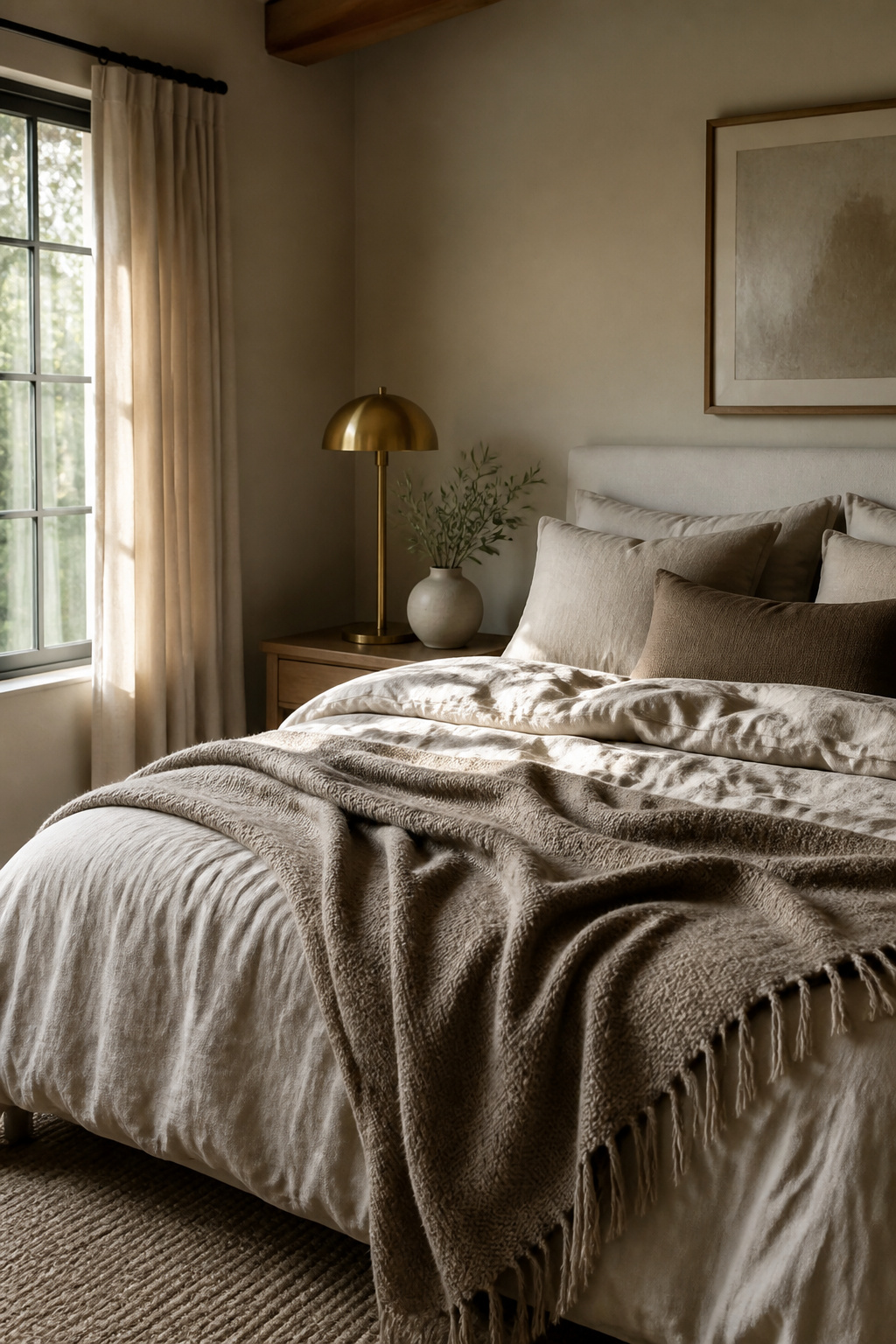
Soft finishes let you warm up a master bedroom without a single hole in the wall. Linen bedding is the place to start; it rumples into something that looks intentional by the second wash and breathes better than anything coated for wrinkle resistance. Look for a mid-weight weave around 160–180 GSM; lighter linen pills at the corners inside a year, and heavier duck or canvas drapes like upholstery, not bedding. Cotton throws in a broken twill or waffle weave do the same work at the foot of the bed for less, and they survive being dragged to the couch on Saturday mornings.
Brushed finishes on metal or ceramic read as lived-in from day one. A brushed brass lamp base or a matte ceramic vase catches light without shouting for attention, which matters when every surface in a rental is already competing. Avoid anything lacquered or high-gloss; it reads as temporary, the visual equivalent of a furniture cover.
The durability test for budget fabric is the long-edge rub: grab a handful and pull. If the weave distorts and stays baggy, it will not survive a year of hospital corners and laundry cycles. Spend the difference on one better set of pillowcases rather than two cheap ones.
3. Layer Sculptural Furniture
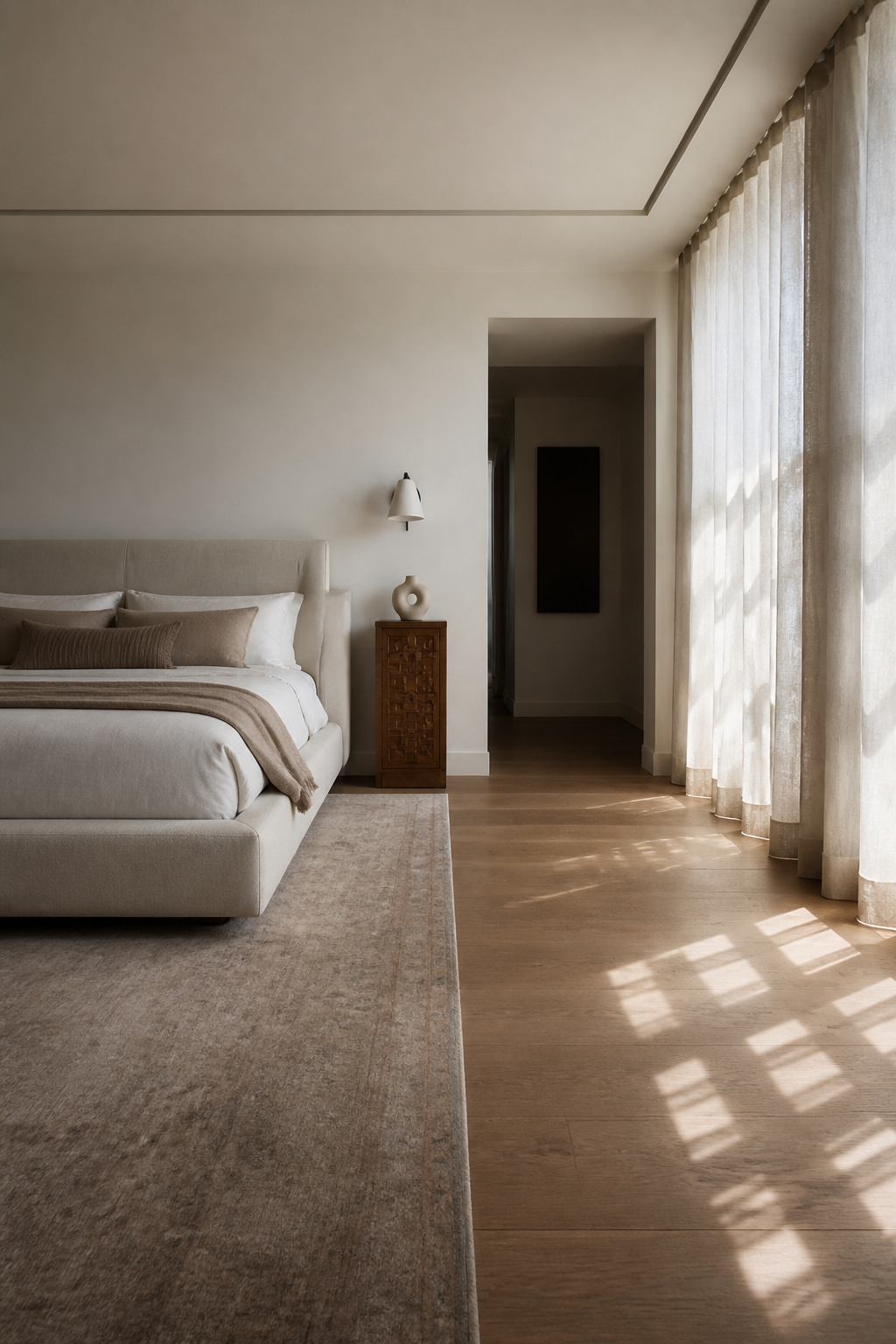
One sculptural piece in a small master bedroom does more than two or three competing for attention. Curved lines, unexpected proportions, or hand-worked details give a piece its presence, but the placement decides whether it reads as intentional or random. Put it where the eye lands naturally: beside the bed as a slender silhouette against a heavier frame, or angled near a window where morning light catches the form. Buy functional first, sculptural second. A bedside table that cannot hold a lamp and a book is not a table; it is a mistake you will replace within a year. If the nightstand itself carries strong texture like marble or rough oak, keep what sits on it restrained. Let the furniture do the work.
4. Use Timber to Ground the Bedroom
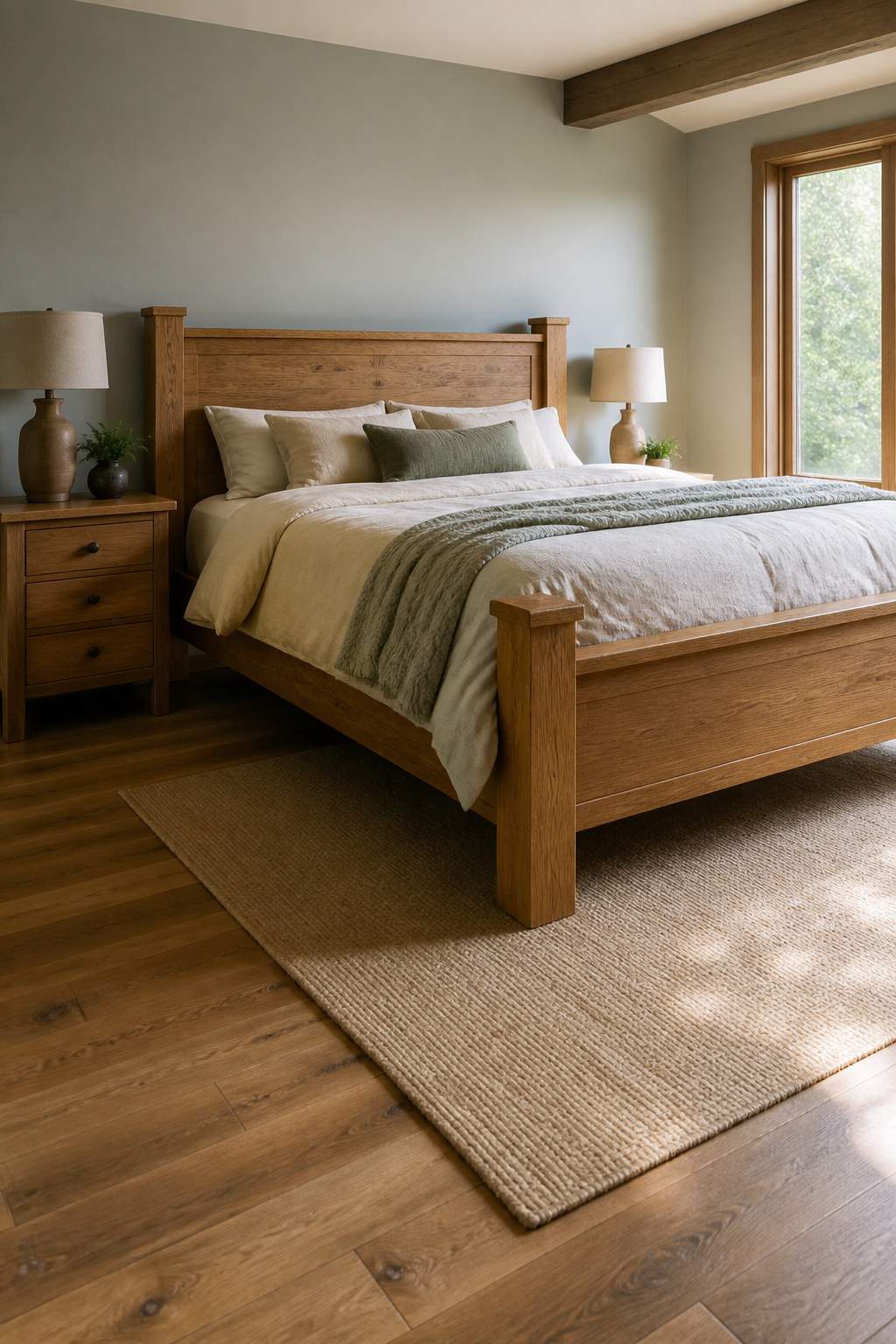
Wood has a way of settling a room that paint alone never quite manages. In a master bedroom, where the goal is to calm down rather than rev up, that anchoring effect matters more than almost anywhere else.
You have three practical paths, and the right one depends on your budget and whether you own the walls. Solid wood furniture, the kind built with proper joinery and weight you feel when you slide a drawer, costs more upfront but lives through moves and humidity swings that warp cheaper pieces. Wood-veneer accents hit a middle price point and still carry real grain under the finish. For renters who cannot install built-ins, convincing laminate alternatives on freestanding legs or adhesive-backed panels give the visual warmth without the commitment or the landlord conversation.
Fifty-six percent of buyers choose neutral tones for master bedroom furniture, and timber answers that preference without trying: natural oak reads warm and light, smoked oak or walnut shift cooler and more grounded, and any of them sit calmly against white, cream, or the soft gray most people already have on the walls. The mistake is mixing too many competing wood tones in one sightline. Pick one dominant timber, let a second contrast in a small piece if you want it, and stop there.
5. Embrace Japandi Principles
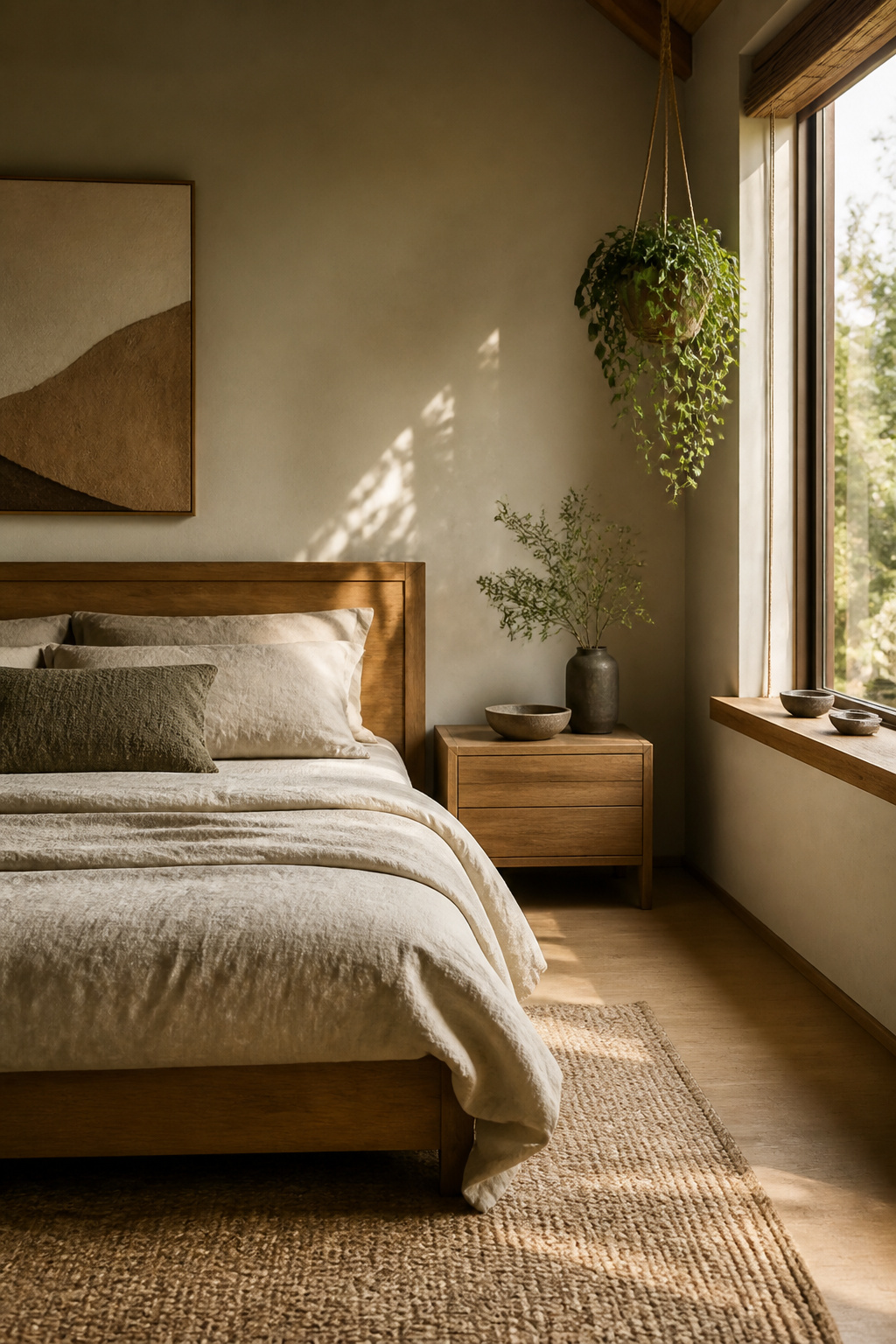
Japandi pulls from two places at once: the quiet restraint of Japanese interiors and the warmth that makes Scandinavian rooms feel lived-in. The result is a style that asks you to own less, not more, which is why it survives a real budget better than most trends.
The core principles are simple enough to apply in a weekend. Natural materials come first: timber, linen, ceramic, a single trailing plant. You are looking for surfaces that age rather than deteriorate, which means a ceramic bowl for trinkets or a few linen-bound books instead of a shelf of objects bought to fill space. Minimalism here is not emptiness; it is the discipline of keeping only what supports calm. A bedside needs one meaningful piece, not a cluster.
Functional beauty matters more than display. Choose a piece because it works, and let the grain of the wood or the weight of the clay provide the interest. The absence of excess is what makes the room feel expensive, even when the spending was tight. A Natural Oak or American Walnut finish warms the light; Smoked Oak or Onyx cools it down if that suits your wall color better. Either way, the stillness is the point. The room should invite a slow morning stretch or an evening wind-down without the visual noise of everything you have not edited out yet.
6. Introduce Texture Over Bold Color
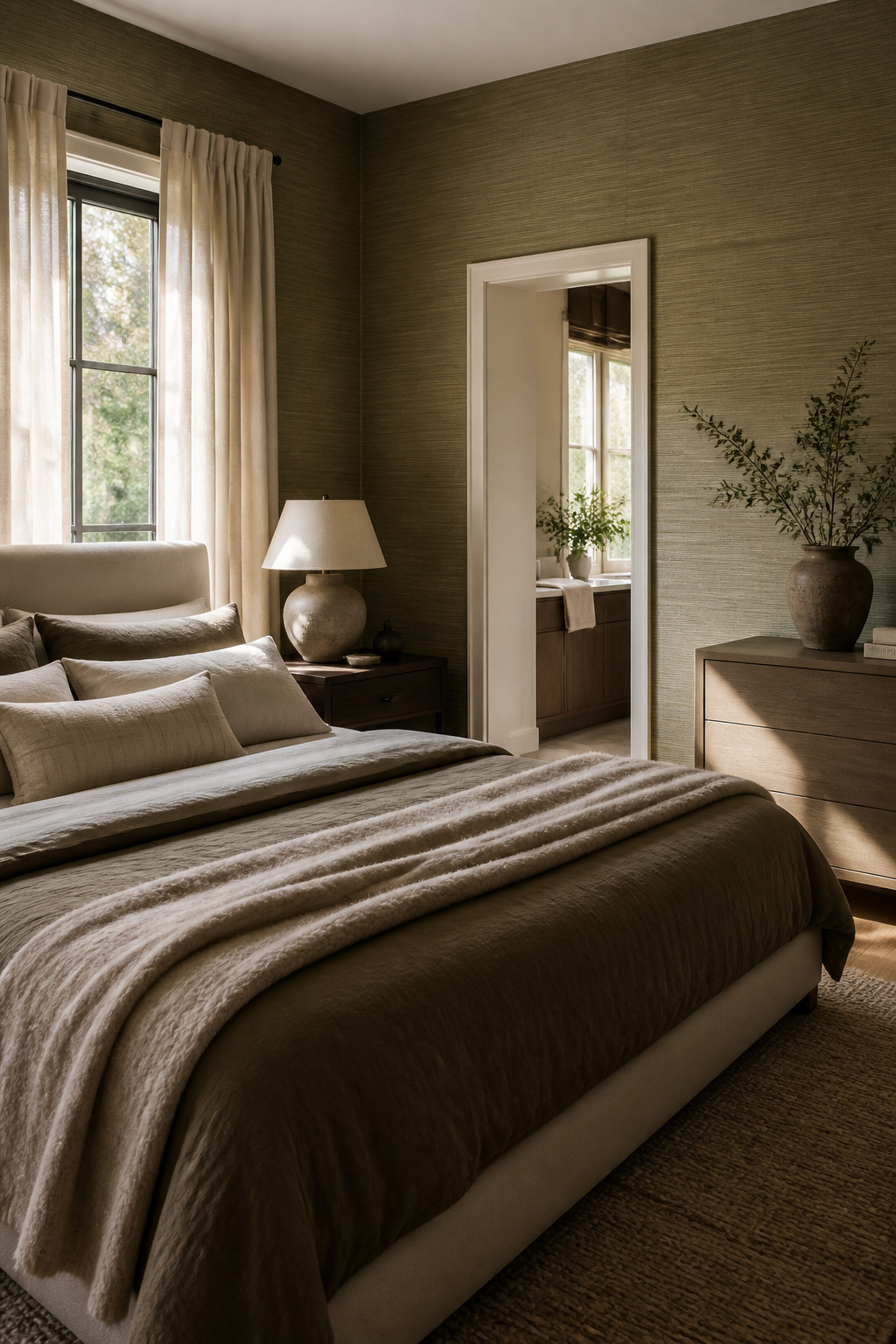
A textured room ages better than one built on this year’s color, because fabric and finish shift with the light instead of locking you into a moment you already saw on Instagram. Warm greens, earthy browns, and soft clay tones on an accent wall give you that warmth without the commitment of a bold paint job, and they pair naturally with wood furniture and neutral upholstery you probably already own.
For renters who cannot paint at all, this is the workaround that actually wins. Layer linen, bouclé, or velvet through bedding, throws, and an ottoman at the foot of the bed. The sleep zone gets defined without a single brushstroke. Add a hand-glazed ceramic vase or a bronze tray for contrast, and the room builds character through touch rather than color blocks.
If you do have the option to treat walls, a textural covering in a mossy green, like a horsehair weave, does what flat paint cannot. It catches shadow, softens sound, and reads as intentional rather than trendy. The cost runs higher than a gallon of paint, but the result outlasts three color cycles.
7. Focus on Seamless Storage
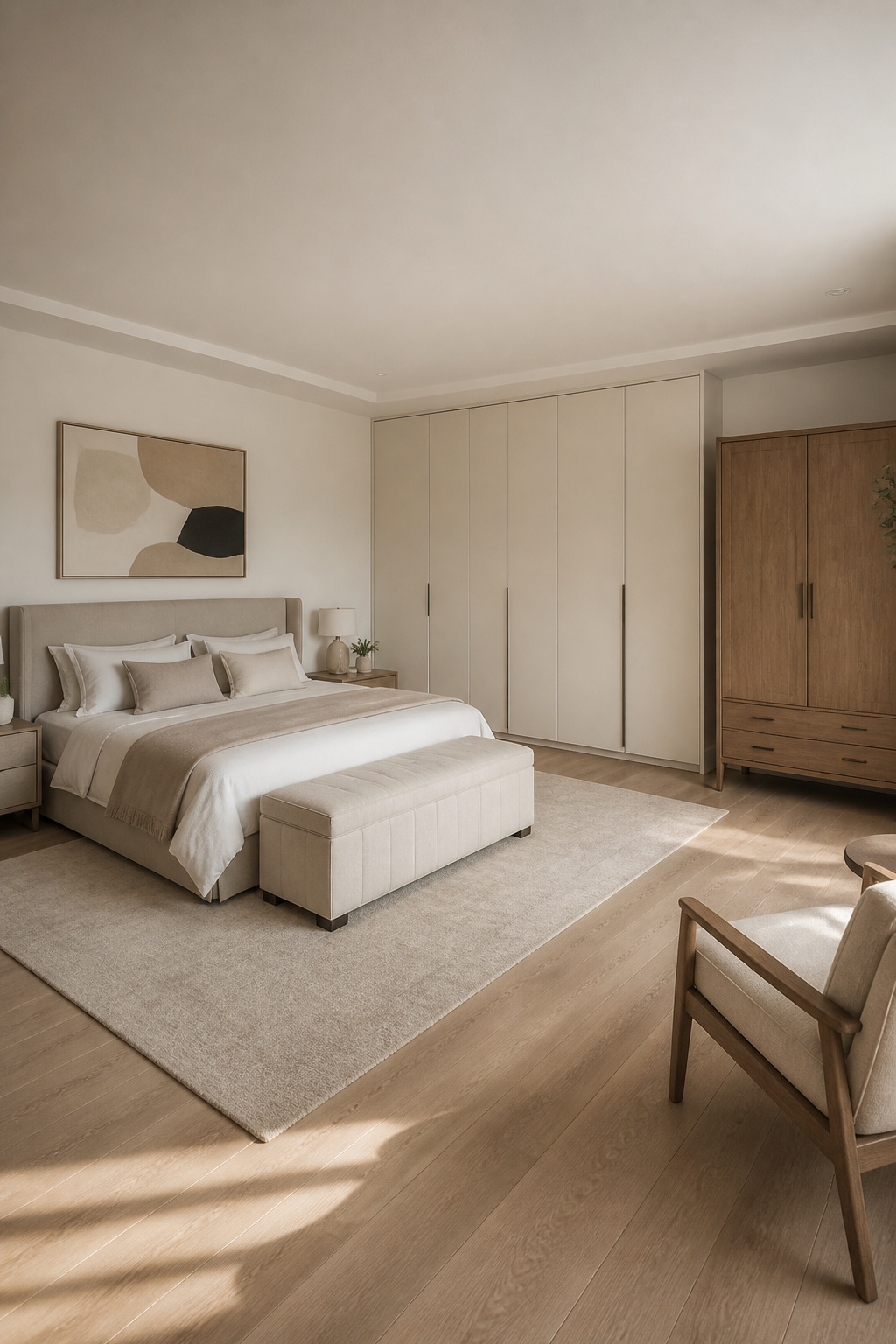
Built-in wardrobes hide the visual noise that turns a bedroom into a storage closet with a bed in it. Floor-to-ceiling cabinetry keeps clothing, linens, and the odd hobby project out of sight without eating floor space. If you own the place and plan to stay, this is where your money goes the furthest.
Renters and anyone on a two-year timeline have options that read as intentional, not temporary. A freestanding wardrobe in a warm wood tone or a clean painted finish anchors a wall the way built-ins do, and you take it with you. Storage ottomans at the foot of the bed hold spare bedding and give you a place to sit while lacing up shoes. Under-bed drawers on casters, or even flat bins if your frame sits low, swallow out-of-season clothes you do not need at 6 a.m.
The mistake is stopping at "stored" instead of "invisible." An open rack of folded sweaters or a wire shelf unit from the laundry room keeps the clutter in view, and your eye registers it as work left undone every time you walk past. Closed fronts, whether doors or fabric covers, are what buy the calm you came for.
8. Add a Lounge Element
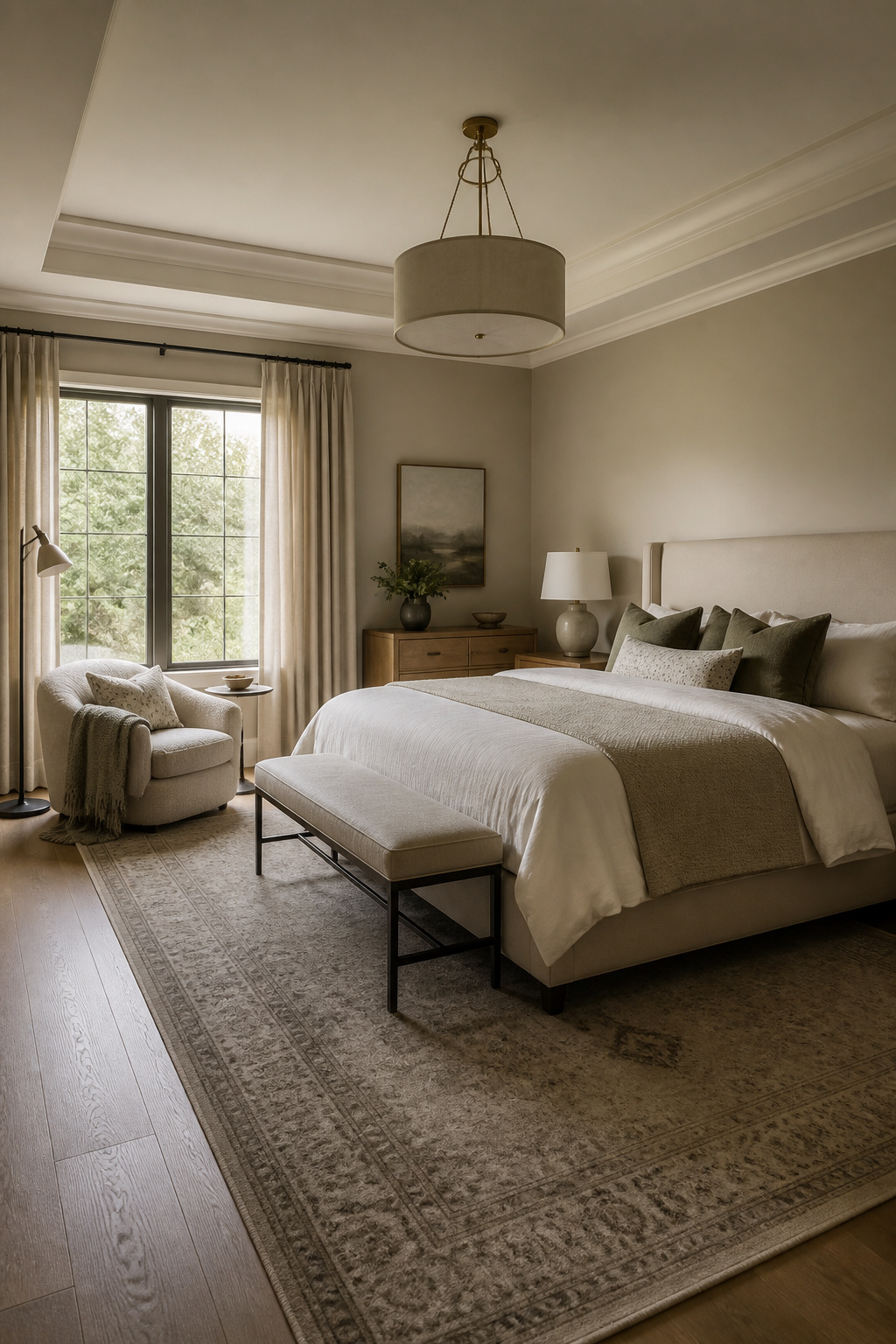
Even a small master bedroom benefits from a place to sit that is not the bed. A single chair tucked into a corner gives you somewhere to pull on shoes or take a call without creasing the duvet. A bench at the foot of the bed softens the layout and anchors the sleep zone. If you have a window with depth, a seat there costs less floor space than any other option and earns its keep as a reading nook.
The mistake is choosing size over function. A bulky wingback or extra-thick upholstered frame can look perfect on a showroom floor and feel oversized the minute it lands in your room. Measure the wall, the walkway, and the distance needed for nightstands before you commit. In older homes, check for radiator placement, narrow stair access, sloped ceilings, and off-center windows. Those details affect what shape and height will work. If movement around the piece feels tight, the room will never settle into the restful feeling you want.
9. Embrace Color and Pattern
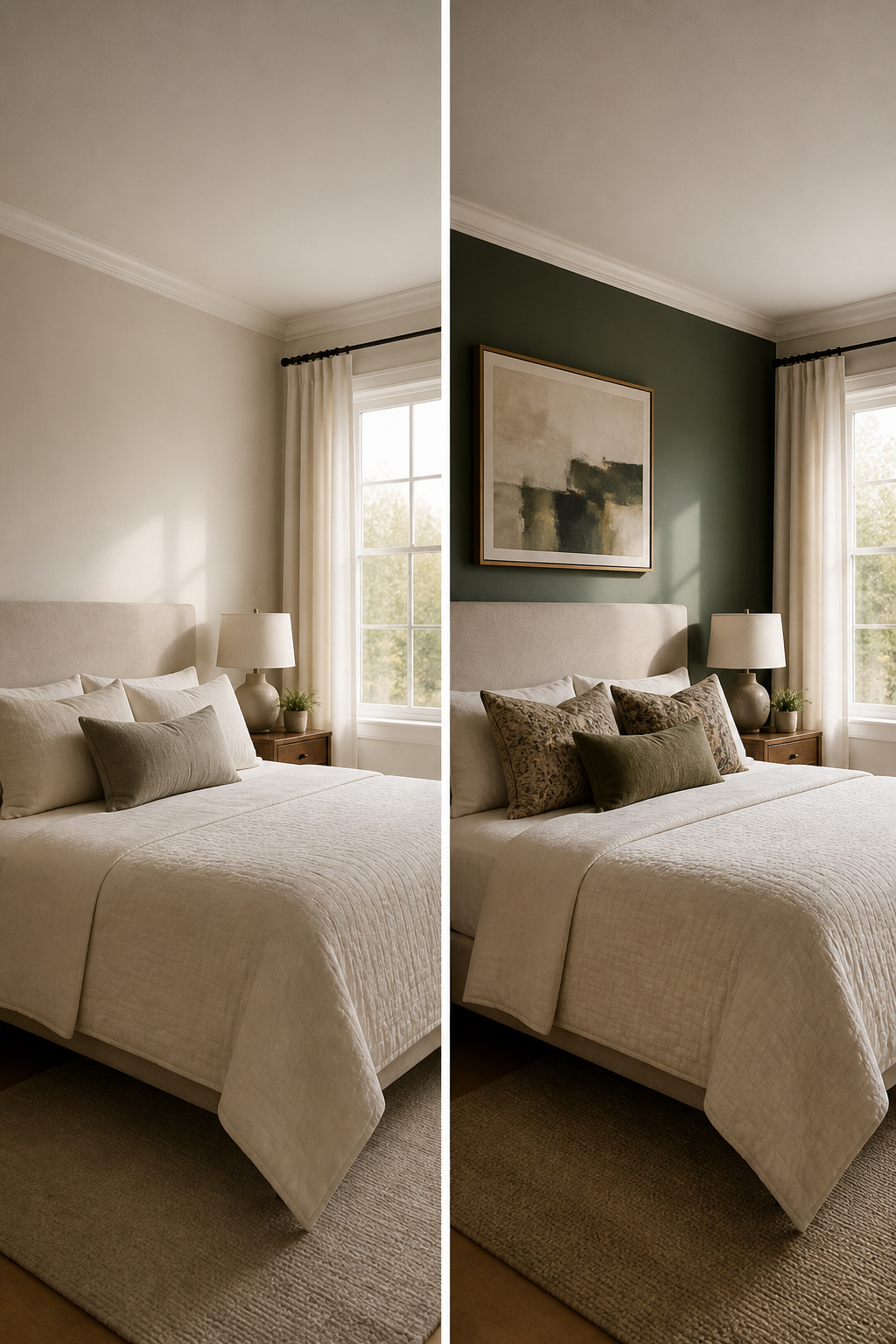
Color and pattern in a bedroom only work if you know where to stop. The cheapest way to test a strong hue is one wall behind the bed, painted or papered, with everything else kept quiet. That single move gives the room an identity without asking you to replace furniture or fight the architecture. Paint runs about $30–$50 a gallon; wallpaper costs more but covers the same ground. Either way, you are buying a backdrop, not a theme park.
Blue, green, and gray read cooler than warm tones, and in a bedroom that matters. They drop the visual temperature and let the eye rest. A tight palette helps: pick one of those hues as your accent and a neutral as your baseline, then run every decision through that pair. Headboard in the neutral if the wall carries the color; lamps in either tone; window treatments matching the wall so the room does not chop itself into pieces.
If the space feels hard or echoey, skip the painted accent wall and go for an upholstered treatment behind the bed instead. It adds softness and pattern control that paint cannot manage, and it reads as finished in a way a standard headboard alone rarely does. The cost jumps, but for a small room where sound bounces, the trade is worth weighing.
10. Crown It with a Canopy
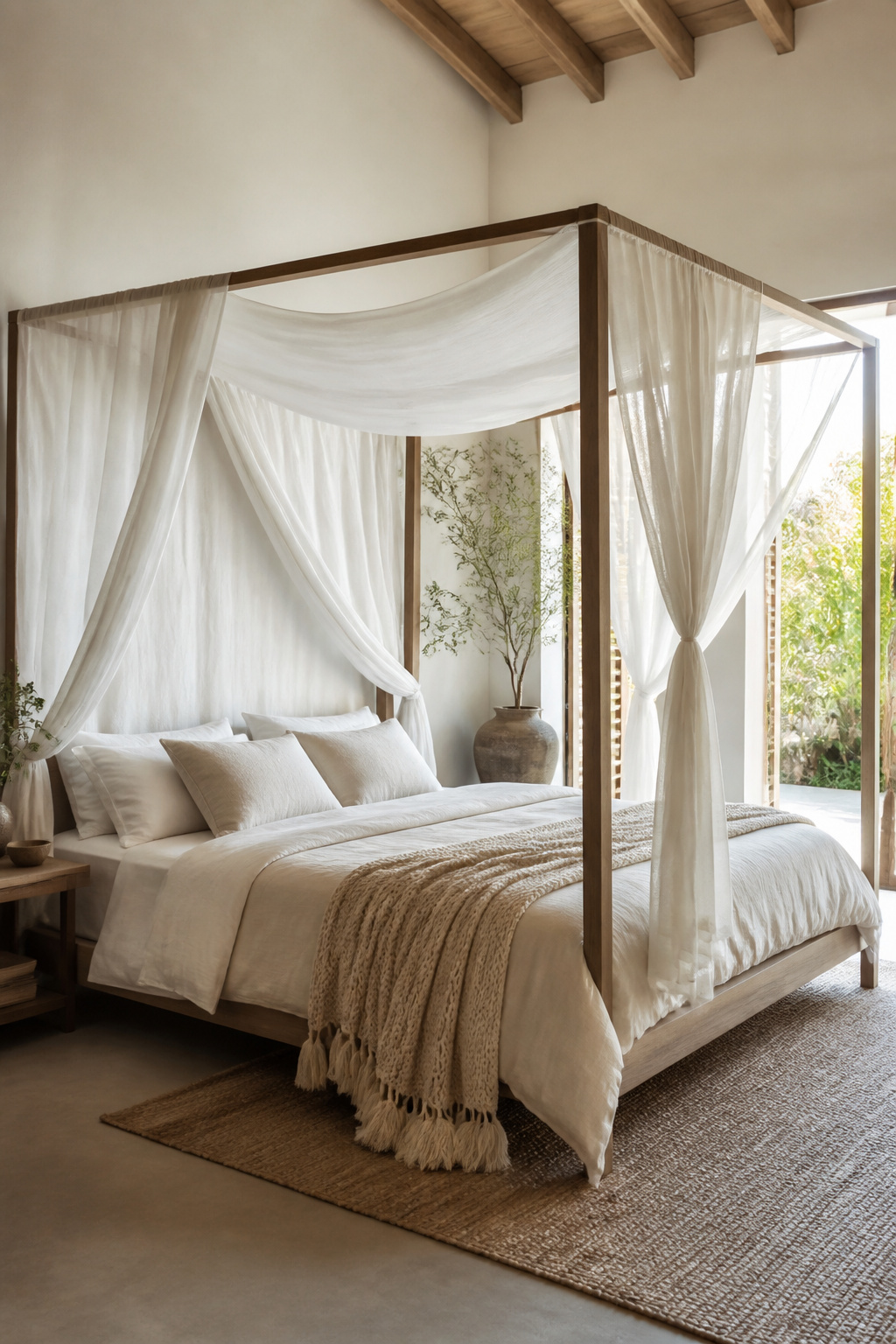
A canopy bed can make a small bedroom feel larger, not smaller, because the vertical draw shifts the eye upward and stretches the sense of height. That same structure gives a plain box of a room the architectural interest it otherwise lacks.
You have two practical routes. A freestanding canopy frame bolts to a standard bed and needs no ceiling access, which suits renters or anyone wary of patching drywall later. If you do own the ceiling, mounted hardware with drapery panels running from a central ring or corner hooks costs less and stores flat when you want the room bare.
The common mistake is heavy fabric. Velvet, blackout-lined panels, or anything that pools thickly on the floor will block morning light and make the bed feel like a tent you sleep in, not a frame you float beneath. Sheer linen, lightweight cotton, or even leaving the structure completely bare keeps the effect airy. The bare frame reads modern; the draped fabric reads romantic. Both work, but only if the material breathes.
11. Play with Contrast
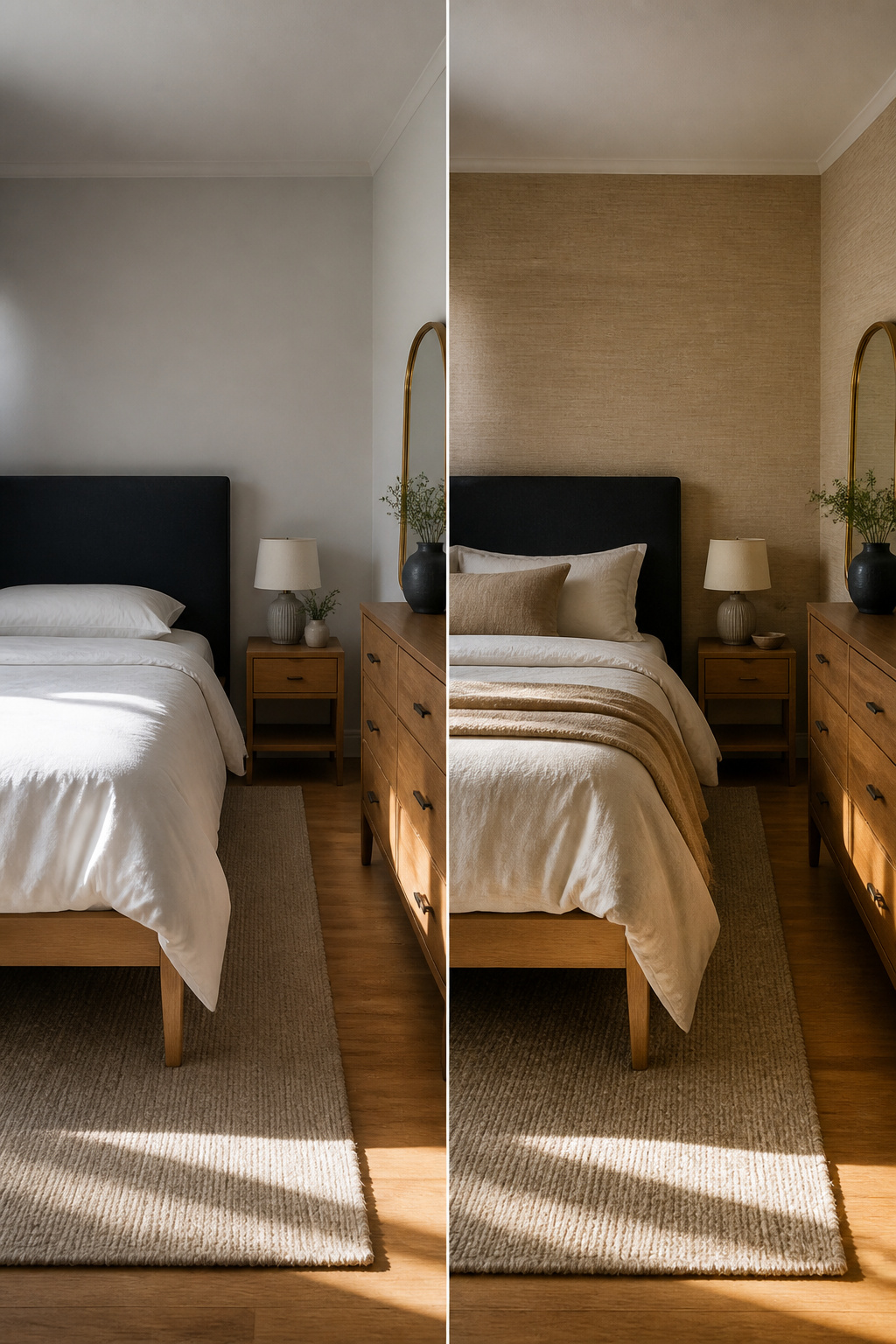
Contrast builds interest without adding clutter. A pale wall behind a dark headboard does more than a shelf of small objects. Rough linen against smooth painted metal, or a single vintage mirror above a modern dresser, gives the eye something to do without filling the floor.
The three pairings that work in a bedroom are light against dark, rough against smooth, and old against new. You only need one per wall, maybe two in the whole room. More than that and the space starts to feel like a display rather than a place to sleep.
A matte black ceiling fan against bright white ceilings looks dramatic in photos and oppressive by lamplight. The mistake is choosing high contrast overhead, where you actually live under it. Keep the strongest contrasts at eye level or below: the bed, a side table, a reading chair. The ceiling should recede, not compete.
12. Add Traditional Accents
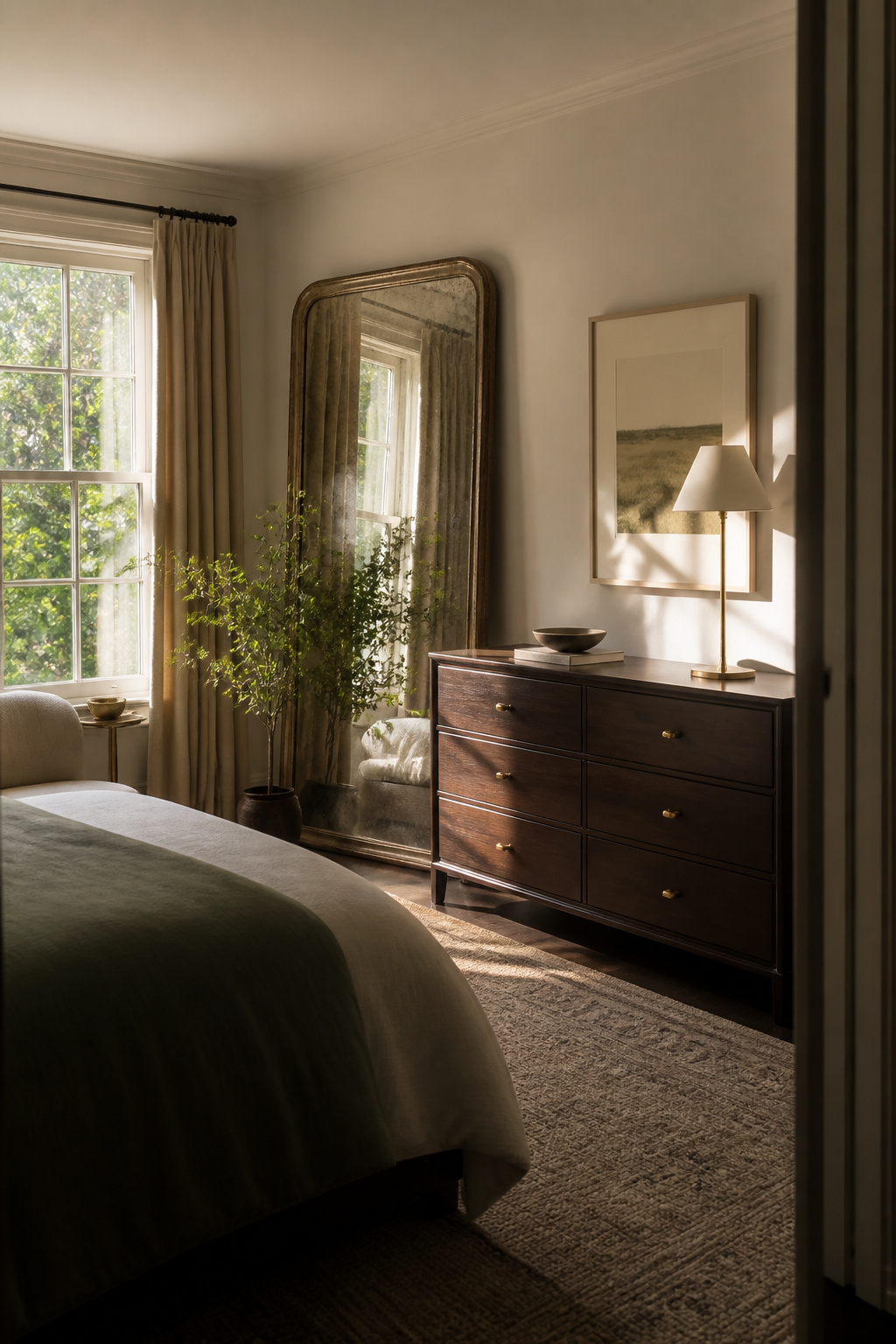
Modern bedrooms can flatten out fast. A room full of clean lines and neutral paint reads as a showroom, not a place where anyone actually sleeps. Traditional accents break that spell, and they do not require an antique budget.
A vintage mirror with worn gilt or patinated silver leans against the wall instead of hanging, and suddenly the room has history without a single nail hole, which matters if you rent. Inherited furniture works the same way. That heavy dresser from your grandmother’s house holds folded sweaters just as well as anything from a big-box store, and the contrast against a simple platform bed gives both pieces more presence than either has alone. Reproduction hardware on existing drawers, about ten dollars per pull, nudges a plain piece toward furniture that looks collected rather than bought in a set.
The mistake is mixing periods without something to tie them together. A Victorian mirror, a mid-century dresser, and farmhouse-style pulls fight each other. Pick one thread, usually the finish on metal or the tone of wood, and repeat it at least twice. Warm brass on the mirror frame and the new drawer pulls bridges a century of styles without anyone needing to name what era anything belongs to.
13. Consider an Unconventional Layout
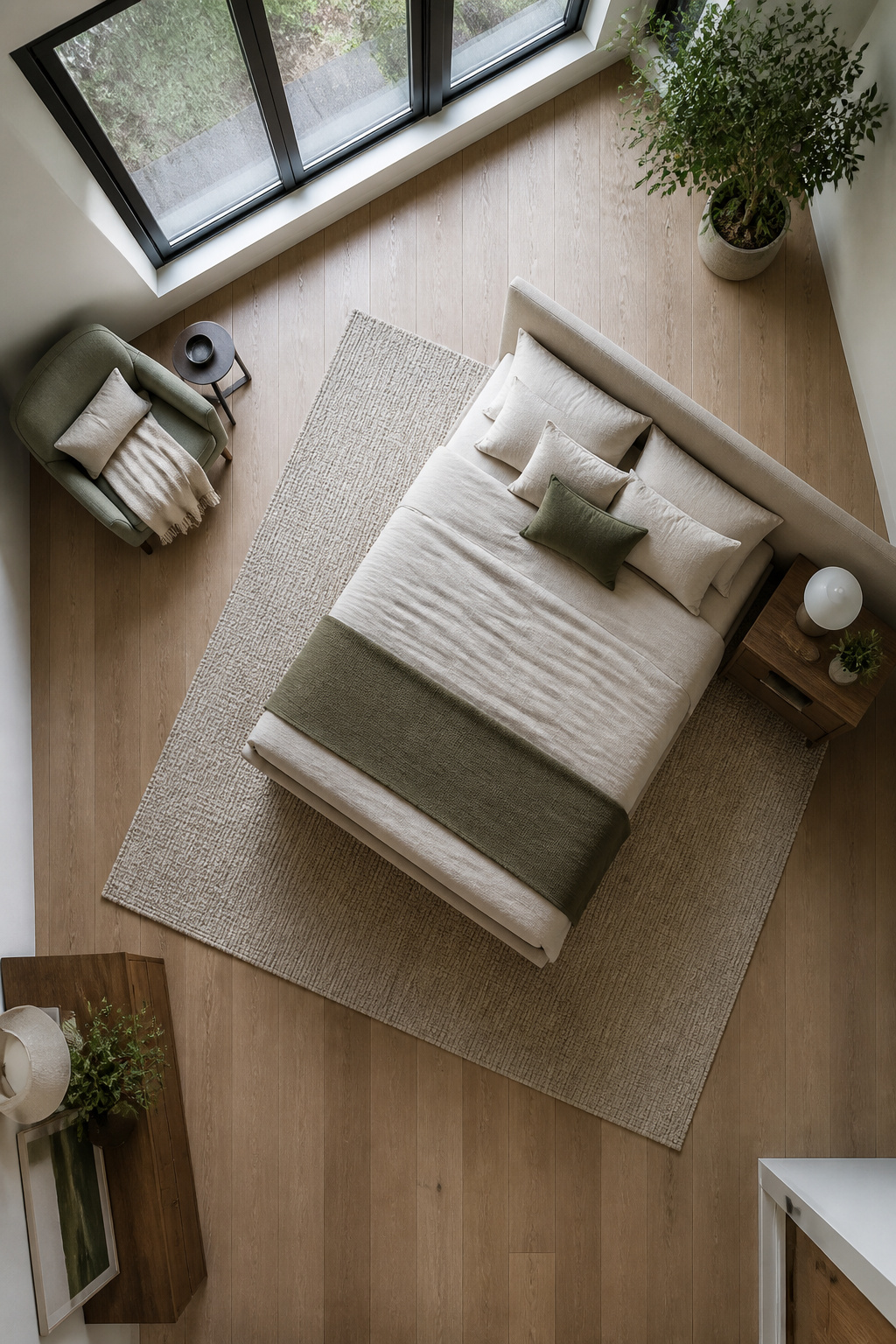
Most bedrooms start with the bed shoved against a wall because that is where the outlets are and because it feels safe. The trouble is that safe layout often wastes the best light or leaves you staring at a blank wall instead of the window you chose the room for. Floating the bed or angling it into a corner can fix that, but only if you have the clearance.
The measurement that ruins these experiments is walkway space around the frame. A wingback or thick upholstered headboard that reads compact in a showroom needs more breathing room than you think. Before you move anything, mark the footprint on the floor with painter’s tape and live with it for a morning. Check whether you can open closet doors, whether nightstands still fit, and whether the path to the bathroom feels tight at 2 a.m. In older homes, also watch for radiators, sloped ceilings, and off-center windows that pin you into fewer workable spots than the dimensions suggest.
If the tape test shows the bed swallowing the room, a lower rail or cleaner headboard profile buys back the inches without giving up the idea. Custom work can get you there, but so can swapping to a simpler frame from the start. The point is to make the bed fit the room, not force the room to work around the bed.
14. Go for Color Continuity
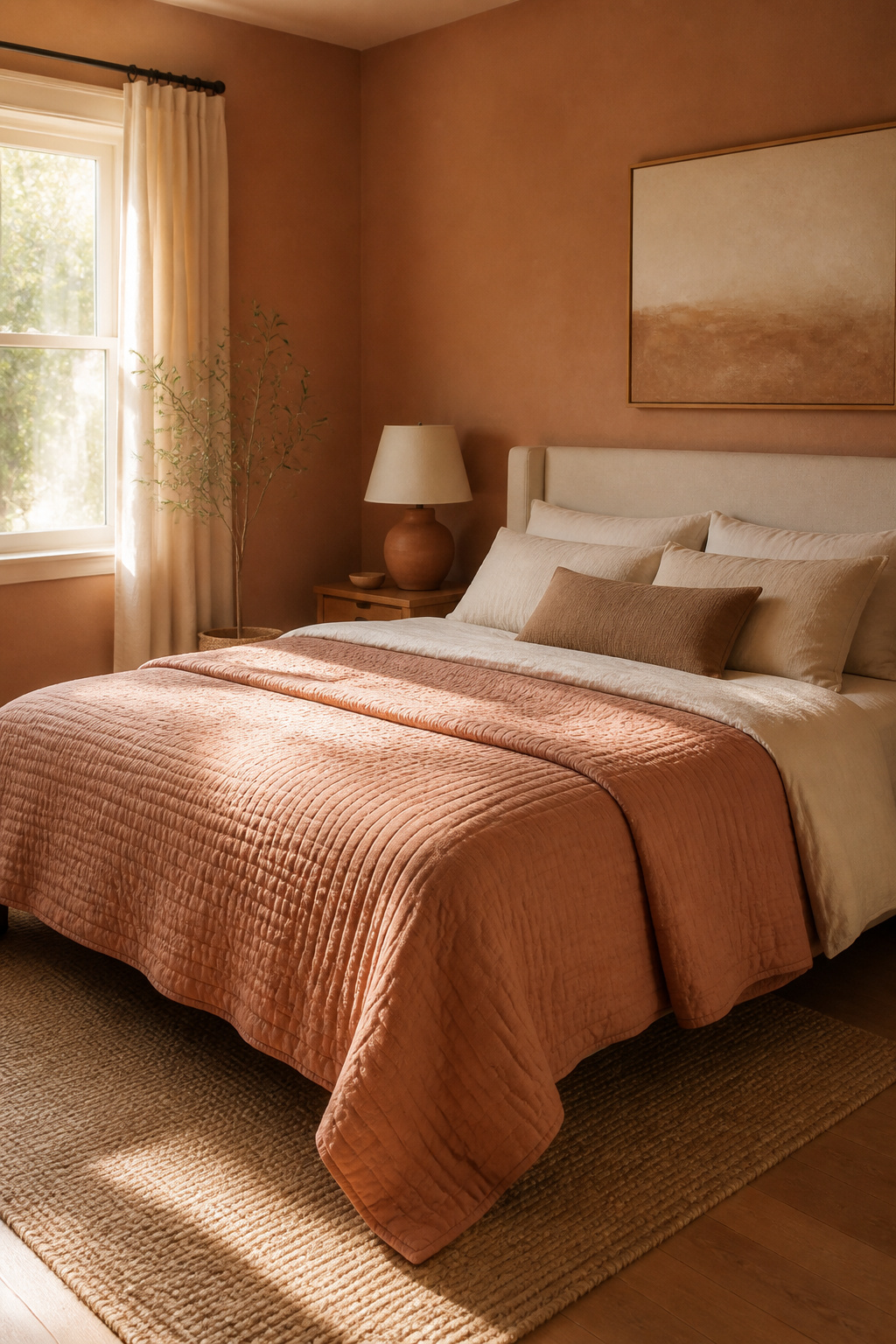
Carrying one color through paint, textiles, and small objects pulls a bedroom together faster than any single expensive piece. A warm clay on the walls, echoed in a throw pillow and a ceramic lamp base, makes the room feel considered rather than decorated.
The mistake is matching too perfectly. Same-color-everything reads flat, like a showroom set rather than a space someone actually lives in. You want variation in value and texture: the wall color lighter and quieter, the textile deeper and nubbier, the object smaller and glossier. Three to five steps apart on the same strip works.
Start with paint, since it covers the most surface and sets the temperature. Then find one textile, a curtain or a quilt, that picks up the same family without hunting for an exact match. Finish with one small object: a vase, a frame, a book stack. Stop there. The eye does the connecting for you.
15. Sync Up with Symmetry
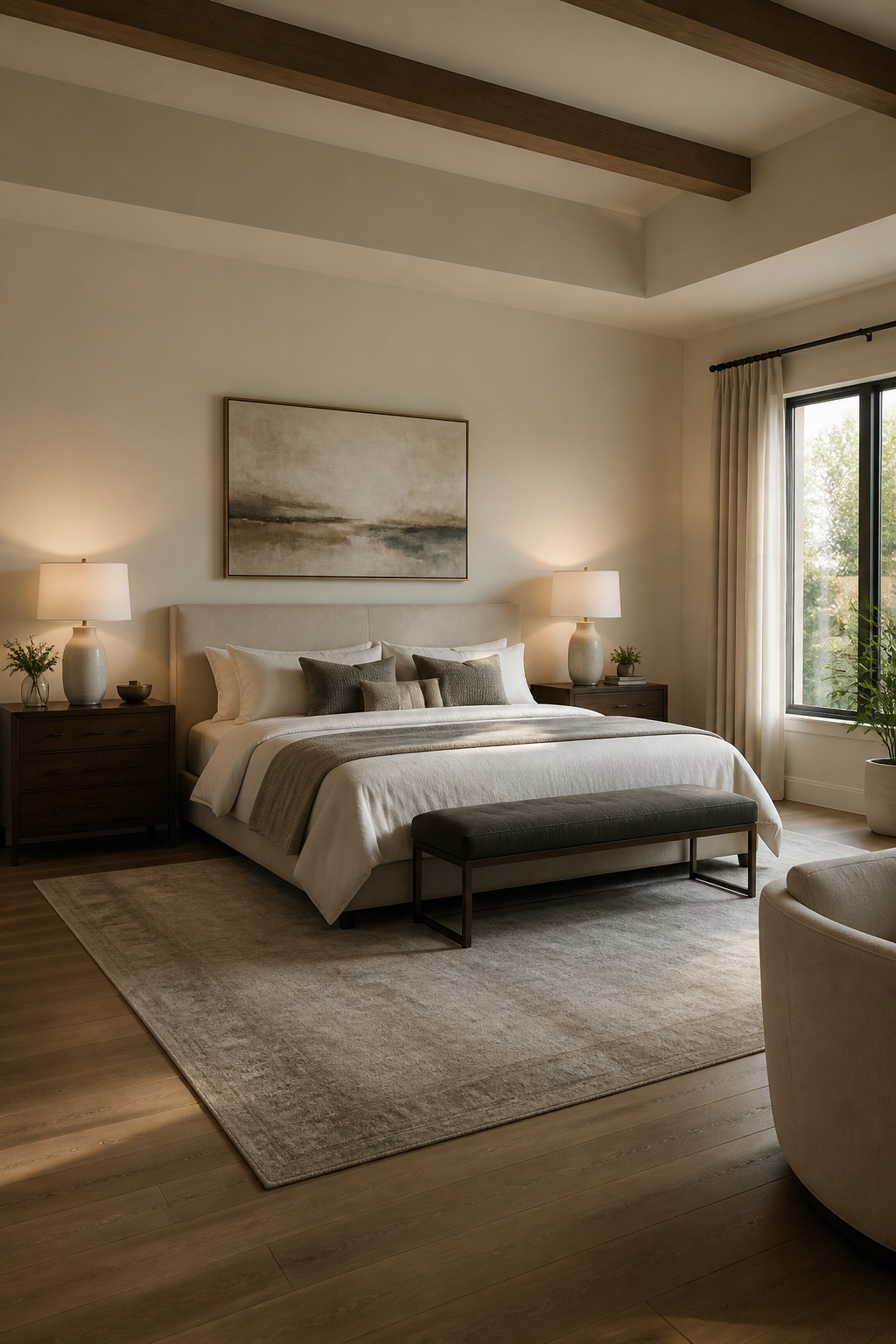
Symmetry quiets a room because your eye reads the balance before it hunts for detail. Start with matching nightstands and paired lamps on either side of the bed. That alone halves your decisions and pulls the space together faster than any single statement piece.
The lamps need scale. Tiny ones beside a tall upholstered headboard vanish visually and never throw enough usable light. Match the lamp height to the nightstand depth and the headboard scale all at once, not in stages, or the proportions slip.
Perfect mirroring is not the goal. Two nightstands in the same finish but with different drawer pulls, or lamps from the same line in slightly varied ceramic glazes, keep the calm without feeling staged. What breaks the effect is forcing twins onto a room that will not hold them. A window off-center to the bed, a door that steals wall space, a radiator on one side: these are fixed. Fight them and the room feels wrong in a way you cannot name. Work with them instead. Let the bed wall carry the symmetry and leave the asymmetrical wall alone, or balance the bed with nightstands and let the art stay intentionally offbeat. Art in particular tends to stiffen when you buy identical pieces. Two works from the same series, not the same print, keep the balance human.
Layered Lighting for Ambiance and Function
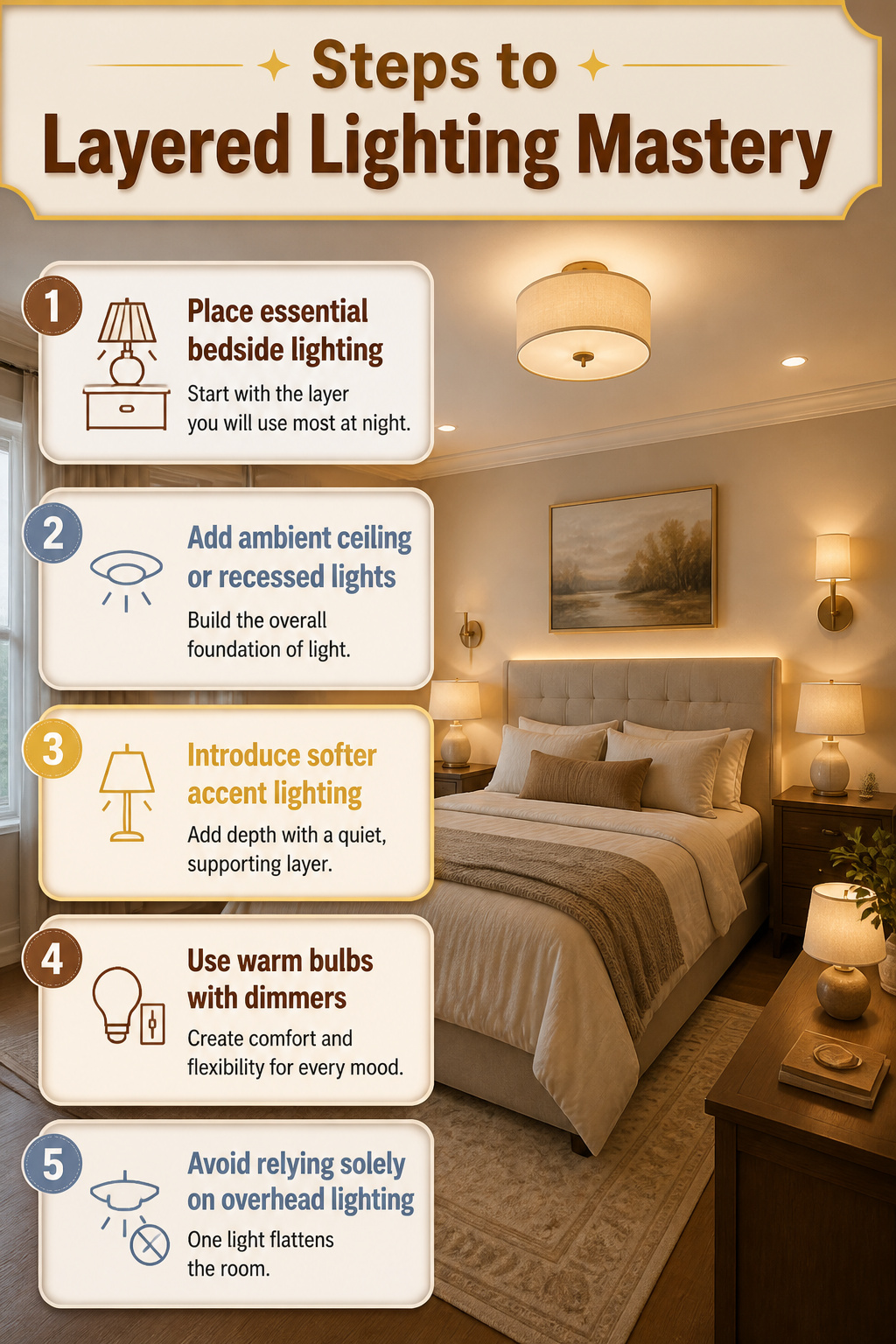
The fastest way to make a good bedroom feel disappointing is relying on one overhead light. A single ceiling fixture flattens the room and forces the same brightness for every task, from getting dressed to reading to winding down.
Layered lighting divides the job into three parts. Start with the layer you will use most at night, which is usually bedside lighting. Table lamps are forgiving and easy to update later. Wall sconces save nightstand space and help the room feel more intentional. Whichever you choose, place it for reading without glare.
After that, add ambient light, such as a ceiling fixture, recessed lighting, or a semi-flush mount. Warm bulbs tend to feel best in bedrooms, and dimmers are worth the small extra effort. Finish with one quieter layer, like a small accent lamp on a dresser or soft backlighting behind a headboard.
The common mistake is choosing style over adequate lumens for reading. A lamp that looks perfect but casts too little light becomes decorative clutter. The other mistake is stopping at the overhead fixture and calling the room done.
Cool Hues and Neutral Tones That Calm

Blue reads as restful because it actually lowers heart rate, which is why sleep studies keep pointing back to dusty blue and powder blue for walls. Green does something similar: soft sage gives a spa-like feel with natural wood and woven textures, while deep forest green pairs well with oak, walnut, brass, and cream bedding if you want more weight. Gray stays the most versatile of the three; pale grey, stone, and taupe layer with almost any textile you already own.
Neutrals do the coordination work for you. Warm options like soft beige, ivory, and sand let you swap throws seasonally without repainting. Cooler neutrals read more modern but can turn sterile under warm LED bulbs, so test paint in morning light, afternoon light, and lamp light before you commit. Bedrooms shift more across the day than people expect.
The mistake is choosing from a screen or chip alone. Flat paint on a whole wall exposes every undertone mismatch with your dresser, bed, and rug. Buy the sample pot, paint a two-foot square, and live with it for two days. The $5 saved by skipping this step costs a weekend of repainting.
Textiles and Accessories That Survive Real Use
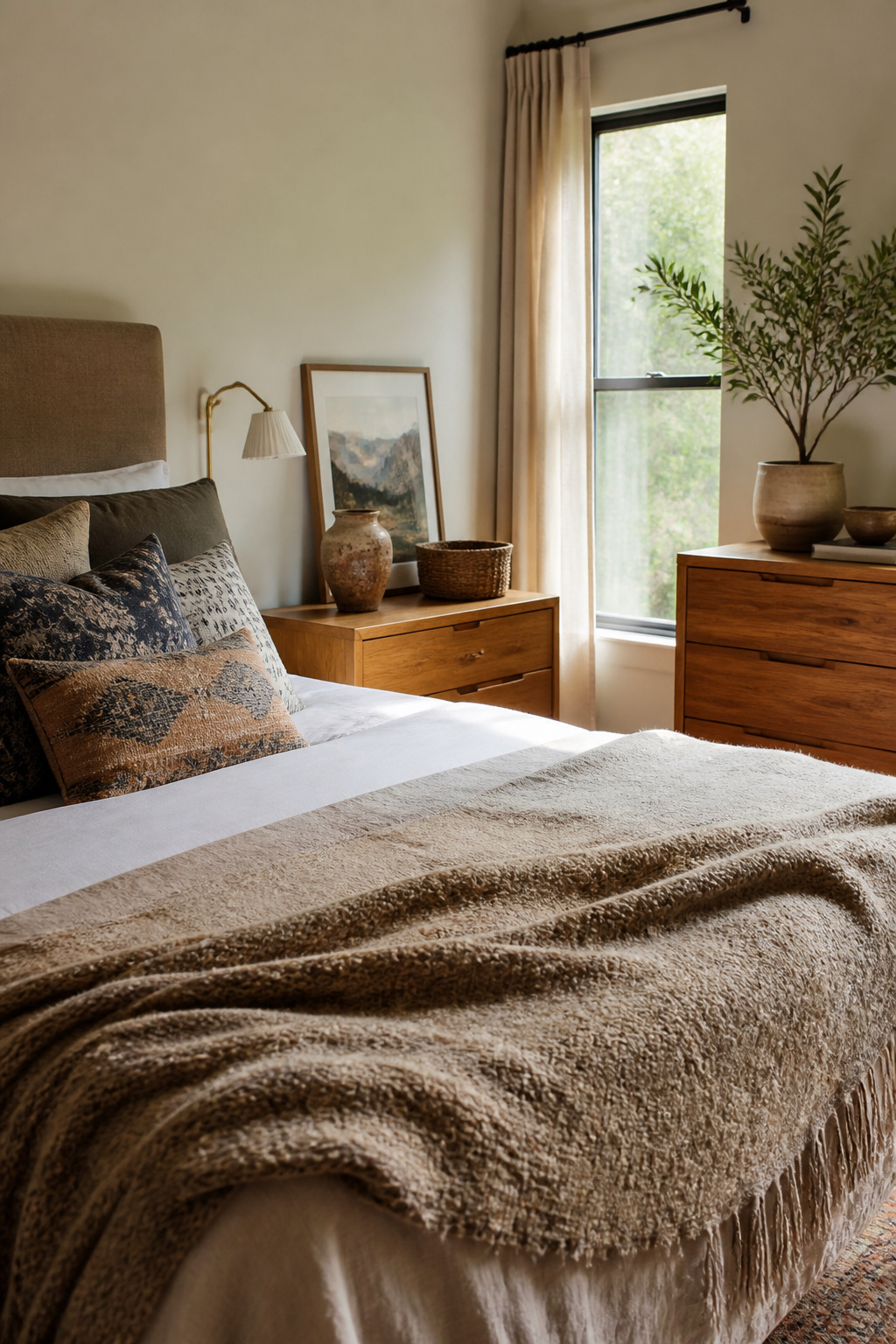
Linen, cotton, and wool are the textiles that actually hold up to daily bedroom use. Linen wrinkles, but that lived-in look is part of why it works, and it softens with each wash rather than pilling into fuzz. Cotton percale gives you a crisp, cool hand for less than linen, while a lightweight wool throw adds structure and warmth through seasons when a down comforter is too much.
The real mistake is buying matching sets. A bed dressed entirely from one retailer’s "collection" reads staged, not gathered. Buy the duvet cover from one source, the throw from a flea market, the pillows because the color reminded you of a trip. The result looks collected because it was.
Apply the same filter to accessories. Group objects in threes or fives for visual rhythm, but only if each item earns its spot. Sentimental value, a connection to a place you love, or a daily function: pick one. A clutter-free surface supports calm better than a shelf of objects you bought to fill space.
What to Skip When Space Is Tight
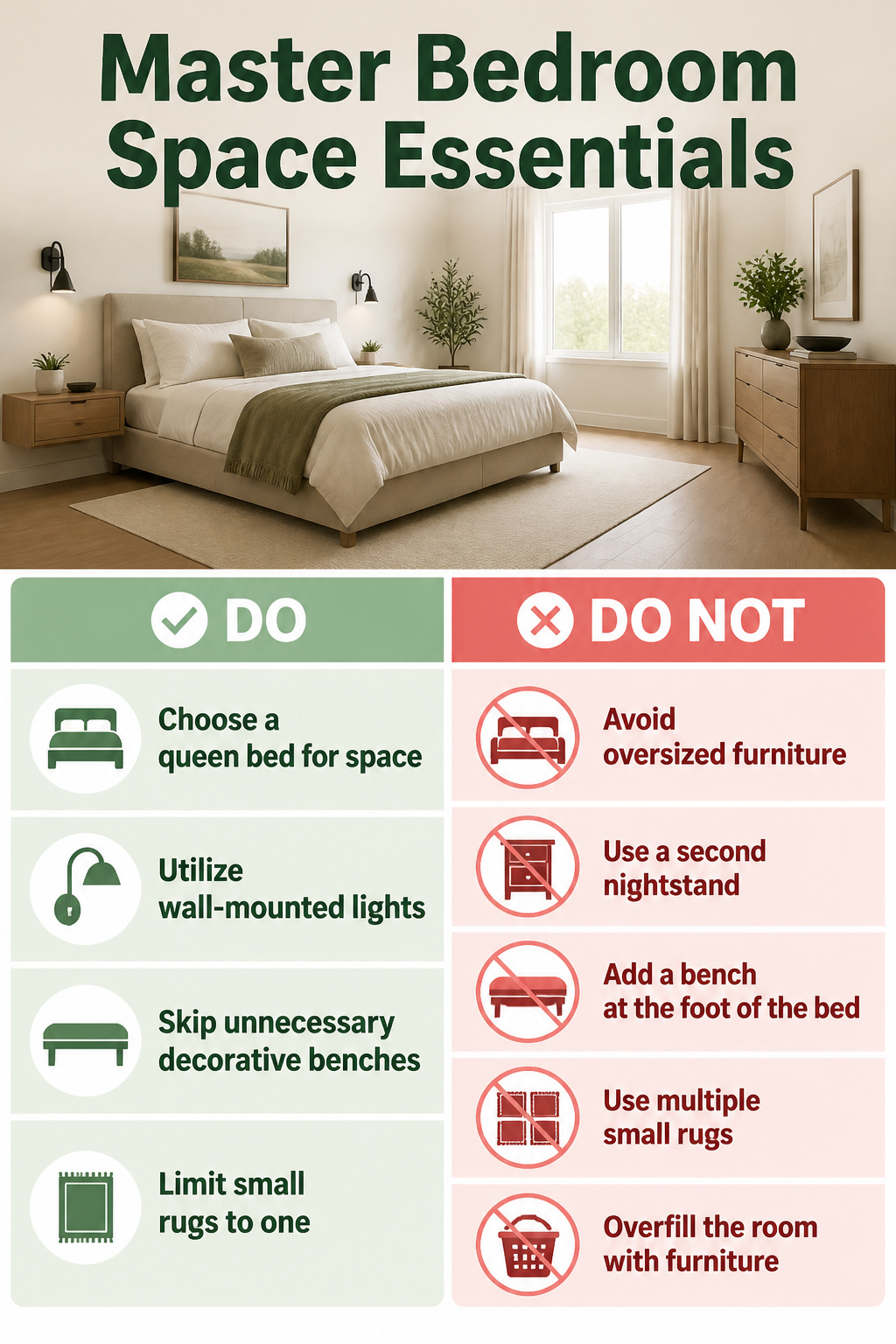
Oversized furniture is the fastest way to make a 10 by 12 foot master bedroom feel like a storage unit. A queen bed gives you thirty inches more walking space on each side than a king, and the difference between a full and a queen in that same room is whether you can open a dresser drawer without bruising your hip on the mattress edge.
Skip the bench at the foot of the bed. Skip the second nightstand if you sleep alone. Two small pieces of furniture eat more floor area than one piece sized correctly for the wall, and they multiply the visual noise. Wall-mounted reading lights replace lamps that crowd the surface. A single rug that stops short of the walls by a foot on every side reads as intentional; three small rugs read as clutter you still need to vacuum around.
If you cannot walk around the bed with the laundry basket, the room is already too full.
Frequently Asked Questions
What essential elements should every master bedroom have?
Every master bedroom needs a comfortable bed that anchors the room, layered lighting you can adjust for different times of day, and surfaces that stay soft to the eye and hand. The bed comes first because everything else arranges around it, and the lighting matters because one overhead fixture flattens the space and forces the same brightness for every task.
How can I create a calming atmosphere in my master bedroom?
Use cool hues like dusty blue, soft sage, or pale gray on walls and textiles, build in symmetry with matching nightstands and lamps, and add soft finishes such as linen bedding and brushed metal or ceramic accents. These choices lower visual temperature and let the eye rest instead of hunt.
What are some tips for layering lighting in a bedroom?
Start with bedside task lighting placed for reading without glare, then add ambient light from a ceiling fixture on a dimmer, and finish with one quieter accent layer such as a small lamp on a dresser or soft backlighting behind the headboard. Warm bulbs and dimmers help the room shift from morning dressing to evening wind-down.