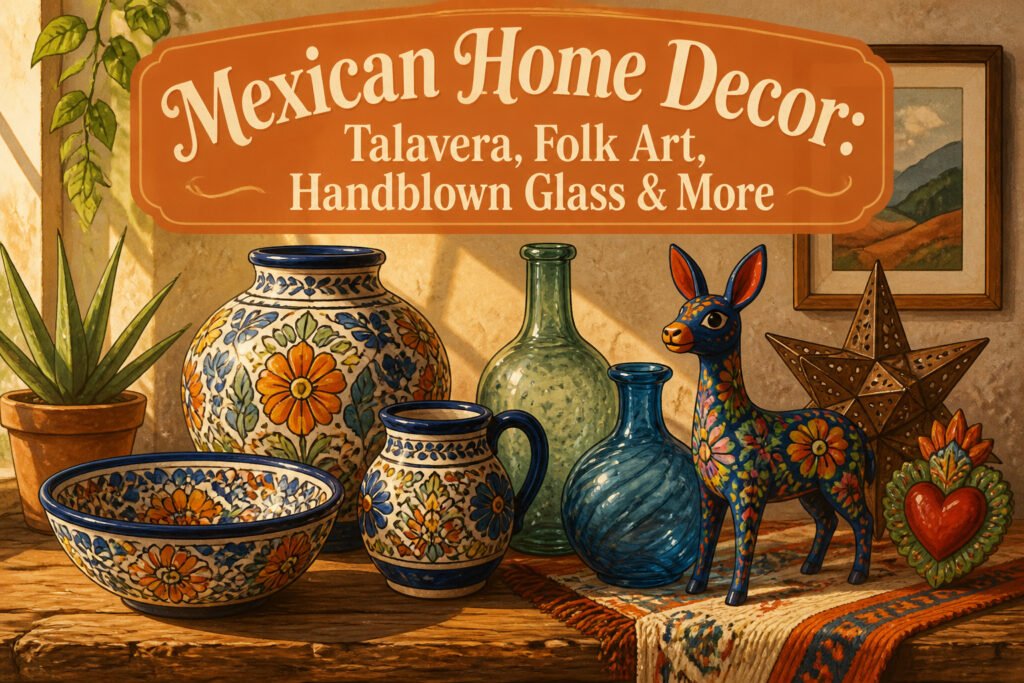
Mexican home decor is a mix of hand-painted pottery, solid pine furniture, handblown glass, and metalwork that carries the weight and irregularity of actual craft. The catch is knowing what survives daily use and what fades to dull pink within a year of dish soap and sunlight. Genuine Talavera runs $25 to $80, and the workshop stamp on the back separates it from the $8 lookalikes that chip like factory porcelain.
Talavera Pottery
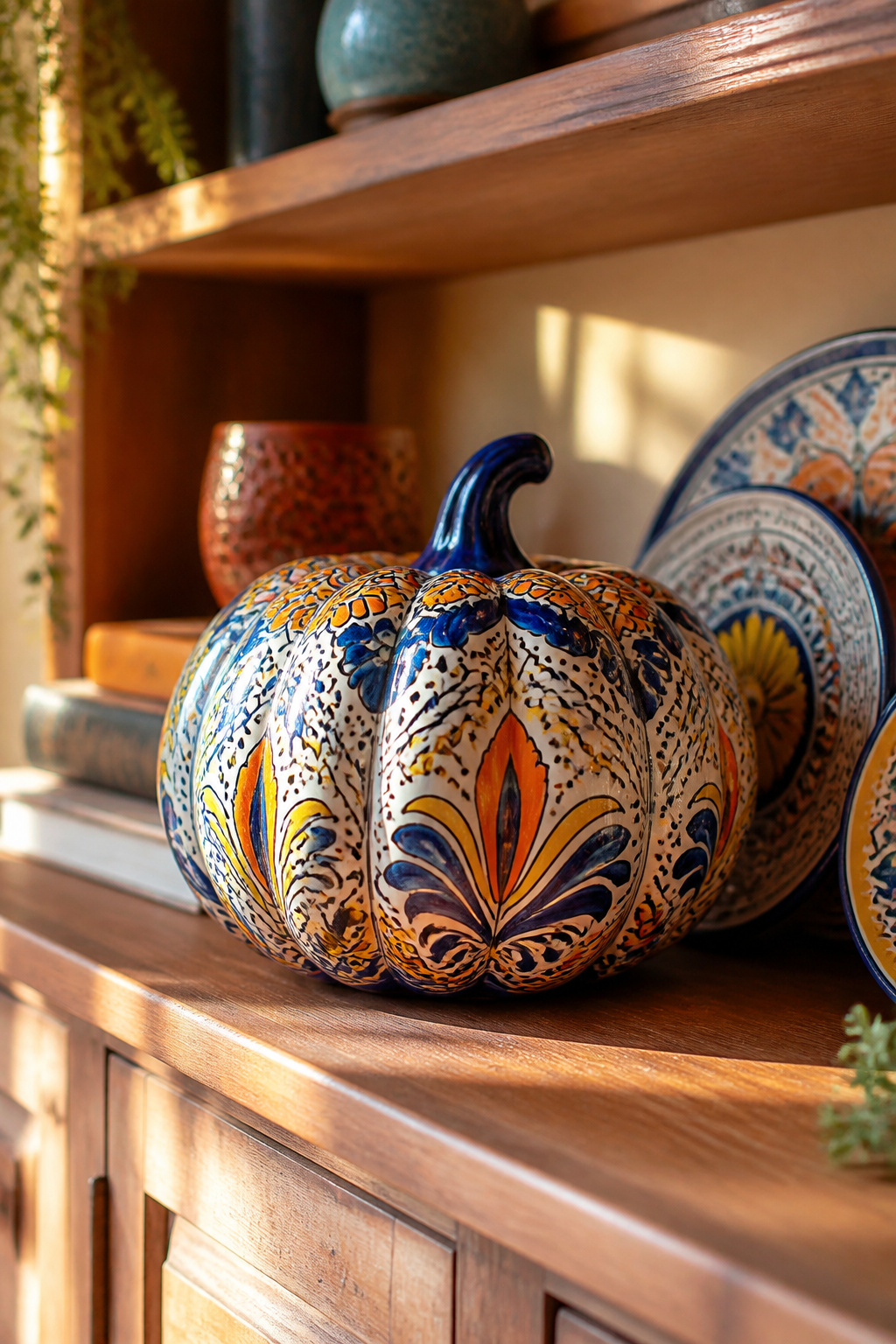
Talavera pottery carries a six-century tradition of hand-painted cobalt, yellow, and burnt orange on a milky white glaze. Each piece is shaped from local clay, fired once, painted by hand with mineral pigments, then fired again. The result is dinnerware and decorative objects that survive daily use without the fragility you might expect.
A Talavera pumpkin, or calabaza, sits heavy in the palm and works as a single accent on a bookshelf or grouped in threes along a windowsill. Renters treat these pieces as portable color: one large bowl on a kitchen counter anchors the whole room, and a set of small plates leans against the backsplash without installation or damage. Drop one on tile and it chips at the rim; it does not explode into shards like thin factory porcelain.
Genuine Talavera runs $25 to $80 depending on size and the complexity of the painting. The $8 ceramic lookalikes in discount stores carry similar patterns at first, but the glazes fade to dull pink and clay-gray within a year of dish soap and sunlight. The difference shows in the weight and the back of the piece, where workshop stamps and irregular brushstrokes mark the real thing.
Rustic Furniture
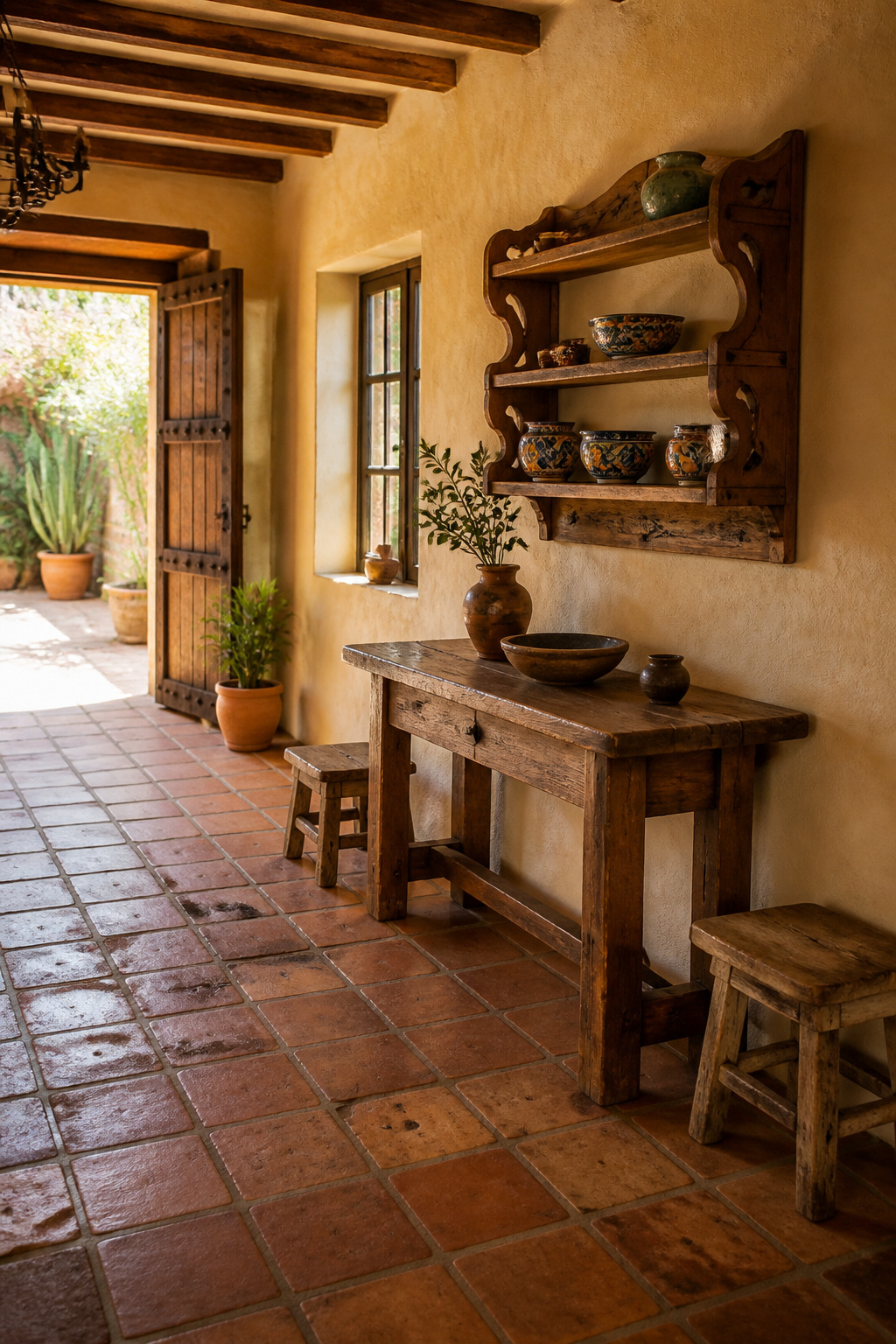
Pine furniture built in the Mexican rustic style carries weight you notice the moment two people try to angle it through a doorway. A console table in this tradition often runs 48–60 inches wide, stands about 30 inches tall, and stretches 16 inches front to back. The solid construction means you are not sliding that piece alone.
Renters work around this by choosing smaller profiles. A bench at the foot of a bed or a pair of stools tucked under a console delivers the same hand-planed, slightly uneven surface texture without the commitment. A slatted wood headboard leaned against the wall reads as Mexican rustic and leaves no holes. You get the warmth and the dark knots in the grain, and on move-out day it travels like a painting, not like furniture. The trick is finding pieces where the craft shows in the surface, not the scale.
Day of the Dead Decorations

The skulls and Catrina figurines draw people in because the color palette refuses to mourn. Hot pink, cobalt, gold leaf on bone white; the whole point is that death is still life-adjacent. You do not need the full ofrenda with marigold paths and bread offerings to bring that energy into a room.
Most buyers stall on the storage math. A 12-inch ceramic Catrina needs a dedicated box, padded, labeled, and slid onto a closet shelf. Paper papel picado folds flat into a manila folder and takes no space at all. Small ceramic skulls clatter in drawers and chip each other unless you corral them in a shoebox with a scrap of towel.
The weekend placement is one shelf, one figurine, one string of banners. Pick the shelf at eye level where you already pause, replace whatever generic object lives there now, hang the papel picado above or beside so the Catrina is framed but not crowded. The skulls work grouped on a windowsill or scattered as single paperweights; choose one or the other, not both in the same sightline. An hour, maybe ninety minutes if you measure twice for the nail. Come November first, the whole arrangement comes down in ten minutes and the box goes back on the shelf until next year.
Metal Wall Art

Recycled metal wall art in the Mexican style stacks together lizards, suns, cacti, and Day of the Dead skeletons from flattened oil drums and scrap sheet. The color comes from enamel or powder coat over the cut steel, and the outlines read clearly from across a room. A 24-inch sun weighs 4–6 pounds, so hanging one takes a stud or a toggle bolt. A nail in drywall will pull loose within a week, and adhesive hooks are not in the conversation.
The finish on the front is usually sealed, but the cut edges are raw steel. In a humid bathroom, those edges will spot with rust after a season or two. If you are renting and want the look without the holes, lean a smaller piece on a mantel or shelf. An 8-inch gecko or a pair of nested birds sits well against a wall and moves when you do.
Handblown Glassware
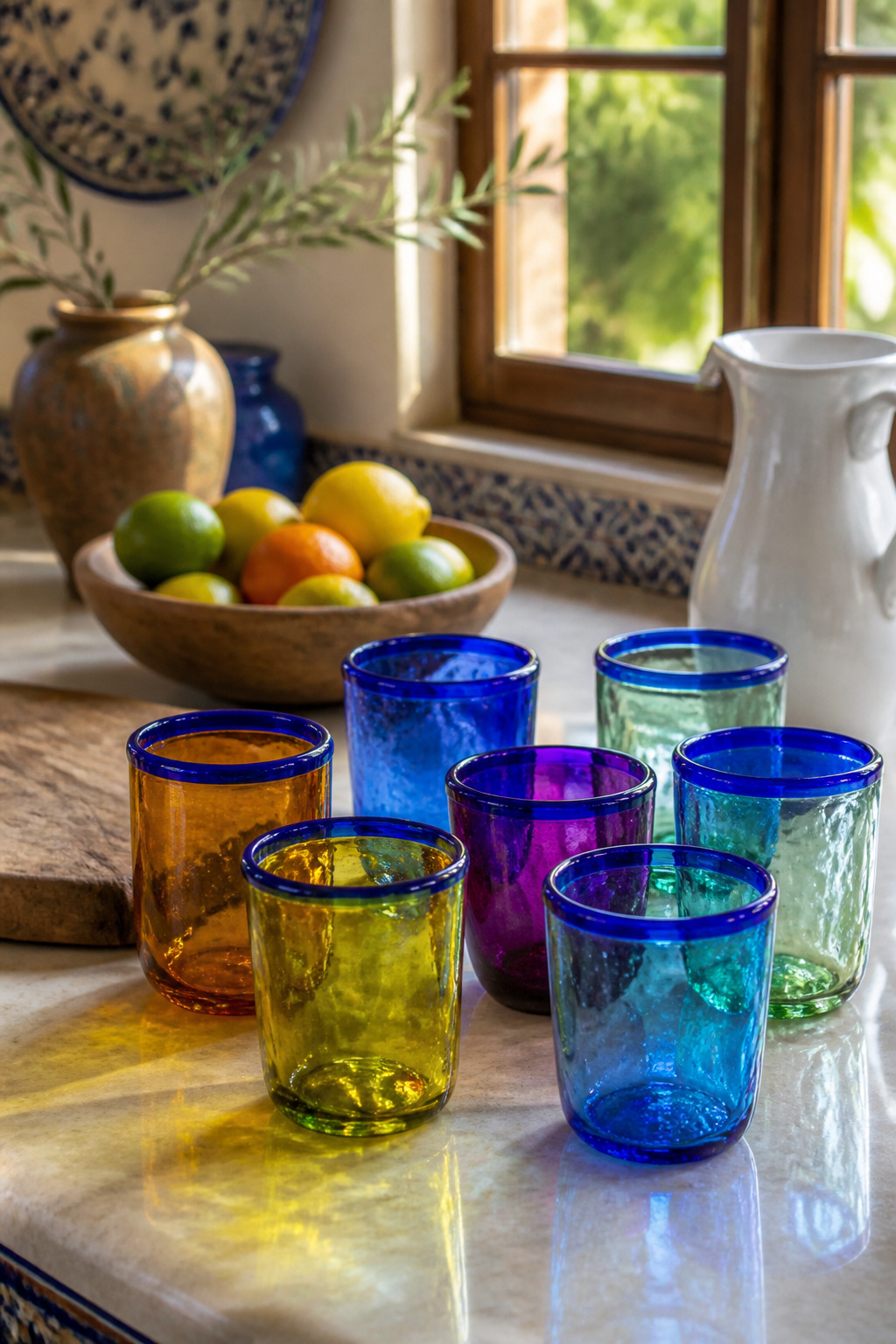
Handblown glassware from Mexico carries the small flaws that prove it was shaped by a human breath. You will see a tiny bubble trapped in the wall, a slight waviness in the rim, glass that runs thicker on one side than the other. Machine-made pieces come out identical and dead-flat; these signs are what you want.
The color sits in the glass itself, not painted on, so it holds up to use but not forever. Dishwasher heat fades the bright rims over time no matter what you do; top-rack placement only slows it down. Hand washing keeps the color longer and takes two minutes.
Drinking glasses run $35–60 for a set of six tumblers, and a single large vase lands between $40 and $90. If you are near the source, factory seconds sell for roughly half that. The wobble is slight, the bubble maybe a little larger, and the piece still holds water.
Ristras

Dried chile ristras start out loud, almost too red, then settle into something quieter. Direct sun bleeds the color out fast: six months and that bright red turns to dusty rose, a year and you are looking at brown. Ceramic versions skip the fading but still collect dust in every crevice between the peppers. Neither one is a lifetime piece. A 12-inch string looks good for about two years, then it becomes background texture, something you stop noticing until a guest points it out.
The kitchen placement catches people. Above the stove looks right, but grease rises, coats the dried peppers, and turns them sticky and dark in months, not years. The practical spot is a covered porch or any wall that stays clear of cooking. You still get the color, and you do not spend a weekend trying to clean something that was never meant to be cleaned. A covered porch beats the kitchen wall every time.
Mexican Rugs
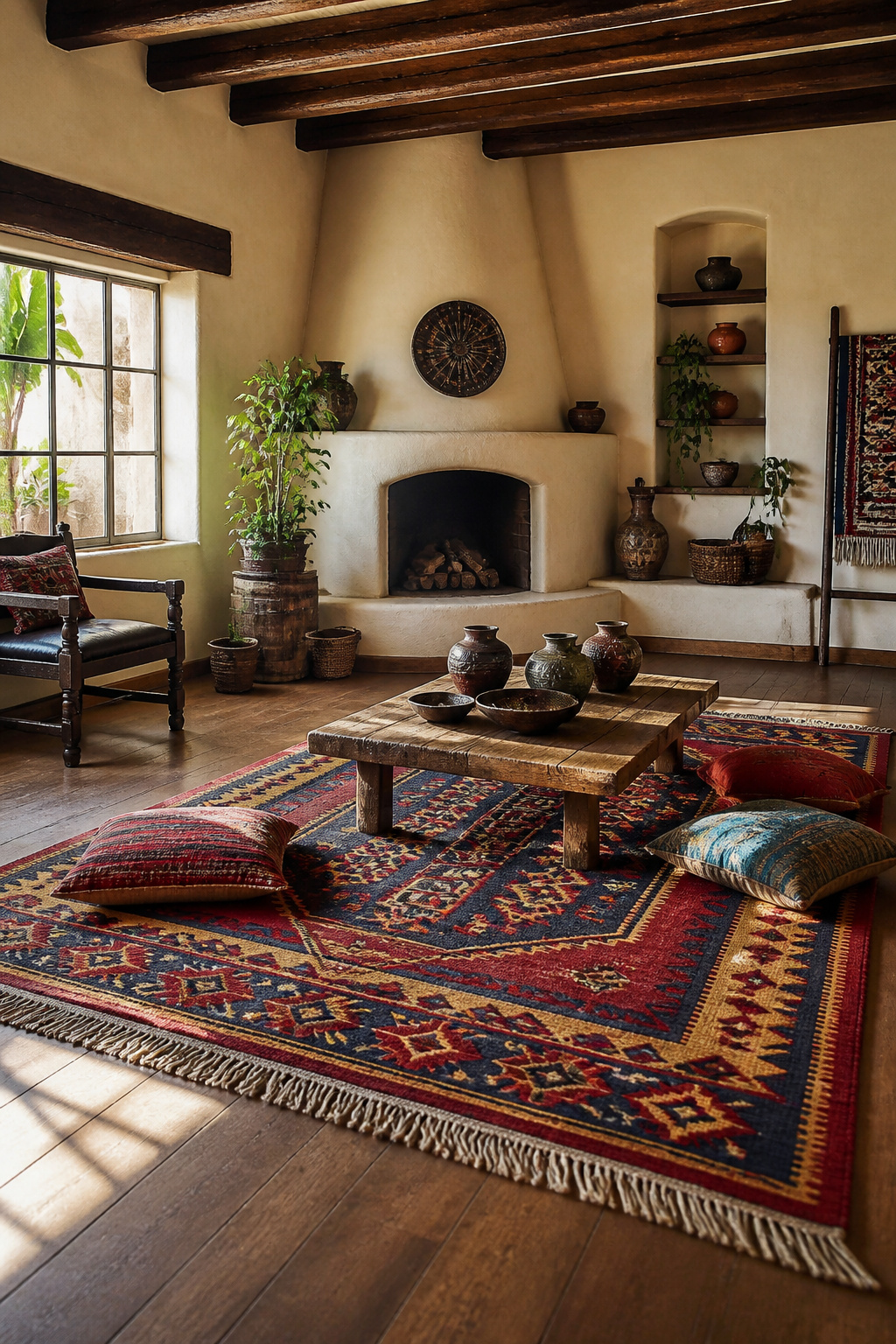
Hand-woven wool rugs from Oaxaca run $80 to $250 and carry real weight. The thick weave grips hardwood better than the thin $30 machine copies, which slide around and shed fibers for months. Size them to the job: a 2×3 foot piece works at the kitchen sink, 4×6 sits right under a coffee table, and runners fit narrow halls without crowding the walking line.
The cleaning routine is simple but not forgiving. Shake them out weekly outdoors, and budget for professional cleaning every two years. Skip the hose. Red dyes in these rugs will run if you try washing them yourself, and a soaked wool rug takes days to dry and starts to smell.
Decorative Mirrors
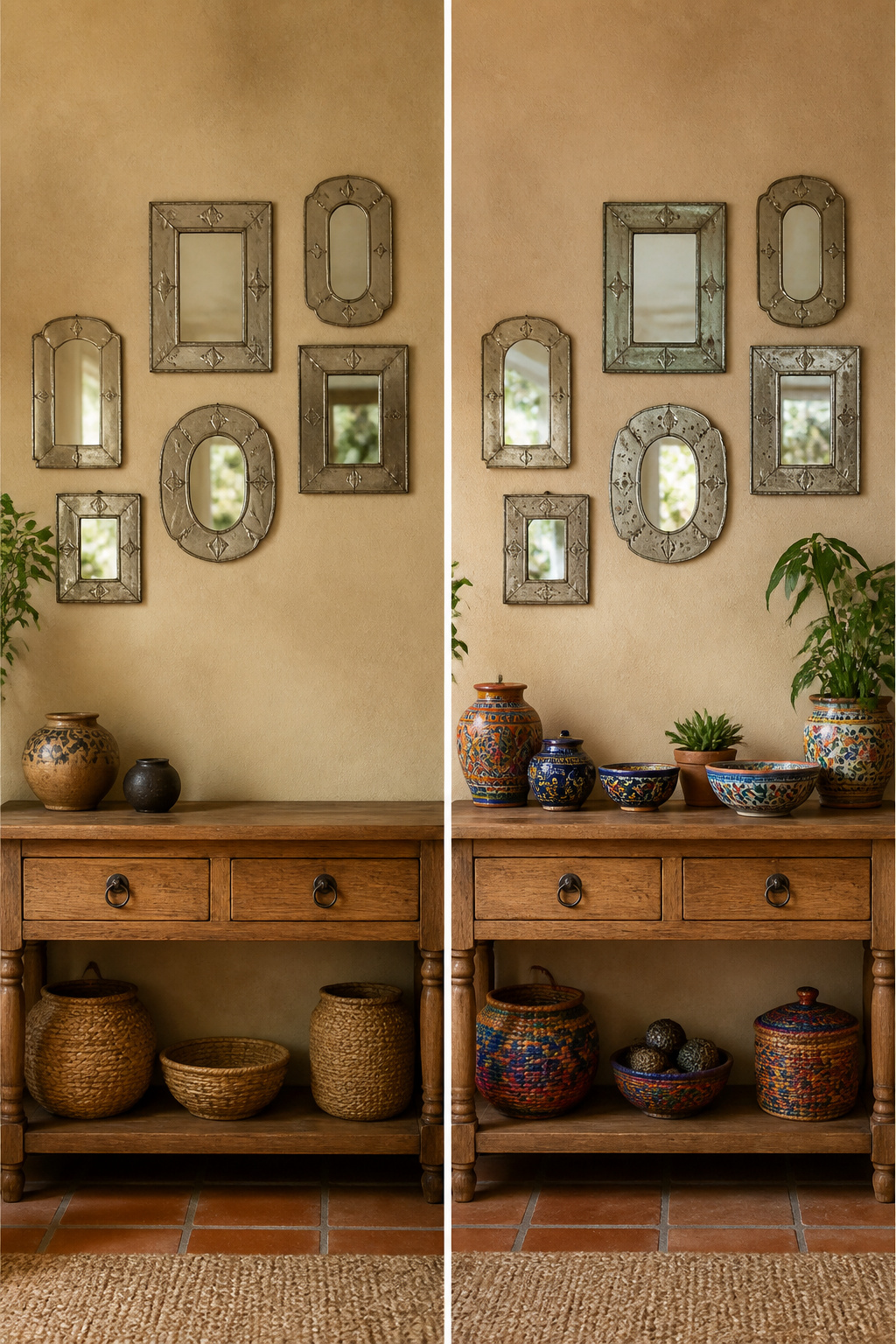
Tin-framed mirrors in Mexican home decor come in at under 3 pounds for a 16-inch piece, which means a standard picture hook handles the job. Painted wooden frames of the same size run 8–12 pounds and need proper wall hardware, so check what your lease allows before you commit.
For placement, one large mirror works as a statement over a console or fireplace. A grouped wall of small ones reads as folk art installation and moves with you more easily, which matters if you rent.
The wooden mirrors chip at corners during shipping more often than sellers like to admit. Inspect yours before you sign for delivery, or photograph the damage on the spot if the driver waits. Tin frames travel better, but their finish dents if something heavy shifts against the box.
Candle Holders
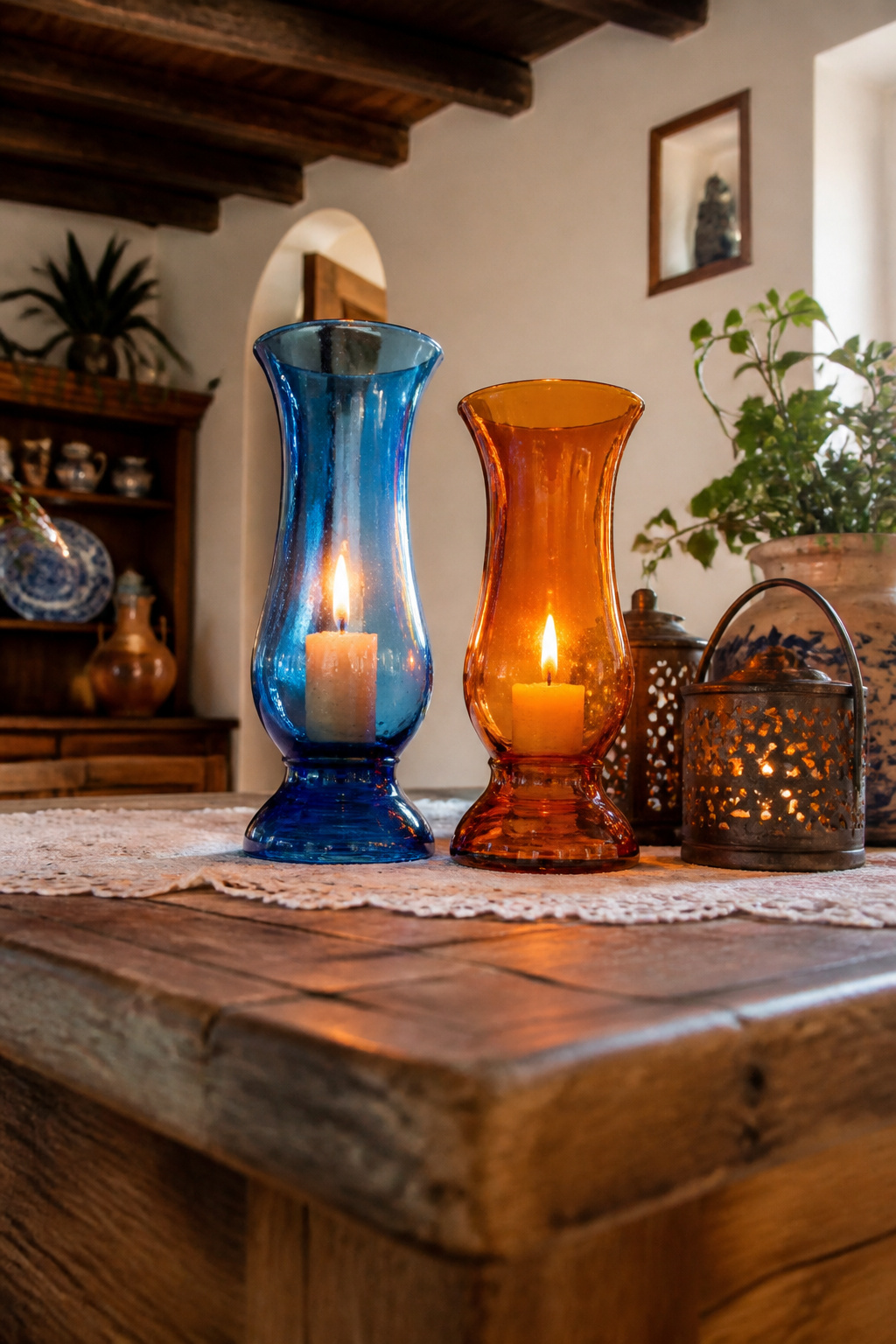
Punched tin and handblown glass are the two candle holder styles worth knowing, and they work completely differently. Tin with its cutout patterns throws light against the wall in shapes; glass changes how you see the flame itself, especially the deep cobalt and amber pieces.
Votive size is standard on paper, but Mexican holders vary enough that store-bought votives either rattle loose or jam tight. Buy the slightly smaller 10-hour votives by the bag; they drop in cleanly and burn through without wedging.
Practical limits matter with both. Punched tin gets hot enough to scorch a wood table, so set it on a trivet or a thick coaster, not a folded napkin. The glass ones, especially the handblown, will crack if water hits them while they are still warm from a flame. Blow them out and let them cool before you wipe the table or move them to the sink.
Folk Art
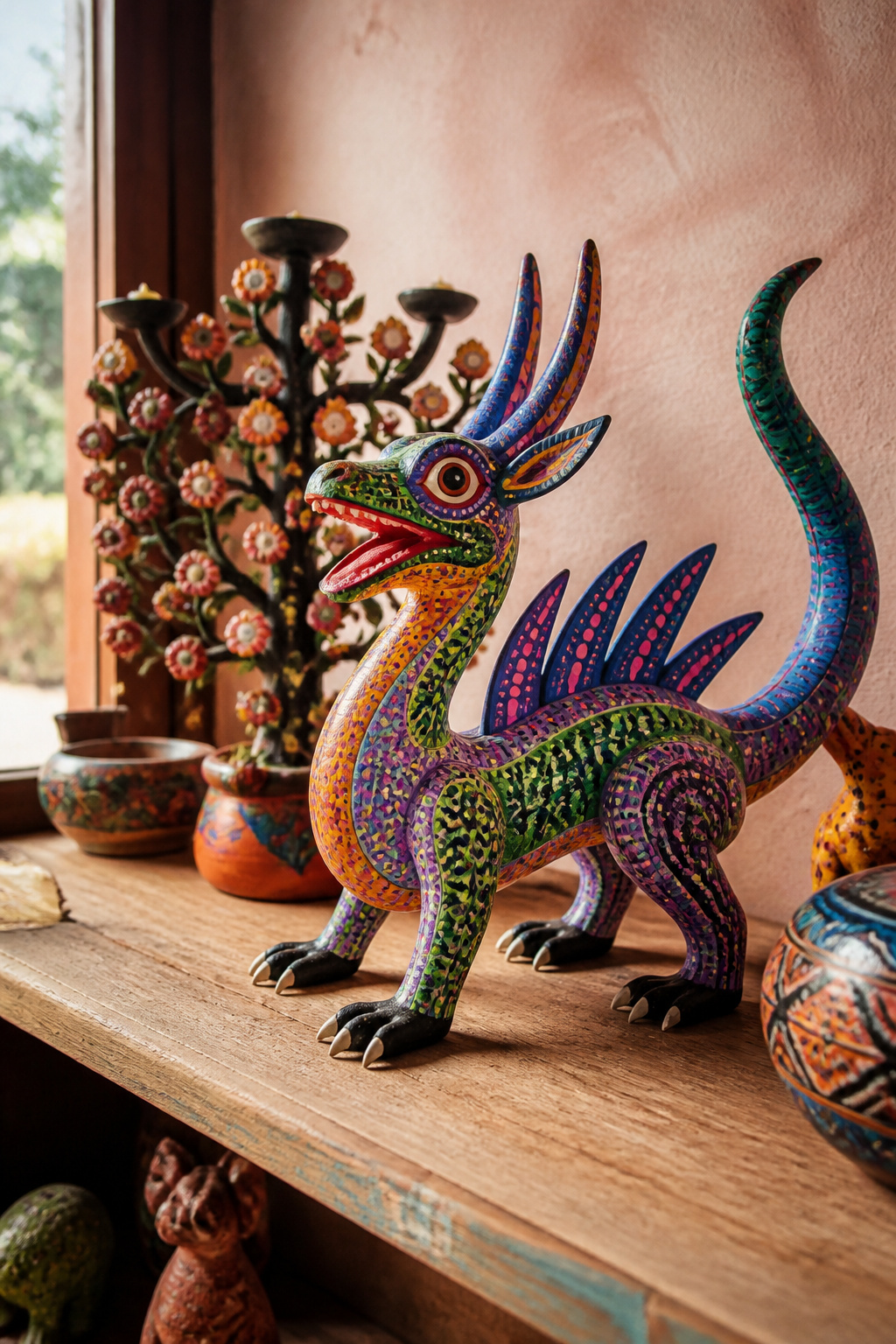
Mexican folk art covers carved wooden alebrijes, tree of life candelabras, and painted figures from towns like Ocumicho or La Union. Each piece is hand-shaped and hand-painted, which means no two are ever identical. That one-of-a-kind quality is both the appeal and the trap. You pick up a bright alebrije in Oaxaca, then a candelabra in Metepec, and suddenly your shelf holds a mismatched set that somehow looks deliberate. It works, but only if you give each piece room to breathe.
A 10-inch alebrije needs 12 inches of height clearance minimum. Crowd it between books and it reads as clutter instead of sculpture. Plan for one piece per shelf section, or mount a narrow floating ledge where a single figure becomes the whole point.
Most of these carvings carry acrylic paint, not lacquer, so a damp cloth will streak the finish. Dust with a dry microfiber and leave it at that. The colors are already saturated enough to catch light without any polish.
Mexican Market Bags
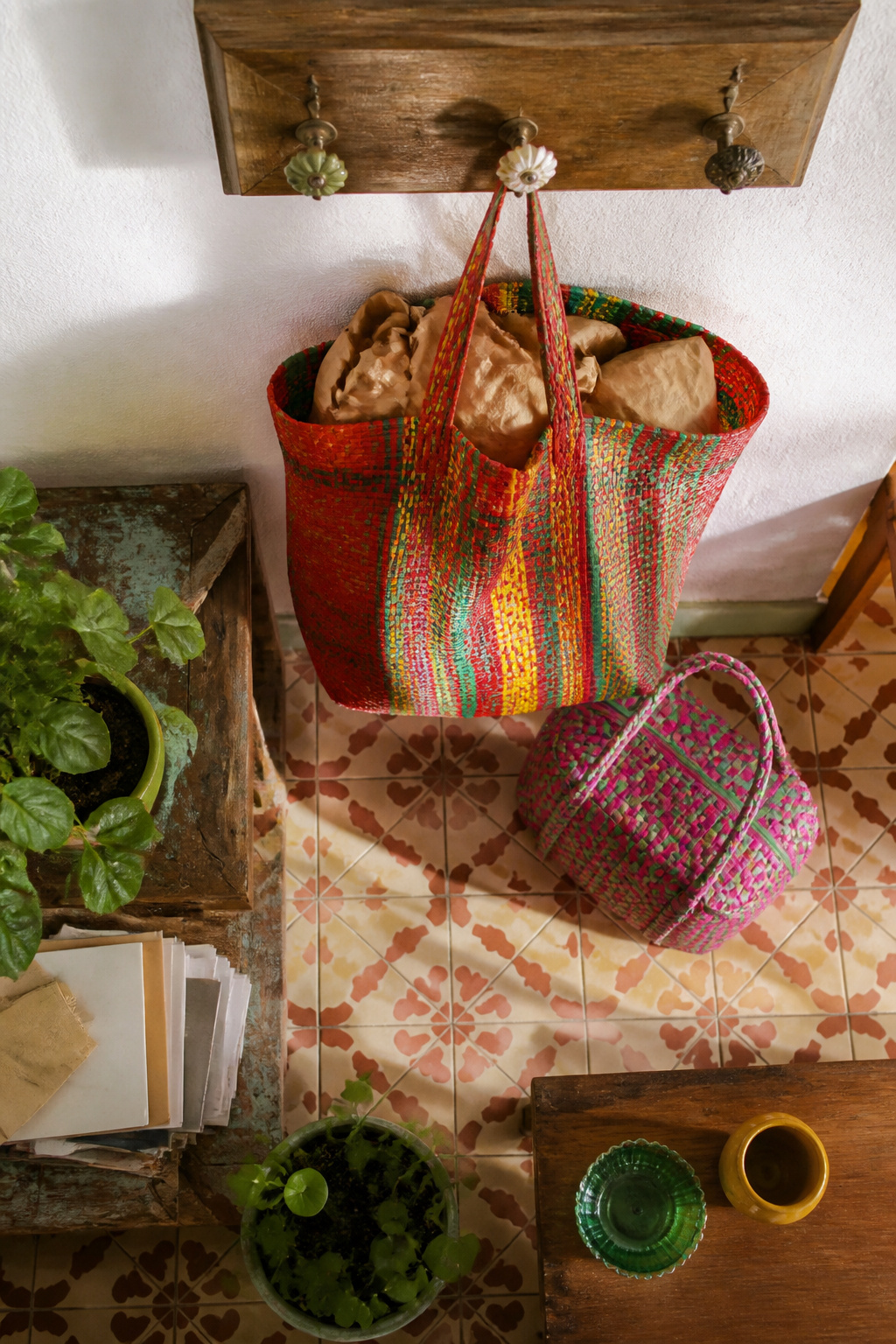
The small woven market bags fit a lunch or a few pool toys; the large ones swallow a weekend grocery run and hang on a hook by the door as color even when empty. Woven plastic frays at the handles after roughly two years of regular use, while fabric versions pick up stains from produce or damp packaging. Neither failure is sudden enough to strand you at the store, but it is worth checking the handle weave before loading up on milk.
For decor, stuff the bag with crumpled packing paper and hang it on a wall peg, or clip the mouth open on a shelf to hold mail or gloves. The plastic ones hold their shape better for this; fabric slumps unless you fill it nearly full. A bag with a busy pattern reads as texture from across the room, so you can hang it where a print would compete.
Lighting Fixtures

Punched tin stars are the piece people picture first, and for good reason: the cutouts throw leaf or geometric shadows across the ceiling and walls once the bulb goes on. That patterned shadow is the entire point, so do not expect to read by one. The light that escapes is ambient, moody, and fairly dim. If you need the room to function after dark, plan on a second source.
Most authentic fixtures are built for hardwiring, which puts them out of reach for renters. The workaround is a plug-in swag kit, or a table lamp with a punched tin shade hung from a ceiling hook. Either gets the look without the electrician.
Heat matters with the metal. Tin fixtures run warm, so an LED bulb is non-negotiable; incandescent heat can discolor the finish over time and will make a small bedroom uncomfortably hot by summer. Ceramic pendants, common in the same Talavera styles as the pottery, stay cooler but weigh more. Check that your ceiling box or hook is rated for the load before you hang one, especially on swag.
Kitchen Canisters
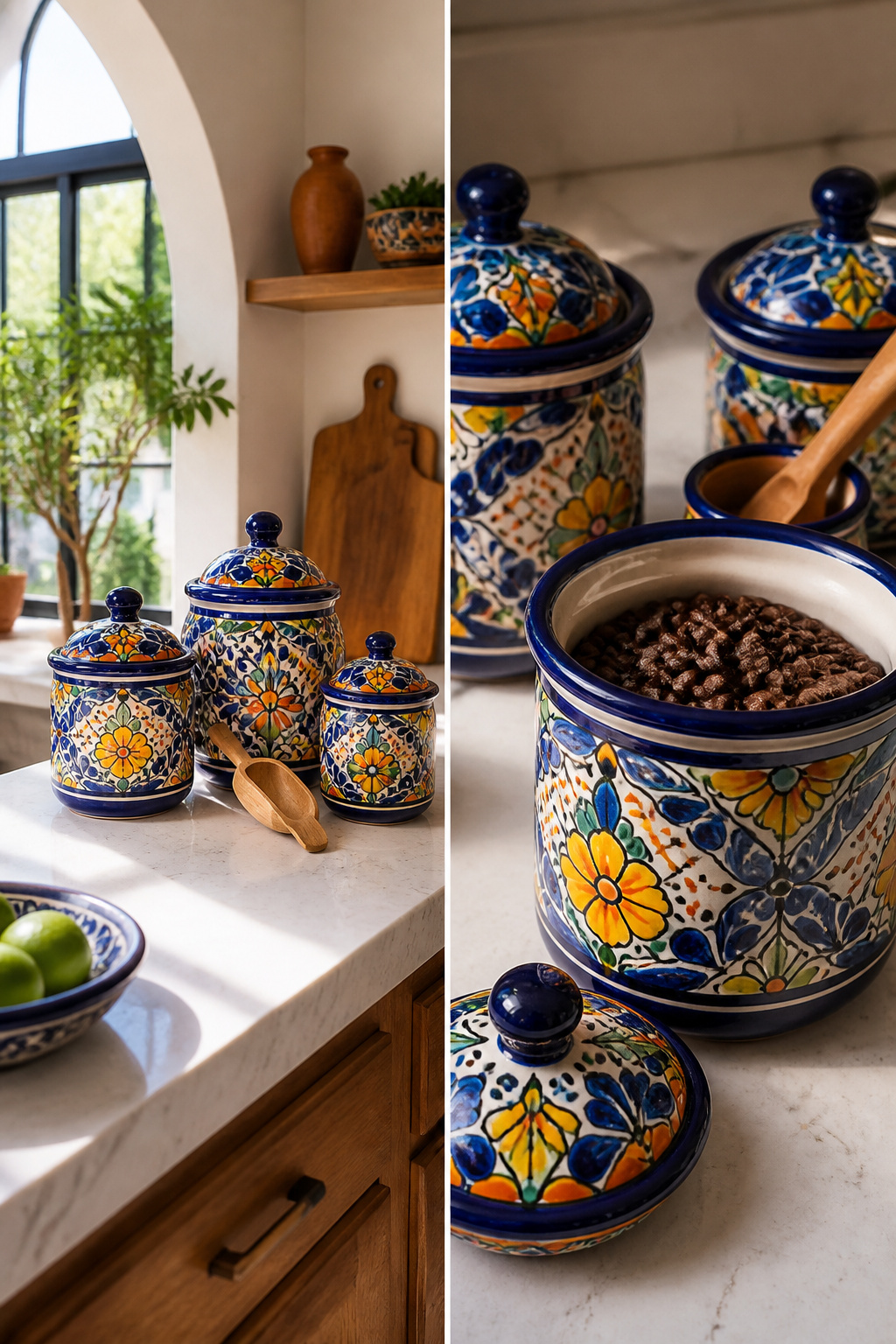
Talavera canisters bring color to a kitchen, but the lids are the detail that determines whether you actually use them. Most decorative sets run loose, which works fine for flour and sugar you burn through weekly, yet coffee goes stale fast under a lid that does not seat tight. Check the fit in person if you can: lift by the knob and see if the base drops.
A three-piece set typically sizes at 6, 8, and 10 inches tall, with the largest holding roughly five pounds of flour. That middle canister ends up the workhorse for sugar or rice. The ceramic rim chips when a metal scoop knocks it, so switch to wood or plastic and the edge stays clean for years. Plain ceramic canisters without the painted glaze cost less and often seal better, though they give up the pattern. For renters, either one reads as Mexican home decor against a white counter, and both move with you.
Decorative Tiles

Talavera tiles hit that sweet spot between permanent install and something you can pack up when the lease ends. The standard size is 4×4 inches, which matters more than you’d think; a 6×6 pattern looks dramatic until one cracks and you realize half the suppliers stock nothing but the smaller square. Keep a few spares from the original batch regardless.
The installed route means grout, and grout in a kitchen means sealing it, or you are scrubbing salsa stains out of porous lines every Saturday. Budget a full weekend: tape, mortar, grout, sealer, and the 24-hour dry windows between steps. Renters usually bail on that timeline and just set four or six loose tiles on the counter as trivets and coasters. Same heat resistance, zero commitment, and you can rearrange them when the mood shifts. The glaze handles a hot Dutch oven straight from the burner, which is the test that melts cheap ceramic coasters.
Plain decorative tiles without the Talavera patterning cost less and stack easier in a drawer, though they read more "subway station" than "Oaxaca market." Your call on whether the color story is worth the upcharge.
Milagros Charms

Milagros are small tin or metal charms, typically half an inch to two inches long, shaped like legs, hearts, hands, animals, or houses. Traditionally someone pins them to an altar cloth or sews them onto fabric as a wish or prayer, the way you might light a candle for a specific intention. A leg charm might mean running to one person, dancing to another, or steady recovery to someone else, and that personal meaning is the whole point.
For wall decor, a group of about twenty fits an 8×10 frame with room to breathe, or you can scatter a handful across a shallow shadow box so they catch light at different angles. A small brass tray on a side table works too, the charms piled loosely so people pick them up and ask. The metal is thin and the colors are usually simple, bright enamel or bare tin, so they read as folk art rather than jewelry.
Because each piece carries its own story, buying them in sets of mixed shapes costs less than choosing individually, and the randomness usually gives you a better range anyway. The frames themselves need no depth beyond a standard shadow box; these are nearly flat.
Wooden Bowls

Turned wood bowls from Mexican markets usually come in pine or a local hardwood, and the price is low enough that you can buy one without overthinking it. The catch is the care. Mineral oil once a month, never the dishwasher, and the wood will still darken and check slightly over time no matter what you do. That is not a flaw; it is how wood lives in dry air.
Sizing is straightforward. An 8-inch bowl works for individual serving, a 12-inch holds its own as a centerpiece, and 16-inch and up is where you store fruit that sits out on the counter. Go bigger than you think for fruit; a mound of limes needs room to breathe.
The crack question comes up eventually. A small check running with the grain is normal and does not leak. A crack running across the bottom means the bowl has dried out. Soak it in mineral oil overnight, and if the crack stays open, retire it to decor-only use. It still looks good on a shelf; it just cannot hold soup anymore.
What Mexican Home Decor Means
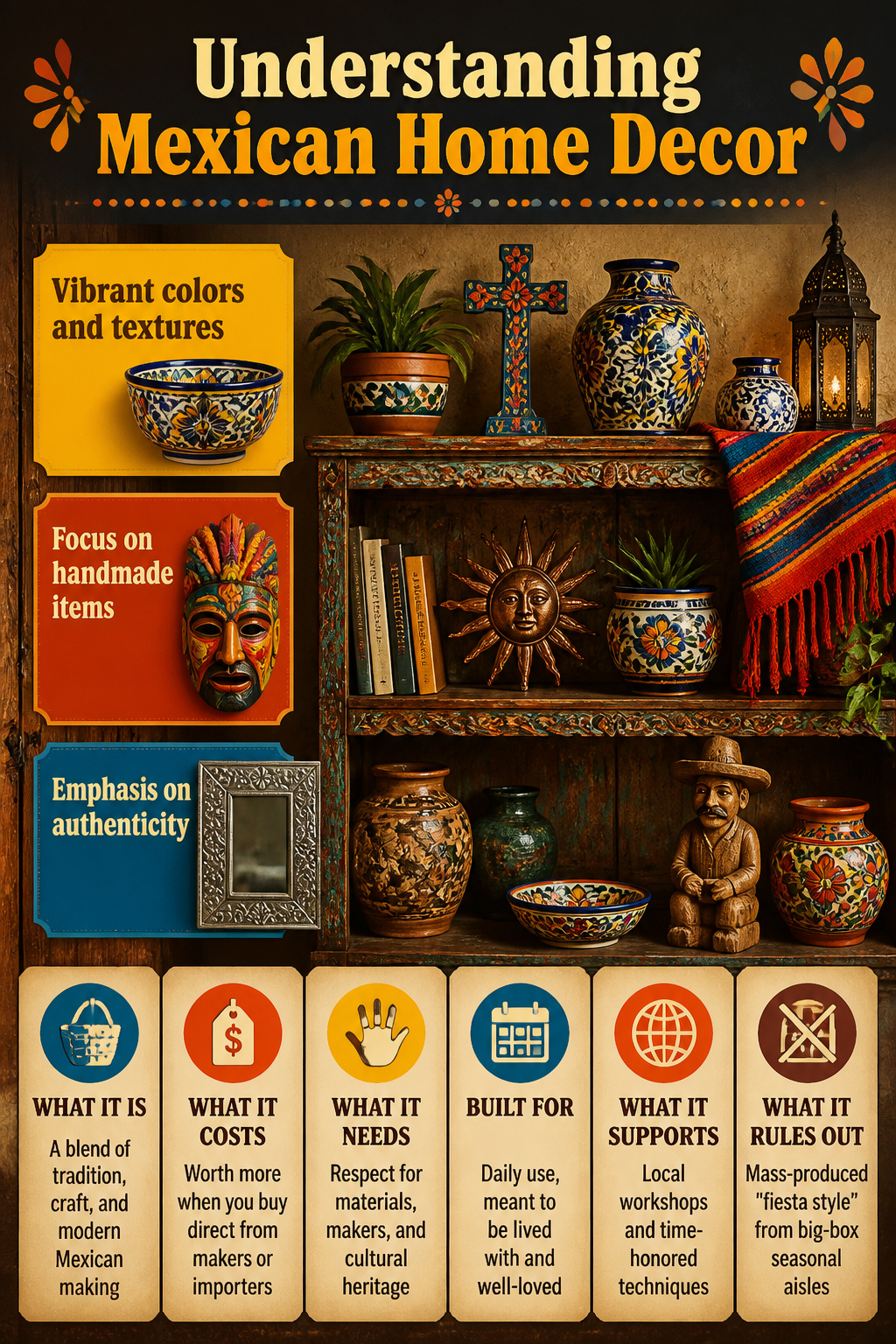
Mexican home decor is less a single style than a patchwork of color, texture, and craft that can fill a room or sit on a single shelf. You will see dazzling blues and yellows against raw wood and hammered metal, rustic furniture built for daily use, and references to traditions that stretch back centuries. What ties it together is the hand of the maker, not a rulebook.
The look draws from three streams that keep mixing: indigenous craft traditions, the materials and motifs brought during the colonial period, and what Mexican makers are producing now. A carved wooden mask, a tin mirror frame, and a hand-thrown bowl can share a mantel without needing to match, because the connection is the handwork and the place it came from, not a catalog aesthetic.
On buying: the difference between collecting and costuming is where the money goes. When you can, buy from the maker or from a direct importer who names the workshop. Skip the mass-produced items tagged "fiesta style" in big-box seasonal aisles; they are usually made elsewhere and designed to read as Mexican from six feet away. Choose a piece because you want to live with it, not because it turns your room into a set. The makers benefit, and your space avoids the thinness of imitation.
Which Pieces Work in a Rental

Most rental leases let you hang things under twenty pounds with a standard nail or hook, but a heavy Talavera mirror or thick pottery plate will push past that fast. Use a stud finder first, or switch to a tension rod, leaner frame, or removable adhesive rated for the actual weight. A ristra of dried chiles needs one small nail and leaves a pinhole you can dab with spackle in ten minutes. A mirror needs a larger anchor and a bigger patch job. A wood console or painted bench leaves nothing at all.
If you are building a starter set on $300, put the money into the rug first. It covers the most visual territory, weighs nothing to hang, and rolls up tight when you move. One large pottery piece comes next, something you can set on the floor or a surface without mounting hardware. After that, pick two small items, milagros or carved figurines, that travel in a shoebox and sit on a shelf. You will have the look without the wall damage.
A Weekend Placement Plan
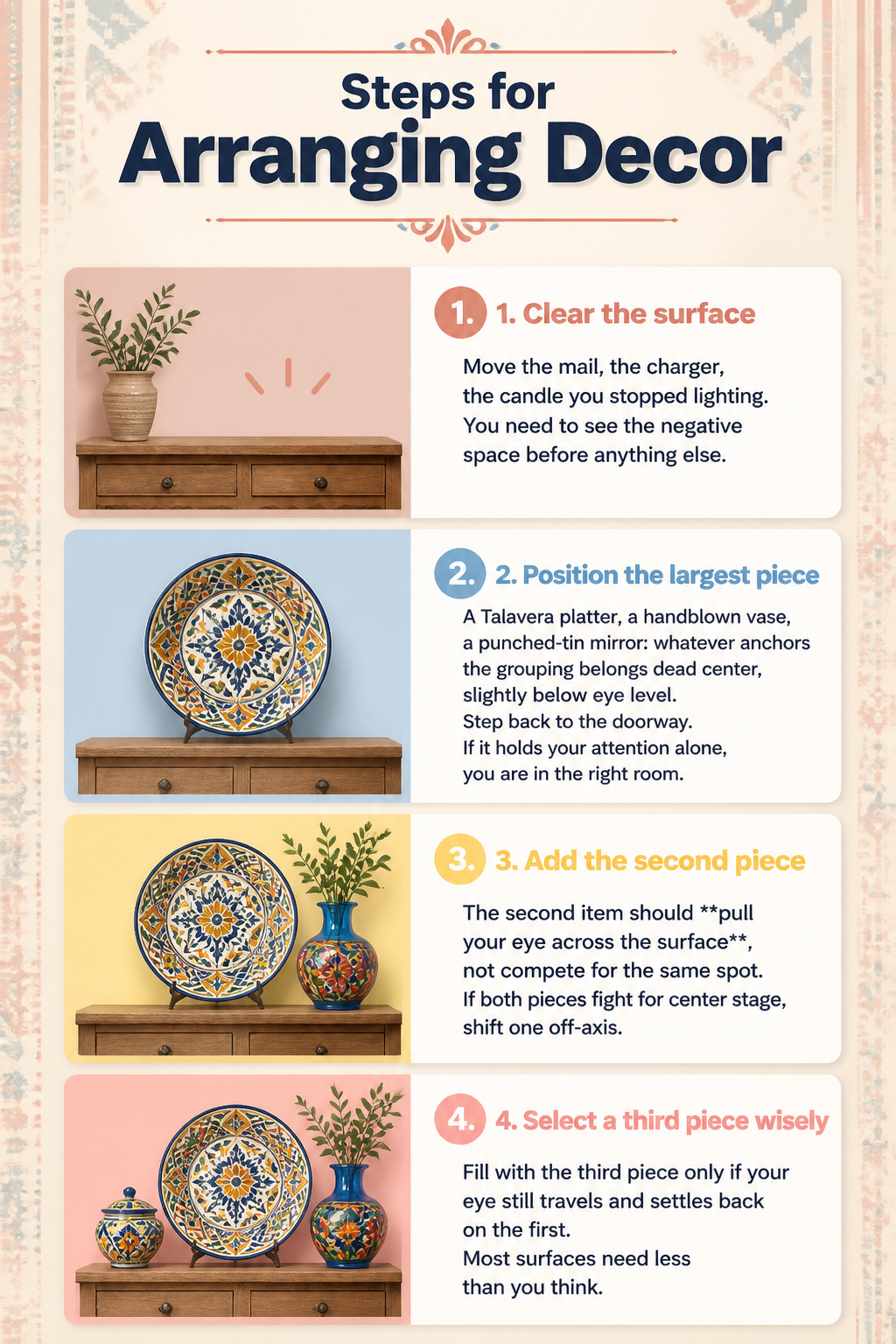
- Clear one surface or wall completely. Move the mail, the charger, the candle you stopped lighting. You need to see the negative space before anything else.
- Place the largest piece first. A Talavera platter, a handblown vase, a punched-tin mirror: whatever anchors the grouping belongs dead center, slightly below eye level. Step back to the doorway. If it holds your attention alone, you are in the right room.
- Add color with the second piece, checking from the entry each time. The second item should pull your eye across the surface, not compete for the same spot. If both pieces fight for center stage, shift one off-axis.
- Fill with the third piece only if your eye still travels and settles back on the first. Most surfaces need less than you think.
The common mistake is buying three items the same size and scattering them like a buffet. Same-height pieces read as clutter because the eye cannot find a place to land. The fix is to vary heights by at least four inches and leave more empty space than feels right at first. Half the surface bare is usually closer to right than wrong.
Frequently Asked Questions
What is Mexican decor?
Mexican decor is a patchwork of color, texture, and craft built around handwork rather than a single style rule. It mixes indigenous traditions, colonial-period motifs, and contemporary making, so a carved wooden mask, a tin mirror frame, and a hand-thrown bowl can share a mantel without matching. The common thread is the maker’s hand and the place the piece came from, not a catalog aesthetic.
What are the key elements of Mexican home decor?
The key elements include Talavera pottery with its hand-painted cobalt and orange glazes, solid pine rustic furniture, handblown glassware with visible bubbles and wavy rims, punched tin and metal wall art, wool rugs from Oaxaca, and folk art like carved alebrijes and Day of the Dead figurines. Each piece carries the irregularity of being made by hand rather than machine.
How can I incorporate Day of the Dead decorations into my home?
Use one ceramic Catrina figurine on a shelf at eye level, hang a string of papel picado above or beside it, and add a few small ceramic skulls grouped on a windowsill or scattered as single paperweights. The banners fold flat into a manila folder for storage, and the whole arrangement comes down in ten minutes after the season ends. You do not need a full ofrenda to bring that energy into a room.