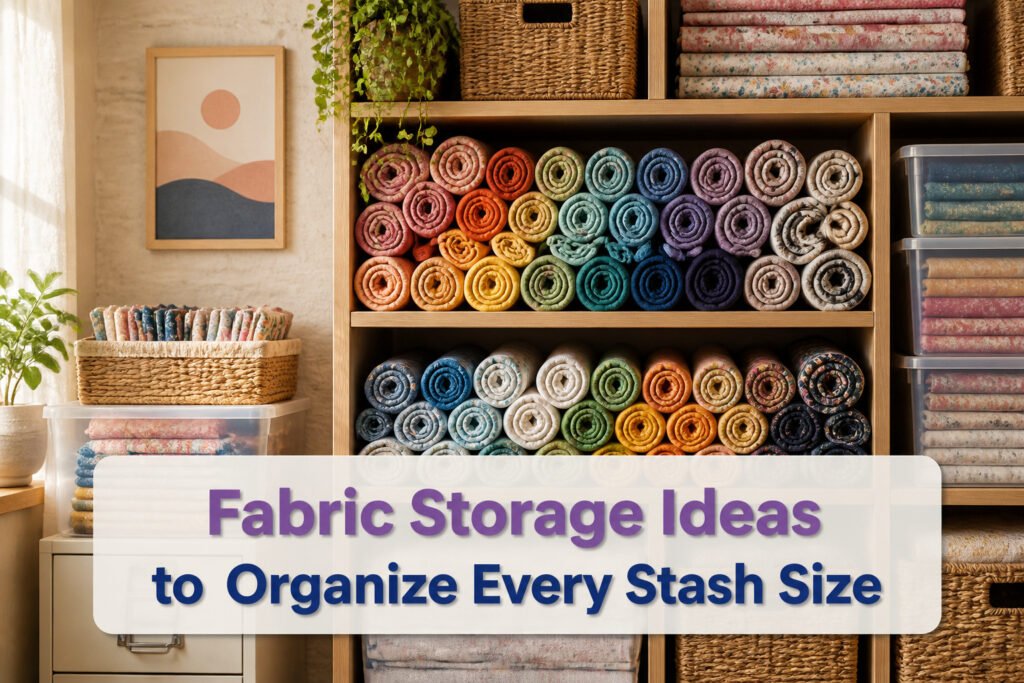
The best fabric storage ideas for 2026 range from free upcycled filing cabinets to $50+ climate-controlled units, and the right pick depends on whether your stash fits in a laundry basket or needs its own storage unit. Rolling beats folding for visibility, but only if you keep the tension tight enough to hold shape without stretching the weave. A 12-quart clear bin holds six to eight yards of folded quilting cotton, enough to tell whether you are organizing a weekend project or a decade-long collection.
1. Roll Fabric Instead of Folding
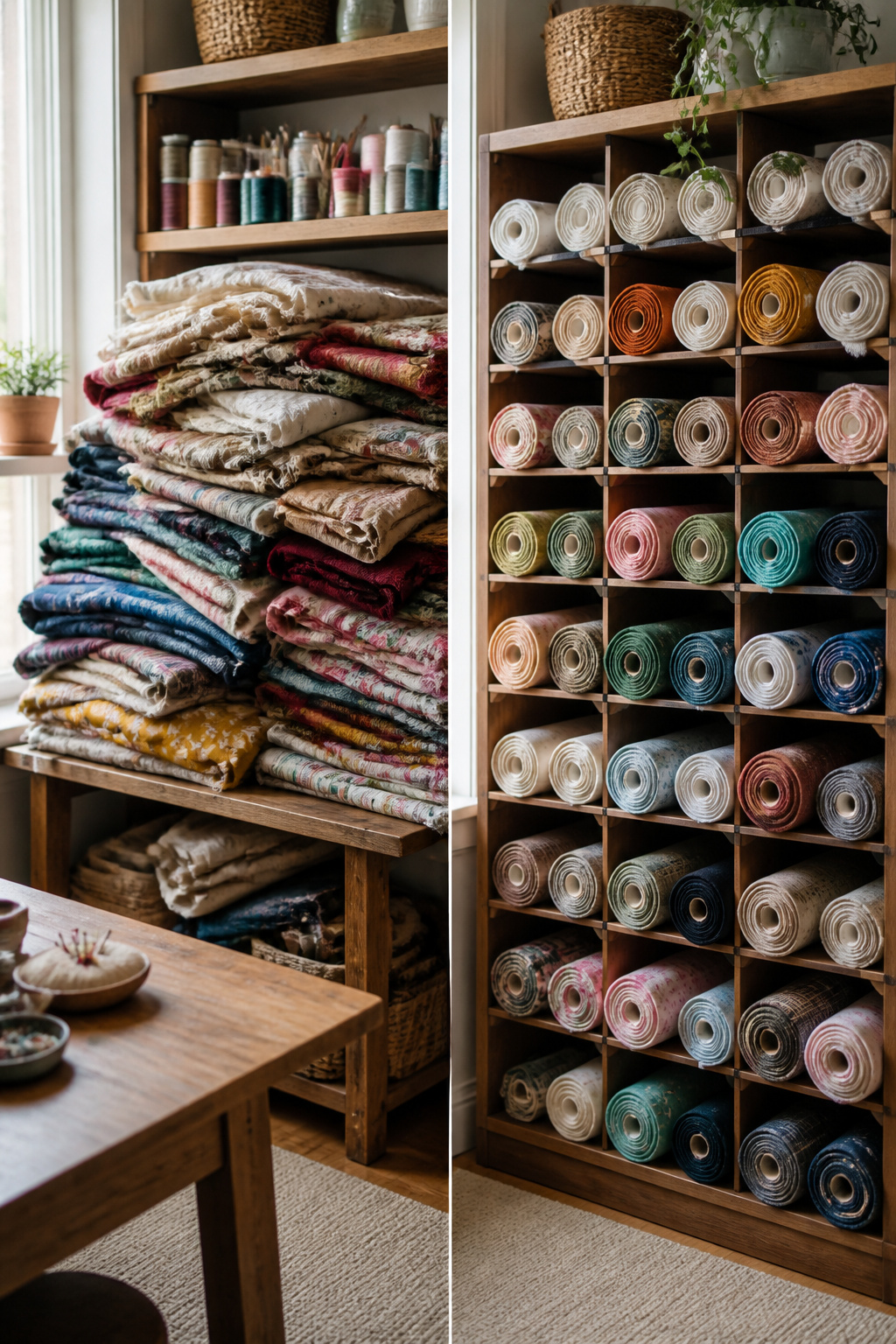
Rolling fabric instead of folding it saves space and keeps creases from setting in, which is why you will see it recommended so often. The method works for anything from yardage to fat quarters, and it opens up storage spots you might not have considered, like bins slid under the bed or an old wine rack with its slots still intact.
Start by folding the fabric in half lengthwise, then roll from the selvage edge. Tight enough to hold its shape, not so tight it stretches the weave. For pieces too wide to behave, a cardboard tube or a cut-down paper towel roll gives the roll something solid to form around, and you can halve those tubes to fit standard baskets.
The real payoff is visibility. A rolled log lets you see every print at a glance without disturbing the rest of the stack, and it keeps knits from tangling into the knots they seem to find when folded flat. If a drawer is overstuffed, pull the bulky fabrics and the interfacing out first; rolling what remains buys back more room than you would expect.
2. Comic Book Boards for Folded Fabric
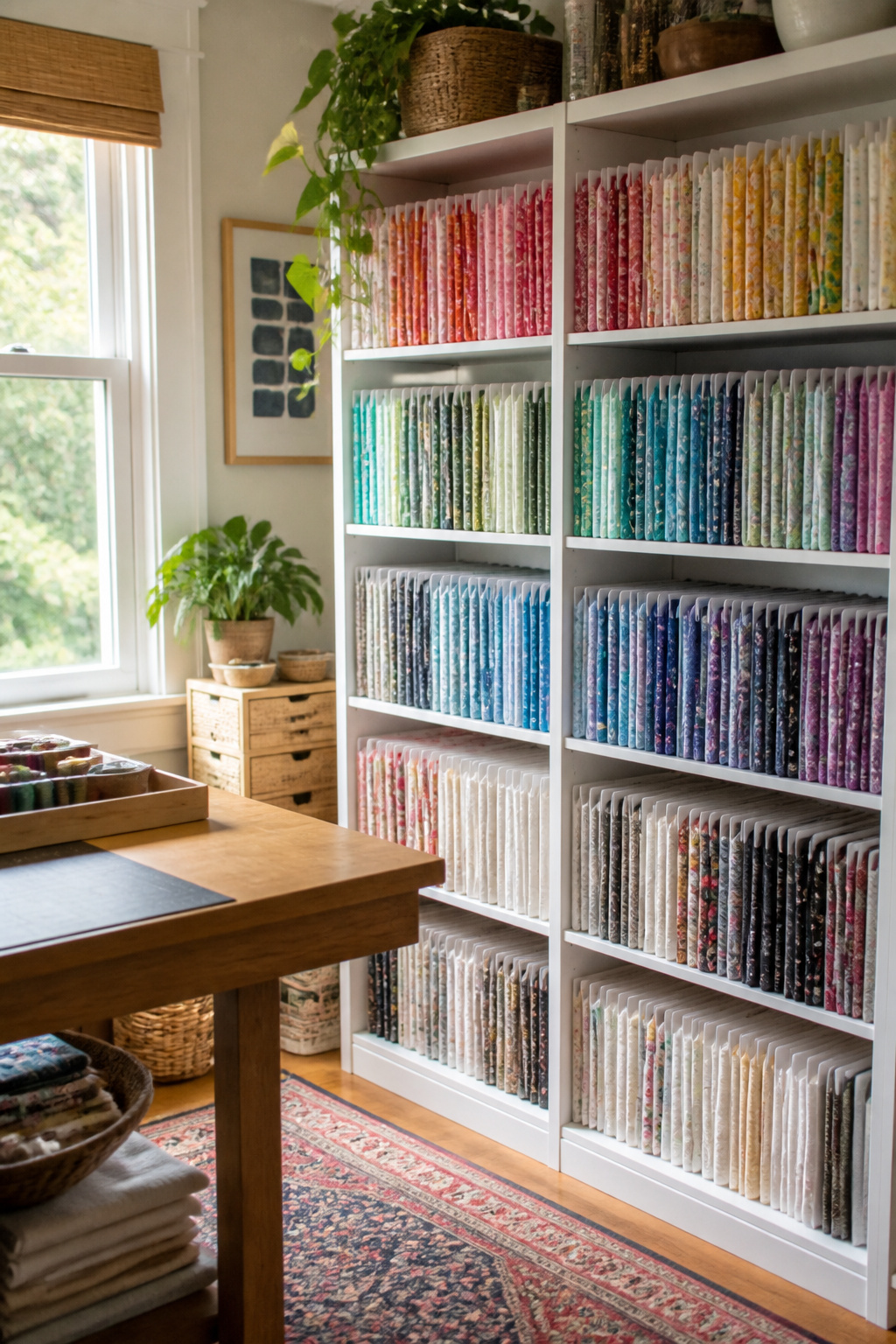
Acid-free comic book boards turn unruly yardage into uniform mini bolts you can stack like books. The standard size runs roughly 7 by 10.5 inches, stiff enough to hold its shape when you pull one from a shelf but slim enough to squeeze dozens into a single cubby. You will find them at comic shops or online, typically around $12.95 for a pack of 100, though a large stash can eat through multiple sets fast.
The wrapping itself is simple: fold your fabric to width, wrap it around the board, and secure the end. Some people use clear plastic alligator clips, others T-pins, though pins can rust or snag if you store long-term. The stiffness is what makes the system work. Without it, folded fabric slumps, edges wander, and your neat row becomes a soft avalanche every time you pull a piece.
For wider yardage, magazine boards at 8.5 by 11 inches buy you extra room and sometimes fit shelving height better. Either way, acid-free matters. Regular cardboard can yellow fabric over years; the few extra dollars for archival-grade board pays off if this stash sits awhile.
3. Clear Bins for Visibility
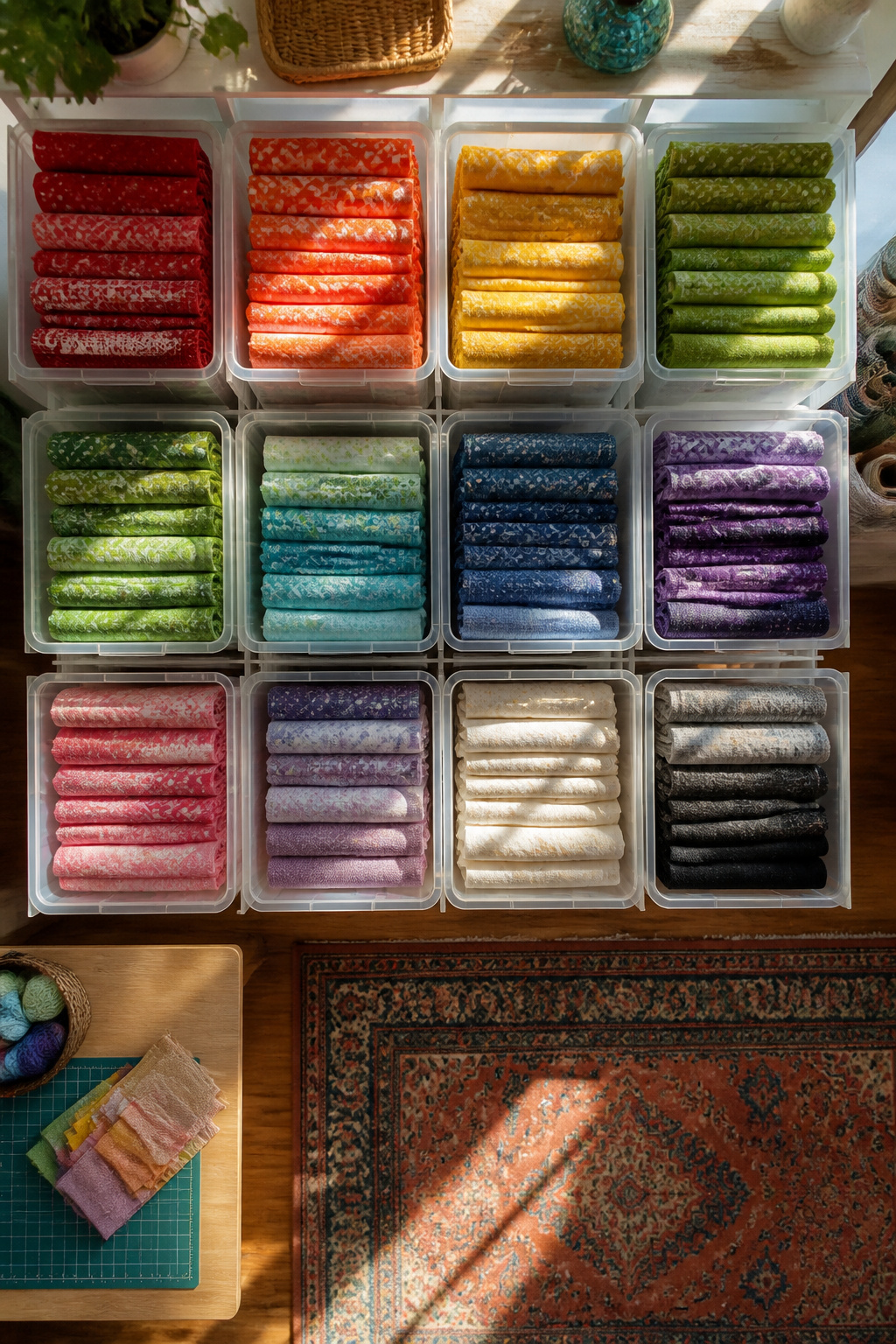
Clean plastic bins with lids are the most frequently recommended container type for fabric storage across the sources, and it is easy to see why. The transparency lets you scan a stack in seconds without lifting a lid, while the seal keeps out dust and the moisture that can mildew cotton and wool over a season or two. If you have ever opened an opaque tote and found a project you forgot you owned, you already know the cost of guessing.
Sizing depends on how you accumulate fabric. A 12-quart bin holds roughly six to eight yards of folded quilting cotton, which is enough for a small project stash. For larger collections, 30-quart or 50-quart stackables let you sort by color or project type without playing Jenga every time you need the bottom bin. Stackable designs matter more than you might expect: they turn vertical closet space into usable real estate and keep the lid on the bin below from bowing under weight.
The one catch is visibility versus access. Seeing fabric helps, but digging through ten clear bins to find one print does not. If your collection has grown past the point where a single glance locates what you need, label each bin by color family, fabric type, or project. That small step closes the gap between "I can see it" and "I can find it."
4. Filing Cabinet Fabric Drawers
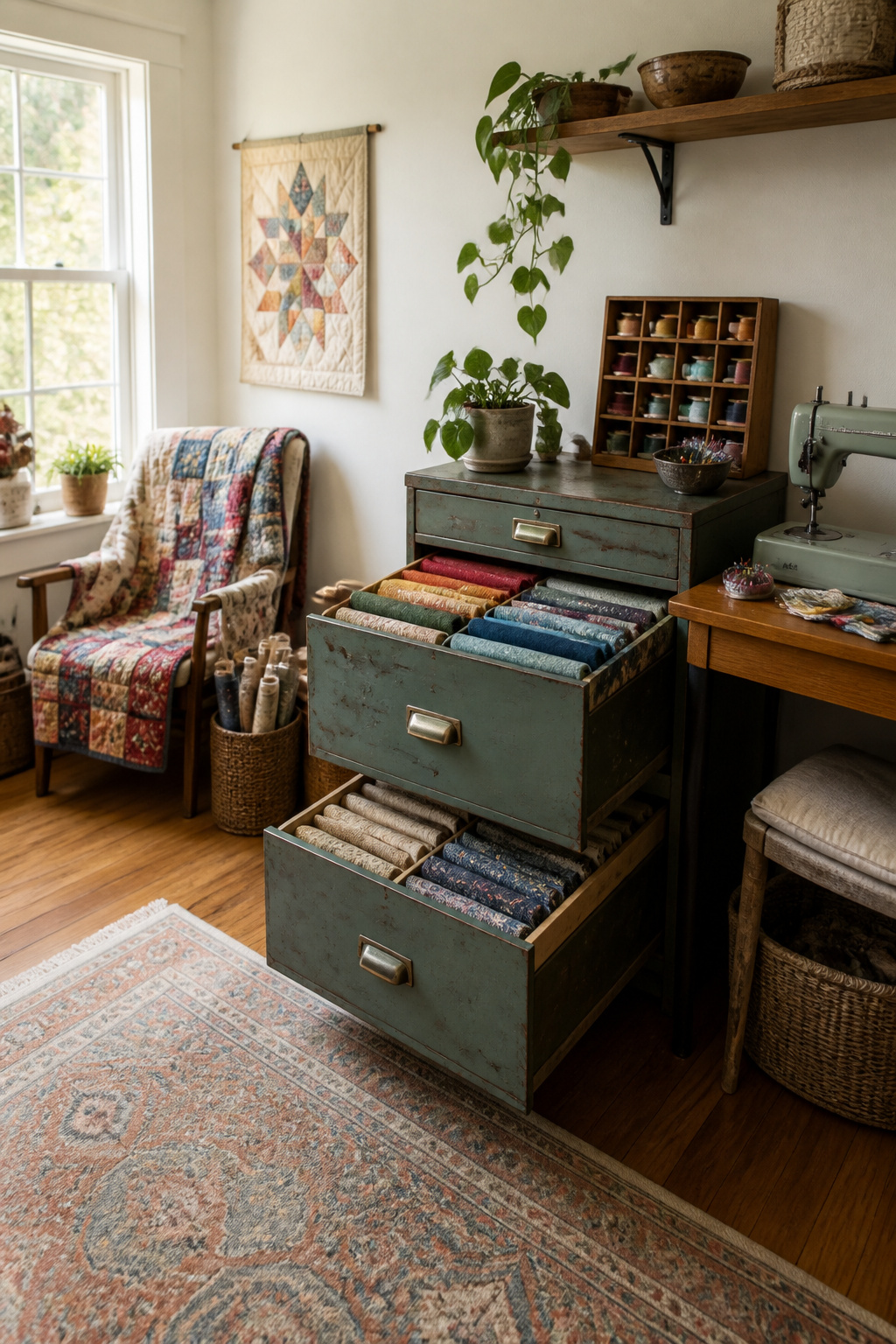
A filing cabinet you already own, or one you pick up used for cheap, becomes surprisingly good fabric storage once you stop thinking of it as office furniture. The standard sizes map to different stash profiles. A 2-drawer legal cabinet, with its wider 15-by-18-inch drawers, swallows full yardage folded in thirds lengthwise and stacked upright like files. A 4-drawer letter cabinet works better for fat quarters, half yards, and scraps hung over actual hanging folders, sorted by color or fabric type with a swatch taped to each tab so you flip through without digging.
The limit is real: anything much over two yards wants to slide, bunch, or fight the drawer rails. Sources describe this as a scraps-and-small-pieces system for a reason. One approach drops the folders entirely and removes drawers to create open vertical bins for folded yardage standing on end. Another keeps the folders and reserves the setup for silks, taffetas, and other small quantities you do not want crushed in a pile. Either way, the cabinet also holds thread, patterns, and notions in the same footprint, which matters when your sewing space shares a wall with the guest bed.
5. Swatch Binder for Inventory
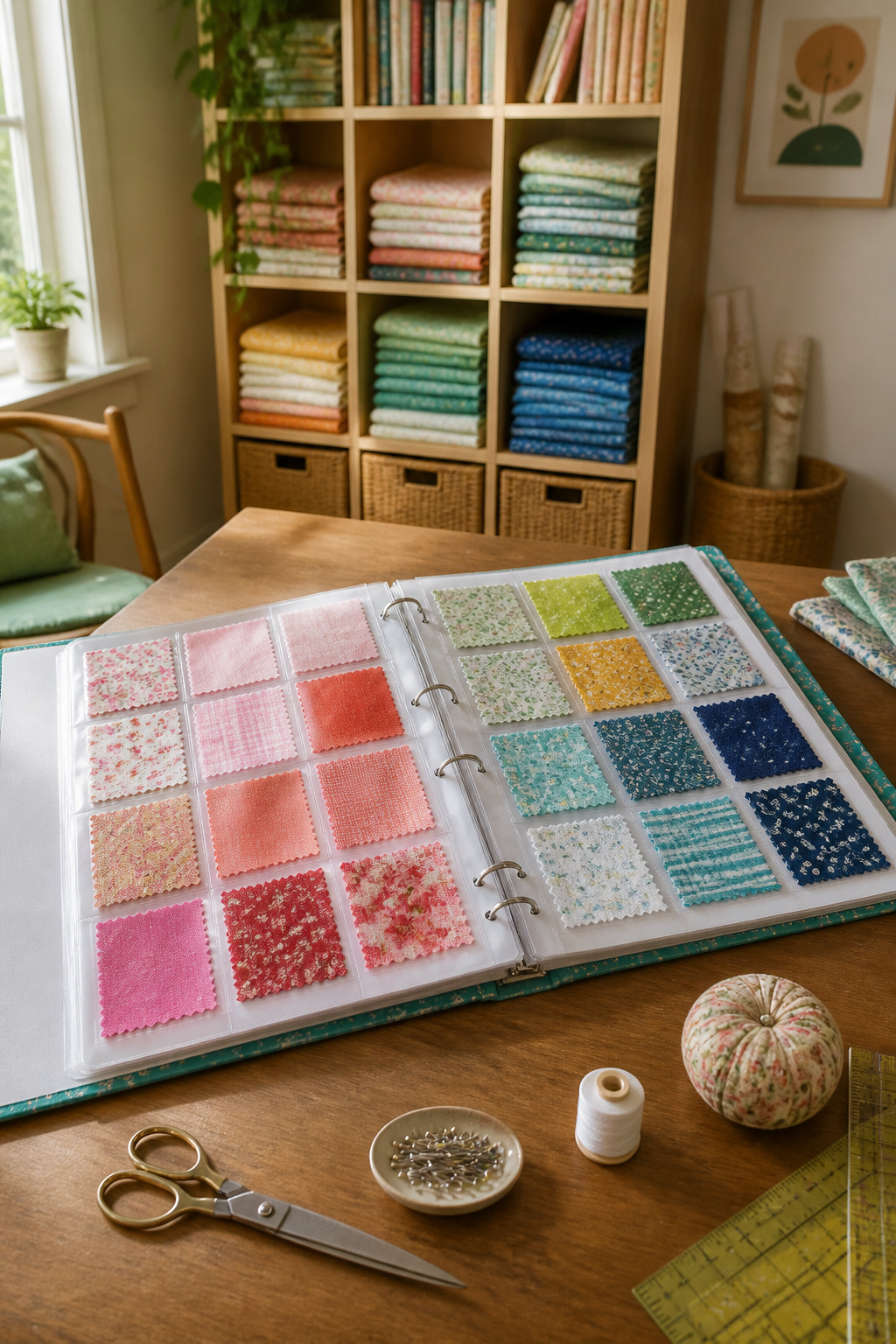
A swatch binder keeps your overflow stash from disappearing into storage amnesia. Cut a square from each fabric you own and slip it into a standard binder with photo inserts or business card sleeves for smaller scraps. On the facing page or card, record the yardage left, fiber content, whether it has been prewashed, and where you bought it.
Two formats work here. Photo inserts give you a full view of each swatch and room to write notes. Business card sleeves force you to cut smaller, but they keep the binder slim enough to flip through quickly while you are project planning. Either way, the goal is the same: stop buying the same dusty rose linen twice because you forgot the first piece exists.
When you are staring down a pattern and trying to decide what you actually have versus what you need, a fifteen-minute flip through the binder beats an hour of digging through under-bed bins. The binder also travels. Bring it to the fabric store and you will know at a glance whether that navy cotton is a match for something home or a duplicate you do not need.
6. Ladder Hanging
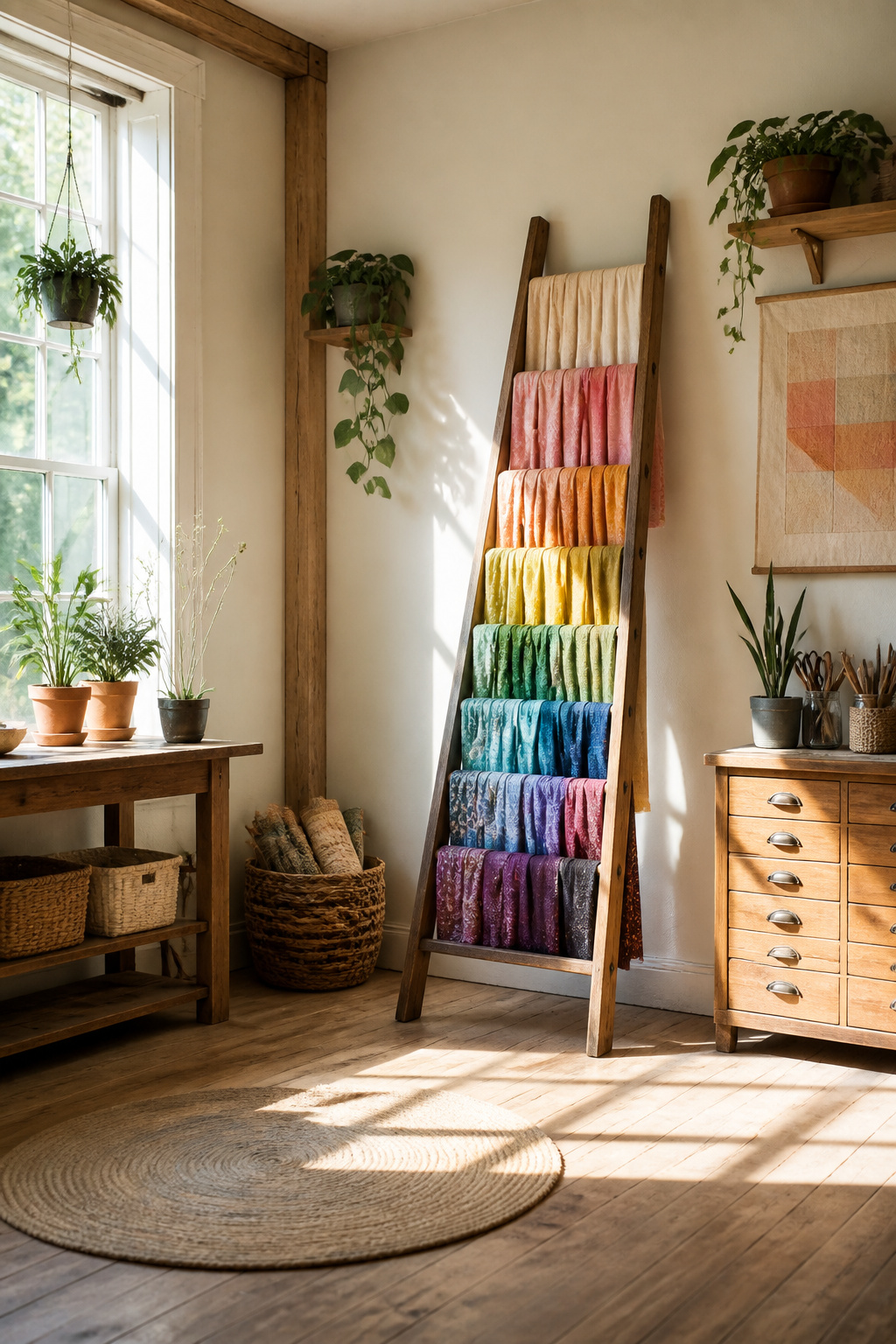
A wooden ladder leaned against a wall turns fabric storage into something you actually want to look at. Drape yardage over each rung and it stays visible, reachable, and free of the creases that folding leaves behind. The rungs do the work of keeping things sorted by color or weight without any extra hardware.
Folding step ladders and vintage wooden ladders both work here, though they read differently in a room. A step ladder gives you a sturdier frame and wider rungs that handle heavier bolts without sagging. A weathered wooden ladder looks warmer, more like the "functional wall art" side of this idea, but check that the rungs are smooth enough not to snag delicate weaves.
Spacing matters more than ladder style. Narrow quilting cottons, around 40 to 45 inches wide, sit fine on rungs set a standard 12 inches apart. Upholstery weight or 54-inch apparel fabrics need more breathing room, so look for a ladder with 15 to 18 inches between rungs or plan to skip every other one. Bolts and rolls behave differently than folded lengths; they need that extra gap or they bunch and tumble.
If you are buying rather than scavenging, a blanket ladder built for display usually has the gentler spacing and rounded rungs that fabric likes. Mounting the ladder flat to the wall instead of leaning it gains stability in a small space, but you lose the easy flip-through of a leaning setup. For a rental, leaning keeps your security deposit where it belongs.
7. Garment Rack for Large Pieces
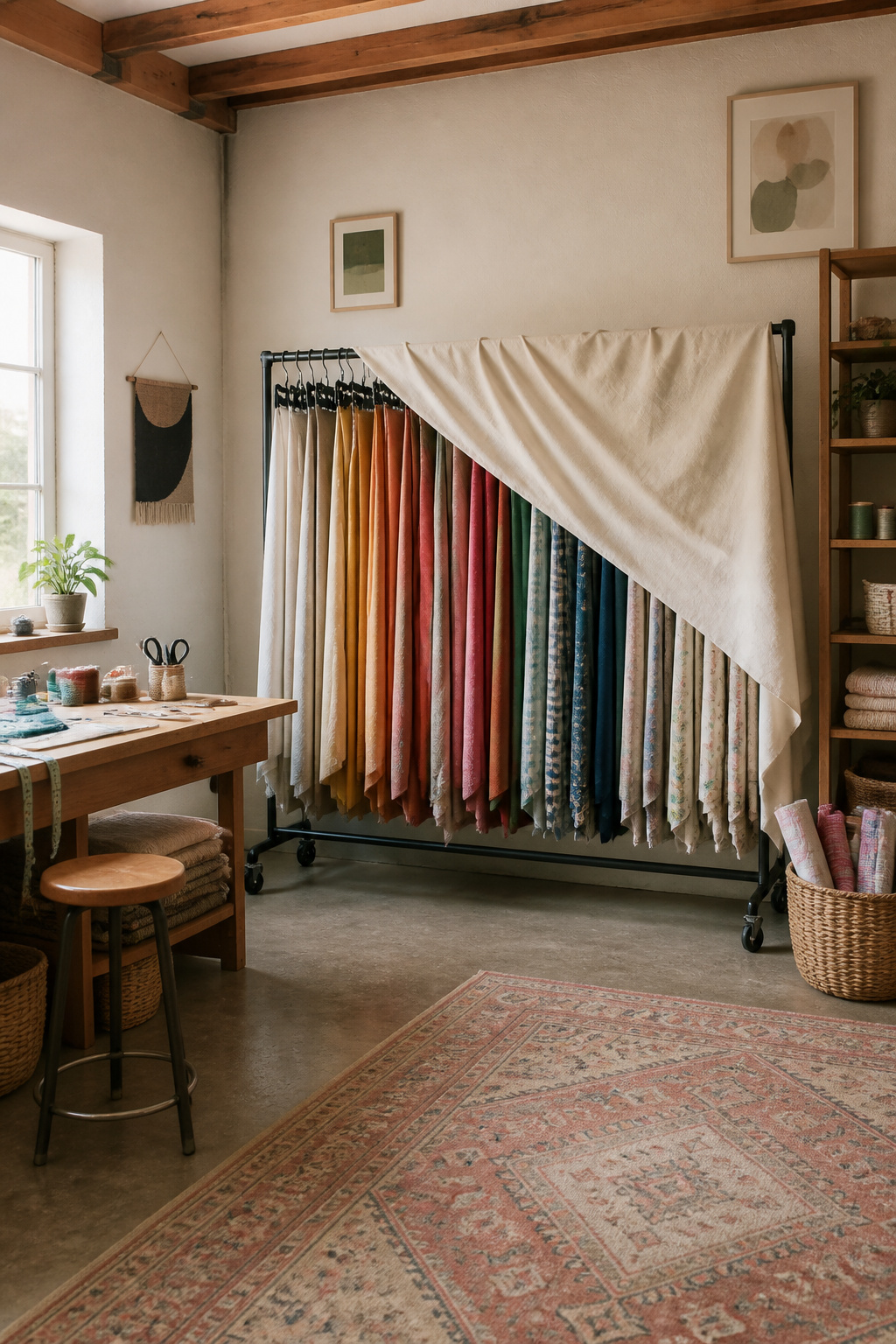
Canvas and upholstery-weight fabric fight back when you try to fold them. They crease where you do not want crease, and they bulk out bins until the lid will not sit flat. A rolling garment rack about 60 inches wide with adjustable height solves this by keeping the material vertical and unfolded. Clamp-style hangers, the kind meant for trousers, grip the fabric without pinch marks if you pad the jaws with folded scrap. Roll the fabric lengthwise first, rather than folding it in half, and the hanger carries it without a hard crease down the middle.
Dust is the real enemy once fabric hangs open. Slip a clear bag over each piece, or drape a cotton sheet across the whole rack if you are storing it in a basement or garage. The rack itself is the weak point. A lightweight discount model will shimmy and lean once you load ten yards of canvas. Check the caster locks too; you want the rack to stay where you put it, not wander every time you brush past.
8. Zippered Pouches for Project Kits
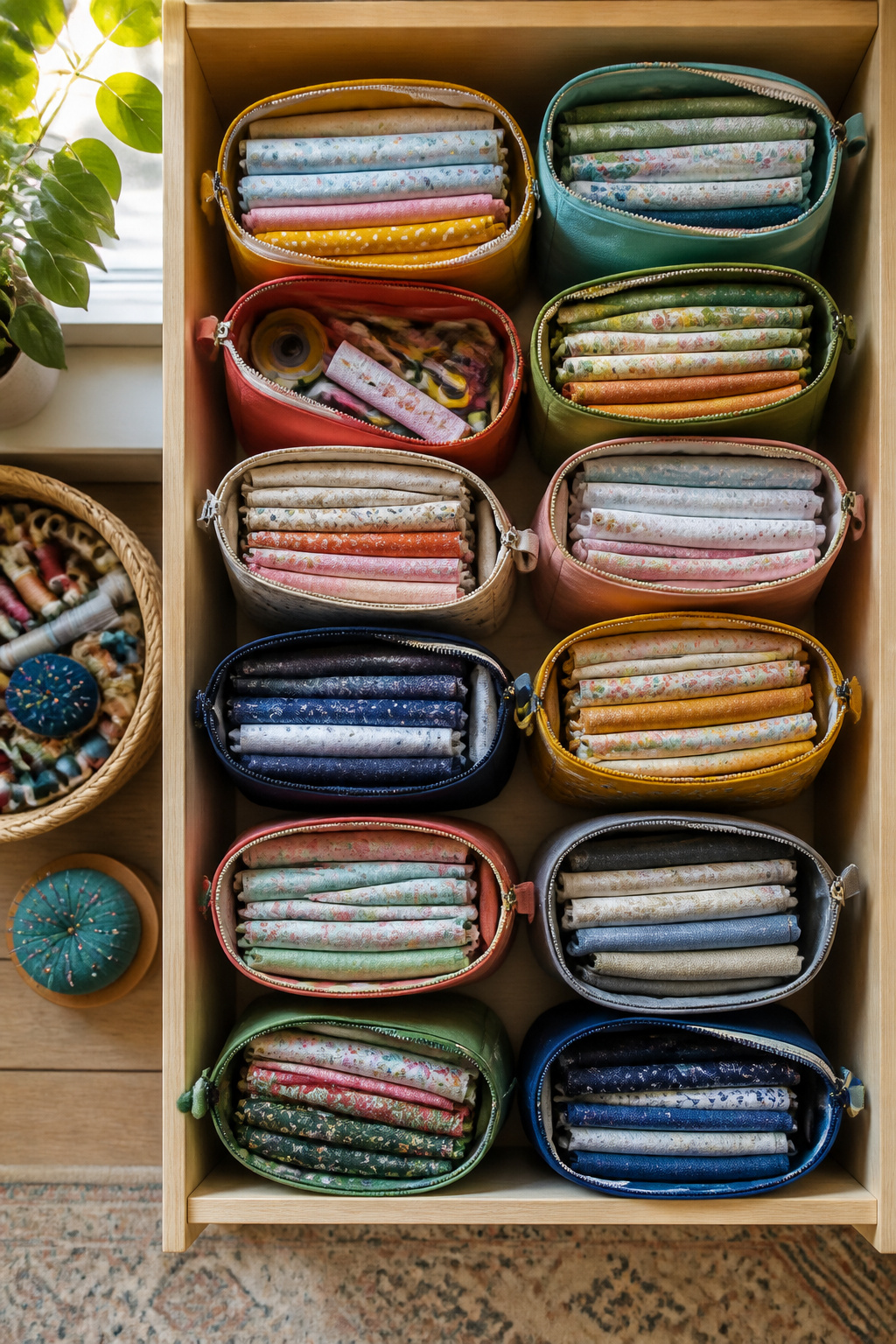
Gallon zip bags work fine for small projects, though they look utilitarian lined up on a shelf. A 2.5 gallon size handles larger cuts without forcing you to refold yardage into submission. The real payoff is what goes inside: pattern, cut pieces, thread, and notions zipped into one place so you are not hunting bias tape when you finally have an hour to sew.
Label the bag with the pattern name and date you kitted it, or you will open six identical bags before finding the right one. Some sewers prefer clear vinyl pouches they make themselves; they hold up longer and look tidy enough to leave out. Others stack the bags flat in a fabric basket so the shelf stays neat. Either way, the point is having a ready-to-sew set when a deadline hits. Scraps that look like nothing on their own become a coordinated kit, and that kit becomes a baby quilt or a set of zipper pouches you can finish in a weekend.
9. Rolling Cart for Active Projects
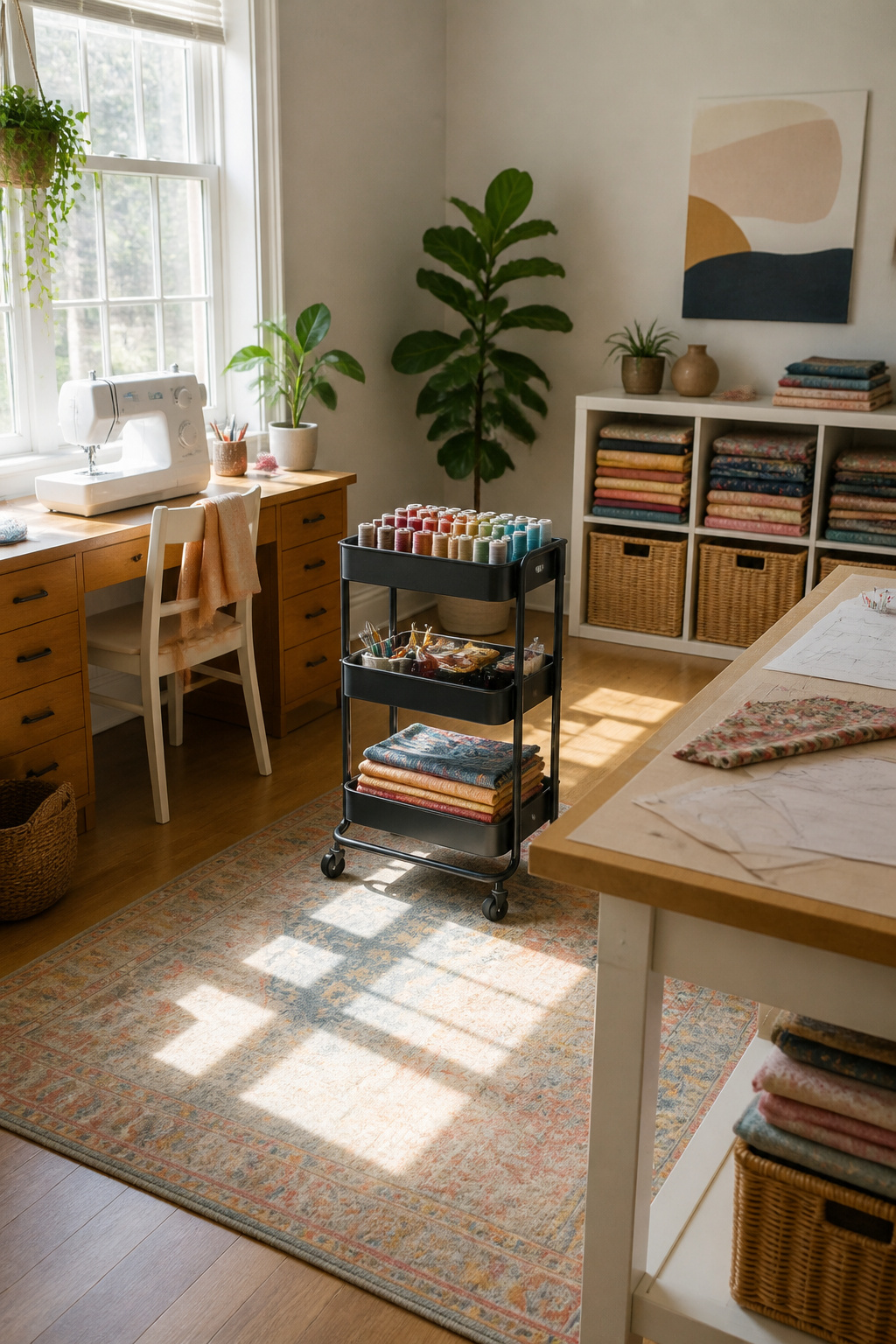
A three-tier metal utility cart, about 30 inches tall, keeps your active work from swallowing the rest of your sewing space. Load one level with the fabric for your current piece, one with tools, and the last with thread and notions. When you sew, roll it right beside your machine. When you finish, tuck it into a corner and your stash stays untouched.
The separation matters more than the cart itself. A project left out on the table becomes the thing you stare at for three weeks without touching. Contained on wheels, it waits without claiming territory.
IKEA’s RÅSKOG is the cart most people recognize, but any dupe with solid casters works the same. The key detail is height: at roughly 30 inches, the top shelf sits level with most sewing machine tables, so you are not reaching up or bending down for your rotary cutter. If the cart is not already on wheels, add casters yourself, though factory ones tend to roll smoother on carpet.
Scrap workers get even more mileage here. A vertical wire basket tower on casters moves between machines the same way, parked beside the sewing table for quilt-as-you-go blocks, then rolled to the embroidery station for in-the-hoop work. The principle is identical: active materials stay mobile, stored materials stay put.
10. Climate-Controlled Storage for Large Collections
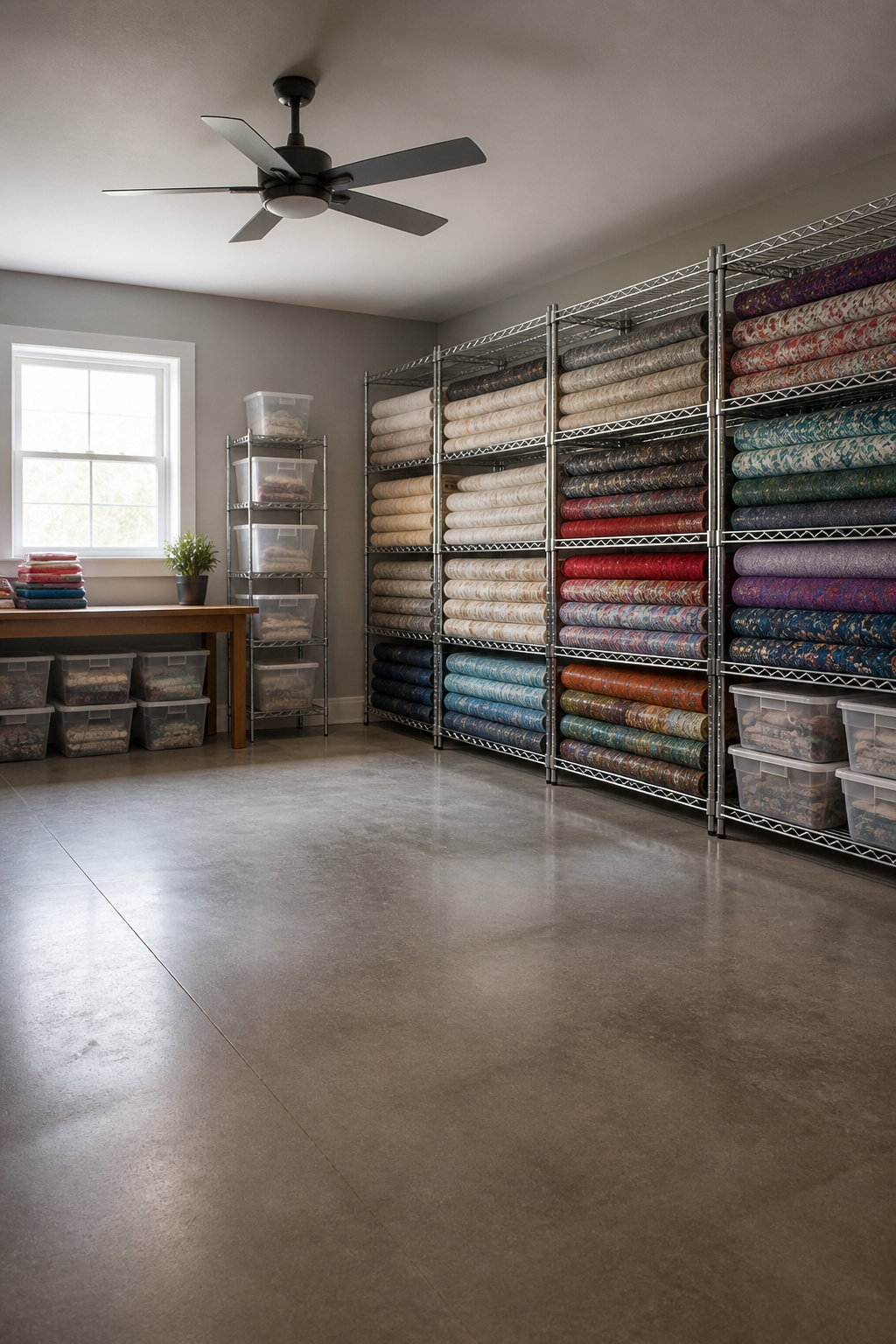
When your fabric outgrows every closet and under-bed space in the apartment, a climate-controlled storage unit becomes the practical next step. The goal is keeping temperature between 60 and 75 degrees Fahrenheit and humidity at 30–50%, which protects cotton, linen, and wool from the damage that ruins a stash: mold growth in damp heat, brittleness in dry cold, and fiber stress from swings between the two.
Units without climate control run cheaper monthly, but the savings disappear fast if a summer heat wave leaves you with faded yardage or wool that smells like the basement it sat in. For a collection you’ve spent years building, the premium is insurance, not luxury. Stack your bolts on wire shelving off the concrete floor, label every bin so you’re not opening boxes to find one print, and visit twice a year to rotate stock and check for pests. The cost runs higher than home storage, but so does replacing fabric that went bad while you weren’t looking.
11. Tall Laundry Basket for Daily Use
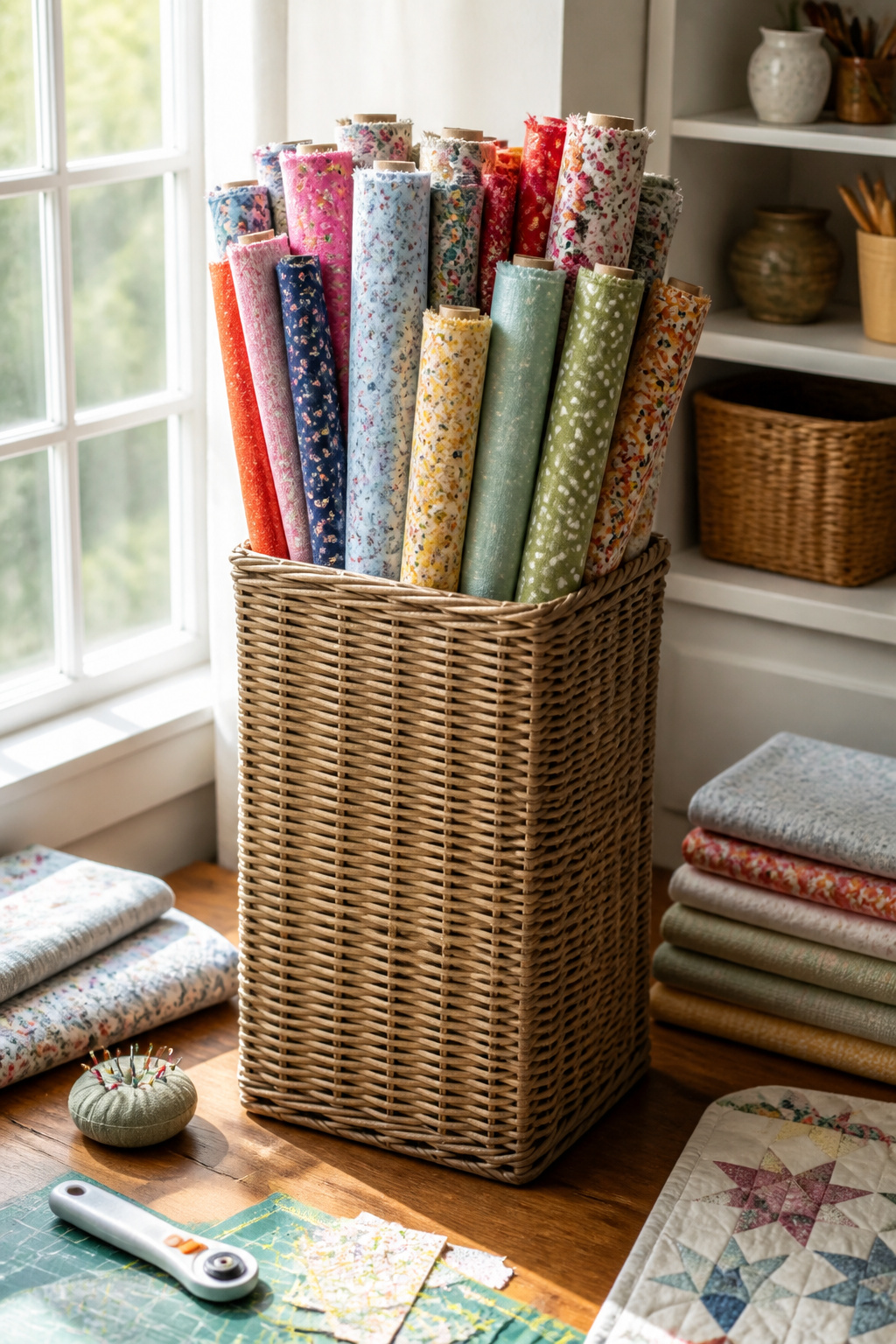
A tall, narrow laundry basket handles the fabric you touch every week better than any shelf or bin. Stand rolls upright rather than stacking folds flat, and you can flip through the whole collection in one motion without everything sliding onto the floor.
The height works two ways. First, vertical layers let you see each print at a glance; second, a 12- to 14-inch footprint tucks into corners where a bin would jut halfway across the room. When your project spreads to the kitchen table or you need to sew in front of a window for afternoon light, you grab the handles and carry the whole active stash with you.
This setup suits works-in-progress and overflow that refuses to fit in the main cabinet. It is not for your heirloom wool or the fabric you bought three years ago and still have not touched. Those live somewhere sealed. The laundry basket is for the cotton you will cut tomorrow, the scraps from last weekend’s dress, the backing fabric you keep reaching for and forgetting where you left it.
12. Clothesline or Hook Hanging
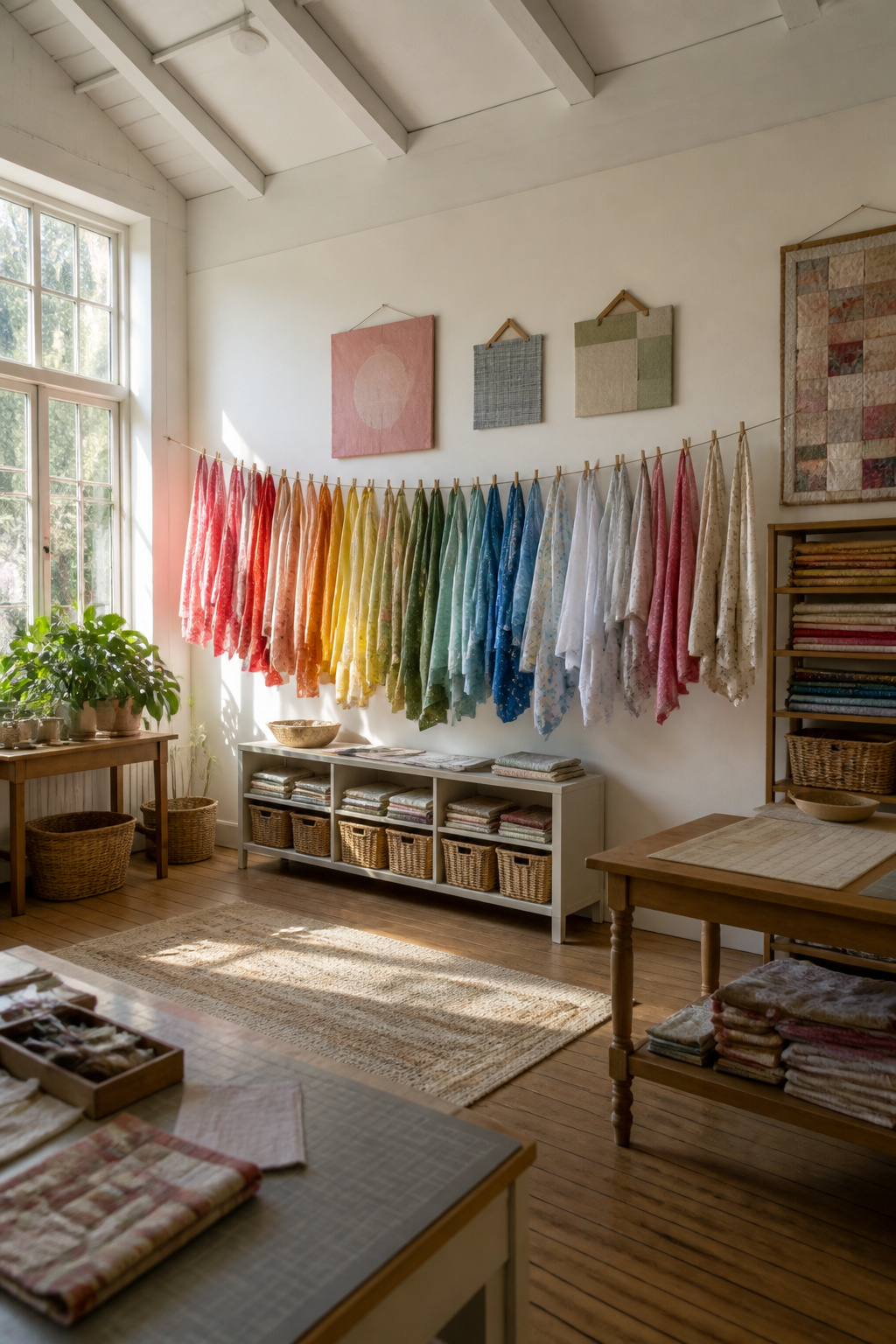
Hanging fabric on a wall keeps yardage visible and off your work surface, which matters more than it sounds when you are mid-project and hunting for the right piece. You have three hardware paths, and the one you pick depends on how permanent you want to be.
Cup hooks or eye screws bite into studs and hold bolts directly or carry a short dowel you drape yardage over. They leave holes, so for renters they work best inside a closet where patch-and-paint at move-out is simple. Tension cable strung between two wall mounts gives you a clothesline effect without the sag; you clip fabric with clothespins and gain the side benefit of air circulation, which keeps mustiness down on pieces that sit awhile. Plastic shower curtain hooks slipped over the cable or directly onto eye screws let you group by project and see color at a glance, though you trade a little wrinkling for that visibility.
Wall type is the real decision. Drywall without a stud will eventually pull under fabric weight, especially quilting cotton stacked heavy. A tension rod in a window frame or across a closet opening skips anchors entirely, but that belongs to another section. Here, the limit is your lease: small holes are usually tolerable, rows of screw holes less so. If you must anchor into drywall alone, toggle bolts spread load better than plastic anchors, though no source calls them out as a fabric-specific solution so you are generalizing from accepted hardware practice.
The wrinkling from hooks is real, and the sources do not pretend otherwise. You either accept it, because you pre-wash before cutting anyway, or you limit hanging to bolts and folded lengths you will press before use.
13. Wheeled Fabric Storage Cart
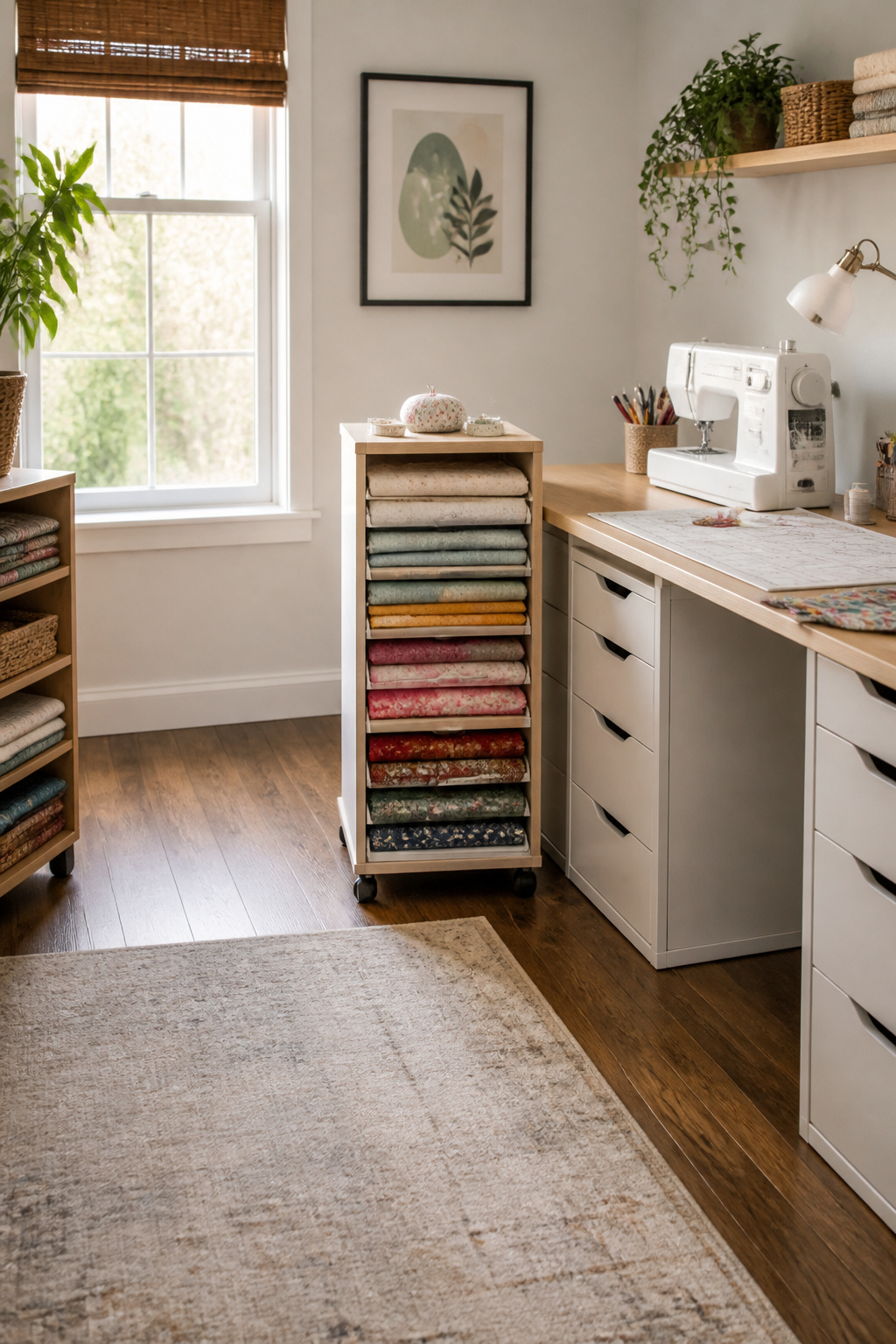
A fabric storage cart with divided compartments is built differently from the three-tier kitchen cart you already own. The divisions matter: shallow drawers or cubbies sized for folded yardage keep stacks upright and visible, where an open RÅSKOG lets everything slump together the moment you roll it.
Dimensions tend to run narrow and tall, roughly counter-height, so the footprint stays under about two feet square while the storage goes vertical. That shape fits beside a sewing table without blocking the chair, then rolls into a closet or corner when the project is done. Casters are standard, not an add-on you have to hunt for.
The trade-off is specialization. A divided cart holds fabric beautifully and tools poorly; the general rolling cart does the opposite. If you sew across fiber types, garment wovens alongside quilting cottons and home dec canvas, the compartment sizes that sort one stash leave another bunched or wasted. Two ways to play this: commit the cart to your most-used category and store the rest elsewhere, or skip the dedicated unit and use a basic rolling cart with separate bins you size yourself. The dedicated cart wins if you touch the same materials weekly. The general cart wins if your projects shift month to month and you would rather adapt than buy twice.
14. Sewing Cabinet with Drawers
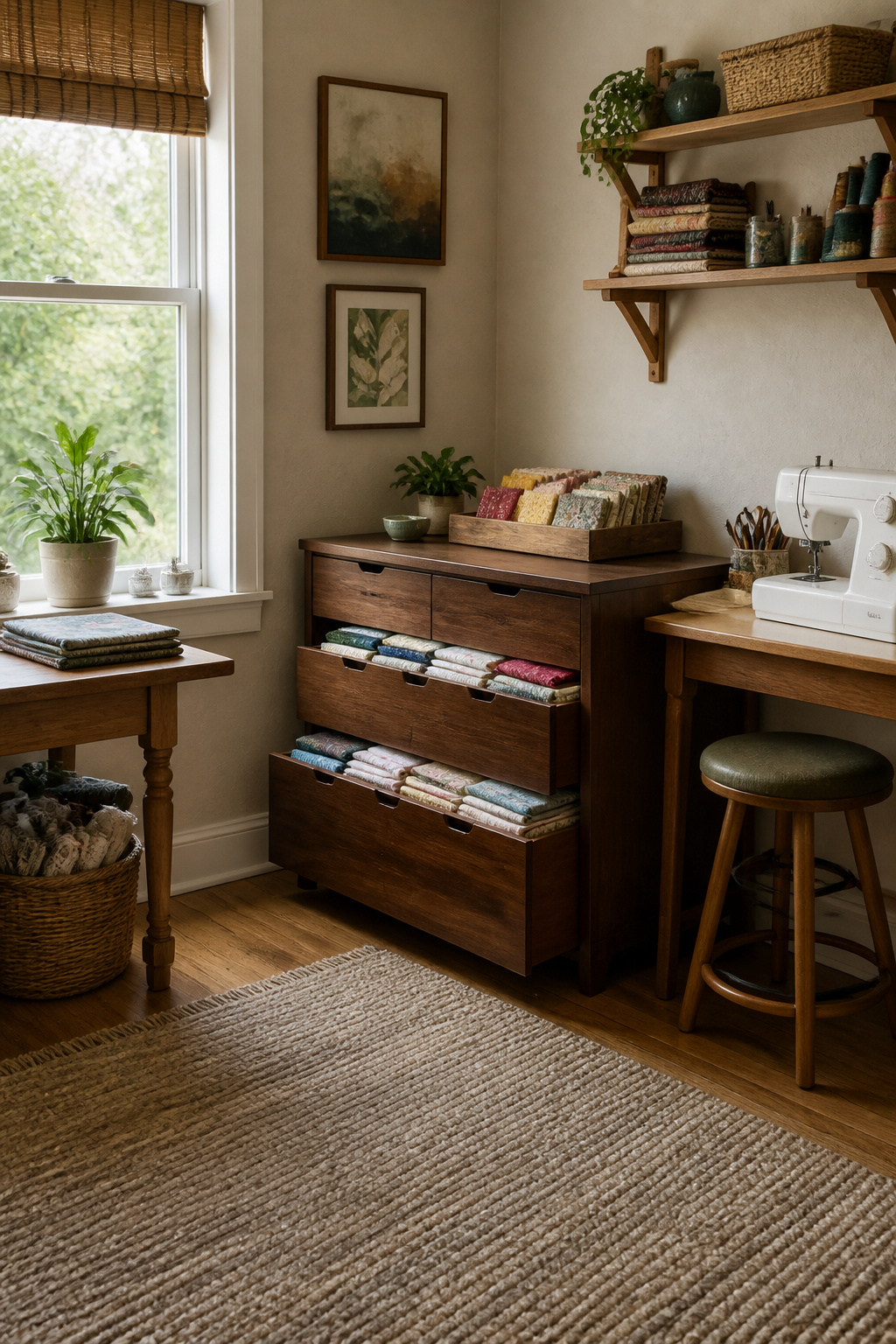
A sewing cabinet with drawers keeps your stash near the machine and completely out of sight, which matters more than most people expect until they trip over a basket in the hallway for the third time. Drawers need to run at least 12 inches deep to hold folded yardage without the back row disappearing into shadow, and anything shallower turns into a filing problem you solve every time you hunt for a print. This setup works best for smaller stashes because you hit the physical limit fast; once the drawers fill, you either purge or upgrade, and the cabinet itself does not pretend to grow with you. Older cabinets or a vintage dresser from a yard sale often give you better depth than new craft furniture built to a price point, and the beat-up ones hide thread snips and pin scars without grief. If you are starting from a few fat quarters and half-yard pieces, stand them on end in a shallow tray inside the drawer so you can lift the whole tray to the cutting table when matching prints. The tray saves you from digging to the back and disturbing the fold you already settled.
15. Baskets for Fabric Scraps
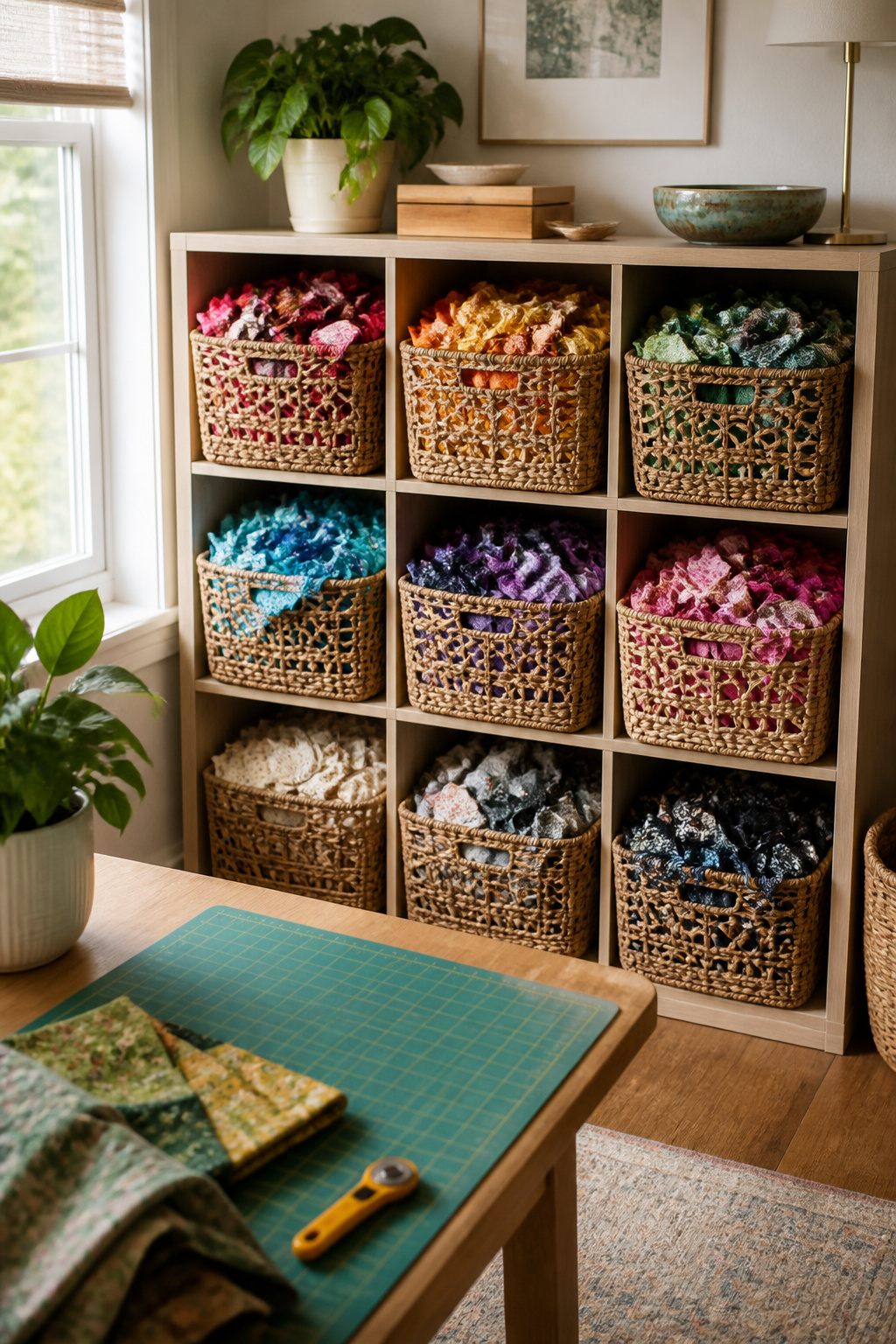
Open baskets beat lidded bins for scraps because you can drop a leftover triangle in mid-project without breaking stride. A lid turns two seconds into twenty, and twenty seconds is enough to let scraps pile on the cutting table instead. Sort them by color or by size, whichever matches how you actually hunt for pieces: color if you start with a palette, size if you start with a pattern piece and need anything big enough.
A standard cube shelf, like IKEA’s Kallax, takes baskets around 13 by 13 by 13 inches per compartment. That size holds a generous scrap collection without letting stacks grow so deep that prints disappear. For narrower bookcases, 11-by-11 or 10-by-12 baskets fit typical 12-inch shelf depths with a little clearance to pull them out cleanly.
Keep the basket shallow enough that you see every print at once. Digging defeats the purpose. If a basket needs stacking more than three layers deep, split the category: reds become pinks-and-reds, or scraps split into "fat quarter and up" versus "strips and strings." The system only works if you use it without thinking.
16. Vertical Wire Basket Tower
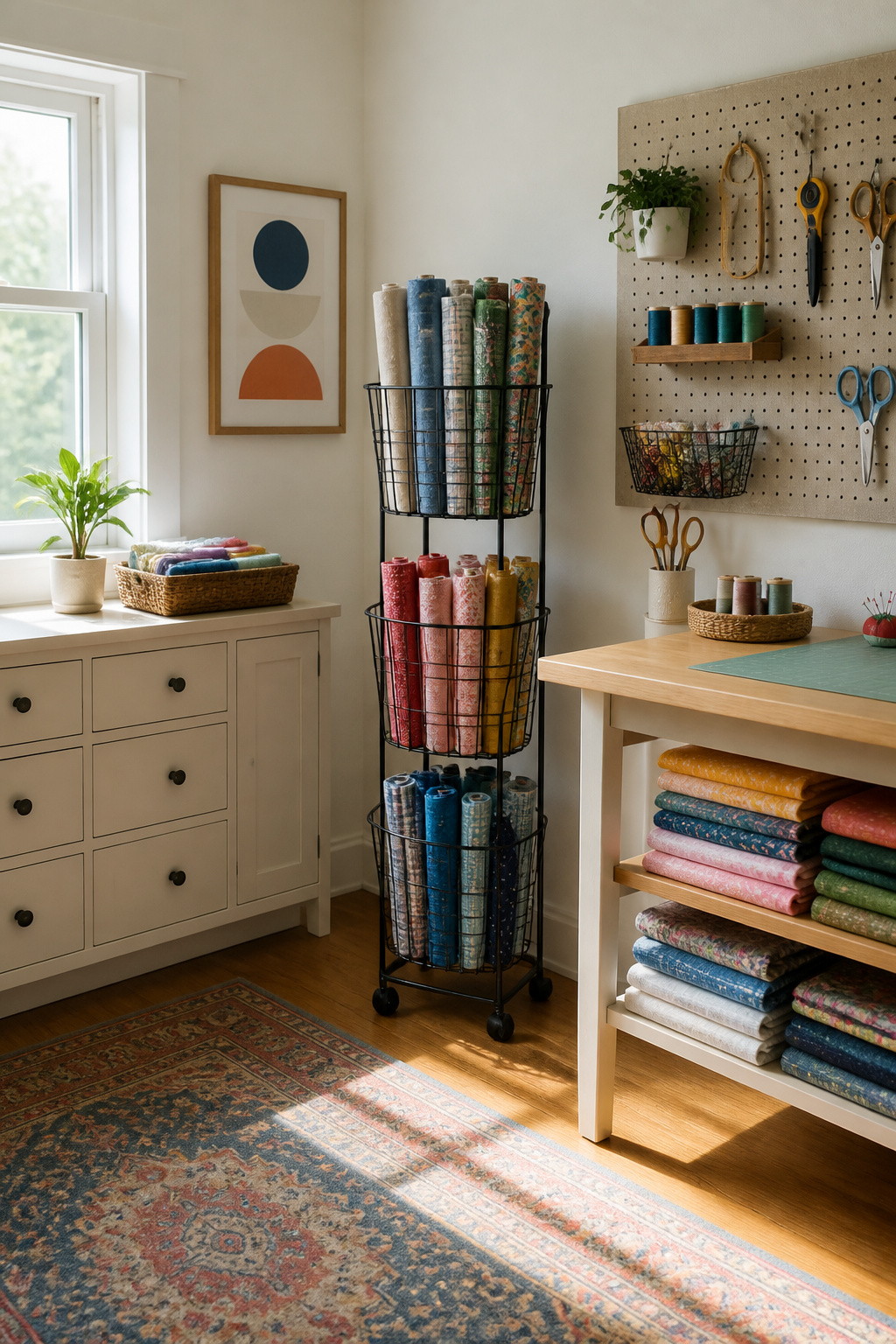
Wire baskets stacked three to five high on a wall or simple frame give you full sight lines into every roll without pulling a thing out. Most setups run 12–18 inches wide per basket, a footprint that fits the narrow gaps beside a desk or between machines. You can roll fabric to the basket height, secure it with a clear hair elastic, and stand rolls upright so the color shows from above; nothing unravels when you lift one out to audition it.
Solid-sided bins hide what you own. Wire does not. That visibility matters when you are hunting a specific scrap for a one-color block and do not want to unstack three tubs to find it. The whole tower moves, too. Roll it beside the sewing machine for quilt-as-you-go work, then shift it to the embroidery station for in-the-hoop projects. If a basket starts to feel too precious, relegate it to test-sewing scraps or hand it off to a friend who sews with kids.
17. Sort Fabric by Color

Sorting by color turns a chaotic stack into something you can actually use. When every blue sits together and every red lives in its own zone, you spot coordination options in seconds instead of pulling out half your stash to check. The visual payoff is real: a shelf graded from light to dark reads as calm workspace, not clutter.
The upfront cost is time. A full color sort of a grown collection takes the better part of a weekend, and you will find pieces you forgot you owned, which starts its own round of decisions. Go in knowing that. Smaller bits like fat quarters and scraps sort faster folded into shoe boxes or gallon bags by hue, while larger yardage on comic book boards lines up upright like books, each color family its own row. Some sewists file folded pieces in hanging folders by color, with a tiny swatch taped to the tab so you flip rather than dig. Clear bins let you scan without opening; opaque ones work fine with a label naming the color family inside.
The method pairs with almost any storage you already have: bookshelf, filing cabinet, cube shelf, stackable bins. What changes is the logic holding it together. Project-based sorting keeps pieces you bought together, but color sorting answers the question you actually ask standing in front of your stash: what do I have that goes with this? Kids can handle the broad sorting; let them call the borderline cases while you settle the close ones.
18. Shoe Organizer for Small Scraps
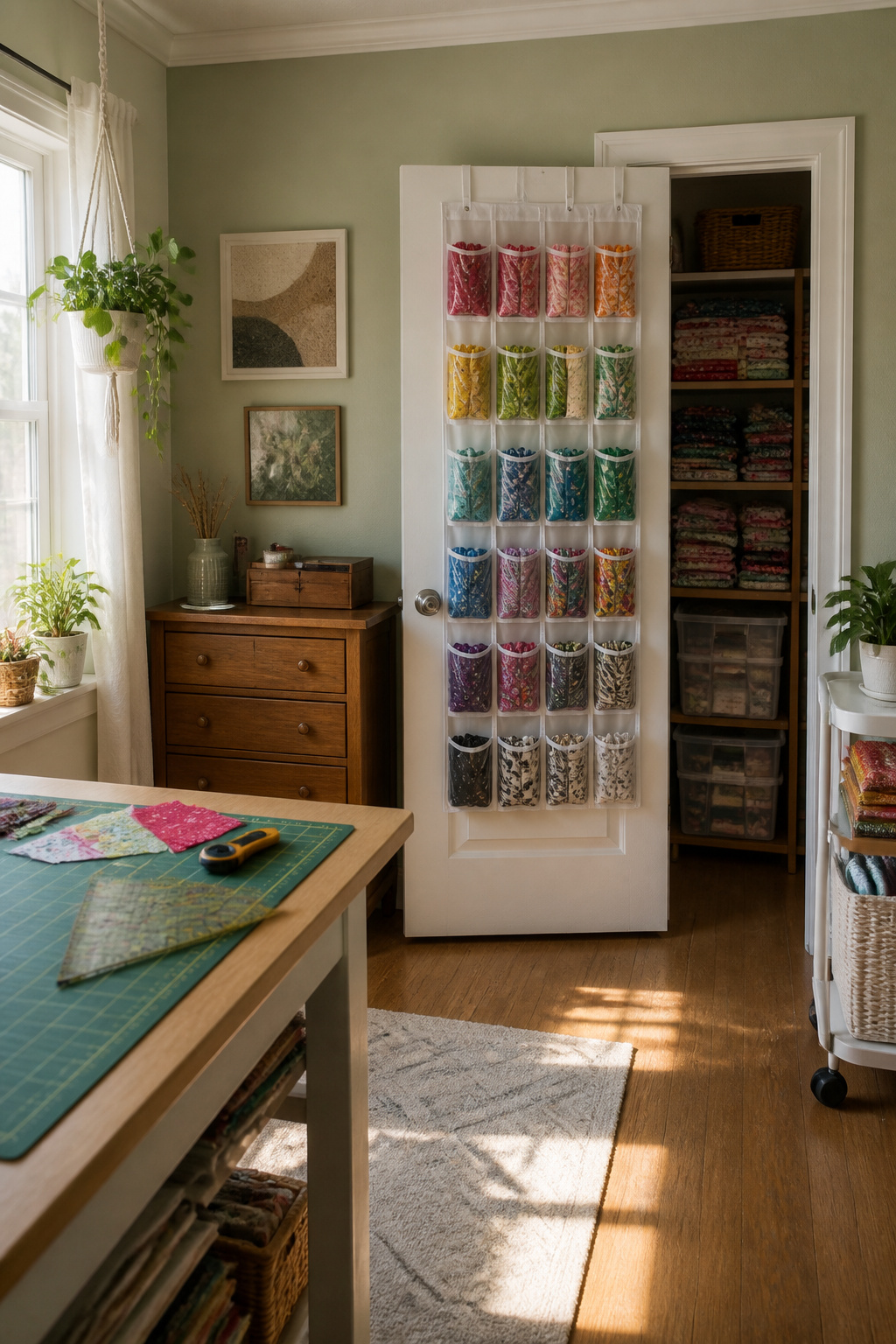
A clear over-door shoe organizer turns the back of any closet or room door into sorted storage for the pieces that otherwise vanish into piles. The standard sizes run 12, 24, or 36 pockets, and the 24-pocket version hits the sweet spot for most sewers: enough slots to separate tiny scraps by color without the grid turning into needle-in-haystack territory. Each pocket holds roughly a fat quarter’s worth of volume, or a small collection of buttons, bobbins, and bias tape if you dedicate a row to notions.
The door placement matters more than it sounds. Work surfaces stay clear, which matters when your cutting mat already owns the kitchen table, and the vertical face puts every scrap in view when you open it. No digging through opaque bins to find that one coral remnant. The tradeoff is that pockets this size tempt you to overstuff; once a bulge blocks the clear plastic, you have lost the visibility that made this worth hanging in the first place.
19. Decorative Box Storage

Decorative boxes let you store fabric in plain sight without announcing itself as craft storage. Bankers boxes, photo storage boxes, and lidded decorative boxes in standard sizes slide onto bookshelves or under console tables where plastic bins would look like clutter. The tradeoff is real: you lose the ability to see what you own at a glance, and a box that matches your living room palette does nothing to remind you that yard of chambray exists. One approach that works is keeping a single file box out in the open with fabrics you plan to sew this season, treating it as an inbox you actually want to open. The rest can hide in prettier boxes, but label them. Wallpaper offcuts or simple printed tags on the front edge bridge the gap between invisible and organized without breaking the visual calm you bought the box for in the first place.
20. Pegboard for Hanging Fabric
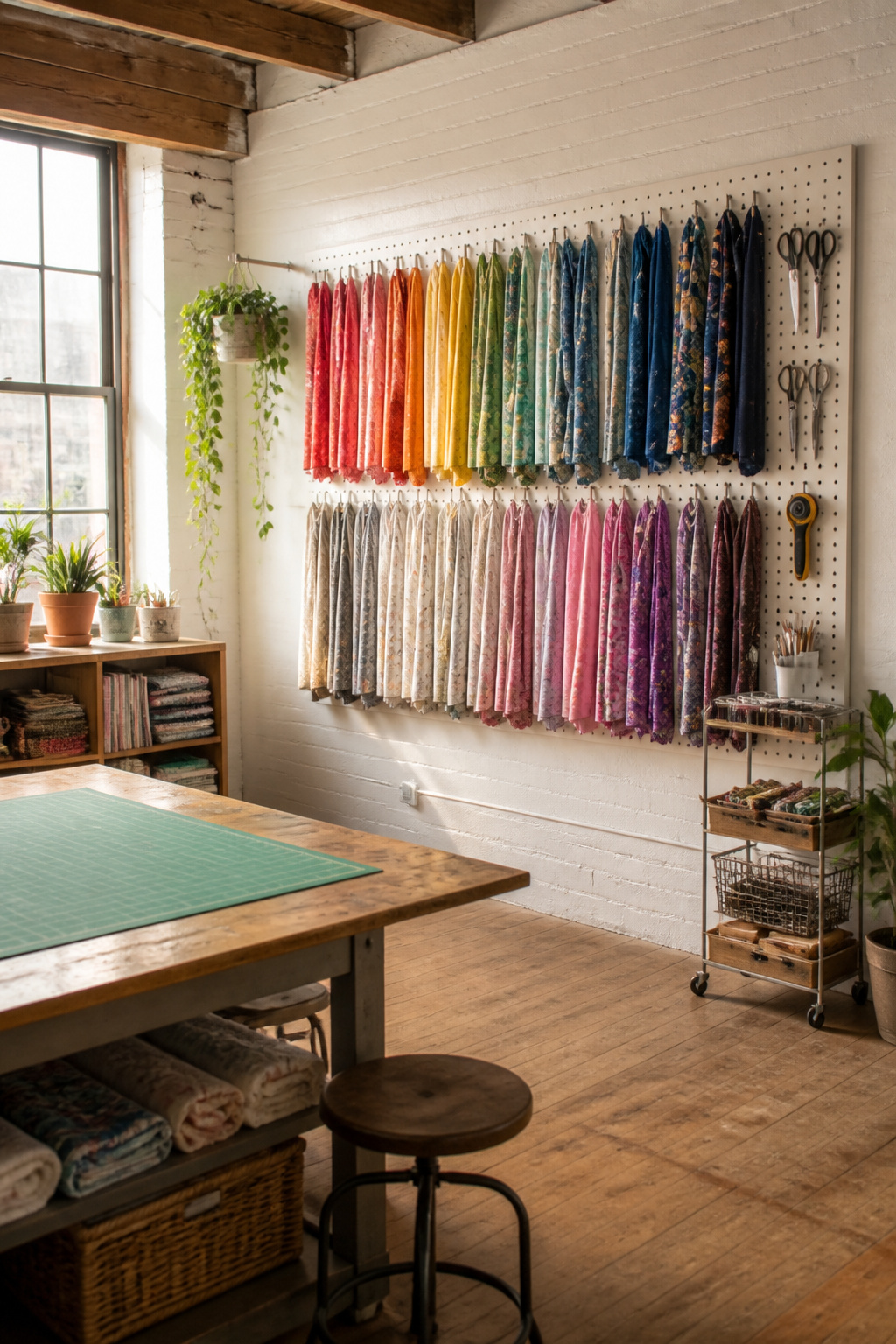
A standard pegboard panel runs 2 by 4 feet, the size most hardware stores stock and most wall spaces can spare. You mount it with a gap behind so hooks pass through cleanly; furring strips or a simple frame of scrap lumber do the job for a few dollars.
The hooks matter more than the board. Standard pegboard hooks with a single ninety-degree bend slip under weight, so buy the kind with a double bend or a locking tab. For fabric, J-hooks and extended-reach hooks work best: one holds a folded yard by its fold line, the other keeps a work-in-progress visible without creasing what you have cut. You can hang scissors, rotary cutters, and a small ruler right beside the fabric, which keeps the active project in one zone instead of spread across a table.
Renters get the real advantage here. Pegboard holes are narrow, about a quarter-inch. When you move, spackle fills them in one pass and a dab of touch-up paint hides the repair. Compare that to the torn drywall a mounted shelf leaves behind, and the deposit looks safer.
21. Under-Bed Fabric Storage
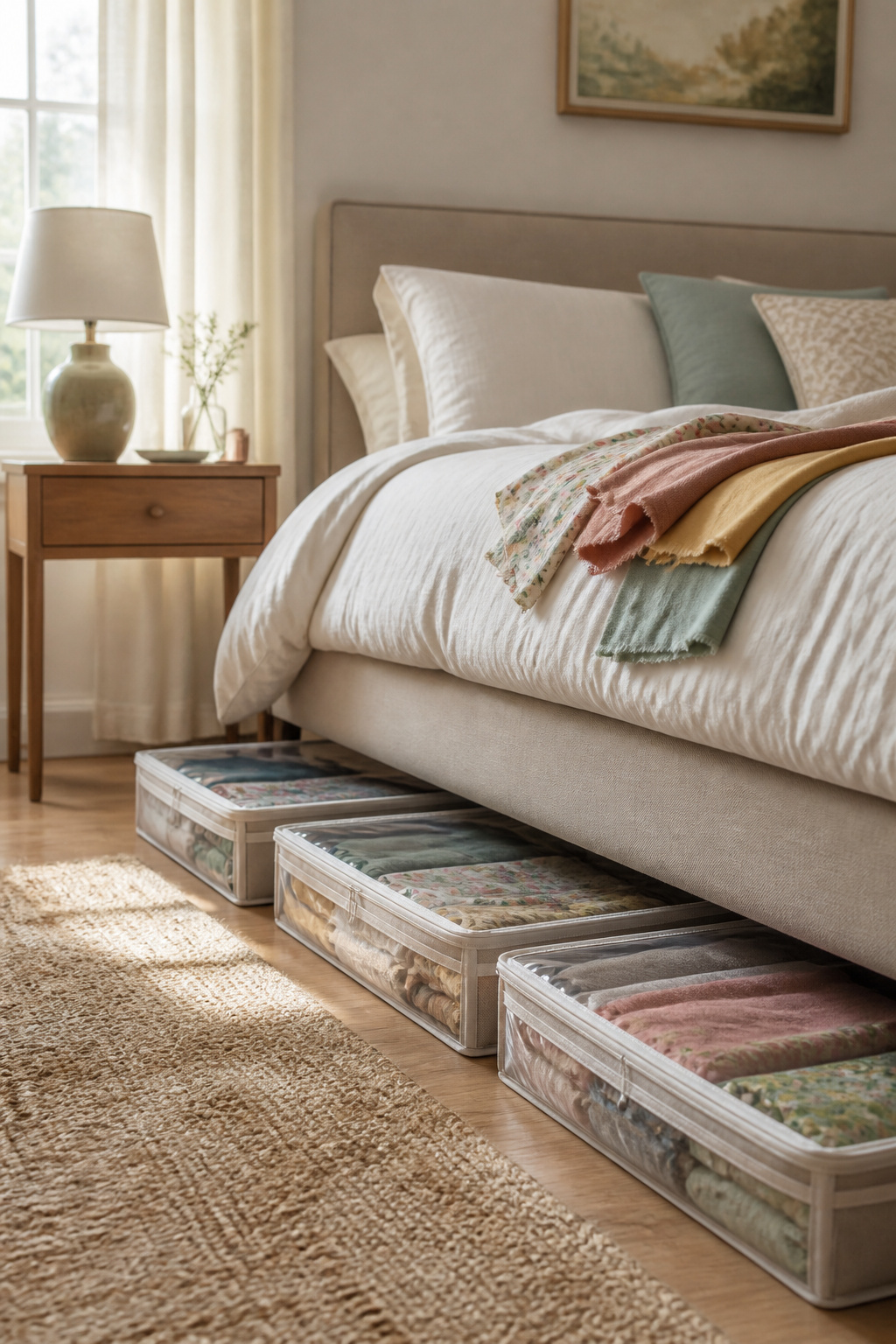
Flat, lidded containers built for under-bed clearance, usually 5–7 inches tall, slide neatly into the dead space beneath a bed frame and keep out-of-season or backup fabric clean and out of sight. Measure your bed frame height before you buy; a frame with only four inches of clearance turns that slick storage plan into a return trip to the store. These bins work best for fabric you touch once or twice a year, like holiday prints or yardage bought on sale for a future project. The lid protects against dust, but pulling a bin out, opening it, digging to the bottom, then sliding it back is enough friction that you will avoid it for anything active. If you are cutting into a stash weekly, under-bed storage quietly trains you to shop new instead of shop your own.
22. Closet Organizer for Fabric
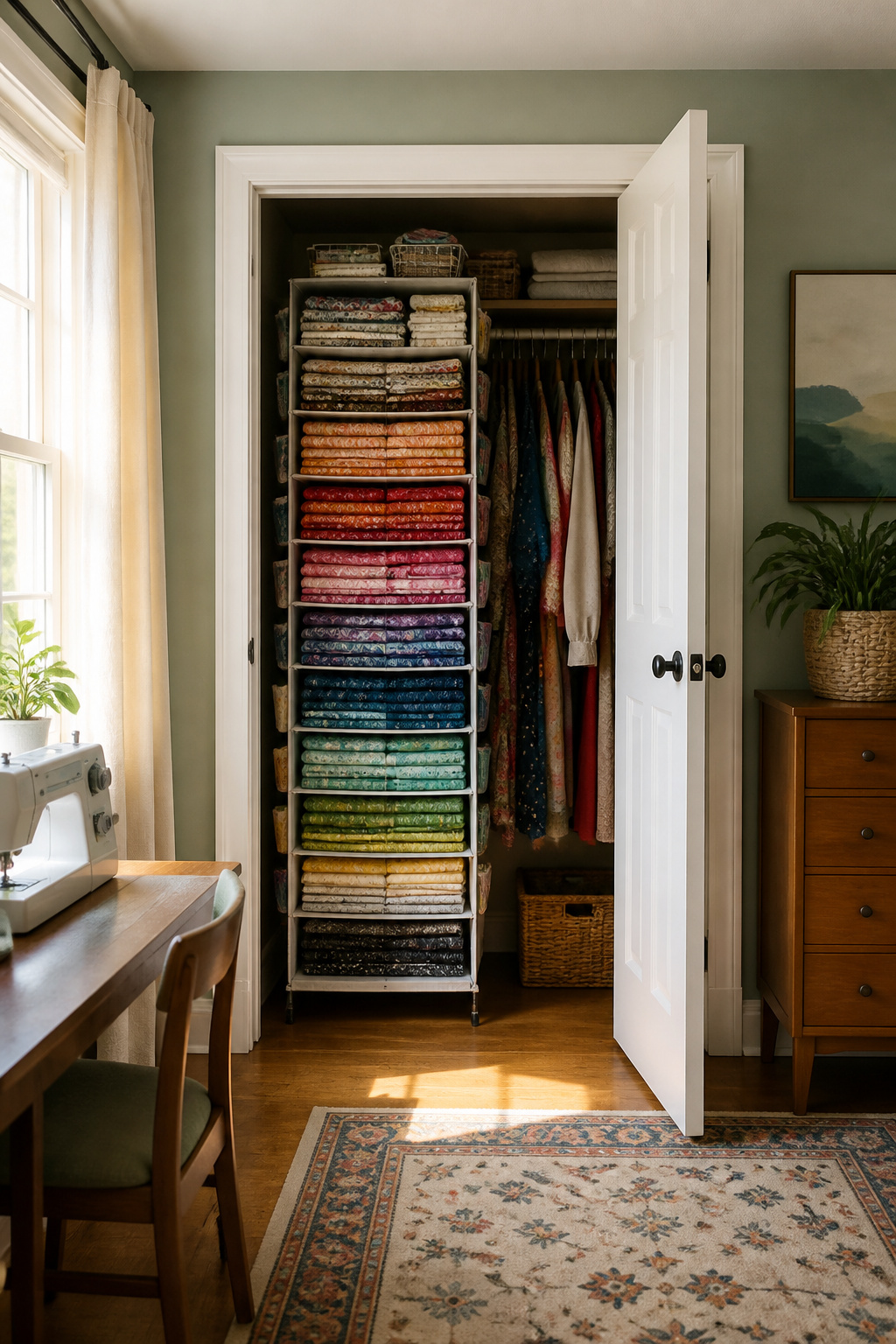
A hanging closet organizer with six to ten shelves turns the dead space in a spare or shared closet into fabric storage that stays invisible when the door is shut. Most units run 12–14 inches wide, which is narrow enough to tuck beside hanging clothes without swallowing the rod. You slide folded yardage onto each shelf like a stack of files; nothing hangs out, nothing needs a bin.
The move that makes this work for a renter is choosing a closet you already use for clothes. Your fabric lives behind your shirts, not in a separate piece of furniture that eats floor space you do not have. Shared closets force a harder choice: you will give up a foot or two of rod length, but you gain a whole vertical column of shelving that costs less than a bookcase and leaves no marks when you move out.
The limit is height. These soft shelves sag if you load a full bolt onto one level, so keep stacks under six inches deep and reserve the bottom shelf for heavier pieces. If your closet rod is the standard 66 inches from the floor, you will have room for an eight-shelf unit and still clear the floor by a few inches.
23. Bookcase Fabric Storage
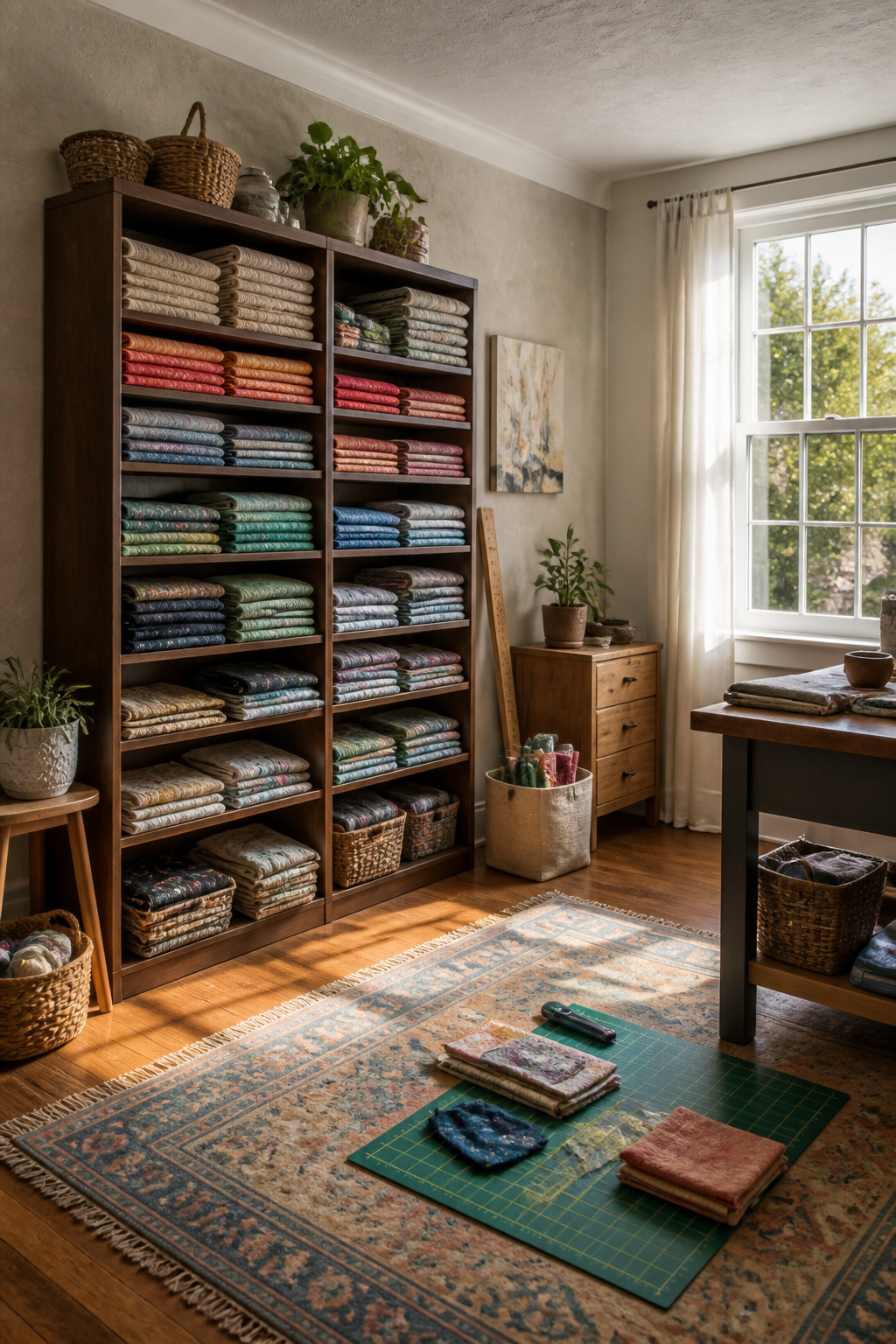
A standard particleboard bookcase, the kind you will find in 31-inch widths and 11-inch depths with adjustable shelves, handles folded fabric stacks better than most people expect. The key is setting shelf height to the fold, not the fabric. A stack of yardage folded to comic-book-board height needs a different clearance than the same fabric folded flat in thirds, and adjustable shelves let you match the spacing instead of wasting air above every stack.
Deeper sounds better until you live with it. An 11-inch depth holds a reasonable stack without letting pieces migrate behind the row and disappear. Go deeper and you will either lose fabric to the back void or overfill the shelf until the whole stack leans and unravels when you pull one piece.
For larger cuts, one approach is cutting a cardboard template to your shelf’s exact width and depth, folding the fabric to match, then sliding the template out. The stack keeps that shape. Magazine boards work too, and at 8.5 by 11 inches they suit wider fabric and taller shelves better than the standard comic size. Look for acid-free stock if the fabric will sit wrapped for months.
24. Fabric Storage Tower
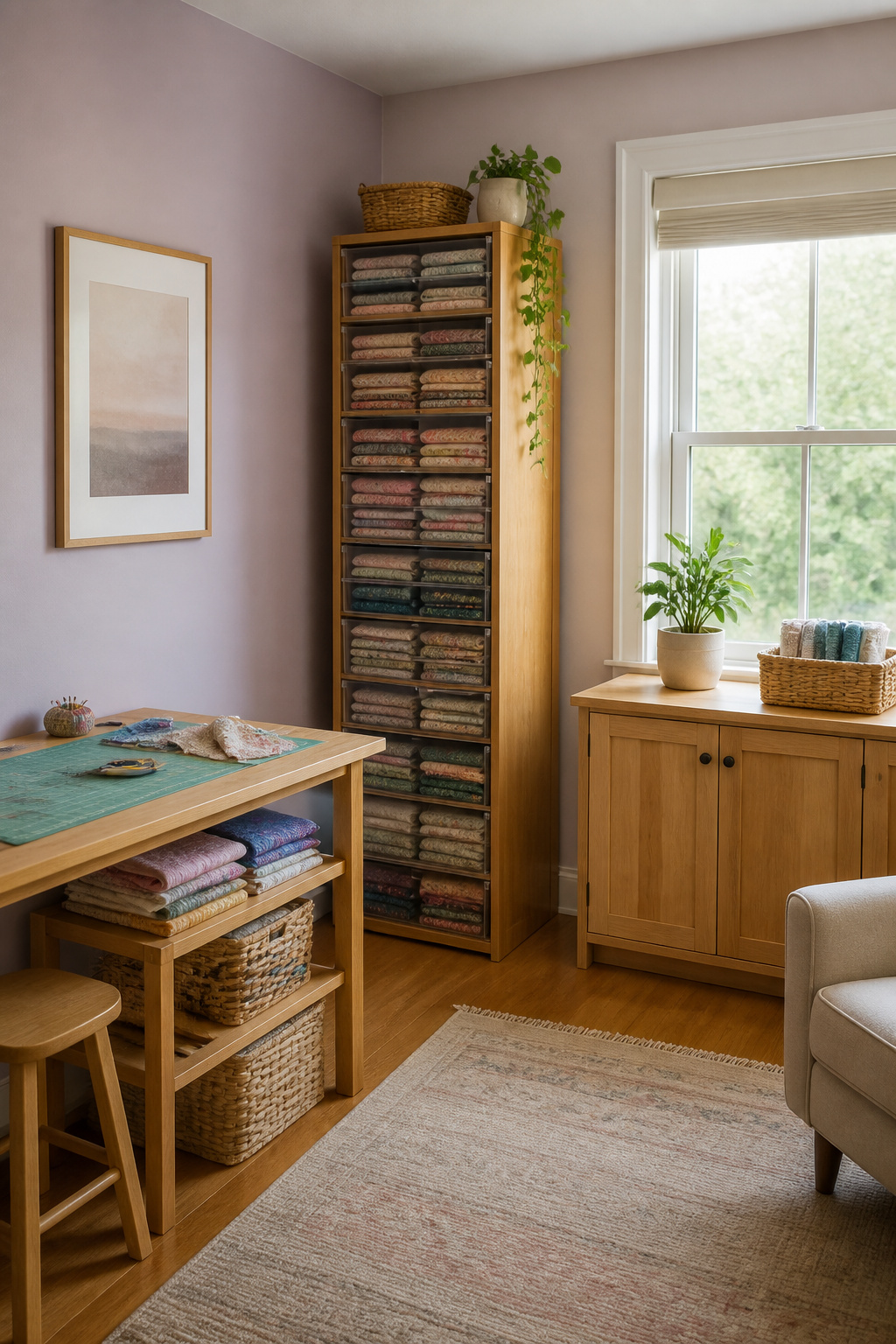
A dedicated fabric storage tower gives you vertical storage without eating your floor space. These units run 12–16 inches wide and stack five to eight drawers or cubbies in a single footprint, something a standard bookcase simply does not do. You get drawer storage for the height, not shelf storage for the width.
The narrow profile matters most in a craft room carved out of a corner. You can park one between a desk and a wall where a wider shelving unit would stick out and snag your hip every time you turn around. Drawers also hide the visual noise of a mixed stash; what reads as clutter on open shelving disappears behind a flat front.
What separates a tower from general craft storage is the ratio: height to footprint, drawers to total volume. A three-foot-wide shelf with two drawers is still mostly open display. A tower flips that ratio and keeps fabric flat, dust-free, and sorted by weight or project without extra bins.
The tradeoff is capacity. A tower holds less than a wall of shelves, and deep drawers can bury smaller cuts where you forget them. Label the front of each drawer, or accept that the bottom two will become the place good fabric goes to wait.
25. Tension Rod Hanging
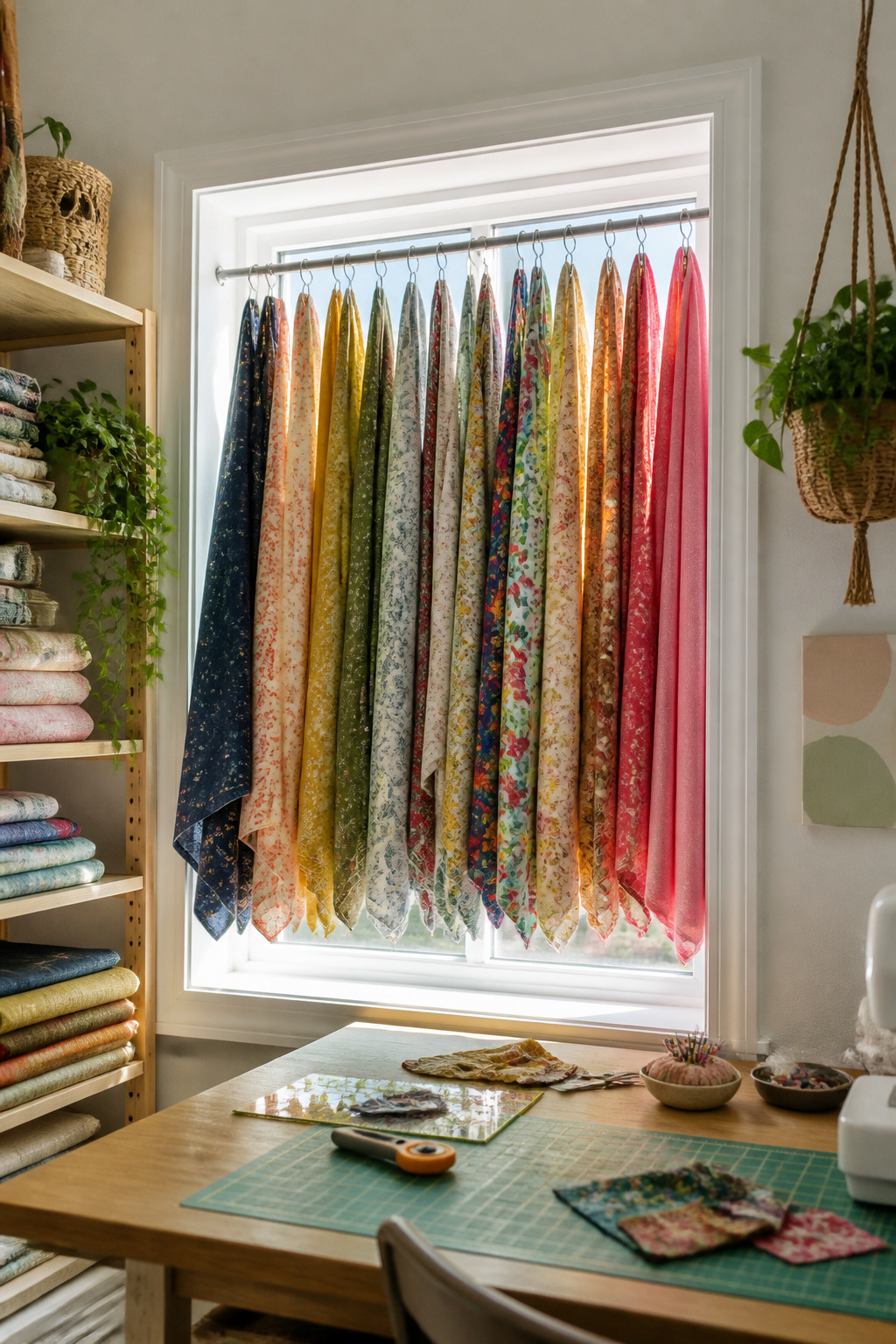
A tension rod turns any window frame, closet opening, or narrow wall gap into a hanging rack for fabric. Standard adjustable rods span 28–48 inches, though extendable versions reach up to 84 inches if you are working with a wider space. The pressure mount means no drilling, which matters if you are renting and patching holes before move-out is not on your weekend list.
Weight limits become the real question once you load it up. Heavier upholstery fabric or multiple layers of denim will sag a cheap rod into a slow collapse, usually at 2 a.m. when the bracket slips. Spring for one rated past what you think you own; fabric accumulates weight faster than it looks. I have seen a rod marketed for curtains hold twelve yards of quilting cotton without drama, then fold under a single heavy wool remnant.
Mount it high enough that the bottom stack clears the floor or window sill, and check the tension every few months. The rubber ends leave marks on painted drywall that scrub off with a magic eraser, but they will gouge wallpaper. If your walls are textured, the grip is worse; a closet with smooth jambs is the safer bet.
26. Plastic Stackable Boxes
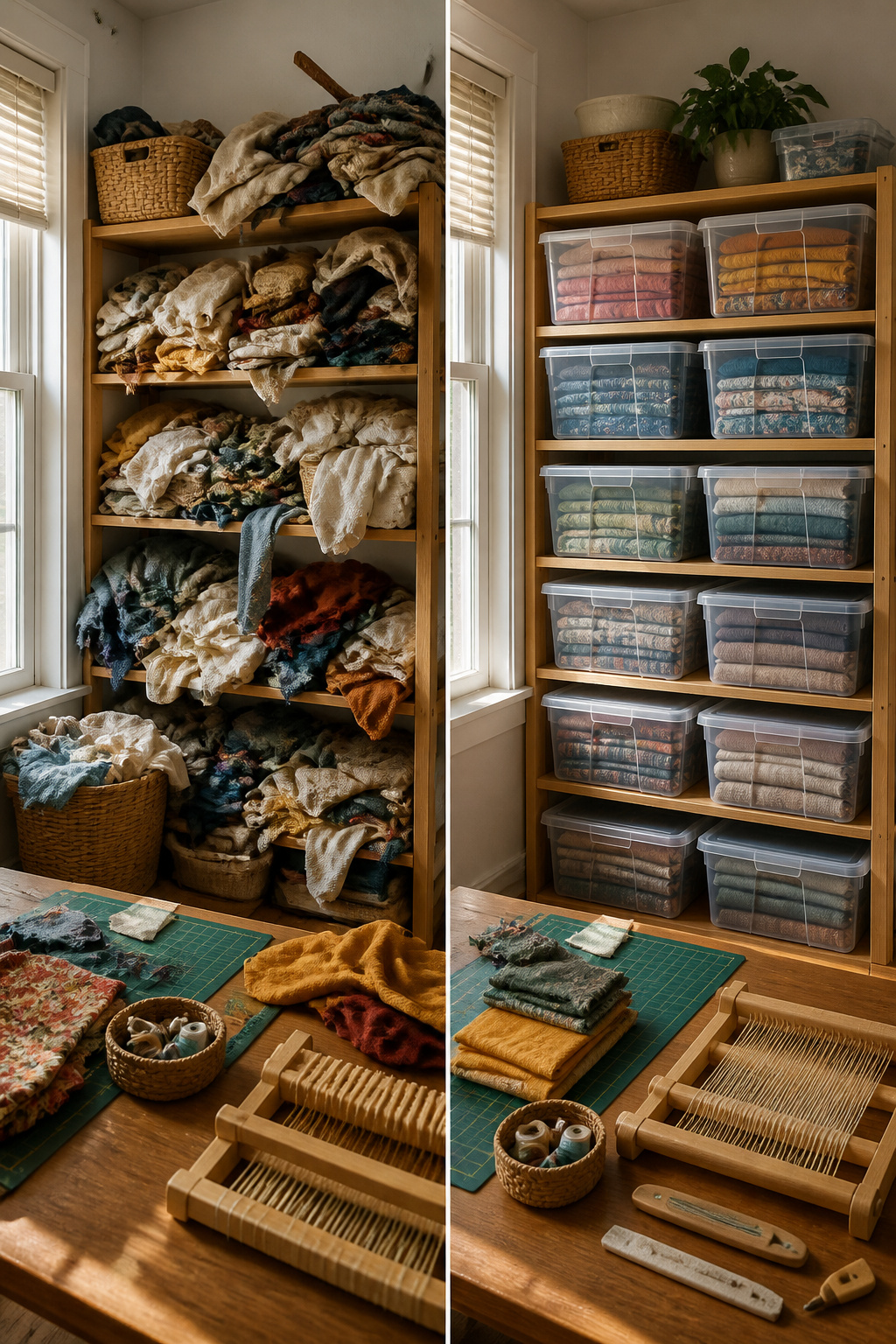
Clear plastic bins let you scan a stack in seconds and know whether the navy corduroy or the mustard linen is three boxes down. Opaque works fine too, but you will need a label on the front or the lid to keep from restacking the whole tower every time you hunt for a piece.
The usual sizes run 12 quart, 30 quart, and 50 quart. A 12 quart holds a few yards of quilting cotton stacked flat; a 50 quart swallows a winter coating or a whole garment project’s worth. The catch is the stack itself. Every box you add locks the one beneath it until you lift the whole column, so the box you need most often belongs on top, or on its own shelf where you can pull it free. If your space is tight and your projects rotate, two shorter stacks beat one tall one. You get to the bottom layer without unloading half the stash, and the lids still seal tight enough to keep dust and the cat out.
27. Drawer Organizer for Small Pieces
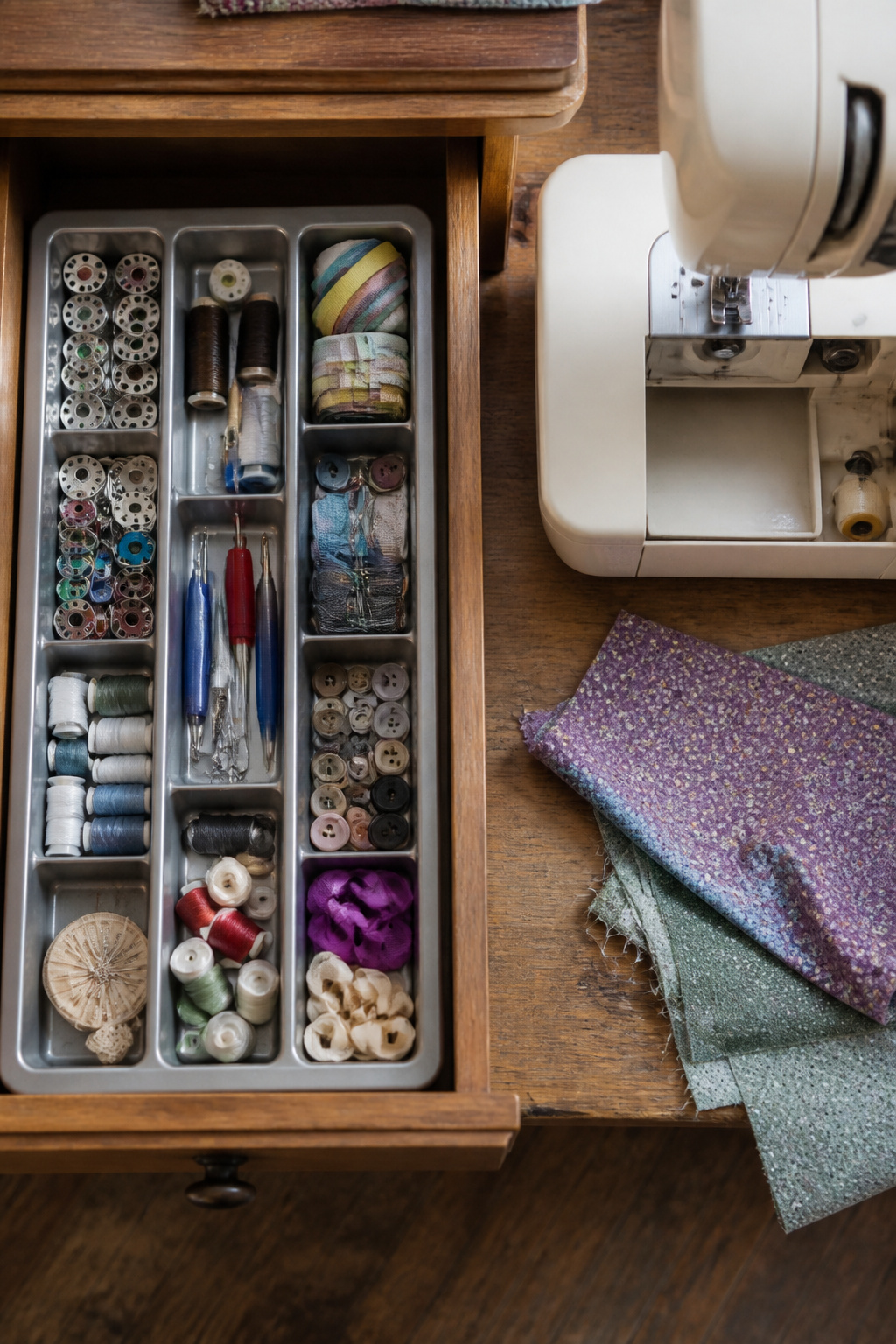
A silverware tray turned on its side, slots angled upward, will keep your bobbins, seam rippers, and tiny bias-tape rolls visible in one sweep. The Joseph Joseph cutlery caddy, roughly 15 by 4 inches, runs about $12 and sits slim enough to perch on your sewing table without claiming workspace. That angled-slot design matters more than the brand: flat-bottomed compartments hide the small stuff under the stuff in front.
For drawer use, shallow beats deep every time. A 2-inch tray divider lets you scan five to nine compartments at a glance; a deep bin buries your zipper pulls under elastic you forgot you owned. Expandable-width organizers, the kind that press outward to grip drawer sides, let you reconfigure as your notion collection shifts from snaps to Velcro to whatever your next project demands. Deep drawers work for fat quarters stood on end, but for the truly small items, the little trays and dividers meant for office supplies or kitchen utensils outclass anything marketed to sewists at twice the price.
28. Armoire for Fabric
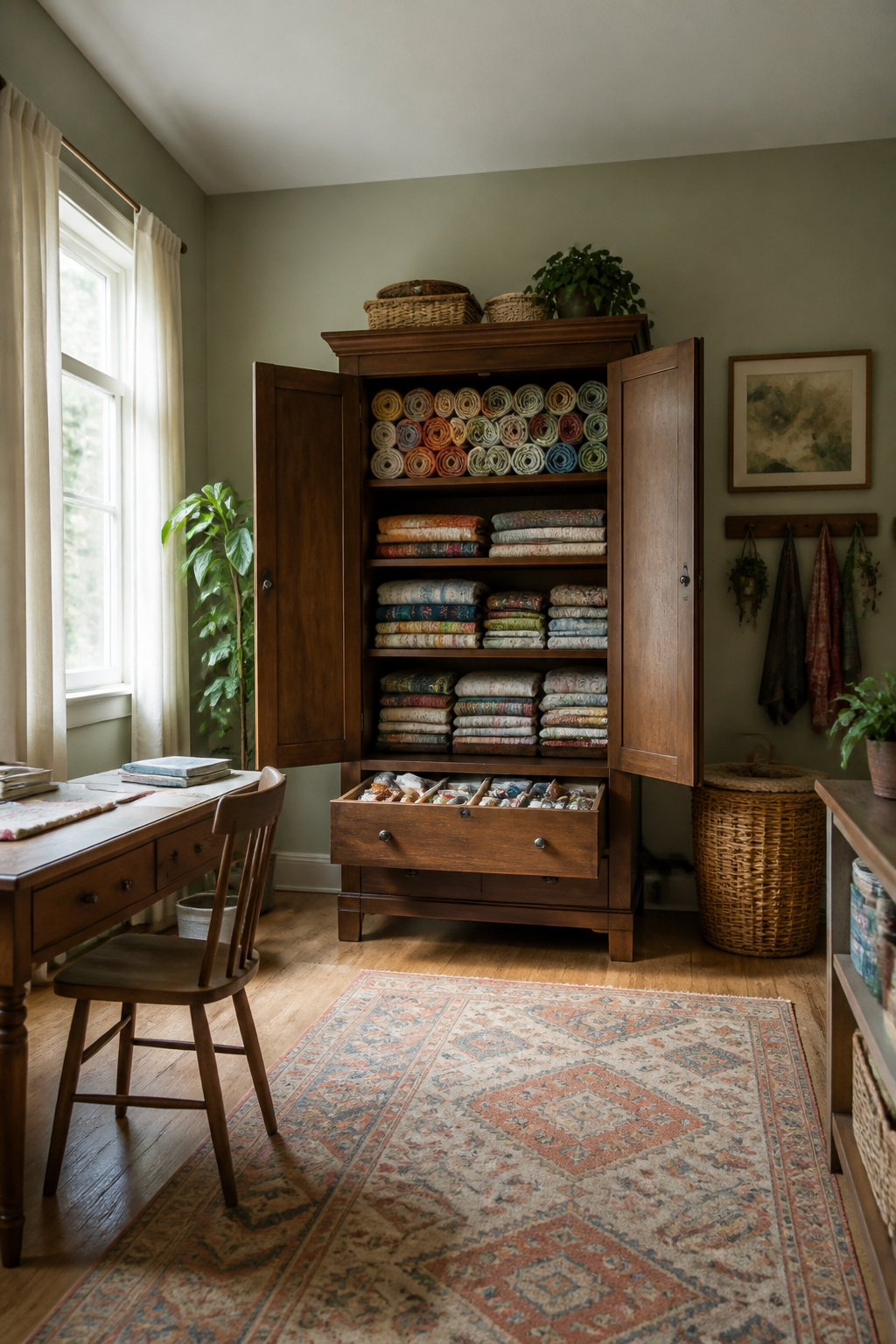
A clothing armoire gives you three zones in one piece, which is why it works for fabric when a single shelf or rod would not. The hanging rod across the top holds bolts upright so they do not crease, while fixed shelves below stack folded yardage you reach for often, and the drawer at the bottom catches scraps and notions before they scatter. Typical armoires run about 40 inches wide, 20 inches deep, and 60-plus inches tall, a footprint that fits against a bedroom wall without eating the room but still swallows a serious stash.
I would not bother with the shallow reproduction wardrobes sold as jewelry or linen cabinets. You need that 20-inch depth so a folded stack of quilting cotton does not hang out the front and collect dust. If the shelves are adjustable, move one up to accommodate taller bolts and leave another spaced for standard 44-inch folded widths. The hanging rod is the feature most people overlook: slide a full bolt onto a pants hanger or S-hook and it stays pressed and visible, not buried in a pile you disrupt every time you hunt for the bottom print.
Drawers matter more than people expect. Fabric stores itself beautifully until you add the thread, zippers, and pattern pieces that turn a neat shelf into chaos. One deep bottom drawer corrals those extras so the main storage stays usable. A solid wood armoire with weight to it will not tip when you pull a bolt from the rod, which is worth checking if you buy secondhand and the back panel is thin fiberboard. Budget two to four hours for emptying, wiping down, and loading; the sorting you do while you fill it saves more time later than the setup costs now.
29. Corkboard for Swatch Display

A standard 16 by 20 inch corkboard gives you enough room for forty to sixty swatches pinned in loose rows, which is plenty for most color-matching jobs without turning your wall into a showroom. You can pick one up for under $15 at an office supply store, or go larger if you have the wall space and a bigger stash to pull from.
The real difference from a swatch binder is that the board stays where you can see it. You pin up what’s active, pull down what’s not, and the arrangement itself becomes a kind of thinking. A binder protects swatches better long-term, but it buries them; you have to remember to open it. The board works best for projects in motion, when you are walking past the same wall ten times a day and need the color to catch your eye before you buy the wrong thread again.
For renters, the board hangs on a single nail or a strip of Command adhesive. When the project ends, you unpin, roll the swatches into a labeled envelope, and the wall is bare by dinner.
30. Decorative Baskets for Display
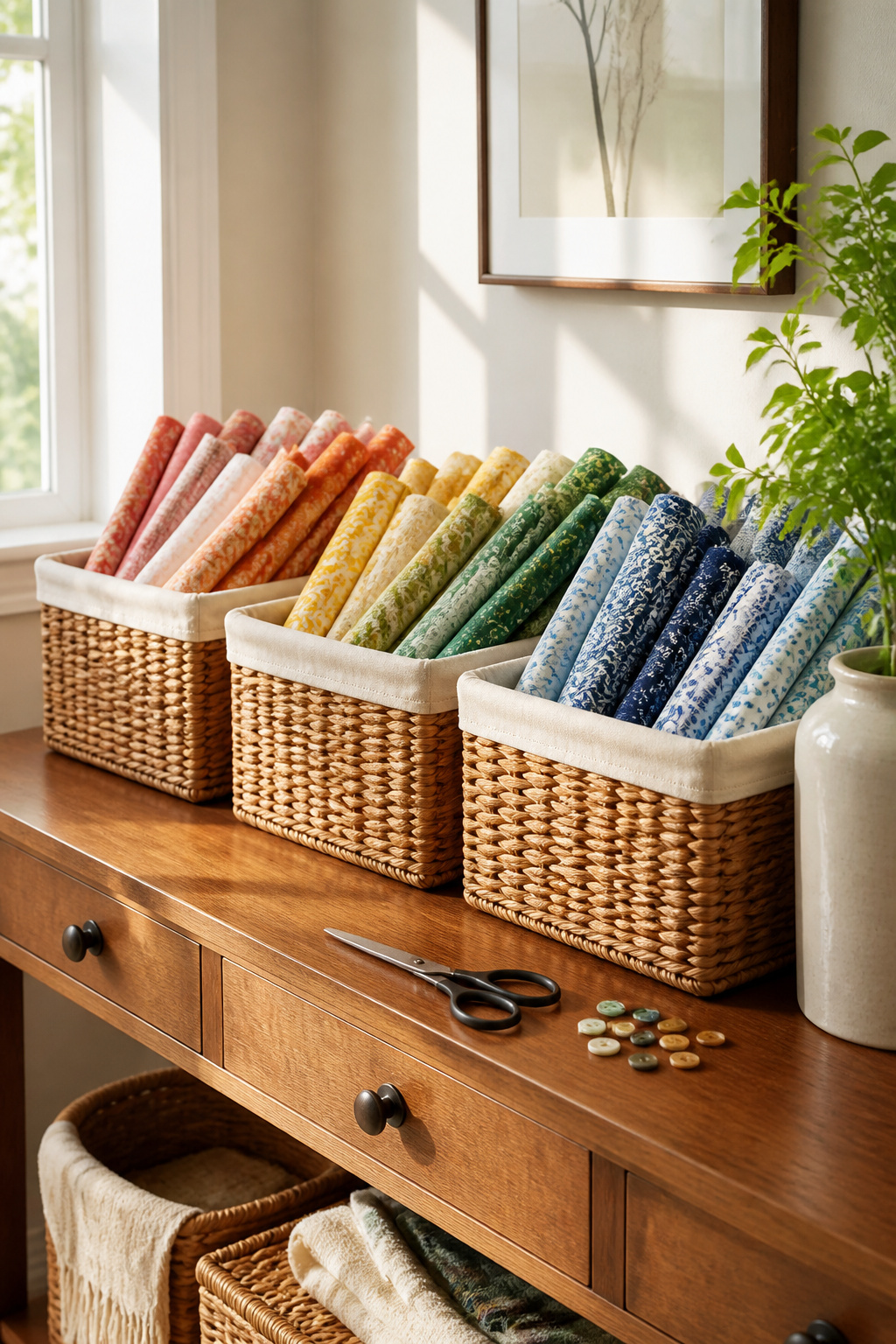
Woven baskets let your fabric stash live in plain sight without announcing itself as a sewing room. Roll your yardage to the height of the basket, secure it with a clear hair elastic, and stand the rolls upright so you can see every color at a glance. This setup keeps single rolls from unrolling when you pull one out to audition it, which is the neatness trick that makes the system last past the first week.
A fabric lining matters more than the basket itself. Unlined wire or coarse weave will catch delicate cottons and snag anything with a loose weave. A simple cotton liner, tacked in place, protects what you have invested in the fabric.
Lids are the trade you have to weigh. They keep dust off and let you stack, but they also hide the colors that drew you to display storage in the first place. If your baskets live on an open shelf in the living room, lids buy you permission to put them there. If they sit in a bedroom corner where only you see them, leave the tops off and treat the rolls as the color block they are.
31. Closet Rod for Bolts
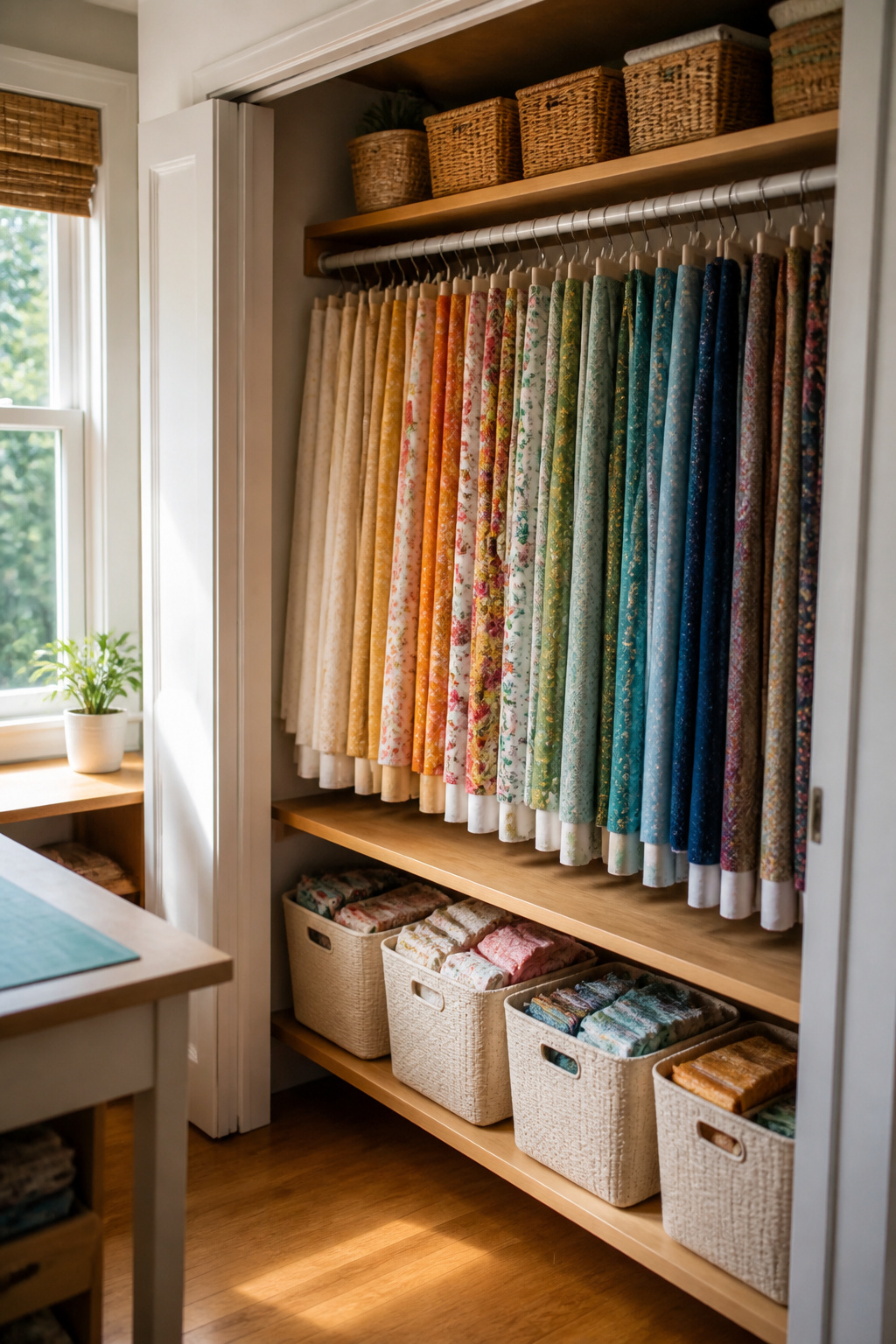
A closet rod hung at roughly 60–66 inches from the floor clears most bolt lengths and keeps the bottom fold from dragging. Mount it inside an existing closet or between two bookcases, the way some sewers have built their own units, and you get the horizontal hanging method fabric stores use: each bolt slides on, selvage to selvage, so you see every print without unstacking anything.
This setup works best for full bolts. The weight keeps them from curling, and the yardage stays smooth without the creases you get from folding. Cuts and scraps behave differently: they lack the heft to hang straight, and shorter lengths tangle or slip. For those, the drawers below the rod, or a separate bin, are the better match. If you already wash fabric before sewing, dust on the exposed ends is not much of a concern.
32. Decorative Ladder Display

A decorative ladder is not the same thing as the step stool you already own. The ones meant for display have smoother wood finishes, wider rungs, and a wider stance at the base so they do not rock when you lean them against a wall. You can find old wooden ladders at estate sales or build a simple one from 1×2 lumber if you want to control the height and rung spacing.
Leaning works fine on carpet or hardwood if you angle the ladder so the feet sit well behind the base of the wall. For tile or if you have pets, wall mounting with a single bracket at the top rail removes the tipping risk entirely.
Drape fabric over each rung rather than hanging it by a corner. A full-width fold across the rung keeps the piece visible and wrinkle-free, and the weight of the fabric draped on both sides prevents the slip you get with a single layer. Heavier bolts belong on the lower rungs; lighter yardage and scraps can sit higher without pulling the ladder off balance. The result reads as functional wall art, but cozier than a metal rack, and you can pull a piece without disturbing the rest of the stack.
33. Fabric Storage Bags
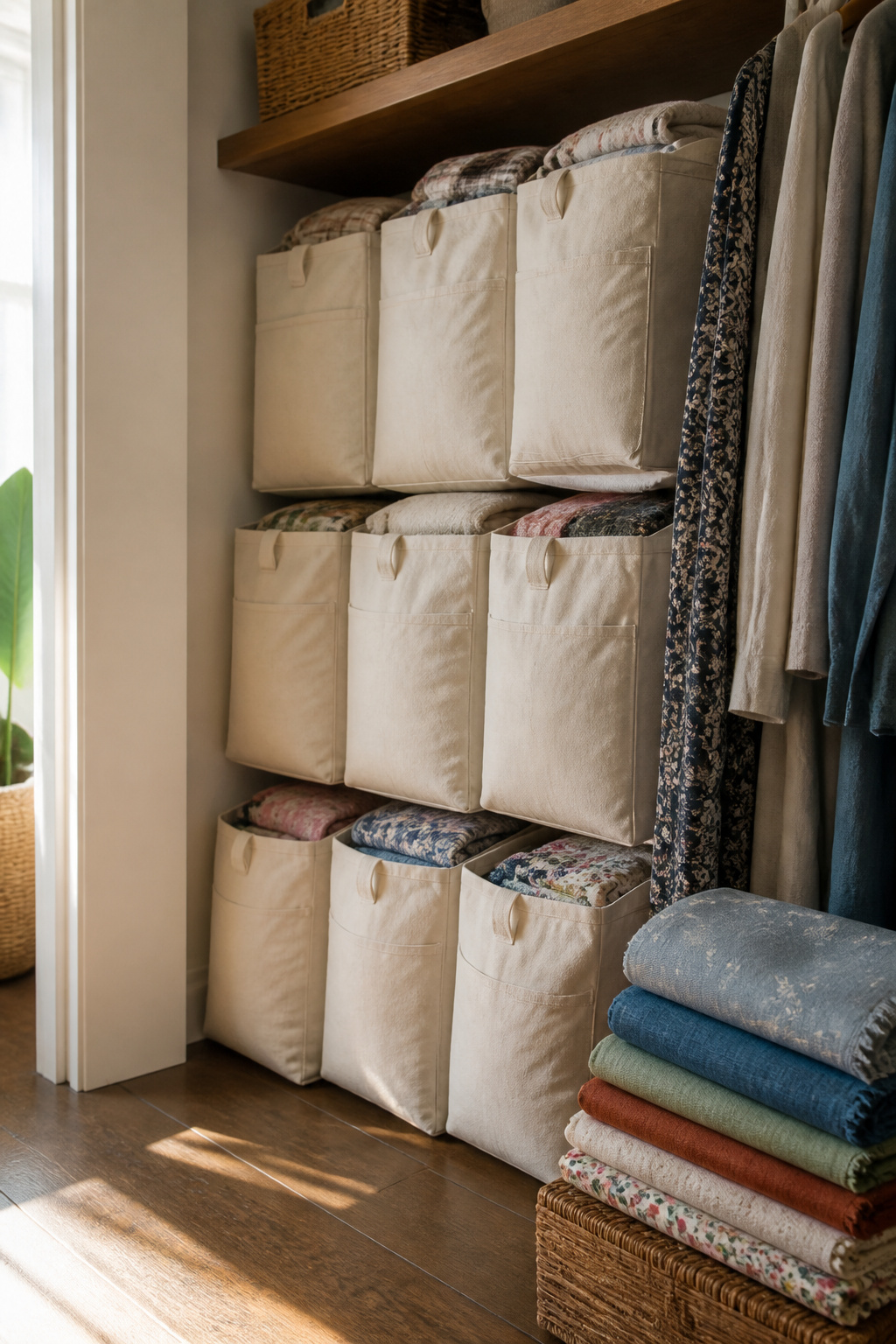
Soft fabric bags work best for the pieces you touch rarely: winter wool pulled in May, costume satin bought on sale for a project six months out, the lengths you inherited and have not found a use for yet. Cotton, canvas, and breathable synthetics let air move through the weave slowly, which matters more than most people expect. Sealed plastic traps the moisture fabric already holds, and over a season or two that stagnant humidity weakens fibers and invites the smell of mildew you cannot wash out. A drawstring cotton bag or a zippered canvas pouch costs little, stacks flat when empty, and slides onto closet shelves or under beds without the rigid corners of a bin. Choose light colors so you can label the outside with a fabric pen, and skip anything with a waterproof coating. The point of long storage is not to seal the world out; it is to let the fabric breathe while it waits.
34. Repurposed Furniture Pieces
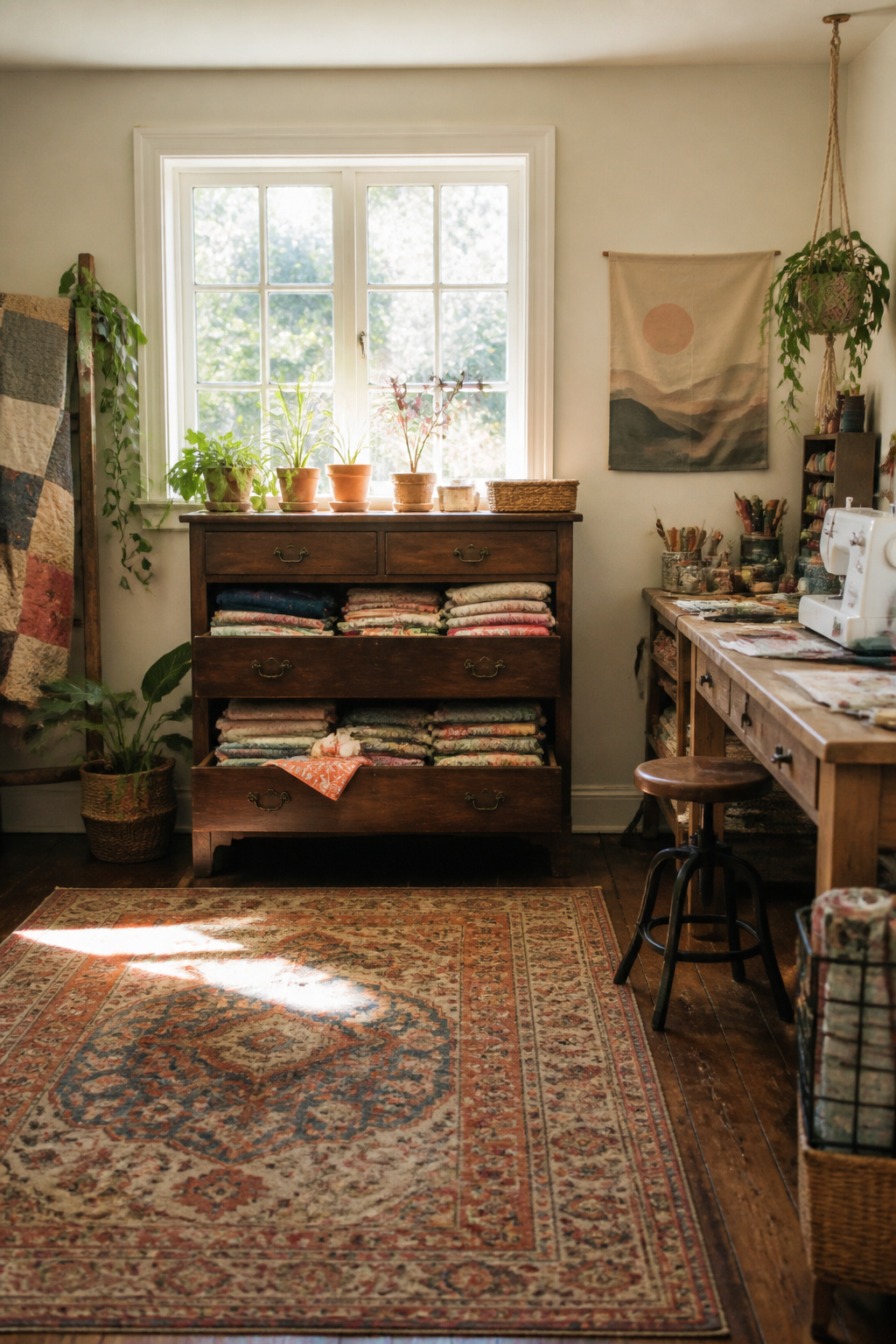
Old dressers and sideboards you find secondhand make solid fabric storage when you choose pieces with drawers deep enough to hold folded yardage without crushing it. File cabinets fall into this same category, and they turn up constantly at estate sales and Habitat ReStores for very little money. The hanging-file frame inside a standard two-drawer cabinet can hold fabric draped over the folders, which keeps smaller cuts visible and upright.
Surface prep matters more than the piece itself. Drawer interiors in used furniture often hide splinters, old stains, or residue that can transfer to light-colored fabric. A quick sanding and a coat of water-based polyurethane on the drawer bottoms stops snags and seals in anything the previous owner left behind. Skip the scented drawer liners; they leave oils that linger in natural fibers.
Entertainment centers work too, especially the older style built for tube televisions with one deep central cavity. That center well fits rolled bolts or folded stacks, while the flanking cupboards hide works-in-progress. One reader turned an armoire into exactly this setup, using the upper shelf for folded fabrics and the lower drawers for overflow. The glass-fronted versions let you see color groupings without opening doors, which is the same reason glass-fronted bookcases rank high for fabric visibility.
Weight the piece before you buy it. A loaded dresser holds more than you expect, and particleboard shelves sag under quilting cotton faster than you would think. Solid wood sides and back panels are worth the extra ten dollars at the register.
35. Rolling Bin for Scraps
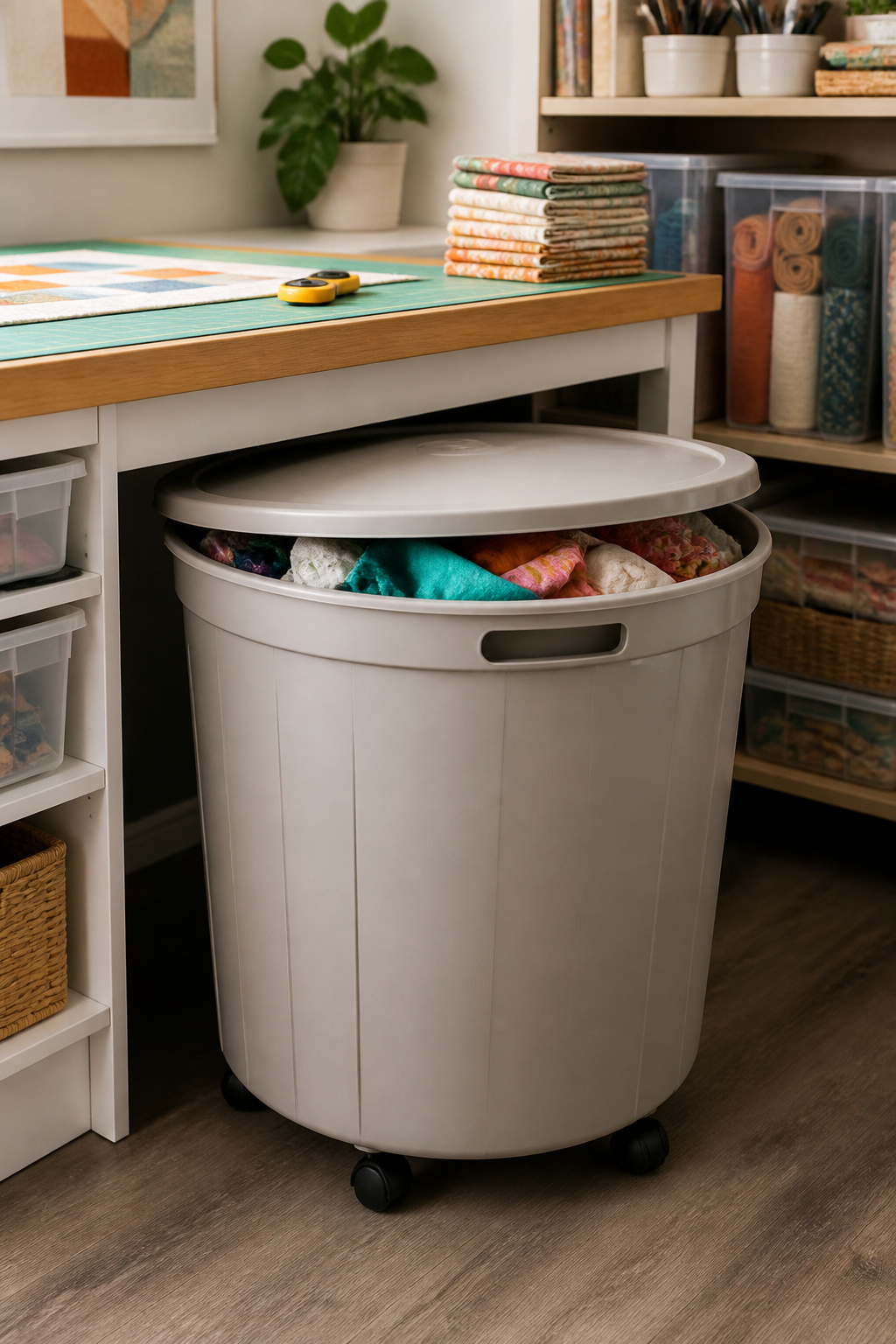
A single large rolling bin with a lid keeps every offcut in one place, which is exactly why it works and exactly why it fails. Most people land on 18 to 30 gallons, the size that fits under a standard cutting table and still rolls through a doorway. Scraps go in at the end of every session, no sorting required, no guilt about whether a strip is worth keeping. That frictionless entry is the point. Without it, the floor piles up again by Tuesday.
The catch is that unsorted volume fills faster than you think. Three months of active sewing and you are digging past t-shirt knit to find the denim you need. The bin does not replace sorting; it delays it. Plan a quarterly session where everything comes out, gets pressed flat, and moves to labeled bags or the donation pile. Skip that stage and the bin becomes a black hole you avoid opening. Lids matter more than you would expect, too. Fabric left open collects dust and fades where the window hits it, so the cheap bins without secure tops are a false economy for anyone near natural light.
36. Clear Tote for Project Containment
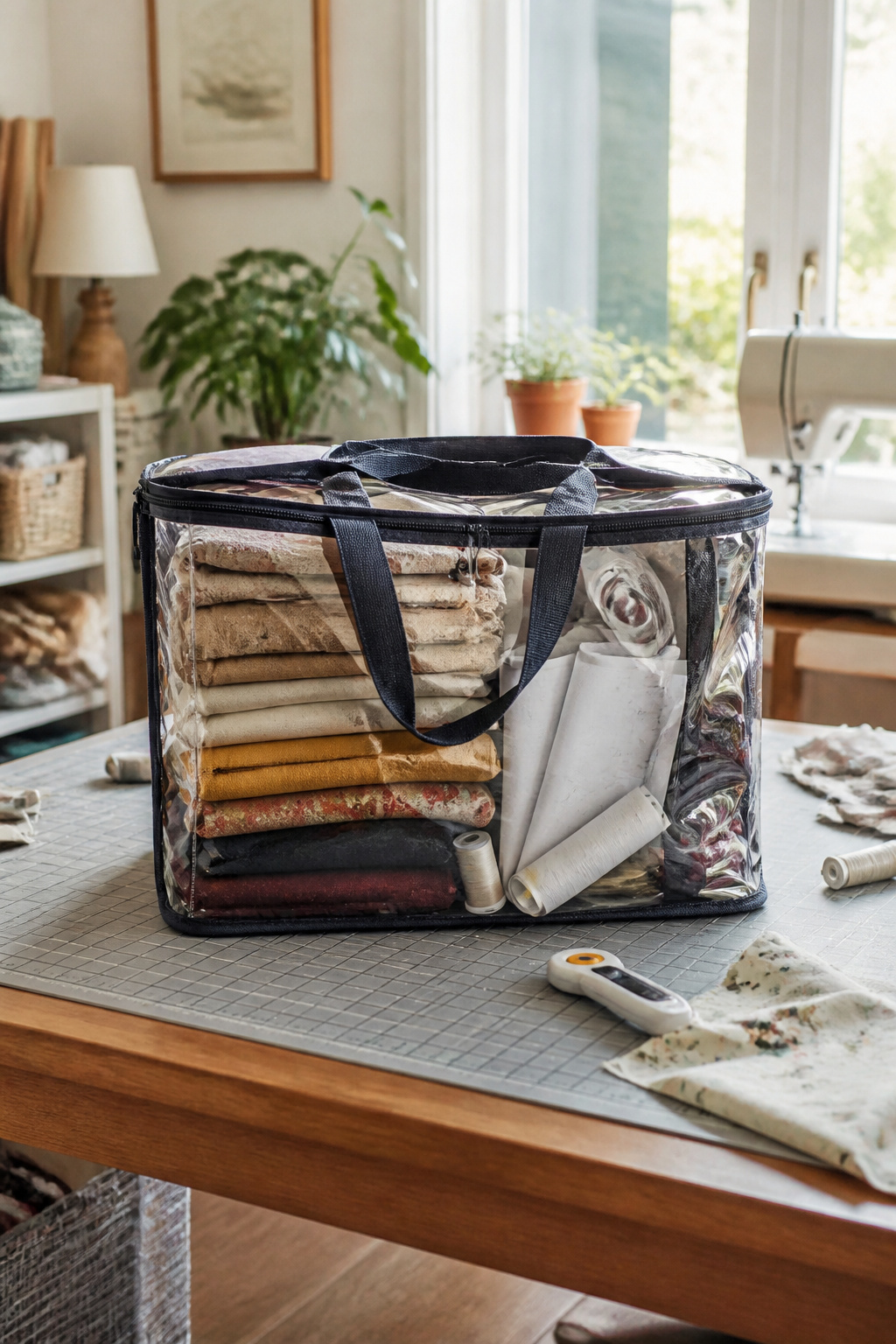
A single clear tote keeps one project’s worth of fabric, pattern, thread, and notions together without the bulk of a rigid bin. Most sewists land in the 6- to 20-quart range: smaller for a single garment, larger for a quilt top with backing. The sides are usually semi-rigid or soft, so the tote flexes into a closet shelf or slides under a table, and the built-in handles mean you can carry it to a class or a friend’s house without switching containers.
This differs from zippered pouch storage in both volume and structure. Pouches work for precut kits or English paper piecing supplies; they collapse under the weight of two yards of denim or a quilt’s worth of yardage. A tote stands upright, keeps fabric from shifting, and lets you see everything at a glance through the clear wall. If you juggle multiple active projects, assign each its own tote size by bulk rather than buying identical ones. A 6-quart tote for a blouse pattern and three cuts of rayon will leave you frustrated; size up until the lid closes without compression, or your pressed pieces emerge creased anyway.
37. Drawer Unit for Sorted Stash
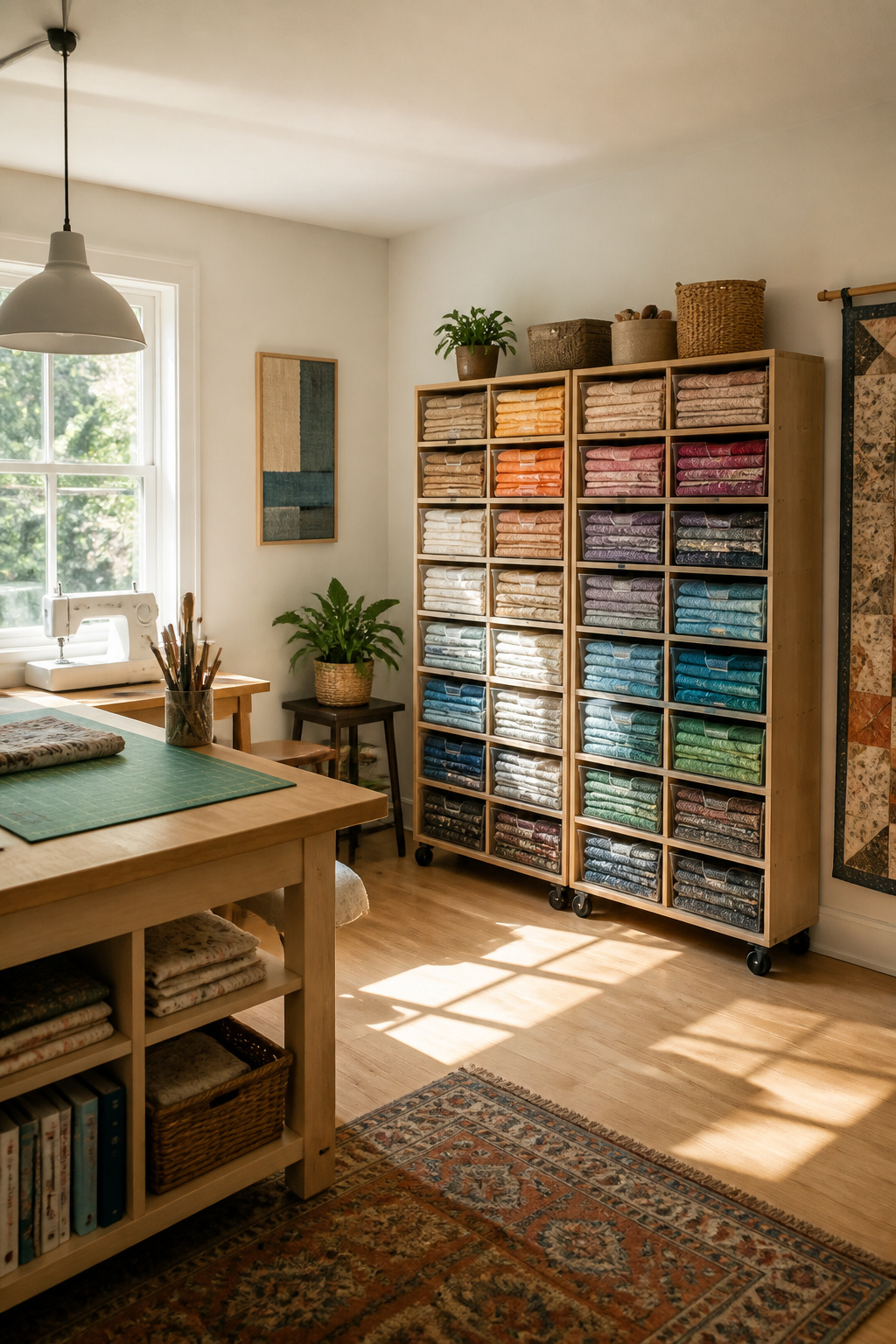
Modular drawer units on casters give sorted fabric the structure that open shelving never quite manages. Most setups run 6 to 12 drawers, each roughly 12 by 12 inches, which happens to fit folded fat quarters or half-yard pieces laid on end so you can scan the stack without pulling everything out. Plastic or wood both work; the real difference is whether you need to move the whole unit to a cutting table or keep it parked against a wall.
The catch is what happens after the first month. Without labels, you will stop opening drawers and start piling new fabric on top. One approach is labeling by fabric type, the way you might separate quilting cotton from canvas and interfacing. If interfacing is eating your space, pull it out and store it elsewhere; it is bulkier than it looks and does not play well with folded yardage. A drawer organizer, sewn from stash fabric if you want the irony, keeps smaller cuts from sliding into a jumble when you remove a tray.
Casters matter more than people expect. A loaded 12-drawer wood unit is heavy enough that dragging it will gouge floors, and you will stop rearranging the room if movement is a project. Check that the casters lock, or park the unit on a mat.
Why Color Sorting Matters Most
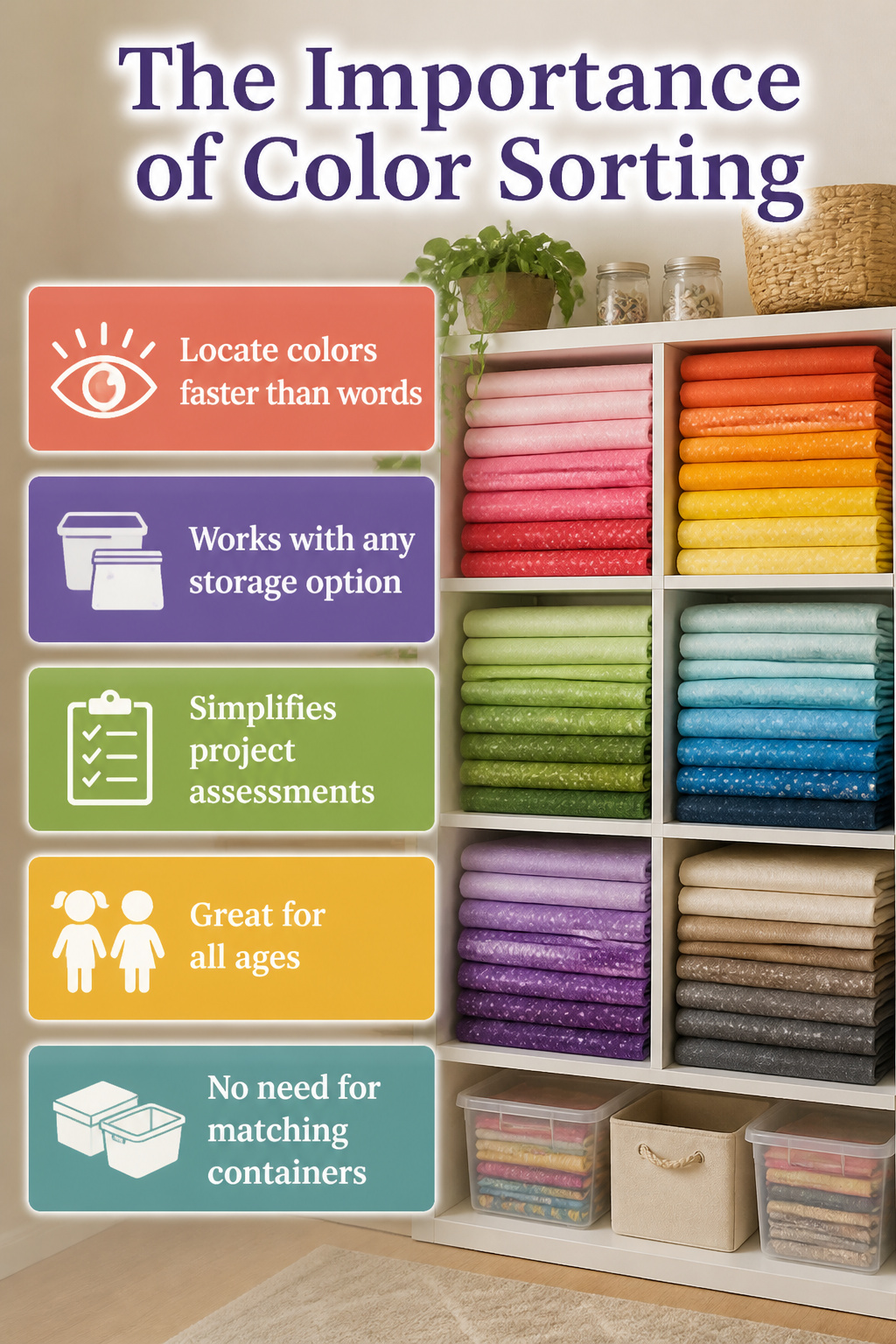
Color sorting is the one principle that shows up in almost every fabric storage setup, and there is a reason it survives every trend in containers and shelving. Your eye locates color faster than it reads a label, which means you spot the navy corduroy or the coral linen without pulling half the stack onto the floor.
The system works with whatever you already own. Shoe boxes, gallon bags, clear bins, or stacked on open shelves, the color sequence does the organizing. You do not need matching vessels or a dedicated sewing room. A reader with two plastic totes under her bed and a third on a closet shelf still benefits from keeping reds together and blues together, because the mental map stays the same across every container.
There is also a practical payoff at project start. When you can see at a glance that you have three fat quarters in olive green and none in charcoal, you know immediately whether the stash supports the plan or whether you need to shop. That assessment takes seconds with color sorting and much longer with any project-based or size-based system, where the same fabric might be split across three boxes labeled "quilt backing," "scrappy stars," and "pre-cuts."
The sources disagree slightly on whether to recruit kids for the sorting. One writer mentions her children loved helping with scraps, framing it as a shared task. Another treats it as solo work. Either way, the method itself does not change: group by hue, store in whatever holds the piece size, and trust your eyes to do the finding.
Small Space Strategies
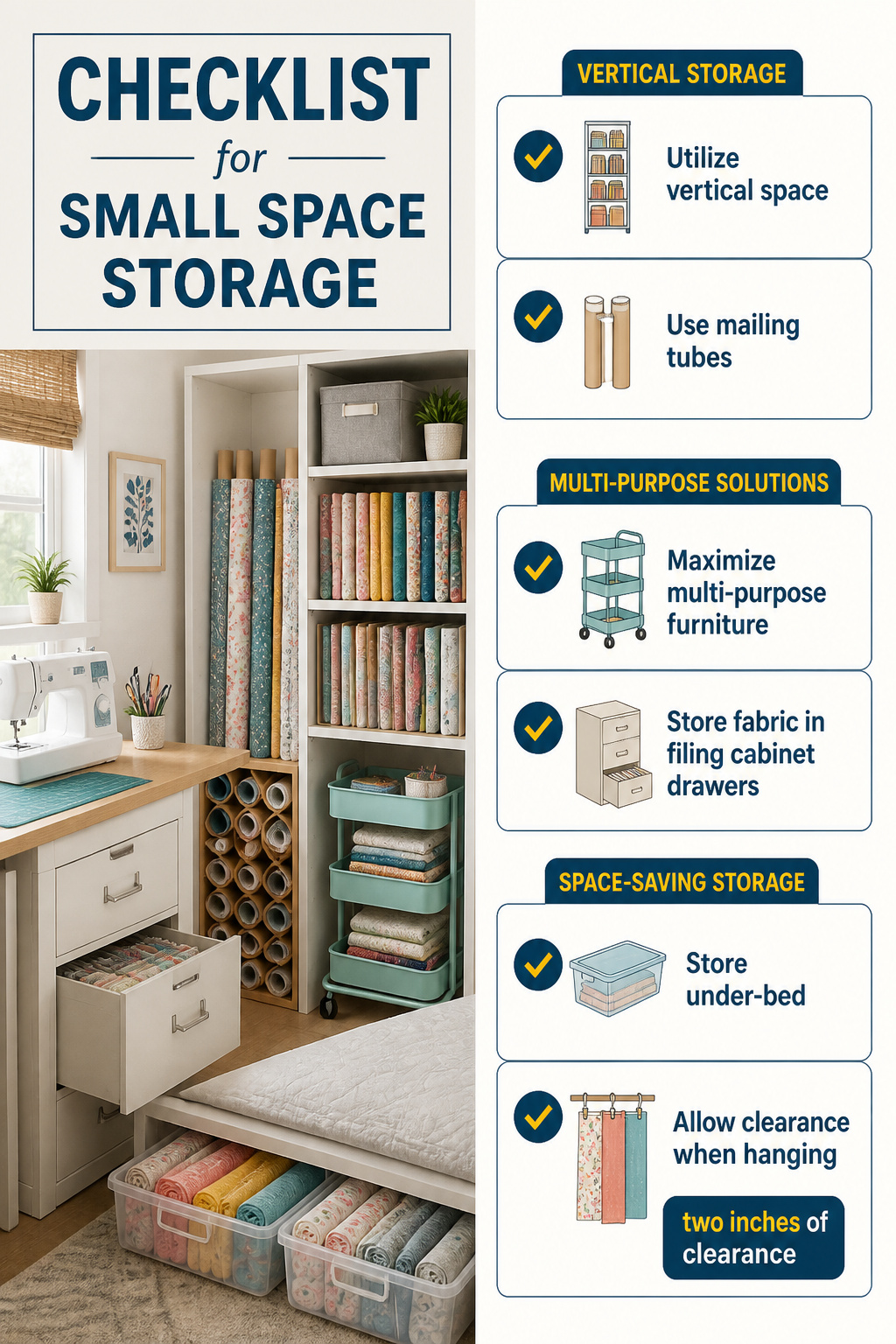
Vertical space is where small-space fabric storage lives or dies. A standard eight-foot ceiling gives you roughly six feet of usable wall above any desk or counter, and that gap is usually empty.
Rolled fabric on mailing tubes slots into the narrow gap between a bookcase and wall, or stands in a wine rack on the floor. The tubes keep bulky wools and French terry from swallowing shelf depth. For lighter yardage, comic book boards wrapped as mini bolts let you pack quilting cotton into a single cubby with almost no air between pieces.
Multi-purpose furniture carries the load when you have no dedicated sewing room. A rolling cart holds your active project by day and slides into a closet by night. Filing cabinets drawer-height under a desk store fabric in hanging folders; the footprint is the same as the desk legs you already have. Under-bed bins work for the overflow, but only if you roll rather than fold, so the fabric fills the rectangular space edge to edge.
The mistake most people make is treating wall storage as decorative. Pants hangers on a closet rod, a ladder leaned against drywall with fabric draped over the rungs, a string of clips on a tension rod: these only work if you leave two inches of clearance for the fabric to hang without bunching at the bottom. Skip that measurement and your "vertical solution" pools on the floor by Wednesday.
When to Purge Your Stash
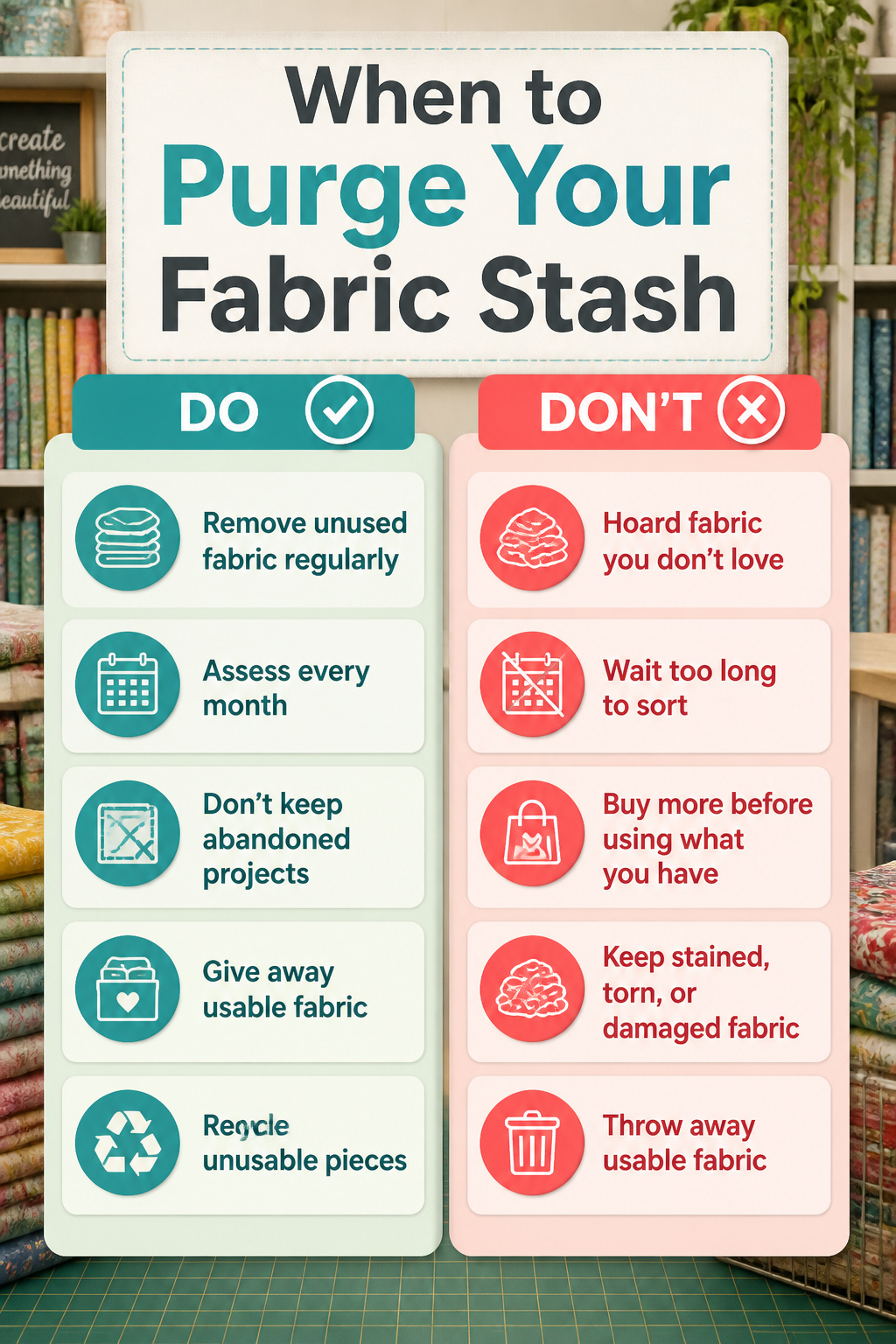
Regularly removing fabric you no longer want or use is the only reliable way to keep your storage system from collapsing under its own weight. Most sewists who stay organized set a simple rule: if you have not loved a piece in two years, it leaves the house. The same goes for yardage bought for projects you abandoned, or the bolt that looked different online and has been sitting in a corner ever since.
The actual sorting does not need to take a weekend. Set a 15-minute timer once a month and touch every piece you own. Shake it out. If your reaction is hesitation rather than a clear plan, move it to a giveaway pile. Local quilt guilds, school theater programs, and Buy Nothing groups will take fabric in usable condition. What is stained, torn, or truly unusable belongs in textile recycling, not the trash.
This habit matters because storage ideas only work when they fit what you actually keep. A bin system designed for three shelves of fabric becomes useless once you have six. Purge before you reorganize, not after, and you will buy the right containers once instead of twice.
Frequently Asked Questions
How do I organize my fabric stash?
Sort by color, project, or fabric type so you can find what you need without digging. Color sorting works with almost any storage you already own: line comic-book-board bolts upright like books, file folded pieces in hanging folders, or group clear bins by hue. A swatch binder with yardage and fiber content noted for each piece keeps overflow stash from turning into storage amnesia.
Can fabric be stored in plastic bins?
Clean plastic bins with lids are the most recommended container type for fabric storage. The transparency lets you scan a stack in seconds, and the seal blocks dust and moisture that can mildew cotton and wool. A 12-quart bin holds roughly six to eight yards of folded quilting cotton; 30- or 50-quart stackables work for larger collections sorted by color or project type.
What’s the best way to store fabric?
Rolling fabric instead of folding saves space and keeps creases from setting in. Fold the fabric in half lengthwise, then roll from the selvage edge tight enough to hold shape but not so tight it stretches the weave. Use a cardboard tube or halved paper towel roll for wide pieces that need support. Rolled logs stand upright in bins, slide under beds, or fit wine rack slots, and they let you see every print at a glance.
How do I store fabric scraps?
Sort scraps by color or by size, whichever matches how you hunt for pieces, and keep them in open baskets or clear zipper bags. Open baskets let you drop leftovers in mid-project without breaking stride; a lid turns two seconds into twenty and scraps pile up instead. Standard 13-inch cube baskets fit IKEA Kallax shelves, and shallow enough to see every print at once beats deep stacks where prints disappear.
Should I wash fabric before storing it?
It is up to you. Washing first lets you know whether the fabric will shrink or bleed before you cut into it, and it removes finishes applied in transit and warehousing. Some sewers prefer everything clean and pre-shrunk in the stash; others store as-is and wash only when a project starts.