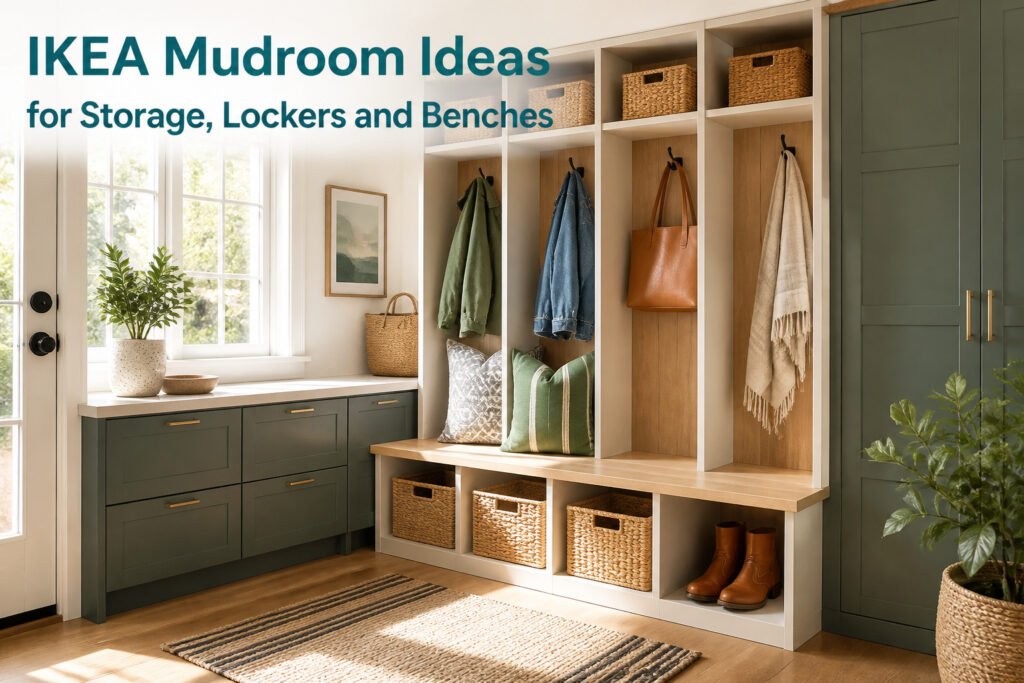
IKEA mudroom ideas work best when you treat the flat-pack system as raw material rather than finished furniture. The difference between a project that looks built-in and one that looks like a dorm room is usually a $40 lumber yard top and a coat of bonding primer on laminate surfaces. Most of these builds land under $500 for the core storage, but that figure assumes you are willing to anchor cabinets to each other instead of the wall and add your own crown molding to fake the custom millwork look.
IKEA BESTÅ Cabinets for a Built-In Bench
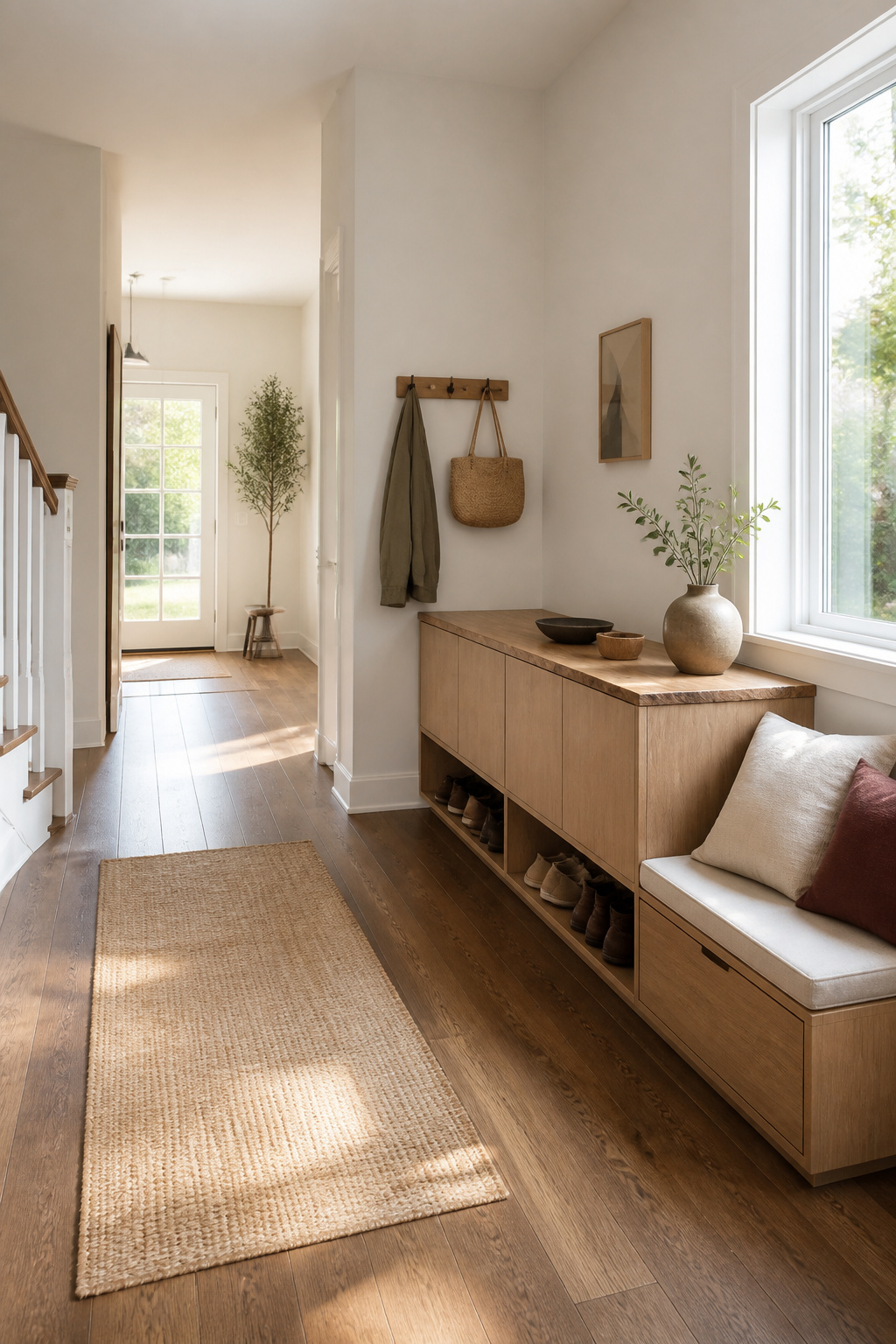
BESTÅ units give you a built-in bench look without the built-in commitment or cost. The line comes in enough widths and depths that you can line up two or three under a window or along an entry wall and get seating plus hidden storage in an afternoon.
What sold me, reading through project write-ups, is how renters handle the install. You anchor the cabinets to each other, not the wall, so they stand as one heavy piece that reads as custom millwork. When you move, it moves. Add a wood top from a local lumber yard or a leftover countertop cut to size, and the IKEA box disappears entirely.
The mix of open cubes, solid doors, and drawers matters more than you’d expect. Drawers hide the visual noise of gloves and hats; open compartments keep shoes from getting musty; a door or two hides whatever you do not want to explain. Plan for at least one drawer directly under the bench seat, since that is where you will reach most often with cold hands.
IKEA KALLAX for Open Shelving
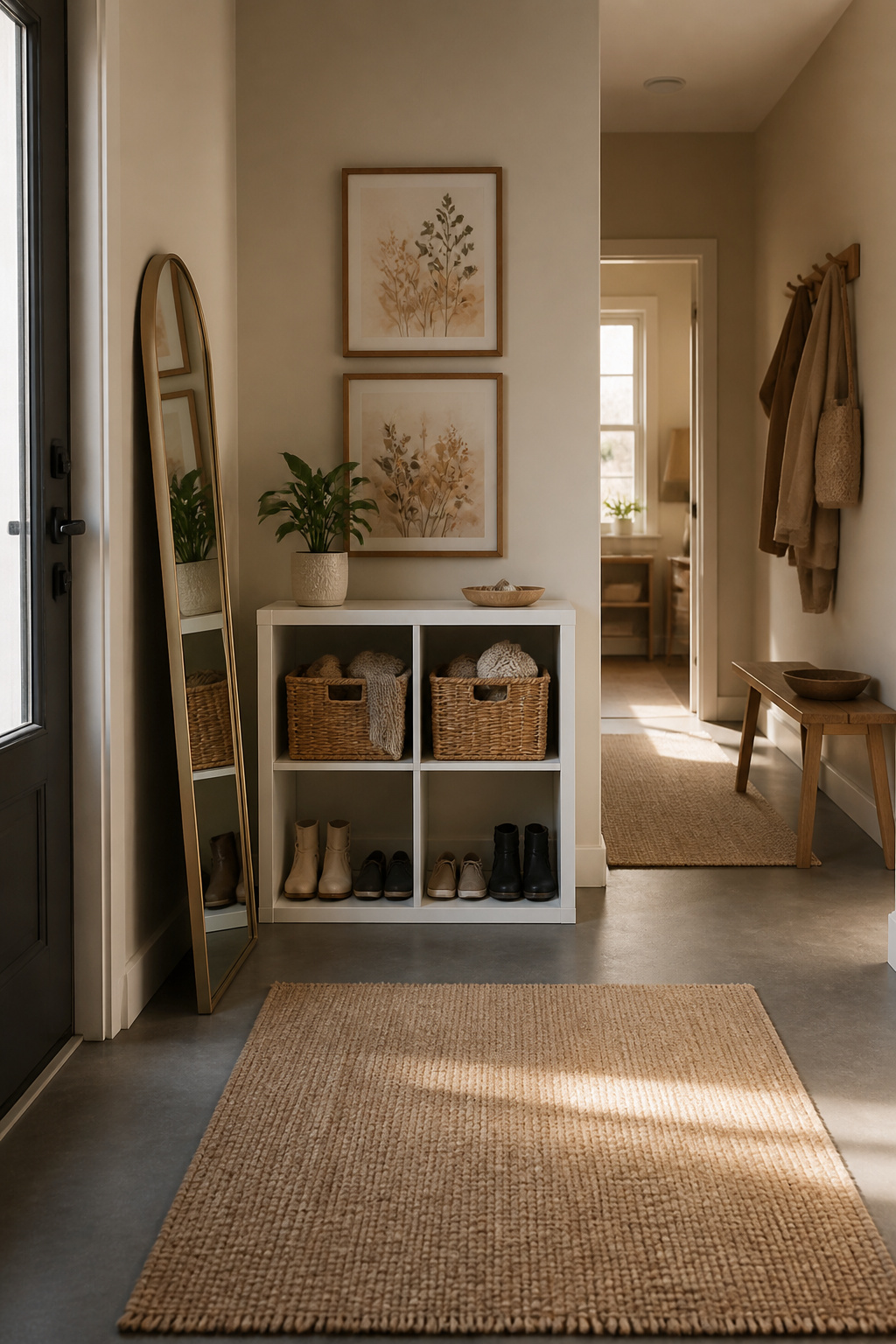
The KALLAX shelf unit lands in entryways because its 39 cm depth sits shallow enough that you still have room to walk past it in a narrow hall. Most standard bookshelves run closer to 40–45 cm, and those extra centimeters matter when you are working with a 90 cm corridor or a landing at the bottom of stairs.
At that depth, the unit holds one row of adult shoes toe-to-wall, or two rows of kids’ pairs, or baskets deep enough to catch mittens and hats without swallowing floor space you do not have. The open cubes keep you honest: nothing gets shoved to the back and forgotten, which in a mudroom means you actually find the dog leash when it is raining.
For renters, the KALLAX works without touching the wall. The unit is heavy enough empty that it does not skate on hardwood, and loaded with boots and baskets it stays put through ordinary bumps. If you want insurance against tipping, a tension rod braced between the top of the unit and the ceiling costs under $15 and leaves no holes. Leaning a mirror or a coat rack against the side anchors the visual weight without anchoring hardware.
The standard 2×4 and 4×4 configurations run about $60–$120, and the flat pack fits in most sedans if you are picking up rather than paying for delivery.
IKEA PAX Wardrobes for Coat Storage
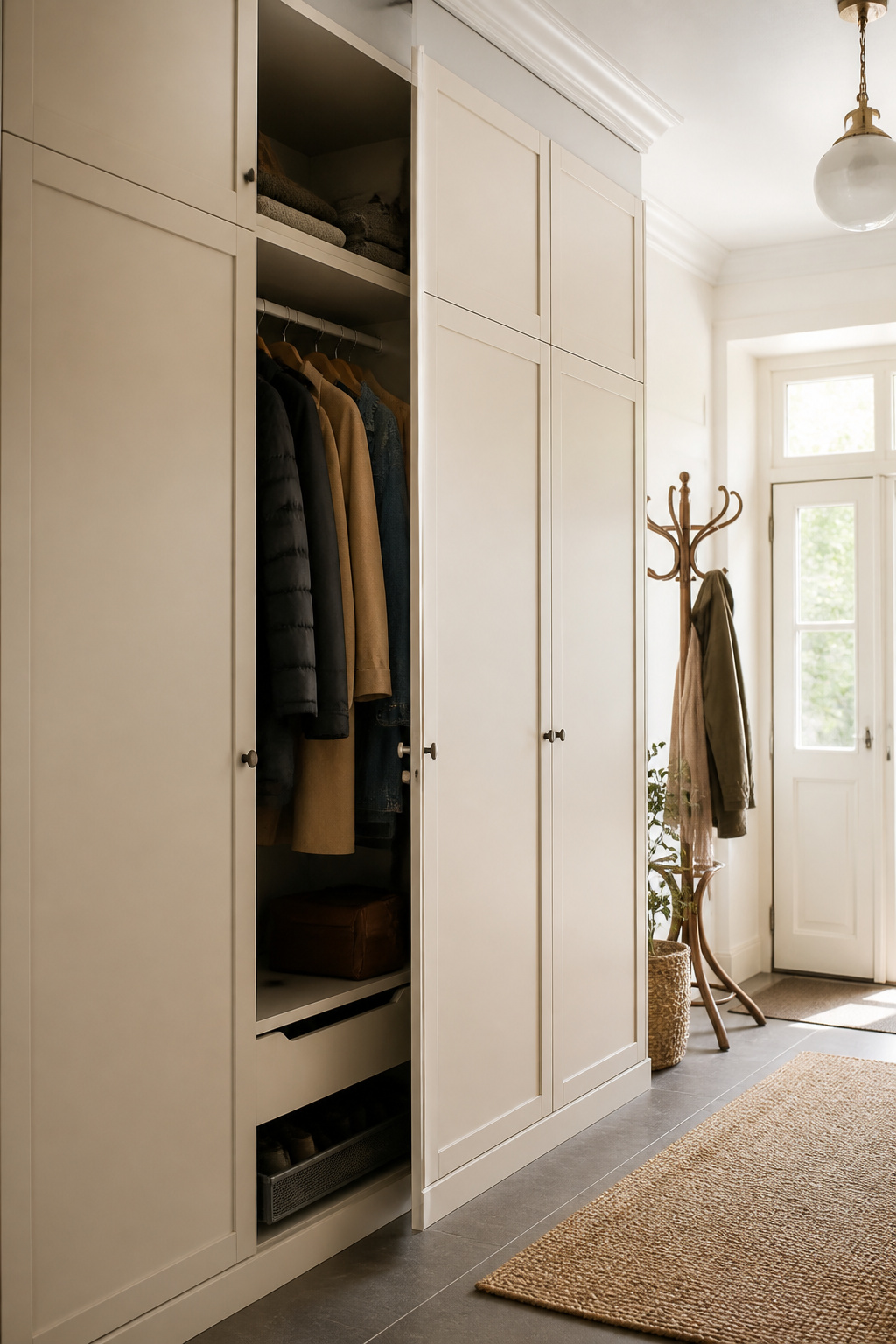
The PAX wardrobe system gives you floor-to-ceiling coat storage without the floor-to-ceiling price. Two units in the Flisberget light beige finish run under $500, which is where a single custom built-in starts. That gap matters when you are trying to handle bulky winter gear on a real budget.
The height is what makes this work for mudrooms. Standard wardrobes often fall short, leaving wasted space above or forcing you to double-hang and crush shoulders. PAX goes to the ceiling, so full-length coats and puffer jackets hang straight without fighting for room. Add a strip of crown molding across the top and the gap disappears; the unit reads as built-in even though it freestands.
Assembly is picture-only instructions, no words, which throws some people the first time. Plan for an hour of head-scratching before the logic clicks. The Flisberget doors ship without hardware, so you will need to source handles separately; factor that into both budget and timeline. One family of six fitted the Pax base with Grimo doors, Borghamn handles, and a custom frame to build out locker-style storage with a basket drawer per person. The system scales to household size without requiring you to reconfigure the whole room.
Prices on the PAX line have climbed since the sub-$500 days, so check current stock before you budget. Shipping costs add up fast on units this tall; if your store has them in stock, the drive pays for itself.
IKEA Hemnes for Bench and Storage
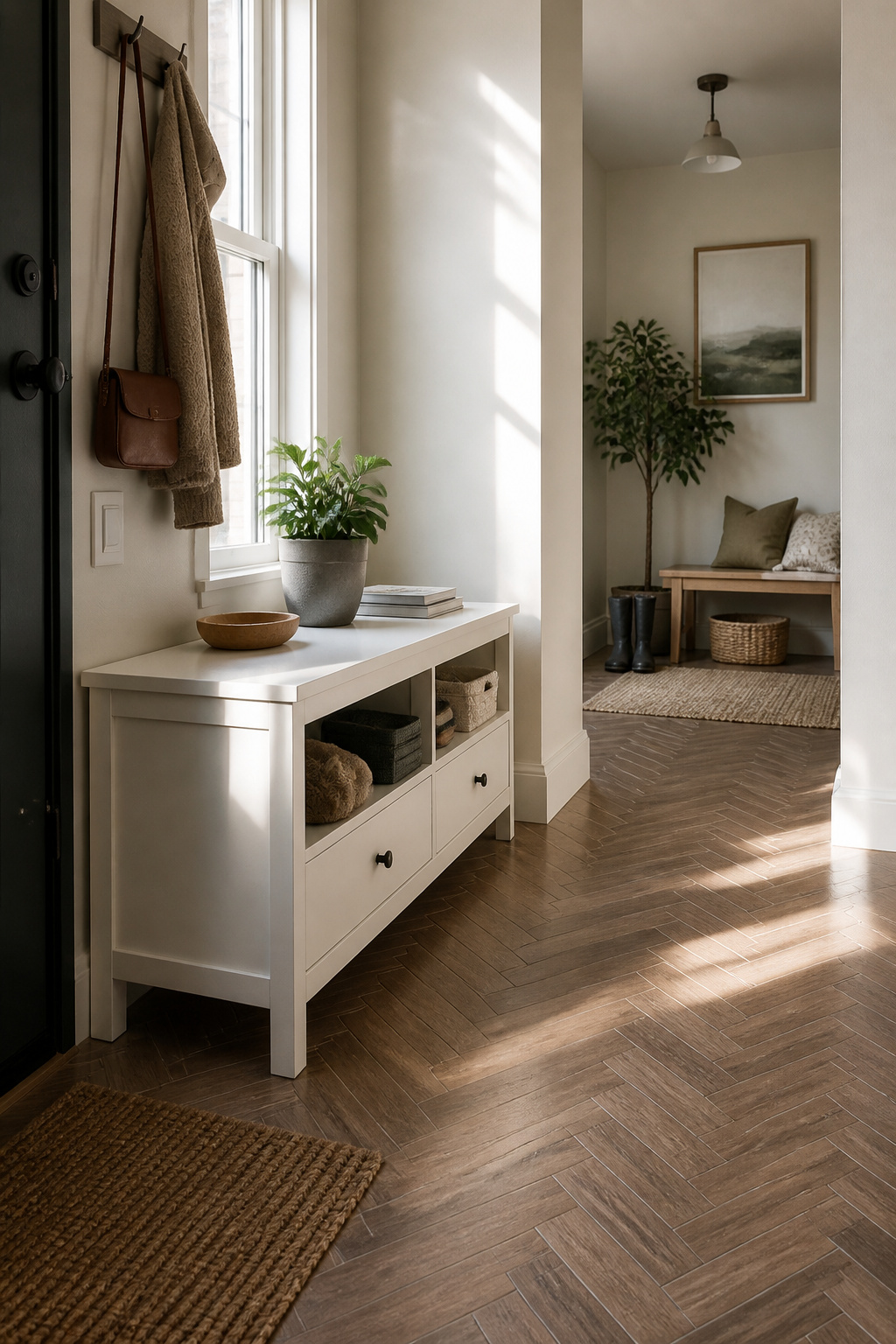
The IKEA Hemnes TV unit keeps surfacing in mudroom builds because it already looks like furniture that belongs in an entry. Its low profile and divided top surface give you a spot to sit and compartments for mittens or mail without any hacking. The catch is the 110 lb weight limit, which puts adult seating in a gray area. Two kids under ten? Fine. A grown adult settling in to lace up boots? That is pushing toward the edge of what the frame is rated for, and the particleboard construction does not forgive overload the way solid wood might.
If you are set on using it as a bench, the safest move is to add a plywood reinforcement across the span underneath, screwed into the side panels where the frame is strongest. It costs maybe ten dollars and an hour. Without that, treat it as kids-only seating and put a sturdier bench elsewhere for adults. What convinced me, reading through a dozen of these builds, is how often the project looked finished in photos but the owner later admitted the unit was sagging after six months of real use. Better to know the limit going in than to discover it when the drawer fronts start binding.
IKEA Sektion for Multi-Functional Mudrooms
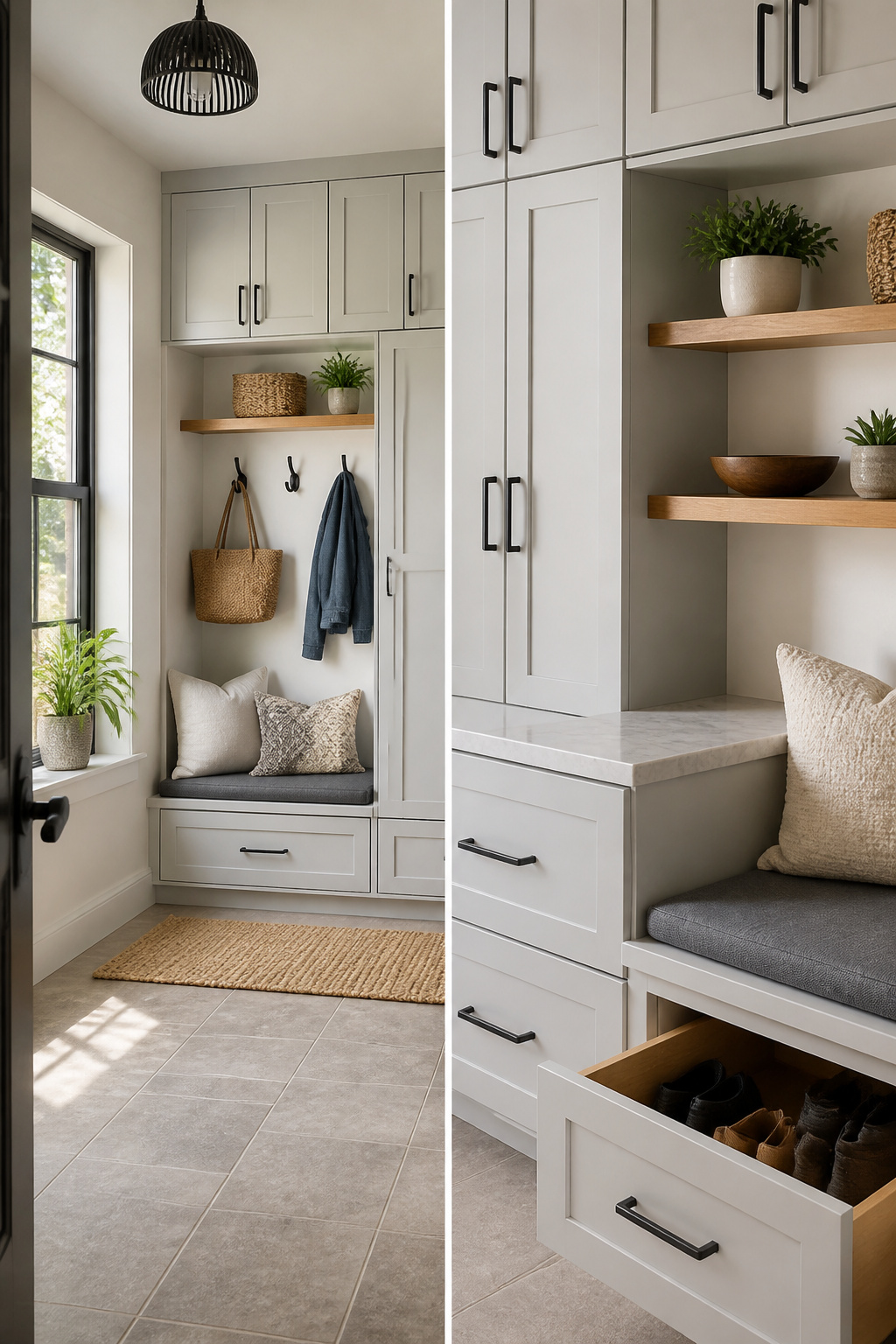
SEKTION cabinets were built for kitchens, but their frame-and-door system adapts cleanly to a mudroom if you plan for the difference in daily use. The frames are the same 24-inch depth you would find behind a stove, which means shoes fit sideways and a cushion on top gives you a bench deep enough to sit on without your knees hitting the cabinets. What trips up first-timers is assuming the kitchen logic carries over untouched. A mudroom needs hooks within arm’s reach of the bench, and the cabinet sides are plain particleboard unless you budget for finished panels or a cover panel on the exposed end. Gina Rachelle Design’s build paired IKEA SEKTION boxes with Semihandmade Supermatte Shaker fronts in light grey, then added a porcelain countertop and maple floating shelves to pull it away from looking like relocated kitchen storage. The sink is the detail that sells the setup if your mudroom opens to a yard or porch, though running plumbing to an interior wall you may not have access to is where the project stops being a weekend job. Tile the floor for the wet boots, keep the bench height at 18 inches so it functions as seating, and order your frames knowing that every filler piece and finished end you skip shows up the minute you stand in the finished room.
IKEA Billy for Extra Storage
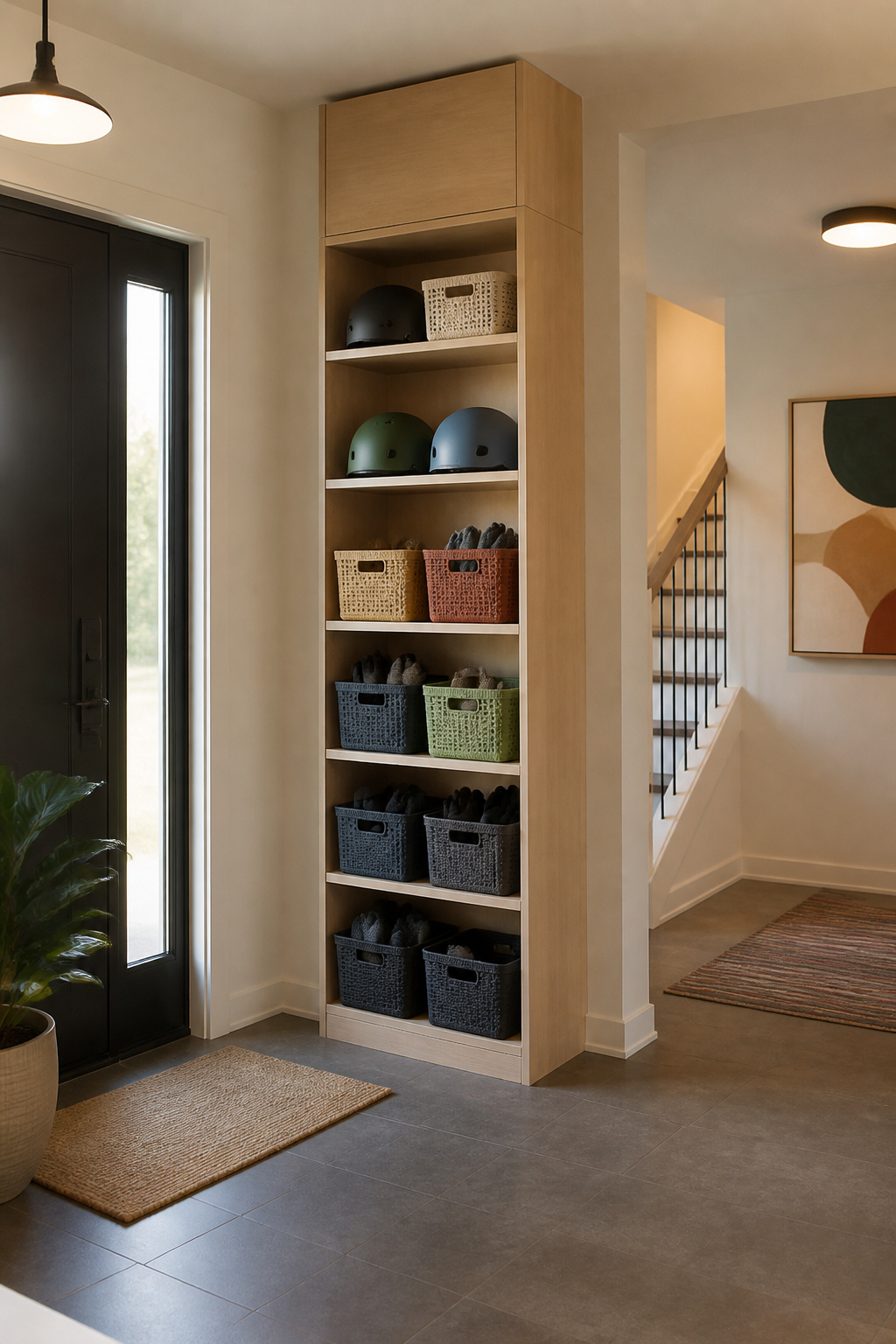
The Billy bookcase works in a mudroom when you need extra shelving but do not have the floor depth for a bench unit or a wardrobe. It is only 11 inches deep, so a pair of them can line a narrow entry wall without turning it into a corridor.
What convinced me, reading through a dozen of these builds, is that the shallow depth is the whole point. Shoes sit sideways, baskets slide in like drawers, and bags do not disappear into a black hole the way they do behind a 24-inch cabinet. One family of four stacked two Billy units with height extenders, added Oxberg doors, and hid leashes, helmets, and gloves behind them. The shiplap and bench came after, but the bookcases carried the storage load.
The catch is the height. At 79 1/2 inches, a standard Billy stops short of a true built-in look unless you add the extender or accept a gap at the top. In a rental, you still want to anchor it to studs; the narrow footprint tips more easily than deeper cabinets when a kid climbs for a basket. Use a furniture strap if you cannot drill into the wall, or screw through the back panel into a stud if your lease allows. The deeper options look more finished, but they also eat 18 to 24 inches of floor space you may not have. Choose Billy when the room is the limitation, not the budget.
IKEA HALLAN for Locker Systems
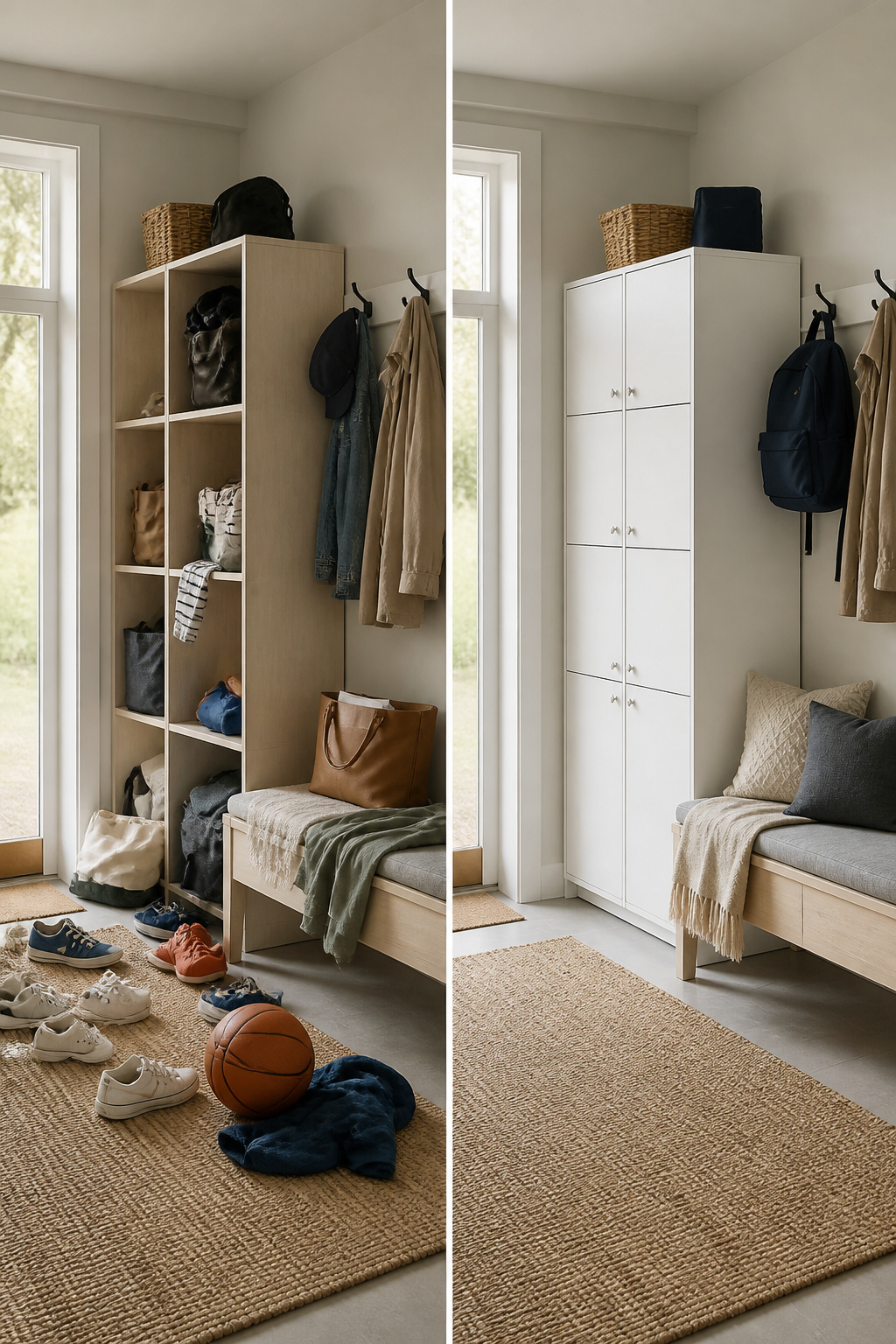
HALLAN units stack as single lockers or run in rows, which matters more than it sounds. A two-unit stack hides a single person’s worth of boots and bags behind clean doors. Add a third on top and you’ve got vertical storage that keeps a family’s daily avalanche out of sight.
The closed format is the real advantage here. Open cubbies look organized for about six hours, then they look like a pile. HALLAN doors forgive the mess behind them. For families, assign one locker per person and the fight over whose stuff is where mostly ends. Couples can split one tall stack or dedicate a unit each, but the system only earns its keep if you actually close the doors. Leave them open and you’ve built an expensive shelf.
The finish is laminate, so it wipes down after wet coats go in dripping. That practicality is why the locker format works in a mudroom to begin with. A bench seat won’t fit inside a HALLAN unit, so pair it with a separate bench or plan to sit on the floor while lacing up.
Painting and Customizing IKEA Units
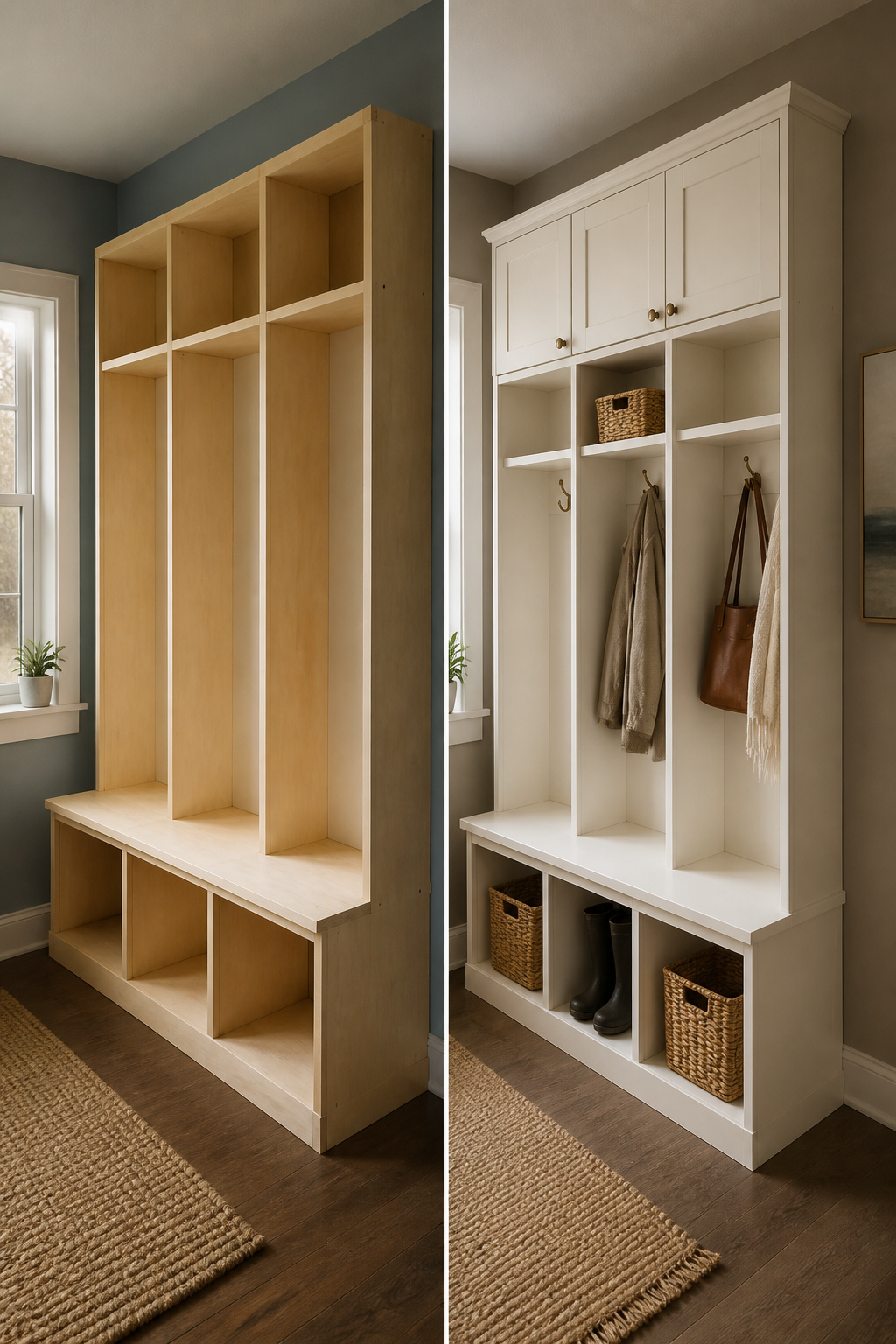
Paint is where an IKEA mudroom stops looking like flat-pack furniture and starts reading as built-in, but the prep separates the result that lasts from the result that chips by spring. Most of what you will find online skips straight to the color and skips the surface. IKEA cabinets are either laminate or wood veneer, and laminate needs a bonding primer before it will take paint at all. Zinsser primer is what holds up on these surfaces without sanding first, and it is the same move whether you are working with a HALLAN locker, a BESTA unit, or Sektion cabinets with Axstad fronts.
For color, Benjamin Moore White Dove in Valspar Signature eggshell is the match that reads soft rather than stark in natural light. Cloud White is the warmer alternative, the one that pairs cleanly with IKEA’s own white locker frames so you can paint trim and surrounding built-ins without repainting the lockers themselves. Providence Blue is the bolder choice for an accent wall or the interior of open cubbies.
The reality is that MDF trim and bench pieces soak up more coats than bloggers tend to admit. Plan on three coats of white to cover raw MDF edges, not the single coat that makes a tidy video. Wood veneer takes paint more willingly but still benefits from the same primer step. Caulk every seam, fill every nail hole, and sand between coats. The flawless finish is in that last hour of prep, not the paint itself.
Adding Non-IKEA Hardware and Cushions
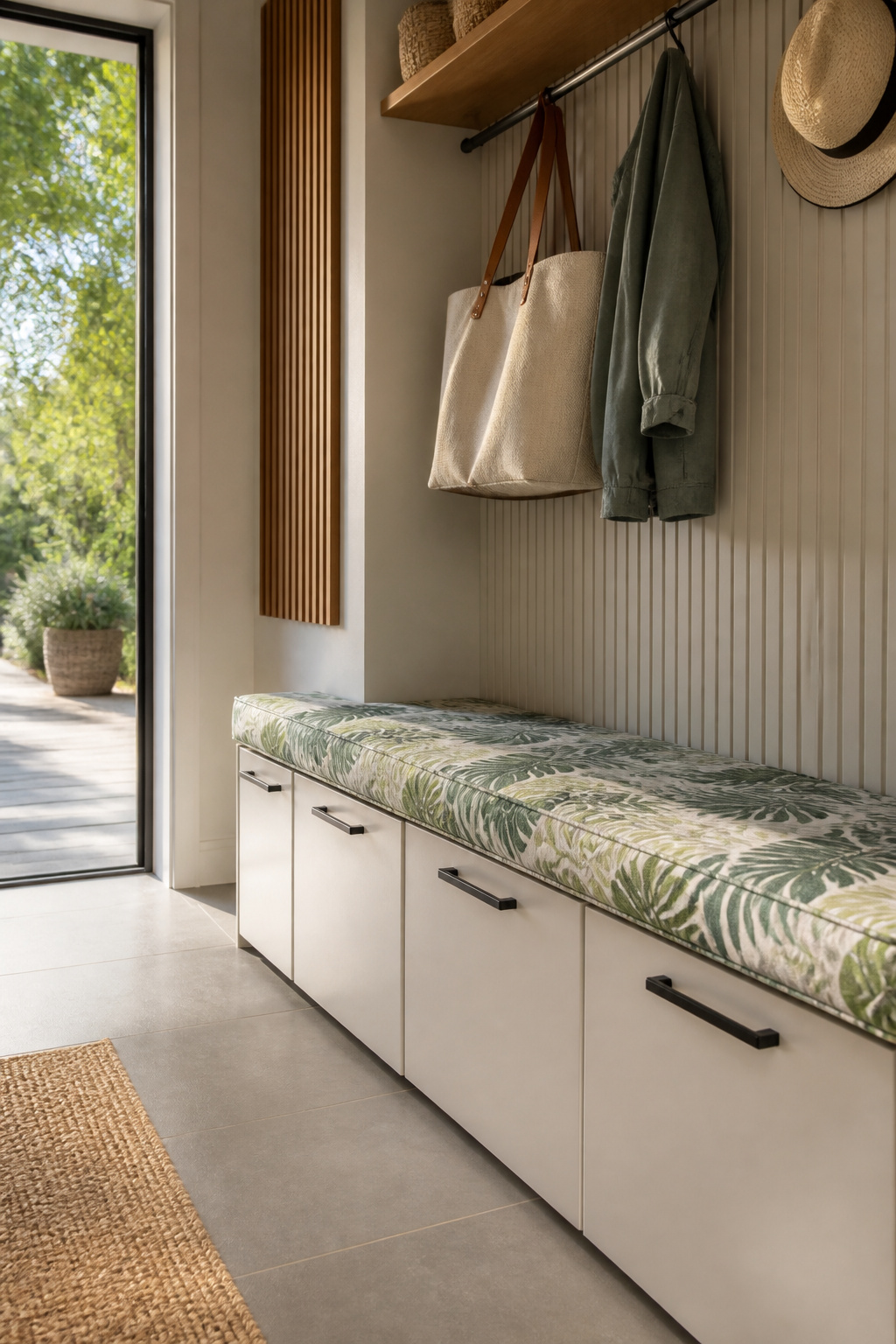
The hardware that ships with IKEA cabinets works, but it also broadcasts "IKEA" from across the room. Swapping pulls and hooks is the fastest way to lose that signal. Black hardware against a light cabinet, or satin nickel against a dark one, does more to custom-grade the look than anything else you can buy for under fifty dollars. Hooks run about three to ten dollars apiece at hardware stores or Target, and you will feel the quality difference when a winter coat does not pull the mount loose.
Bench cushions are where the budget can balloon fast. One maker built a padded seat from thick plywood, foam, and outdoor fabric for a fraction of retail. Waterproof or stainproof fabric matters here, not for the photo but for the first muddy pants that land on it. Custom cushions from a shop start around two hundred dollars and climb from there. The plywood-and-foam route lands under sixty if you already own a staple gun.
Semihandmade doors on IKEA Sektion boxes are the upgrade that gets photographed most. They save money over full custom while reading as built-in, but they are still a four-figure line item. For a rental or a first project, that money usually buys more function elsewhere. Start with the pulls and the hooks. Add the cushion if you sit there daily. Save the door fronts for the house you plan to keep.
What These Projects Cost in Real Dollars
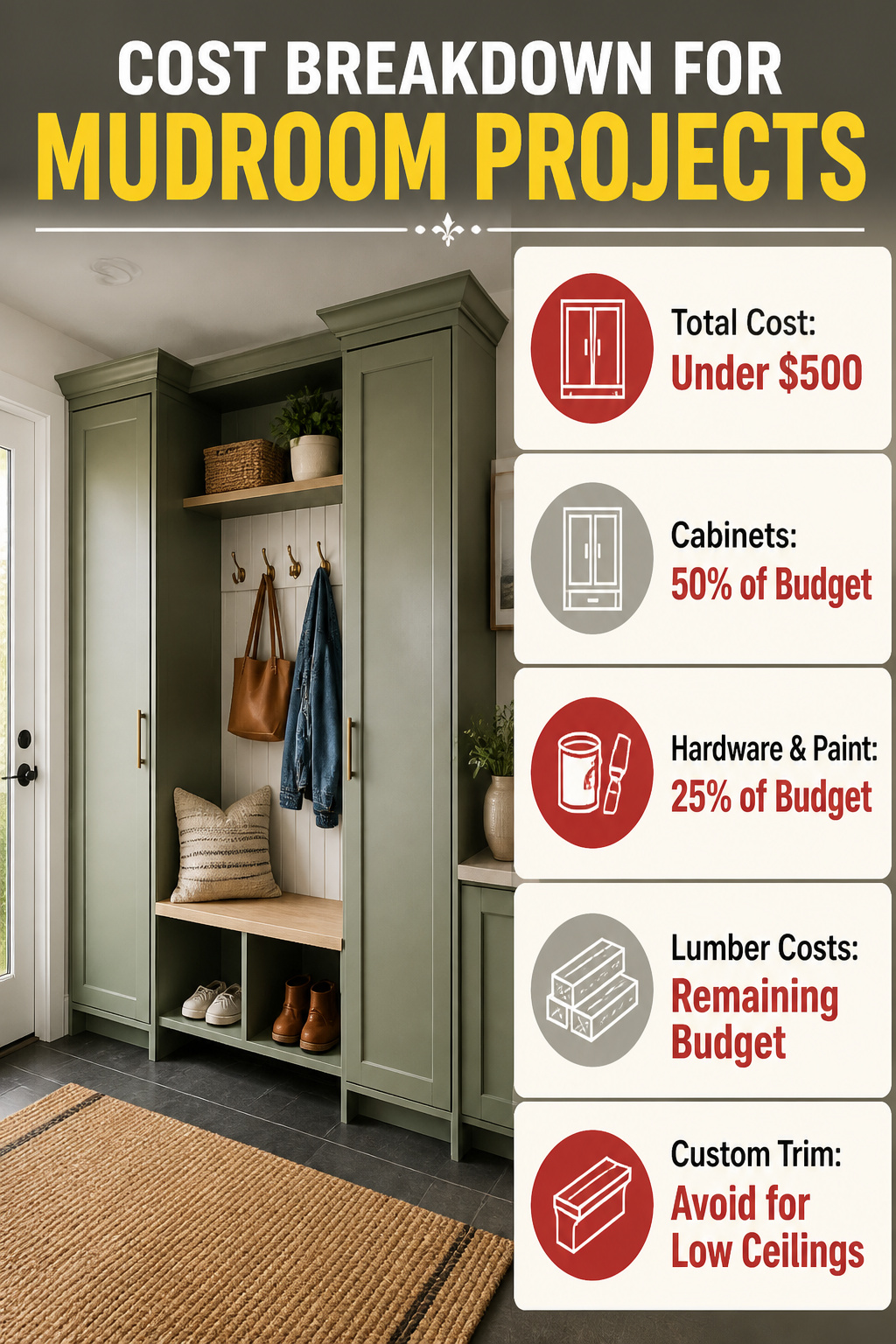
Two PAX wardrobes can anchor a mudroom for under $500, which is where most of these builds land before paint and trim. That figure gets you the carcass, doors, and basic shelves; handles, hooks, and crown molding to fake the built-in look come after. One builder drove an hour to avoid shipping and called the savings worth it, which tells you where the money goes fast.
Most weekend projects in this space run a few hundred to a thousand dollars total. The split is roughly this: cabinets eat half the budget, hardware and paint take another quarter, and the rest covers lumber for bases, trim, or a bench top. Skip the custom crown if your ceilings are low or uneven; a straight run of painted 1×3 against the wall reads cleaner than molding that gaps. Renters should weight the project toward freestanding pieces and spend less on permanent trim. If you own, the extra $40 in molding pays back when you sell, but it does not pay back in daily use.
Hooks, Benches, and Shoe Storage That Functions

A mudroom fails when it looks right but fights you at 7 a.m. Hooks set too high leave kids dropping coats on the bench. A bench too shallow has you perched on the edge wrestling boots off. Plan for the shoes you actually own, not the three pairs you wish you owned. One family keeps nearly all footwear in the room because they are no-shoes inside; another’s bench drawers overflowed until they switched to open cubbies. The Hemnes TV unit at 58¼ inches wide fits an alcove bench with shoe storage beneath. The Kallax on feet works as a bench with Gullviva rugs for cushion, but the 15⅜-inch height sits low for some adults. A BESTA base with HALLAN lockers above solved one family’s vertical storage problem after drawers alone failed and thrifted lockers ran too wide for the wall. Hooks under a Mosslanda ledge double as coat storage and a place to swap art. The common mistake is chasing the clean look of hidden storage and ending with lids that never get closed, or a bench seat that lifts on hinges you avoid using. Open cubbies, reachable hooks at varied heights, and a bench depth you can actually sit back on win over time.
Frequently Asked Questions
What are some IKEA mudroom hacks?
IKEA mudroom hacks let you build storage, seating, and coat systems from flat-pack furniture at a fraction of custom prices. Popular moves include turning BESTÅ TV benches into built-in benches, stacking PAX wardrobes as floor-to-ceiling lockers, and lining KALLAX or Billy units along narrow walls for shoe and basket storage. The key is anchoring pieces to each other rather than walls so the setup moves with you.
How do I organize a small mudroom?
Maximize storage with shallow units that do not eat floor space. The KALLAX shelf at 39 cm deep fits 90 cm corridors and holds one row of adult shoes or two of kids’ pairs; the Billy bookcase at 11 inches deep lines narrow walls without narrowing them further. Open cubes keep items visible so nothing gets lost, and a tension rod between a unit’s top and the ceiling prevents tipping without drilling holes.
What is the best IKEA cabinet for a mudroom?
The PAX and BESTÅ lines are the most versatile starting points. PAX wardrobes reach ceiling height so full-length coats hang straight, and two units in Flisberget finish run under $500. BESTÅ units assemble into a built-in bench look with hidden storage underneath, and you anchor them to each other so the whole piece moves as one heavy block. Which works better depends on whether you need hanging space or seating first.