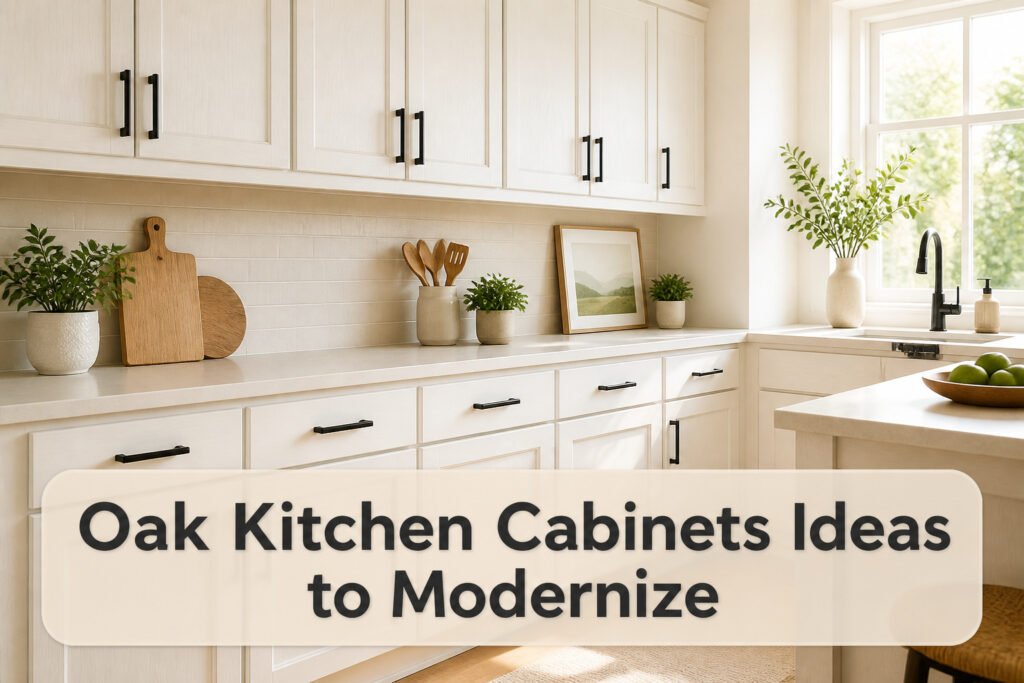
The fastest way to pull oak cabinets out of the 1990s costs about $200 and takes an hour with a screwdriver. That alone will not finish the job; the golden stain, the cathedral door profile, and the fluorescent box overhead are what actually date the wood. Swap the hardware for matte black bar pulls sized to one-third your drawer width, and you have the first move in a full modernization that runs anywhere from a weekend paint job to an $8,000 countertop and lighting overhaul.
1. Update Cabinet Hardware
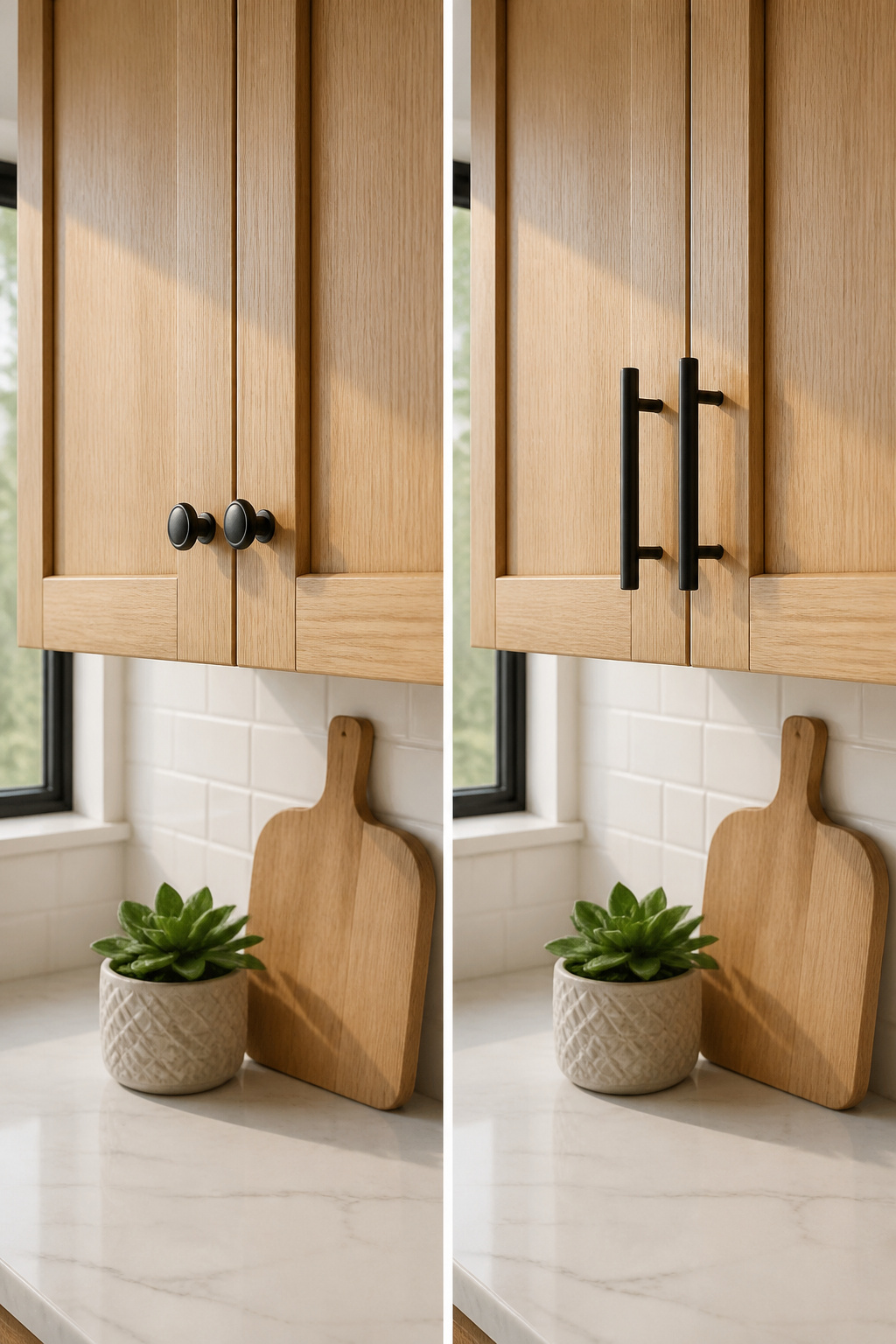
The fastest way to pull oak cabinets out of the 90s is to swap the hardware. Builder-grade knobs and shiny brass pulls drag the whole kitchen backward, and replacing them takes about an hour with a screwdriver.
Matte black bar pulls are the most popular choice right now for a reason: they cut hard against light oak and give the kitchen some graphic weight. If your oak runs warmer or honey-toned, brushed brass or champagne bronze works with the wood instead of fighting it. Satin nickel is softer and hides fingerprints better than polished chrome if you want something quiet.
Sizing is where most people slip up. A drawer pull should be roughly one-third the width of the drawer. For standard cabinets, 96–160mm pulls look proportional; go smaller and the hardware looks like an afterthought, go larger and the drawers look undersupported. For a layered look, pair knobs in one finish on doors with pulls in another on drawers, but keep it to two metals total or the kitchen starts to feel busy.
A full hardware swap runs $200–$800 for a complete kitchen, which puts it in reach of even tight weekend budgets.
2. Change Wall Colors
Cool-toned wall colors are the quickest way to pull golden oak back from dated territory. Blues and greens sit opposite those warm orange undertones, so the eye reads the room as balanced even when nothing else has changed.
Benjamin Moore Balboa Mist is the greige that keeps coming up for this exact pairing. It is muted enough to calm the wood without fighting it. If you want something with more color, Sherwin-Williams Sea Salt reads as a soft green-gray in most light and does the same cooling work without turning the kitchen cold.
Skip bright white. The contrast against honey oak pushes the wood toward orange instead of away from it. Warm whites and softened neutrals read as intentional; stark white reads as accidental.
A gallon of either paint runs roughly $45–$70, and most kitchens need two. Tape well around cabinets you are not painting yet. The wall color sets the stage for everything else you do to the oak.
3. Replace Cabinet Door Profiles
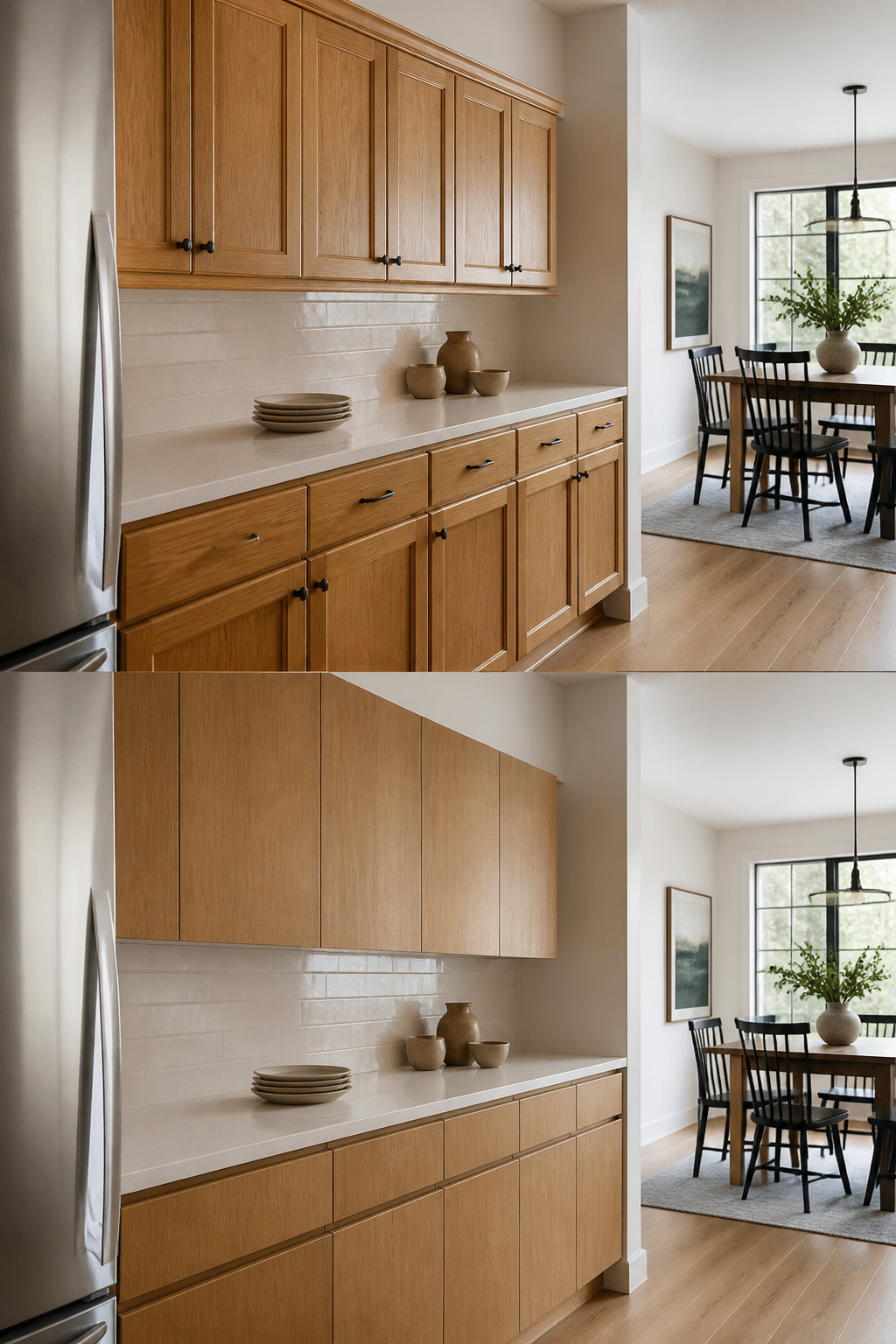
Cathedral or raised-panel doors are what date an oak kitchen most severely. Even with fresh paint and new hardware, that arched profile still reads early nineties. Swapping the door profile itself fixes the problem at the source.
Your two modern paths are slab doors, flat and minimal, which let the oak grain do the work and suit Scandinavian or industrial kitchens; or slim Shaker doors, a 2026 refinement with rails and stiles narrowed to 0.5 to 1 inch, lighter than traditional Shaker without going fully flat. New doors run $13–$60 each, so a full kitchen lands between $500 and $4,000. That assumes your boxes are sound, which oak usually is.
This is the most involved project here. You are unmounting, possibly re-drilling hinge cups, and aligning dozens of doors. Some homeowners flip their existing raised-panel doors and use the flat back side, adding thin trim for a budget Shaker look. It saves money but costs weekend hours and patience.
4. Install Modern Countertops
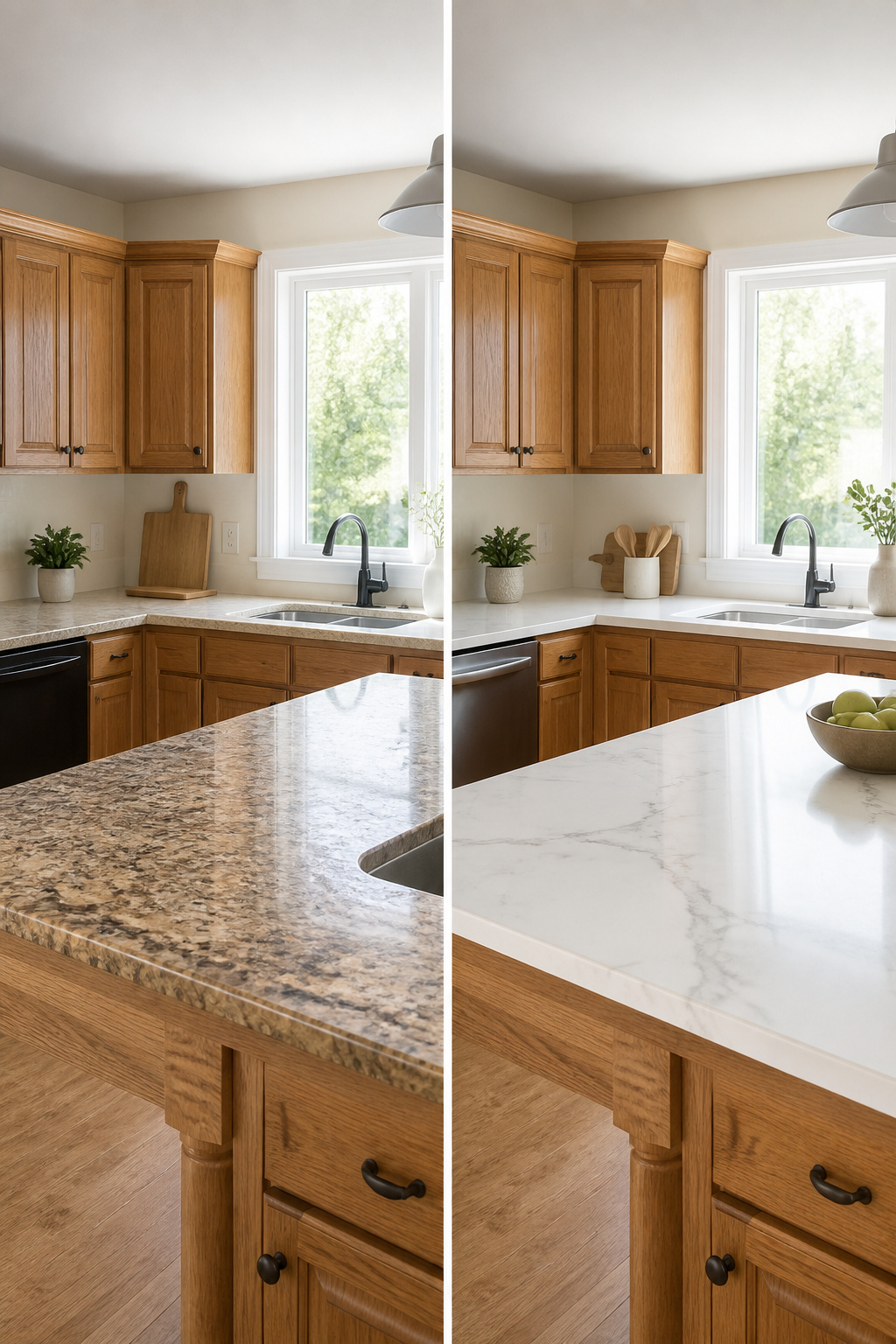
Dated laminate next to oak cabinets hits hard with 90s energy, and swapping it out is the single biggest move you can make. White quartz with subtle veining is the pairing you see most often for a reason: it brightens the space and sets up clean contrast against the wood grain. Cambria, Caesarstone, and Silestone all carry options that work here without shouting for attention.
If you are working with a tighter budget, marble-look laminate has improved enough to be a real contender. Formica’s Carrara Bianco is the one designers keep naming when they are working with oak and need the look without the price tag.
For something quieter and more matte, honed soapstone brings natural variation and a softer surface that reads as sophisticated without trying too hard. One rule worth following: if your oak runs golden or honey, skip anything with warm beige or yellow undertones. It will push the wood toward orange instead of balancing it.
A full countertop swap in a mid-range kitchen typically runs $3,000–$8,000, which puts it in reach for a serious weekend project without requiring a full gut renovation.
5. Add a New Backsplash
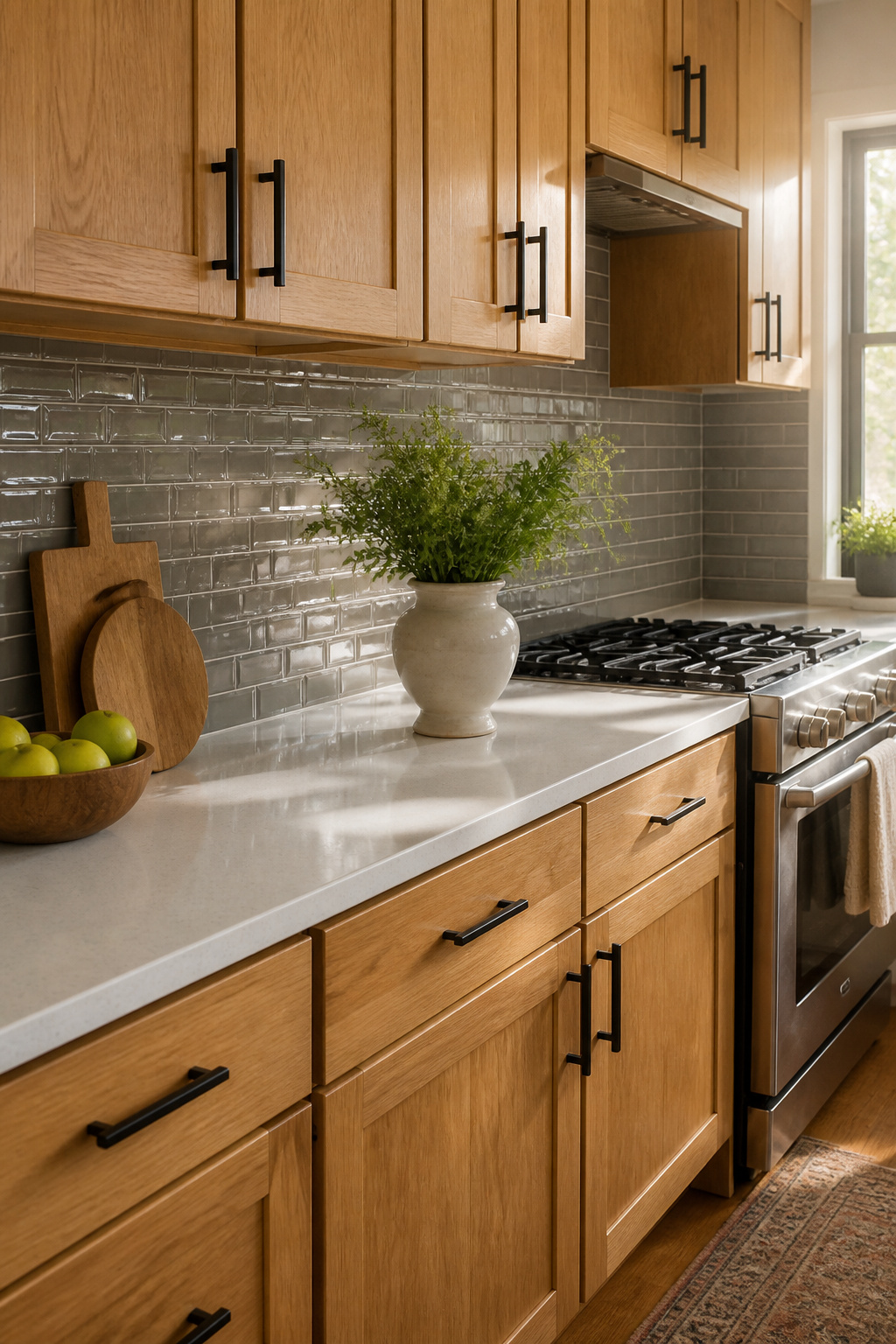
A new backsplash does more than protect the wall behind your stove. It resets the entire conversation around your oak cabinets.
Subway tile with dark grout runs about $200 to $800 and installs in a weekend. The dark lines give the grid some weight, which keeps oak from reading too suburban. White subway tile alone against golden oak is a known mistake; the contrast pushes the wood toward orange. Cream-toned or warm gray tiles soften that edge instead.
Zellige tiles cost more but earn it if you are drawn to the Japandi look. Their uneven, hand-cut surfaces catch light in ways that flat factory tile cannot, and the texture pairs naturally with oak’s own grain. You will spend longer on the install because no two pieces sit quite flush.
Geometric patterns, hexagonal or otherwise, work best on a single wall or behind a range. Running them everywhere fights the cabinets for attention. The passages noted this as a statement choice, not a blanket solution.
The full-height slab backsplash, where your countertop material continues to the ceiling, eliminates grout lines entirely. It is marked as a 2026 trend and reads gallery-like, but it is not a weekend job. Start with tile if you are mid-project and need to finish by Monday.
6. Upgrade Lighting

Fluorescent boxes and the single dome fixture most kitchens came with will fight every other update you make. Swapping them out for a layered setup is one of the fastest ways to shift the whole room, and the oak starts working with you instead of against you.
Start with under-cabinet LED strips. They are non-negotiable in a modern kitchen. Dimmable strips running the counter edge cast light down onto your work surface and bounce a soft glow up onto the backsplash, which makes golden oak grain look intentional rather than dated. Most kits are plug-in or use a simple outlet tap, so this is solid renter territory if your lease allows adhesive mounting.
Pendant lights over an island or table do the heavy lifting as the room’s focal point. Linear or globe styles draw the eye to the center of the space and away from cabinet details you are not ready to change. Recessed ceiling grids replace bulky surface mounts and eliminate the shadows that make honey oak read orange.
The bulb temperature matters as much as the fixture. Neutral white at 4000K to 5000K reads crisp and modern against oak; 2700K yellow will push everything back toward the 1990s.
Expect to spend $500 to $2,000 for a full lighting update. Under-cabinet LEDs and pendant swaps you can handle yourself. Recessed grids and any new hardwired switches need an electrician, and that is where renters usually hit a wall with both permission and cost.
7. Consider Open Shelving
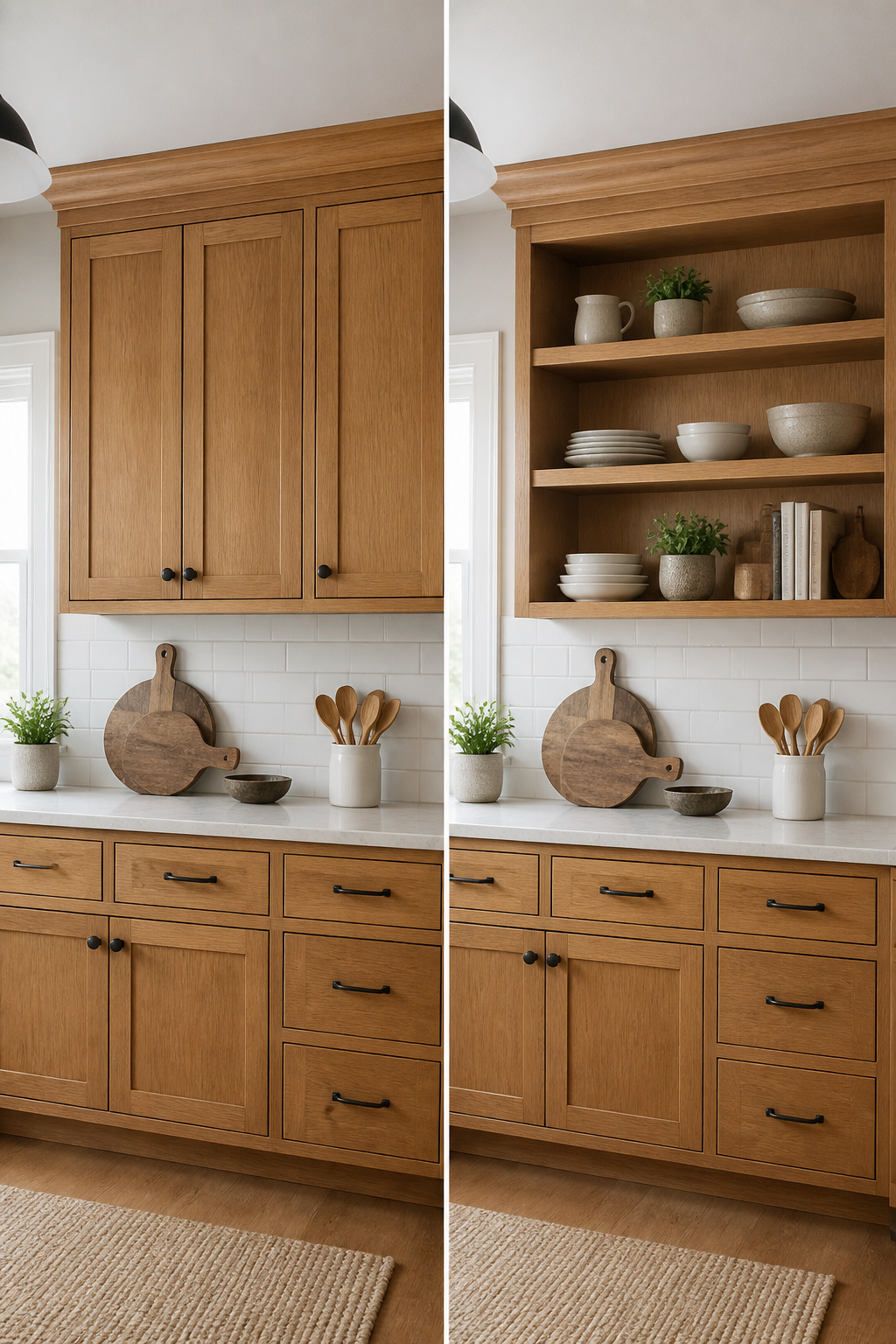
Solid oak cabinets running wall to wall can feel like a lot of wood staring back at you. Replacing some upper cabinet doors with open shelving or adding floating shelves is another great way to open up your kitchen. The shelves interrupt the mass and give your eye somewhere to rest.
Wood, metal, or even glass shelves all work here, and each reads differently against oak’s warmth. Glass keeps things airy; metal adds a cooler, more industrial note that can balance the traditional feel.
If you rent, this is one of the easier moves. You can simply remove a few upper cabinet doors and store them for move-out day. Zero cost, fully reversible, and you still get the lighter look. Style what you put up there with intention, a few cookbooks, a plant, something you actually use, so the shelf feels lived-in rather than staged.
8. Use Two-Tone Cabinets
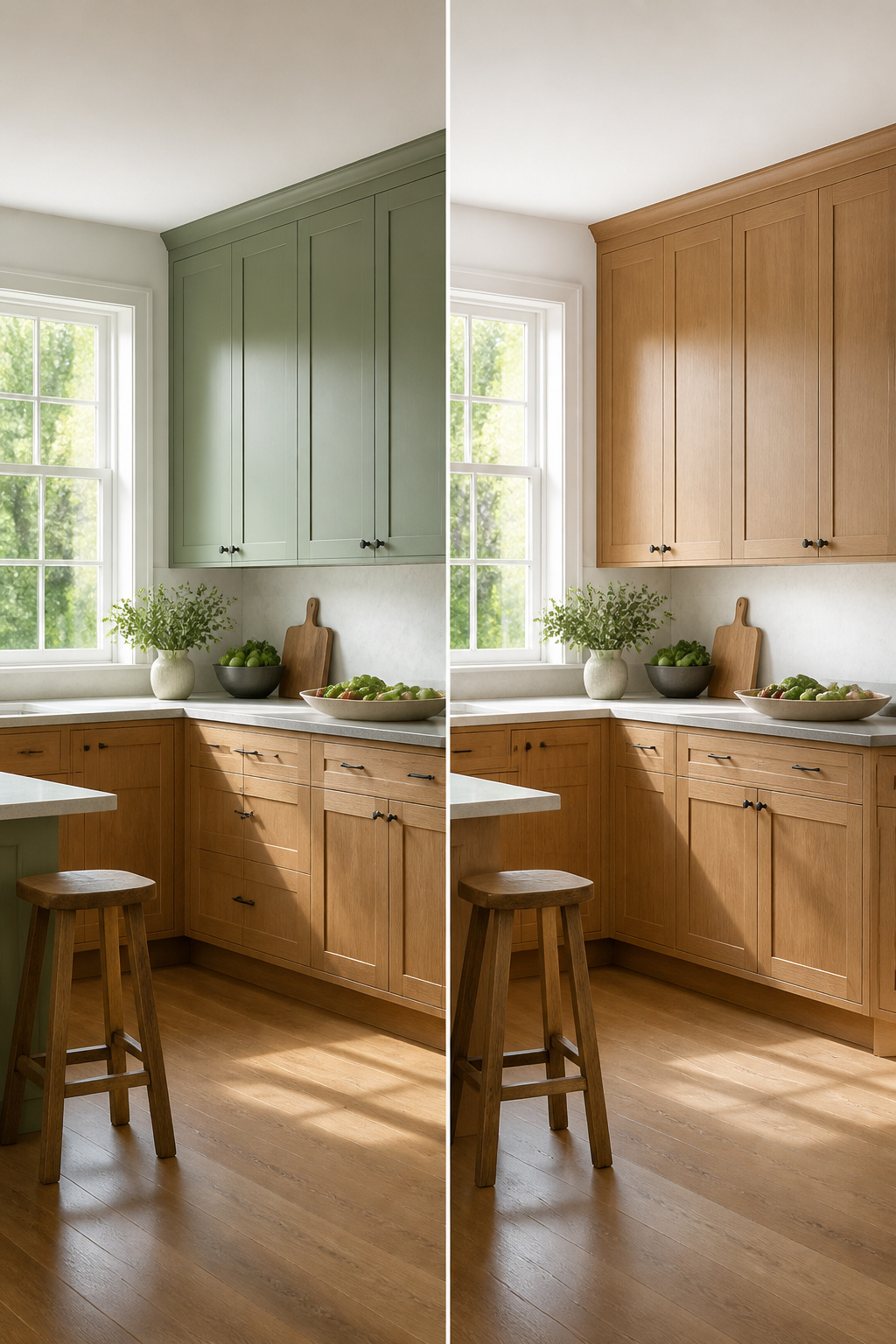
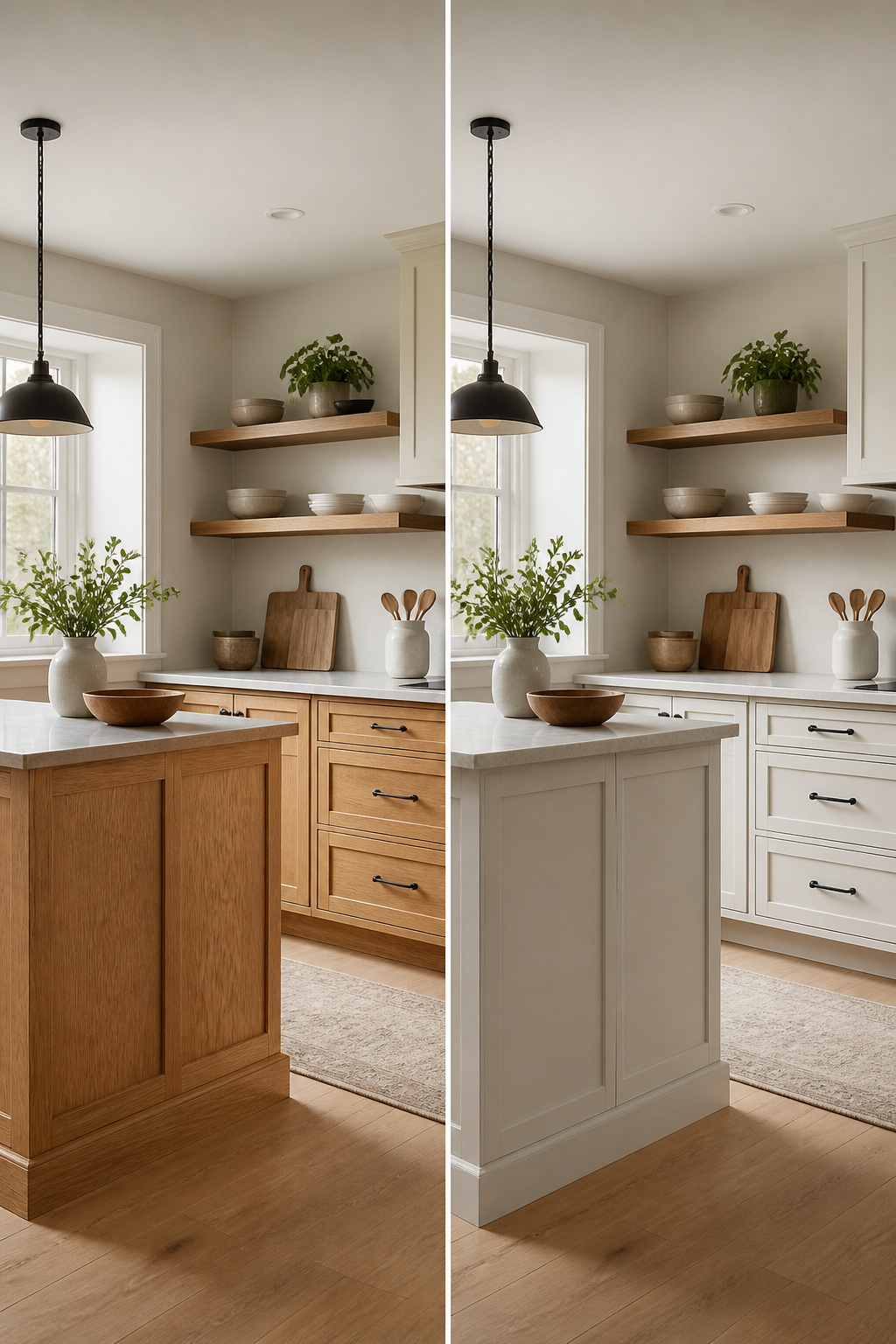
Painting every cabinet feels like a big bet, especially when you are not sure the result will outrank the oak. The two-tone route splits the difference: paint the uppers and leave the lowers in oak. It breaks up the wall of wood that dates most oak kitchens, but you still keep the grain where it shows least, down at counter height.
White on top is the safe starting point. Benjamin Moore White Dove reads warm rather than clinical, and it plays against oak without making the wood look dirty. If you want more color, Sherwin-Williams Sea Salt or a sage green softens the contrast while still reading modern. Keep the oak lowers as-is, or swap their hardware so the wood feels intentional, not leftover.
The fear here is real. Oak has orange undertones that can look louder once you have painted nearby surfaces. The trick is to test the wall color and the cabinet paint together, in the actual room light, before you commit. A gray-blue upper that looked balanced on a swatch can turn the oak below it straight-up pumpkin if the light is warm.
Cost lands around $500 to $2,000 if you do the painting yourself, depending on how many uppers you have and whether you rent a sprayer. Shellac-based primer like Zinsser B-I-N is non-negotiable on oak; the tannin bleed will yellow through anything less.
9. Refinish with Modern Stains
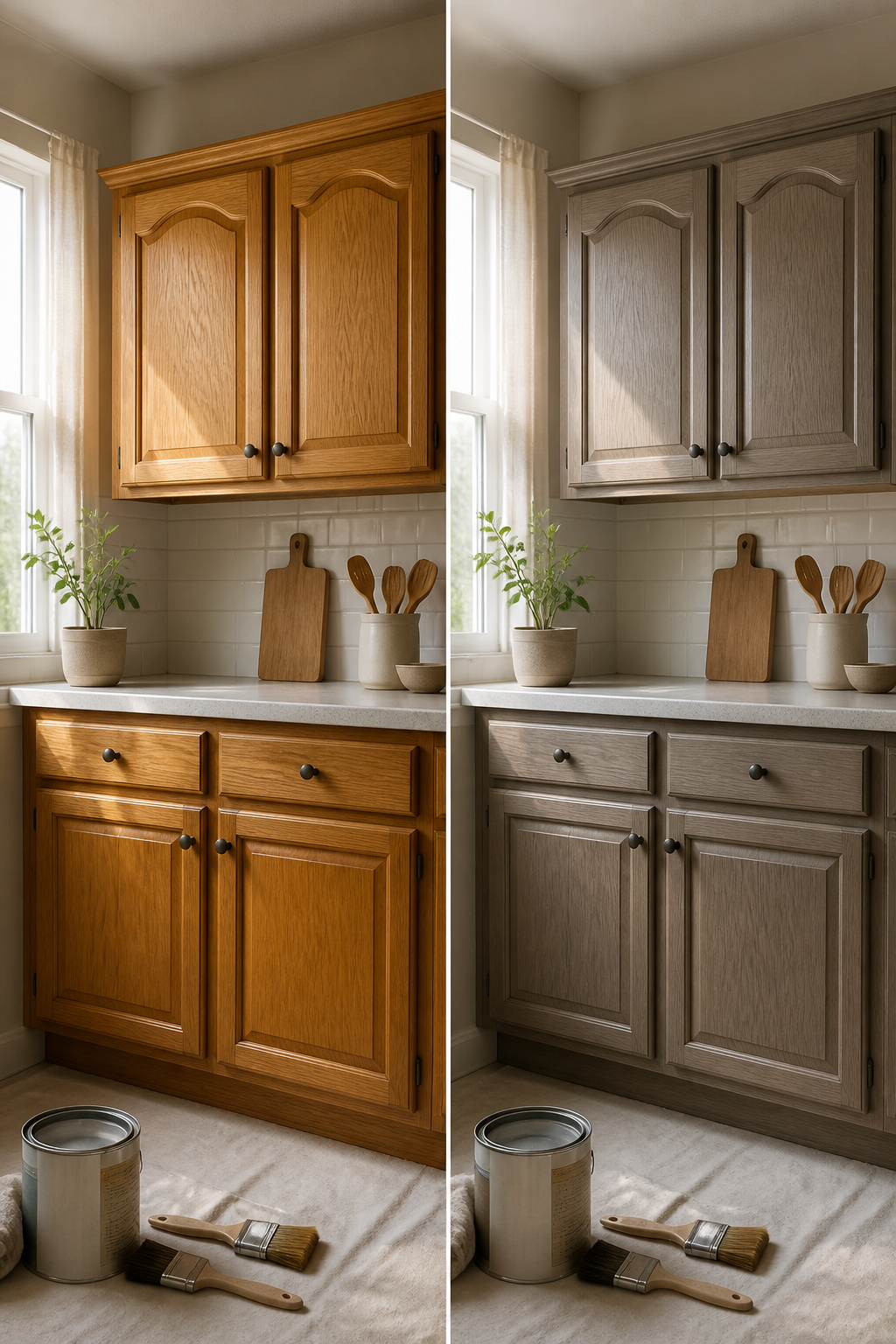
The golden-yellow cast is what dates honey oak more than the grain itself, and gray-wash or driftwood stains neutralize that orange while leaving the wood character intact. These tones read Scandinavian rather than suburban-90s, and they pair cleanly with white quartz or honed soapstone countertops you might already be considering.
Briwax Tudor Brown takes a different path for under $30. You rub it straight onto the existing finish without sanding, so an afternoon gets you a warmer, deeper tone that quiets the yellow rather than replacing it. Do not expect a full color change. It is a tone-down, not a transformation.
If you want the trending white-oak look, the route exists but it is not the weekend project: strip the existing finish, apply a two-part wood bleach like Zinsser Wood Bleach, and work with gloves, goggles, and serious ventilation. Most renters skip this one.
Whatever stain you choose, go matte or satin. High-gloss finish catches light across oak’s naturally shiny grain pattern, and that shimmer is exactly what reads dated.
DIY runs $200–$800 depending on square footage and whether you need stripper. Professional refinishing lands at $1,500–$3,000, which buys you spray application and even coats inside the frames and across the drawer fronts.
10. Incorporate Statement Pieces
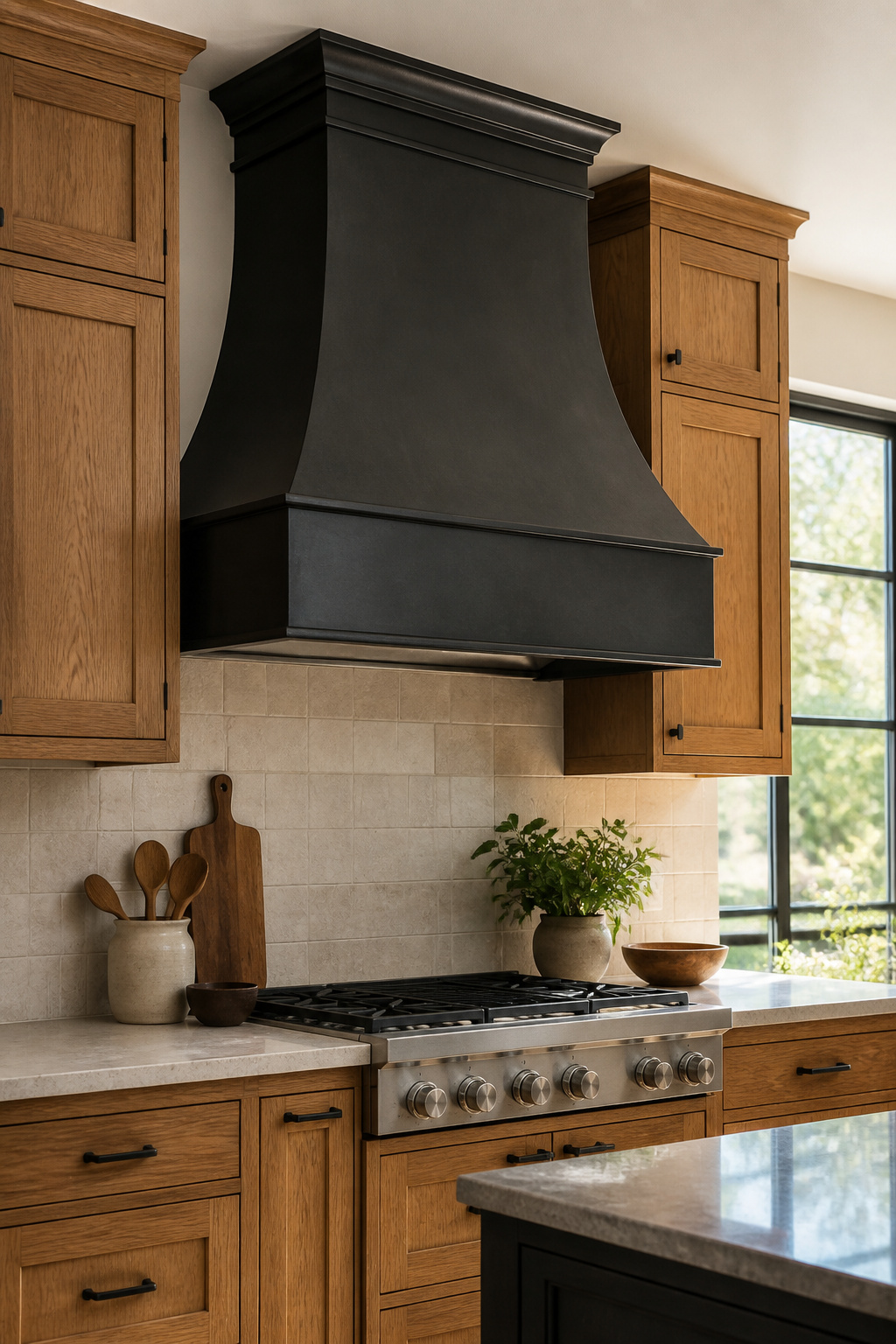
A bold range hood is the fastest way to shift a kitchen’s entire visual balance without touching the cabinets themselves. Because oak carries so much warmth, the eye tends to settle on the cabinetry and stay there; a striking hood, whether wrapped in sleek metal or painted in a tone that contrasts with the wood, pulls attention upward and breaks that weight. The effect is immediate, and the cabinets read as intentional rather than dated.
This is where the budget splits cleanly. For some, a fresh coat of paint on an existing hood in a deep charcoal or soft black costs a weekend and a gallon; for others, a custom metal hood becomes the single largest line item in the whole kitchen. Both work. What matters is the architectural presence: clean lines and a finish that does not compete with the oak’s grain but sits deliberately apart from it. A handcrafted copper or stainless hood runs higher, yet it also functions as the room’s single piece of art.
If the hood feels like too much commitment, a sculptural sink can play the same role. Artisan sinks in finishes that sit outside the standard stainless or white porcelain range create a focal point at counter level, drawing the eye across the workspace and distributing attention more evenly. The principle holds either way: one strong piece rebalances the whole room.
Are Oak Cabinets Actually Outdated
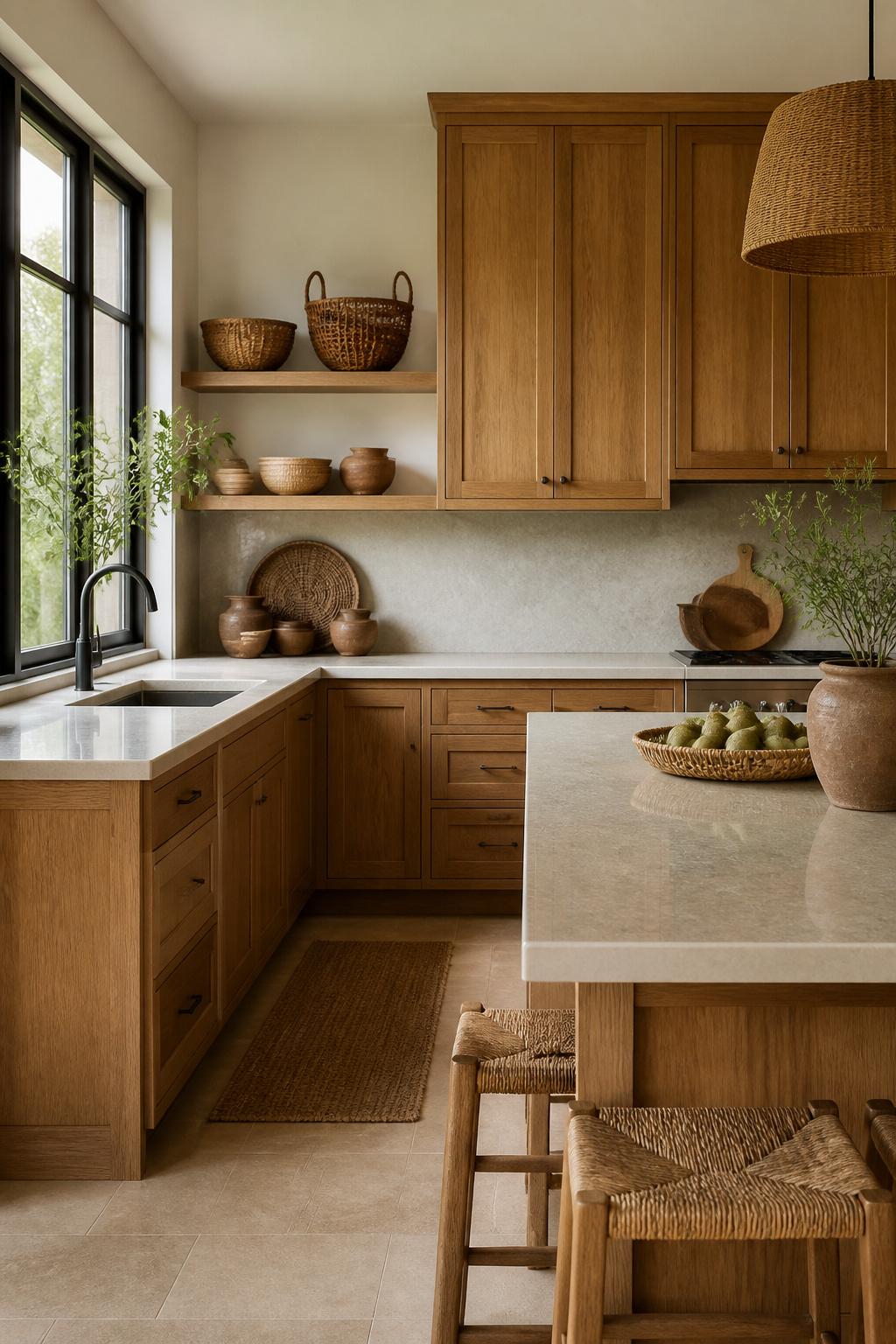
Oak cabinets are not outdated. Wood cabinetry is making a strong comeback in 2026, and the features that make an oak kitchen feel stuck in the past usually have nothing to do with the oak itself.
What reads as dated is almost always the golden stain, the cathedral door profile, or the surrounding finishes: laminate countertops, busy wallpaper, brass hardware that has turned pink. The wood underneath is not the problem.
This matters if you are standing in your kitchen right now, second-guessing whether to paint over perfectly good cabinets. The "Warm Minimalism" trend moving through 2026 actually celebrates natural wood warmth. Honey oak, specifically, is coming back paired with organic textures like rattan and linen, earthy tones like terracotta and olive, and brushed metals that read intentional rather than leftover.
The question is not whether oak belongs in a modern kitchen. It is whether the elements around your oak are working with it or against it. A hardware swap runs $200–$800. A full refresh with backsplash, lighting, and stain lands closer to $3,000–$8,000. Either route costs far less than cabinet replacement at $12,000–$35,000+, and both keep the grain and durability that made oak a standard in the first place.
Modernize Without Painting
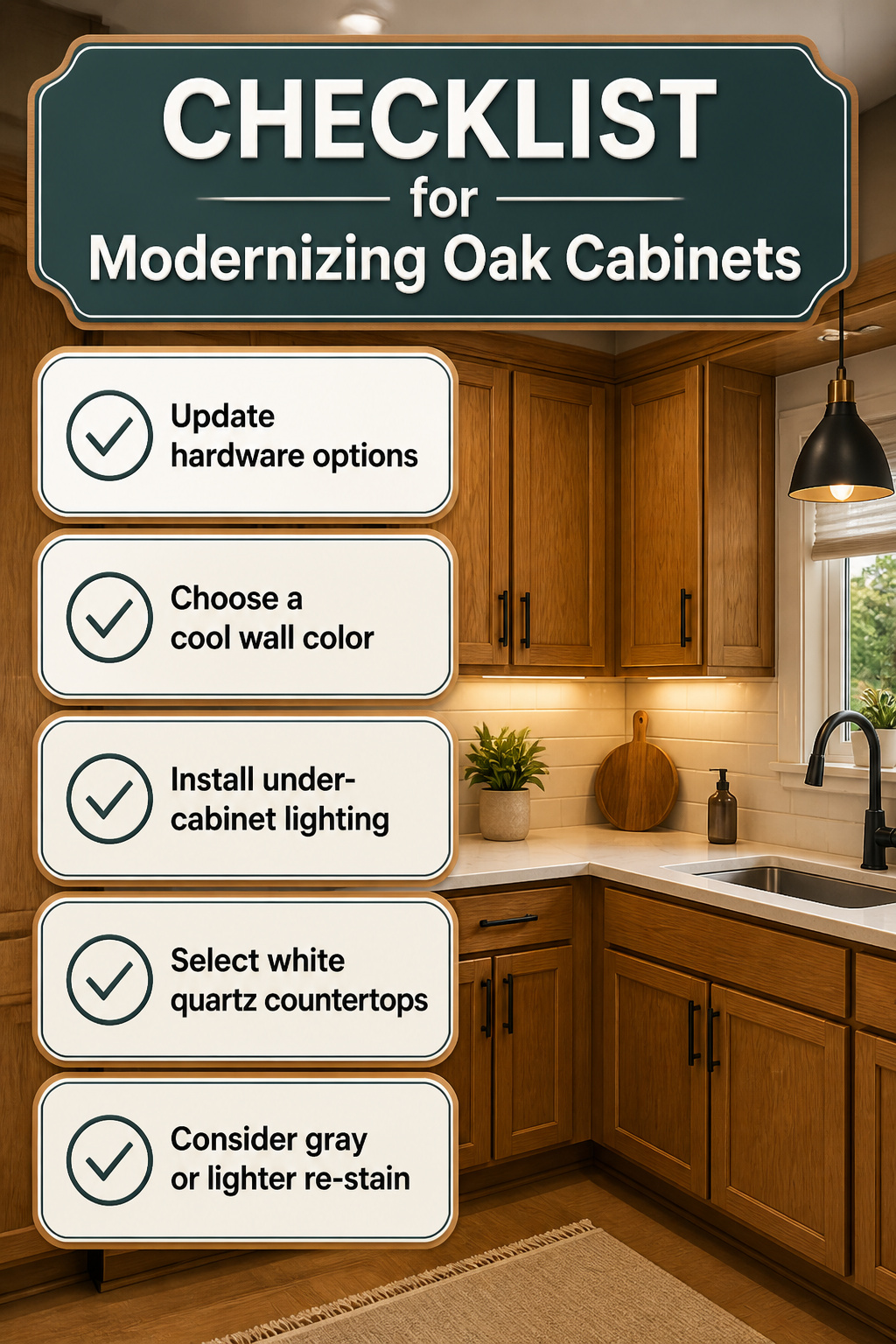
If you cannot paint, start with what touches the oak every day. Matte black or brushed brass hardware runs about $3–$8 per pull and installs with a screwdriver in an afternoon. The old warm-toned knobs that came with the cabinets read dated because they are dated; swap them for slim bar pulls with clean edges and the whole kitchen shifts without touching the wood.
Wall color does the heavy lifting next. A cool-toned neutral, something with gray or green undertones, pushes back against the orange cast that makes oak feel stuck in the 1990s. It is not about fighting the wood; it is about giving your eye somewhere cooler to rest.
Countertops and lighting finish the trick. White quartz reflects light upward and breaks up the oak’s dominance. Under-cabinet LED strips plus one modern pendant over the sink replace the builder-grade flush mount that came with the house. If you own and want more change, a gray or lighter re-stain is possible, but renters get ninety percent of the effect from hardware and paint that is not on the cabinets at all.
What Colors Go With Oak

Cool tones are what calm oak down. Blues, soft greens, and grayed neutrals sit opposite orange on the color wheel, so they counter oak’s warmth instead of amplifying it. Benjamin Moore’s Balboa Mist is a greige that handles golden oak without fighting it; Sherwin-Williams Moonmist reads as a light blue that stays fresh rather than cold. Warm whites like Farrow & Ball White Tie keep the harmony, while a clean bright white against honey oak can push the wood toward more orange than it already is. If you want greenery without going literal, a reed green on walls or textiles keeps the kitchen grounded without looking like a showroom set. Two ways to play this: keep the oak natural and let the walls do the cooling, or gray-wash the cabinets themselves and pair with muted walls. The first costs a weekend and two gallons of paint. The second takes longer but gives you modern tone without losing the grain.
Countertops That Work Best

Dated laminate next to oak cabinets reads as double trouble, and swapping it out is one of the highest-impact moves you can make. White quartz with subtle veining is the pairing that comes up most often for a reason: it brightens the space and gives the oak something clean to push against. Cambria, Caesarstone, and Silestone all stock options that work.
If you want to push further from farmhouse territory, concrete-look surfaces in matte, cool gray do the same balancing act with a harder edge. For golden or honey oak specifically, skip anything with warm beige or yellow undertones; it will amplify the orange instead of quieting it.
On a tighter budget, marble-look laminate has improved enough to be worth a look. Formica’s Carrara Bianco is the one designers keep naming. Honed soapstone sits at the other end, matte and variable, for kitchens where you want the counter to feel like stone that has actually lived somewhere.
Budget Breakdown by Project

Hardware runs $200–$800 for a full kitchen, which is the smallest entry point and the one you can finish Saturday morning. Countertops jump to $3,000–$8,000, the widest swing in this list because material choice drives almost everything. Cabinet doors cost $13–$60 each; multiply by your count before you commit. Lighting lands at $500–$2,000 depending on whether you are swapping pendants or wiring under-cabinet LEDs. Refinishing is the split decision: $200–$800 if you handle the sanding and stain yourself, or $1,500–$3,000 to hire out.
| Project | DIY Range | Pro Range | Timeframe |
|---|---|---|---|
| Hardware | $200–$800 | n/a | Weekend |
| Lighting | $500–$2,000 | n/a | Weekend |
| Refinishing | $200–$800 | $1,500–$3,000 | 1–3 days |
| Countertops | n/a | $3,000–$8,000 | 1–5 days |
| Door replacement | $13–$60/door | n/a | 1–3 days |
What is missing: backsplash pricing, faucet and sink costs, and primer or paint specifics for a full cabinet paint job. The sources flag these as mid-range or structural items without attaching hard numbers, so your actual spend there depends on square footage and brand choices.
Frequently Asked Questions
Are oak kitchen cabinets outdated?
Oak cabinets are not outdated. Wood cabinetry is making a strong comeback in 2026, and what reads as dated is usually the golden stain, cathedral door profile, or surrounding finishes like laminate countertops and old hardware. The oak itself remains durable and workable in modern kitchens.
How can I modernize oak cabinets without painting?
Swap the hardware for matte black or brushed brass pulls, paint surrounding walls in cool-toned neutrals, upgrade to white quartz countertops, and install under-cabinet LED strips with a modern pendant. These four changes shift the whole room without touching the wood.
What countertops go best with oak cabinets?
White quartz with subtle veining is the most popular pairing because it brightens the space and gives the oak clean contrast. Honed soapstone works for a quieter, more matte look, and improved marble-look laminates like Formica’s Carrara Bianco suit tighter budgets.
What colors go with oak cabinets?
Cool-toned colors counter oak’s warmth best. Benjamin Moore Balboa Mist, a muted greige, and Sherwin-Williams Sea Salt, a soft green-gray, both calm golden oak without fighting it. Skip bright white, which pushes honey oak toward orange instead of away from it.