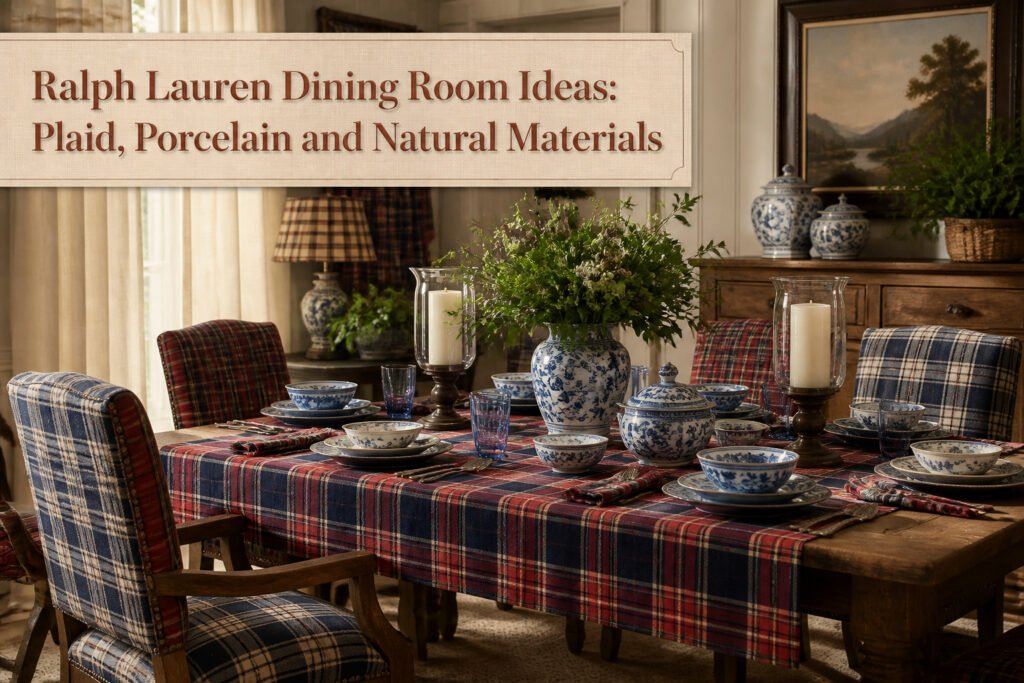
A Ralph Lauren dining room is a layered, lived-in space built around plaid textiles, blue and white porcelain, and substantial wood furniture, but only if you balance the formality with wear and actual use. The one element that appears in every interpretation, from Adirondack cabins to English country houses, is plaid: a small check on a lampshade paired with a larger buffalo check on the table, not matched but related.
Plaid Textiles

Plaid tablecloths and lampshades carry most of the warmth in a Ralph Lauren dining room. The pattern reads instant lodge without the themed-restaurant feel if you keep the colors muted: charcoal and cream, navy and tan, deep green and ivory. A plaid tablecloth under everyday meals makes Tuesday dinner feel intentional, and it hides the water rings your grandmother’s silver pitcher will leave anyway.
The lampshades are where you can actually get your hands involved. Plain drum shades take plaid fabric with spray adhesive and a careful wrap, and the seams land right at the back where no guest sees them. What convinced me, reading through a dozen of these rooms, is that the shade does not need to match the tablecloth. The same family of colors, different scale: small check on the shade, larger plaid on the table. One source used a hunting tartan on the shade and a muted buffalo check on the table, and the mix kept the room from feeling like a catalog spread.
You will see this element repeated across every version of the style, from the Adirondack cabins to the English country houses. It is not the one authentic Ralph Lauren detail; it is the one that appears in every interpretation, which makes it the safest place to start if you are building the room piece by piece.
Blue and White Porcelain

Blue and white porcelain is the accent people notice first in a Ralph Lauren dining room, and it is the easiest element to borrow without rebuilding the space around it. A single grouping on a sideboard or bar cart sets the tone the way paint or upholstery cannot, because the pattern carries its own history.
You do not need museum pieces. Sources describe blue willow dishes and traditional china mixed with holiday greenery, flameless candles, and silver champagne buckets. The porcelain works because it is rigid and refined against softer textures, not because every piece matches. Start with what you already own or can find secondhand: one tall vase, a pair of ginger jars, or a stack of plates propped on a stand.
The risk is making it feel scattered. What reads as collected in a spacious room can look like clutter in a smaller dining area. Keep the porcelain to one zone, the bar cart or a single shelf, and let the rest of the room breathe. If the pieces look too bright against your walls, shift them to where natural light hits during the hours you actually use the room. Porcelain changes with the light, and that shift is part of why it lasts in a space where trends fade.
Natural Materials

Wood grounds a Ralph Lauren dining room more than any single piece of decor. A substantial dining table with visible grain establishes scale and sets the hierarchy for everything around it. You want the surface to look like it came from something, not out of a box.
Leather, linen, wool, and aged metals layer in from there, each one adding a texture your hand notices before your eye names it. Weathered finishes and softened edges matter more than polish here. The dent in a chair arm, the fold that stays in a linen runner, the patina on brass candlesticks: these read as time spent, not carelessness.
This balance of refinement and wear is what keeps the room from feeling staged. A table that can hold a dinner party on Saturday and coffee and mail on Sunday morning is the point. The materials do the work; you just live with them.
Layered Lighting

A single overhead fixture leaves a dining room flat after dark. You need the chandelier to pull focus, then softer sources to fill in what it misses.
The Ralph Lauren Windsor Large Hanging Shade anchors the table with scale and a pleated drum shape that reads traditional without dressing up. Sconces on the surrounding walls catch the edges the pendant drops into shadow. Add a lamp on a sideboard or console and you have three heights of light instead of one blast from above.
This layering does two jobs at once. It shrinks a large room to human proportion, and it stretches a small one by pushing the walls back visually. The Windsor shade in particular turns up in rooms with rattan chairs, walnut tables, jute rugs, dark wood floors, painted beams, and slipcovered seating, so it already knows how to belong in an informal, lived-in space.
The mistake is stopping at the chandelier. Without the lower and peripheral sources, you get a spotlight on the plates and blackness everywhere else. Build the full stack, then dim each layer to where you can see the food and the faces across from you.
Heritage Color Palette

The colors that ground a Ralph Lauren dining room never shout. Deep tobacco browns, navy, warm creams, charcoal tones, muted greens, and rich navy hues layer together like old club chairs and inherited wool blankets, settling a space rather than staging it.
You will notice these tones shift across the day without any effort on your part. Morning light pulls the cream forward and keeps the room readable; evening sinks everything into something closer and quieter. That daily change is part of the point. In a small dining space, this depth can feel heavy unless you break it with texture, a linen curtain or a scrubbed wood surface. In a larger room, the same palette gains architecture and holds its own against tall windows or bare plaster.
For the wall itself, Sherwin Williams Naval has become the navy people actually commit to and live with. It reads as color, not as black hole, and pairs naturally with the warmer browns and greens without turning nautical. If you are renting and painting is an option, this is the shade worth testing on a single wall before you buy the gallon.
Classic Furniture

A Ralph Lauren dining room starts with furniture you can feel the weight of. The Monterey table from Serena & Lily clocks in at 400 lb, which tells you something before you even touch it: solid wood, trestle base, built to stay put. That kind of substance grounds the room in a way veneer never manages.
Pair it with upholstered chairs that have some wear in mind. White works, as one pairing proved, but the fabric matters more than the color. You want something that softens the wood without going formal.
Brass details belong on the lighting, not scattered as trim. A sculptural shade with polished nickel or brass hardware gives you that contrast without clutter. Skip the small stuff and put the metal where it draws the eye upward.
For storage, look at heritage-inspired pieces: cabinets with paneling, benches that double as entry seating, anything that connects rooms rather than boxing them in. The bench that stays open to the next space keeps sightlines clear and actually gets used.
If you are hunting secondhand, bring help. Four hundred pounds is not a solo carry, and kind neighbors only get you so far.
Timeless Elegance
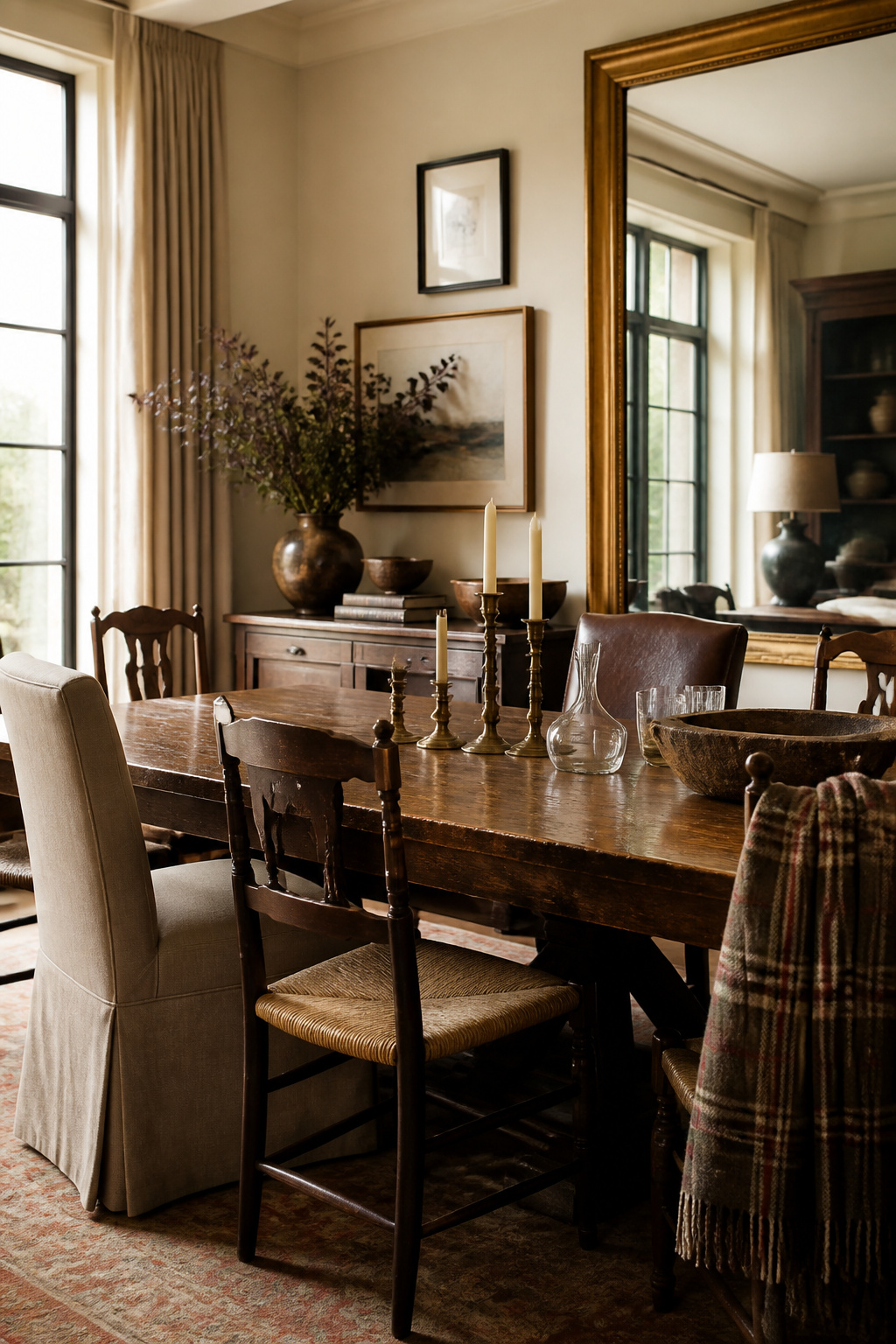
A Ralph Lauren dining room never tries too hard to impress. It reads like a house that has been lived in for generations, where the furniture came from a grandfather’s study and the rug was found at a weekend auction. That collected feeling comes from mixing old wood, worn leather, and soft wool rather than buying everything from one season.
The balance between polish and ease is what makes the style useful for actual life. A heavy oak table with visible grain holds up to Tuesday night tacos and Thanksgiving dinner with equal comfort. Brass candlesticks that have dulled over years sit beside everyday water glasses, and no one reaches for a coaster.
Layering is how you avoid the showroom trap. Start with a wooden table that shows its age, add linen napkins with a little slub in the weave, and hang a mirror or painting in a gilded frame that has already lost some of its shine. Each piece should look like it arrived on a different day.
The same room can feel right for a birthday dinner or a working lunch because nothing in it is too precious to use. Porcelain plates stack beside handmade pottery. A plaid throw drapes over a chair back because someone was cold last winter, not because a stylist placed it there. That is the point: the room serves the people in it, not the other way around.
Material Language
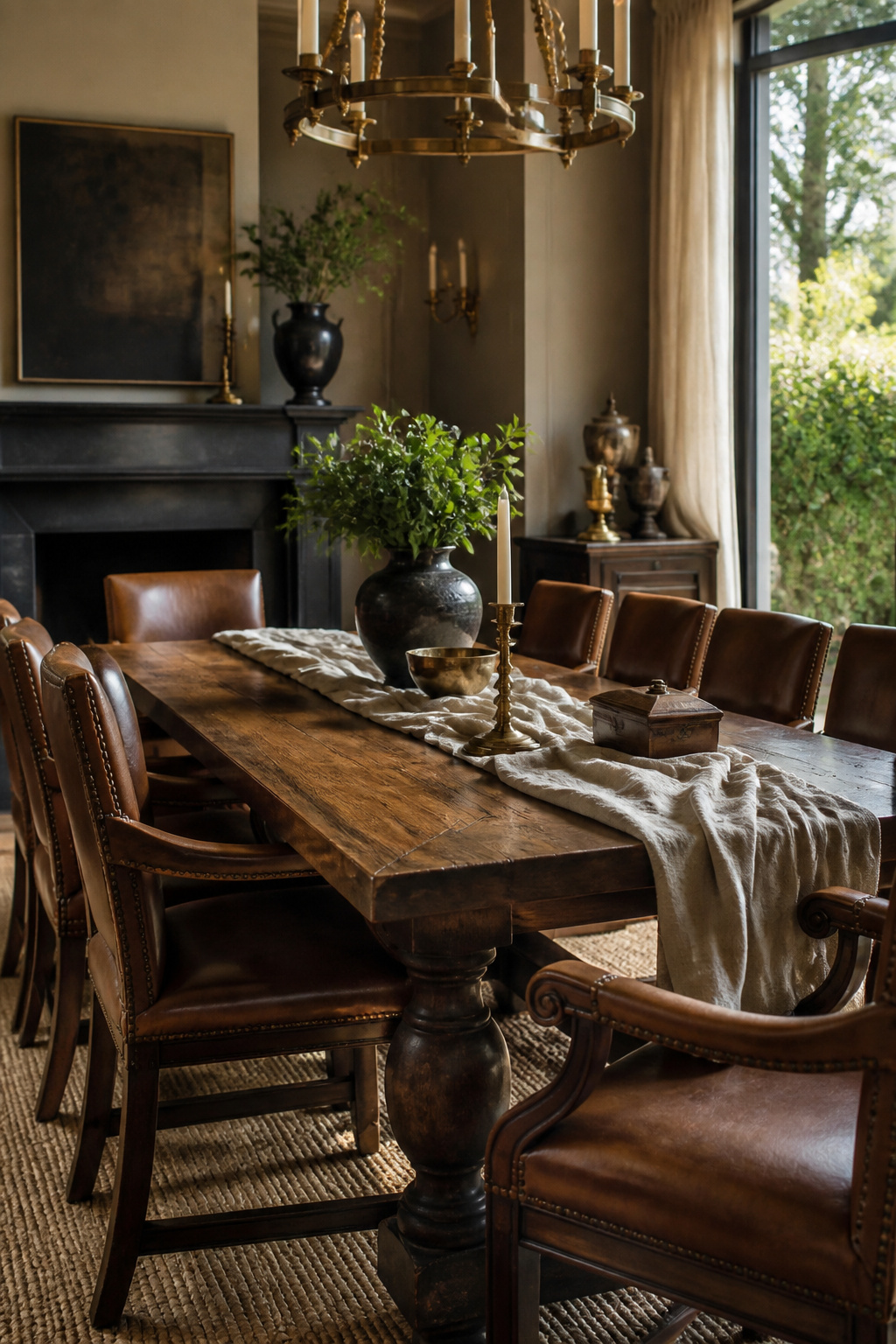
Wood sits at the center of this look, and not just any wood. A dining table with visible grain, substantial enough to ground the room, sets the scale everything else responds to. From there, tactile contrast builds the character: leather that softens at the edges, linen with natural folds that never quite flatten out, wool with a slight nap, metals that carry some age rather than a factory shine.
The point is not perfection. Weathered finishes, softened edges, fabric that shows it has been lived with: these read as time and use rather than flaw. A surface that looks like it might already have a story feels more convincing than one that arrived yesterday from a showroom.
This balance of materials is what lets the room shift between contexts. The same space can hold a formal dinner or a Tuesday night pasta without either feeling like an intrusion. For a renter or a first-time owner working on a weekend budget, that adaptability matters. You are building one room to do several jobs, and the materials you choose decide whether it can.
Relaxed Formality

A Ralph Lauren dining room starts with structure: traditional moldings, a table with real weight, proportions that feel considered rather than accidental. The formality works only if you soften it. Fresh flowers in a ceramic vessel, a stack of books on the sideboard, monochrome framed photography, these details shift the room from staged to lived-in. They give guests something to lean toward without cluttering the visual calm.
The balance matters more than any single piece. A dining room that feels too arranged discourages lingering. One that feels too casual loses the sense of occasion. The Ralph Lauren approach lands in the middle: enough refinement for a Saturday dinner that runs long, enough ease that nobody worries about which fork. This adaptability carries across spaces, from a modern apartment to a suburban home with an expansive dining area. The same principles hold because they are about behavior, not square footage.
Coastal Twist

A coastal Ralph Lauren dining room keeps the structure but trades the weight. Soft blues and layered whites replace the deep greens and burnished leather that anchor the heritage look, and the whole room opens up toward whatever light you have. You still want the traditional proportions, the turned wood, the ceramic vessel with flowers on the sideboard, but the mood shifts from clubroom to something you can walk into barefoot.
The mistake is thinking coastal means stripping away the formality entirely. It does not. The Ralph Lauren balance still matters, the tension between refined and relaxed. A dark mahogany table in a beach house feels like a transplant; a white oak table with similar lines, scaled to the room, keeps the lineage without the heaviness. The monochrome photography stays. The stack of books stays. What changes is the palette and the patina you allow yourself to live with, salt air and all.
Frequently Asked Questions
What defines a Ralph Lauren dining room style?
A Ralph Lauren dining room style is defined by timeless heritage luxury combining classic American elegance, rich textures, and warm atmosphere. Plaid textiles appear in every interpretation of the look, from Adirondack cabins to English country houses, making them the safest starting point. The overall effect reads like a house lived in for generations, where furniture and decor arrived on different days rather than from one catalog.
How to design a Ralph Lauren dining room?
You design a Ralph Lauren dining room by layering natural materials, balanced lighting, and classic furniture for a timeless elegant space. Start with a substantial wood table with visible grain, add plaid textiles in muted colors, group blue and white porcelain on a single surface, and build three heights of light: a chandelier, sconces, and a sideboard lamp. The room should feel collected, not staged, with weathered finishes and softened edges that show time spent.
What colors work in Ralph Lauren dining room design?
Ralph Lauren dining room colors include deep browns, navy, cream, and muted greens that create warmth and visual depth. Sherwin Williams Naval has become the navy people actually commit to and live with; it reads as color, not as a black hole, and pairs naturally with warmer browns and greens without turning nautical. These tones shift across the day on their own, pulling cream forward in morning light and sinking into something quieter by evening.
What furniture fits a Ralph Lauren dining room?
A Ralph Lauren dining room uses solid wood tables, upholstered chairs, brass details, and heritage-inspired storage pieces. The Monterey table from Serena & Lily, at 400 lb with a trestle base, exemplifies the weight and substance that grounds the room. Pair it with upholstered chairs in fabric that softens the wood without going formal, and look for storage that connects rooms rather than boxing them in, like benches that double as entry seating.
Can Ralph Lauren dining room work in small spaces?
Yes, it works in small spaces using scaled furniture, soft lighting, and neutral tones to maintain elegance without crowding. In a small dining space, the deep heritage palette can feel heavy unless you break it with texture, like a linen curtain or scrubbed wood surface. Keep blue and white porcelain to one zone so it reads as collected rather than scattered, and use layered lighting to push the walls back visually rather than relying on a single overhead fixture that flattens the room.