
Home interior decor ideas span from a $4 pack of floor protectors to a full curtain rod move, and the right pick depends on whether you want to finish in an hour or a weekend. The catch is that the smallest upgrades trip people up fastest: a 20-inch pillow insert crammed into a matching cover stays permanently sad in the corners, and a crooked frame you swear you’ll fix becomes the thing you stare at for months. Most of these swaps stay under $40, but the one that costs nothing, hanging your rod six inches higher, changes a room’s proportions more than any paint job.
1. Throw Pillows and Covers
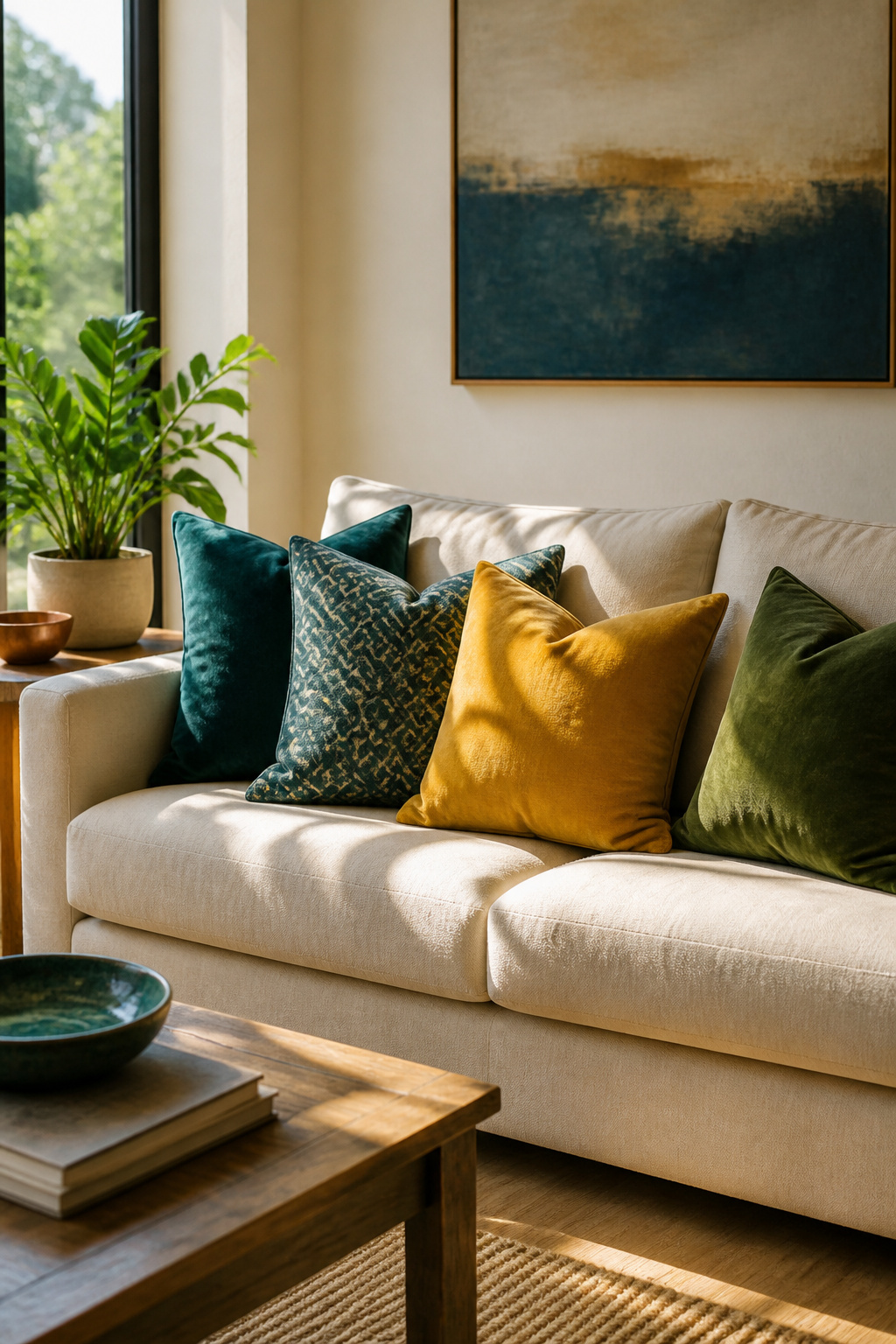
Swapping pillow covers instead of buying all-new throw pillows is the fastest way to shift a room’s mood without the storage headache of orphaned inserts piling up in a closet. Most covers run $15–$40, so you can hit two or three patterns for under a typical weekend-project budget and still have the inserts you already own doing the work.
The mistake that wastes that money is ordering covers to match the insert size exactly. Covers need to go one size up from the insert, or you end up with sad, under-stuffed corners that never plump right. A 20-inch insert wants a 22-inch cover. Linen and velvet hold shape differently than cotton, so read the fabric note before you decide; a stiff weave can read formal in a room that needs soft, and a slubby cotton can look cheap under a reading lamp. If your sofa is neutral, one cover in a small geometric and one in a solid texture gives you something to rotate between laundry days without committing to a whole new palette.
2. Wall Art
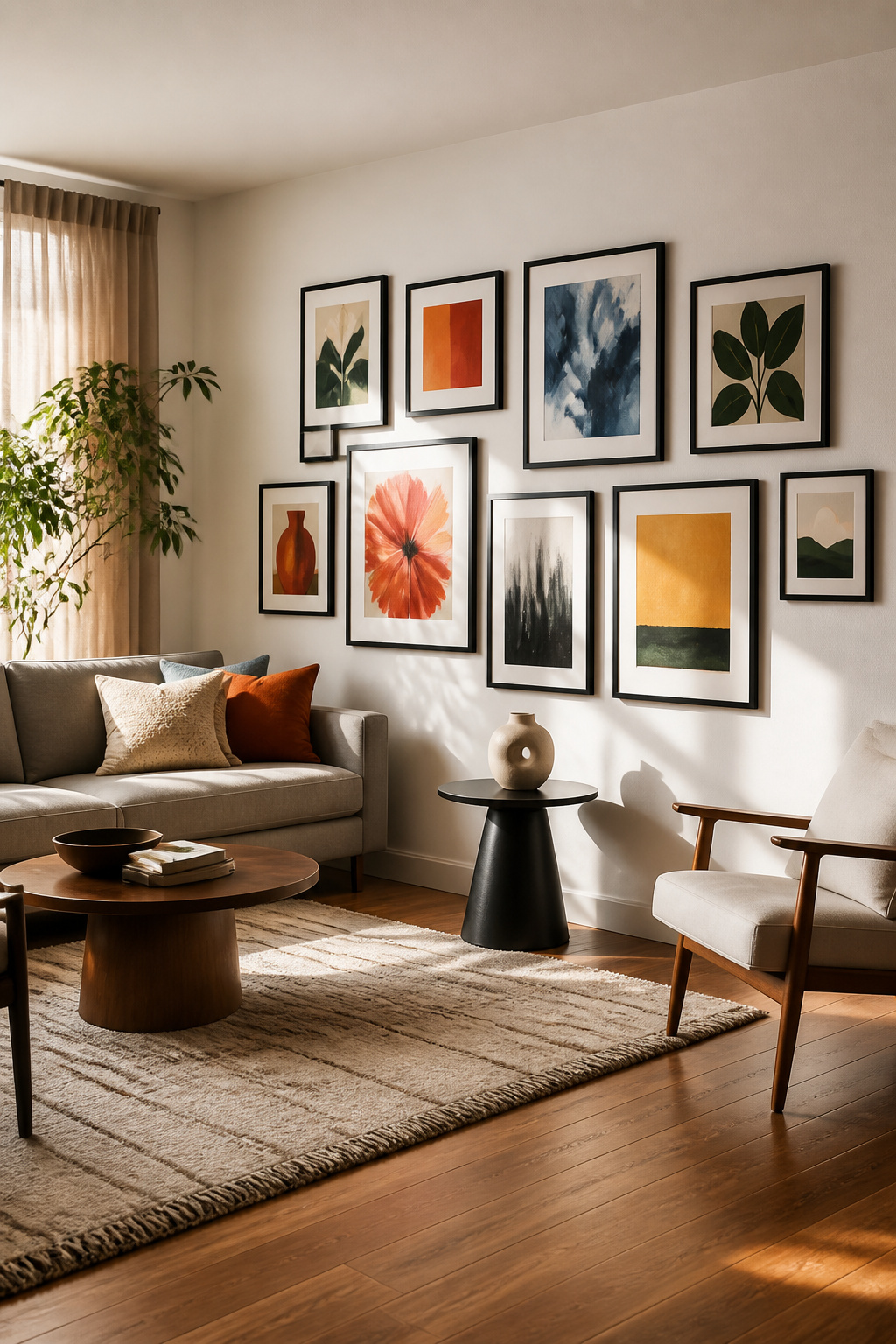
Swapping out wall art is the fastest way to make a room feel finished without touching a paint can. You notice the difference immediately, and so does anyone who walks in after.
For renters, the hanging method matters more than the frame. Command strips hold up to sixteen pounds on their large hooks, which covers most framed prints and lightweight canvases. Nails handle heavier pieces and textured walls better, but they leave holes that need patching before move-out. If your lease charges per damaged wall, that fifteen-dollar spackle kit and an hour of touch-up work erase whatever you saved on the hardware.
A crooked frame undoes the whole effect. You will walk past it for three days telling yourself you will fix it later, and you will not. Buy a small level, or use the one built into your phone, and check the piece from the doorway where you will actually see it. The two minutes of adjusting saves you from slowly hating a piece you once liked.
Print shops and museum poster stores run sales every few months. A twenty-dollar reprint in an existing frame changes the mood of a room for less than the cost of dinner out.
3. Lighting Updates
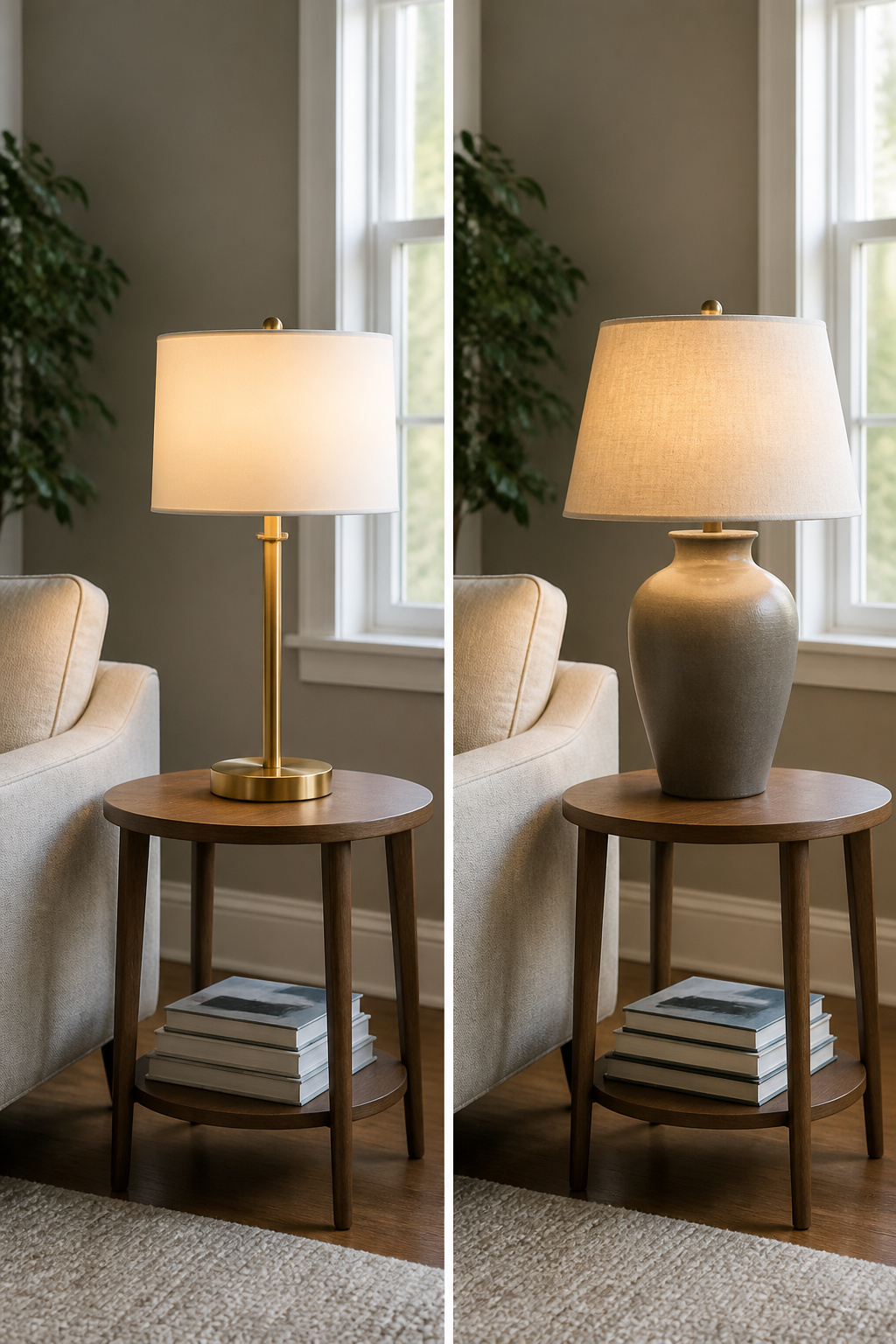
New lamps work harder than most decor swaps because they shift both how a room looks and how you feel in it after dark. A Drew & Jonathan Porteau Medium Table Lamp in a finish that reads against your wall color gives you that change for the price of a single fixture, not a rewiring job.
Smart bulbs stretch the same idea further. You set color temperature and brightness from your phone, which means one lamp can read warm at 7 p.m. and cooler at 10 a.m. The $12 mistake that wrecks a whole room is grabbing 2700K when you meant 4000K. That 2700K bulb casts the yellow of a diner booth; 4000K reads closer to morning light through a window. You will not know which you actually live with until the sun goes down and the walls turn butter or ash. Replace the bulb, the room corrects itself, and you will check the box twice from then on.
4. Indoor Plants
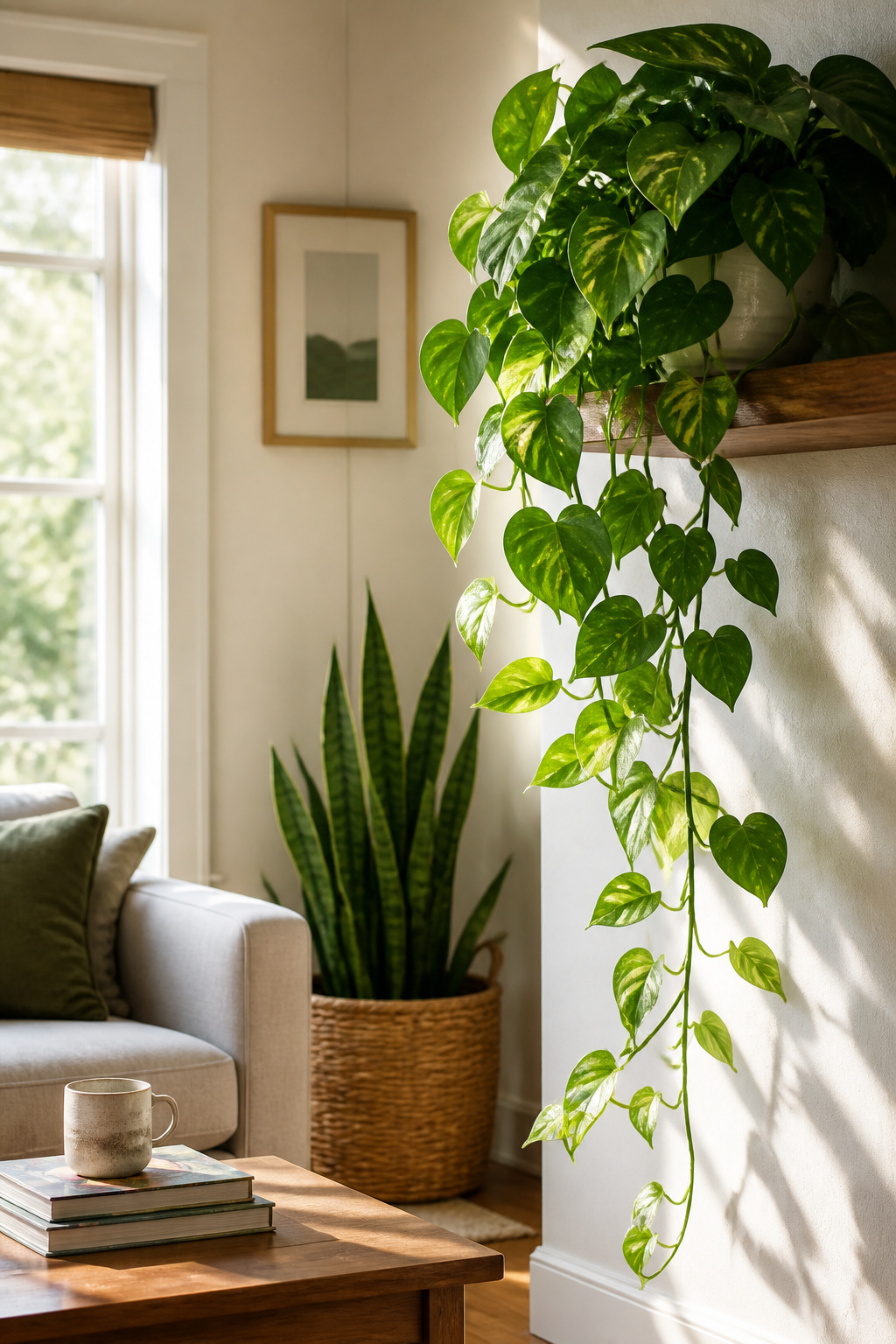
A pothos or snake plant will survive the kind of watering schedule you actually keep, not the one you promise yourself. Both handle low light and dry spells better than most, and either one runs under $15 at a grocery store or nursery.
The fiddle-leaf fig craze is real until you watch one drop every leaf inside six weeks because you watered it a day late. That $35 mistake taught me to buy the plant that forgives you, not the one that photographs well. My replacement pothos sat in a corner with irregular water for a full year before I finally repotted it, and it only looked better for the neglect.
For air quality, the science is softer than the marketing. A few leafy plants in a room will not replace a filter, but they do add humidity and they absolutely change how a space feels. A trailing vine on a high shelf draws the eye up without any installation. A compact snake plant fills an awkward floor gap between furniture.
Start with one. Water it when the soil is dry an inch down, not on a calendar schedule. If it lives, you have your green light to add another.
5. Rugs

A rug that is too small for a room looks like a postage stamp, not an anchor. The right size pulls furniture together so pieces feel arranged on purpose, not scattered. You want at least the front legs of sofas and chairs resting on it, which usually means 8×10 feet for a standard living room setup. The 5×7 you spot for $80 at a clearance event will not stretch far enough, and you will know it the moment you unroll it. That rug became a bathroom mat in my house, which was not the worst outcome, but it was $80 spent twice. For renters, a rug also covers what you cannot change: worn carpet, odd tile, or a floor plan that puts the dining area three feet from the entry. Jute and flatweave options run thin enough to stack if you need extra padding, and they move out with you. Measure with painter’s tape before you buy anything, and let the tape sit for a day so you walk around the outline and notice door swings and chair pull-backs.
6. Accent Furniture
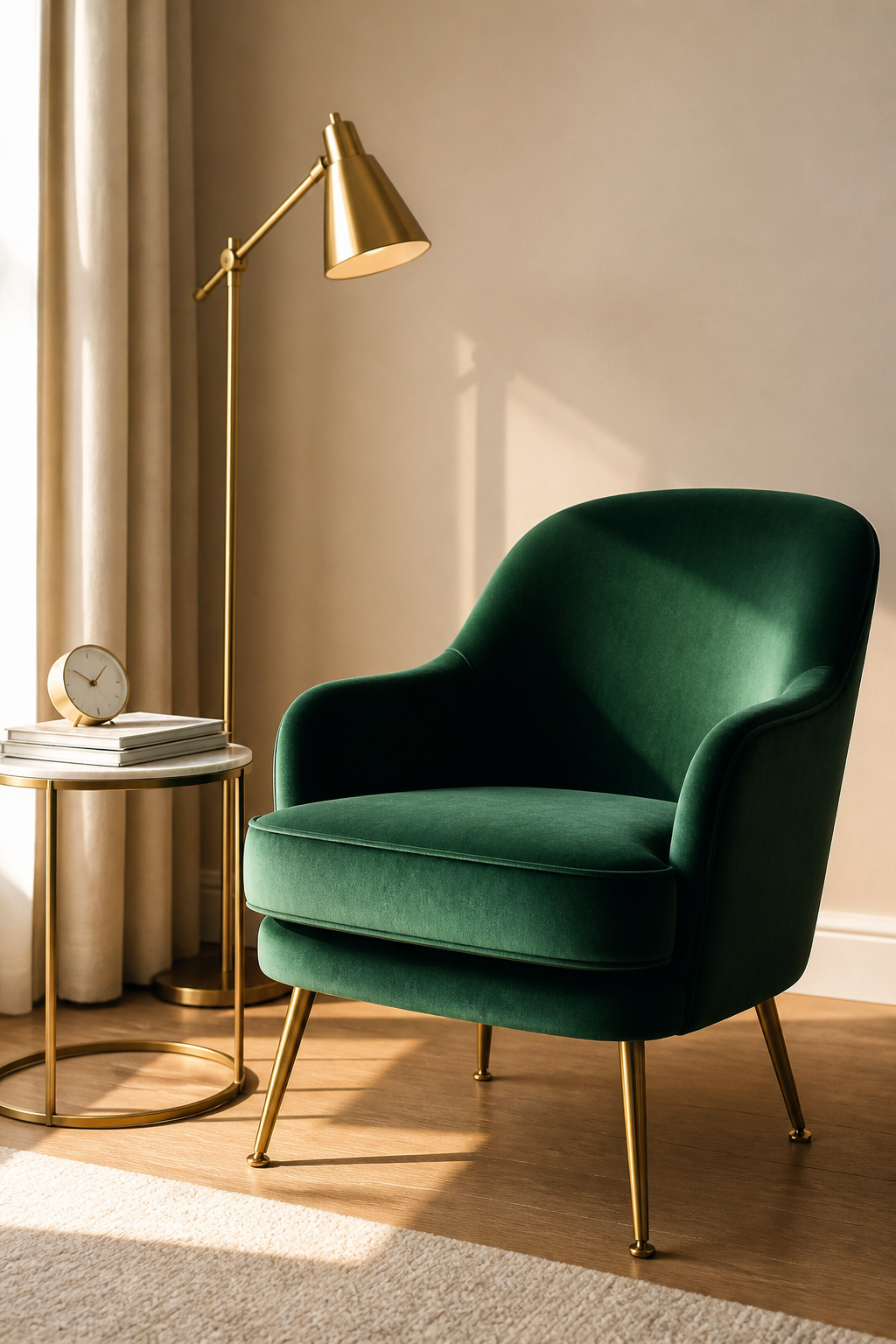
A single piece of furniture can pull a room together faster than repainting ever could. The trick is finding one that holds its own without eating your whole weekend budget.
You do not need a designer showroom find. A $60 side table from a big-box closeout sale can carry a living room if the shape is right. The one I keep coming back to had a wobble out of the box, the kind that scrapes hardwood and makes guests nervous setting down a drink. The fix was a $4 pack of adjustable floor protectors, threaded until all four feet sat flat. That ten-minute adjustment turned a reject into the piece people ask about.
Weight matters more than price. A lightweight table slides every time you bump it; something with a solid wood frame or weighted base stays where you put it. Look for legs that splay slightly outward, a lower shelf that actually holds books, and a finish dark enough to hide the water ring from last Tuesday’s glass.
The mistake most people make is buying "temporary" and acting temporary. They leave the sticker on, skip the level, treat the piece like it does not belong. The table that wobbled is still in my living room six years later because I bothered to adjust it.
7. Color Swaps
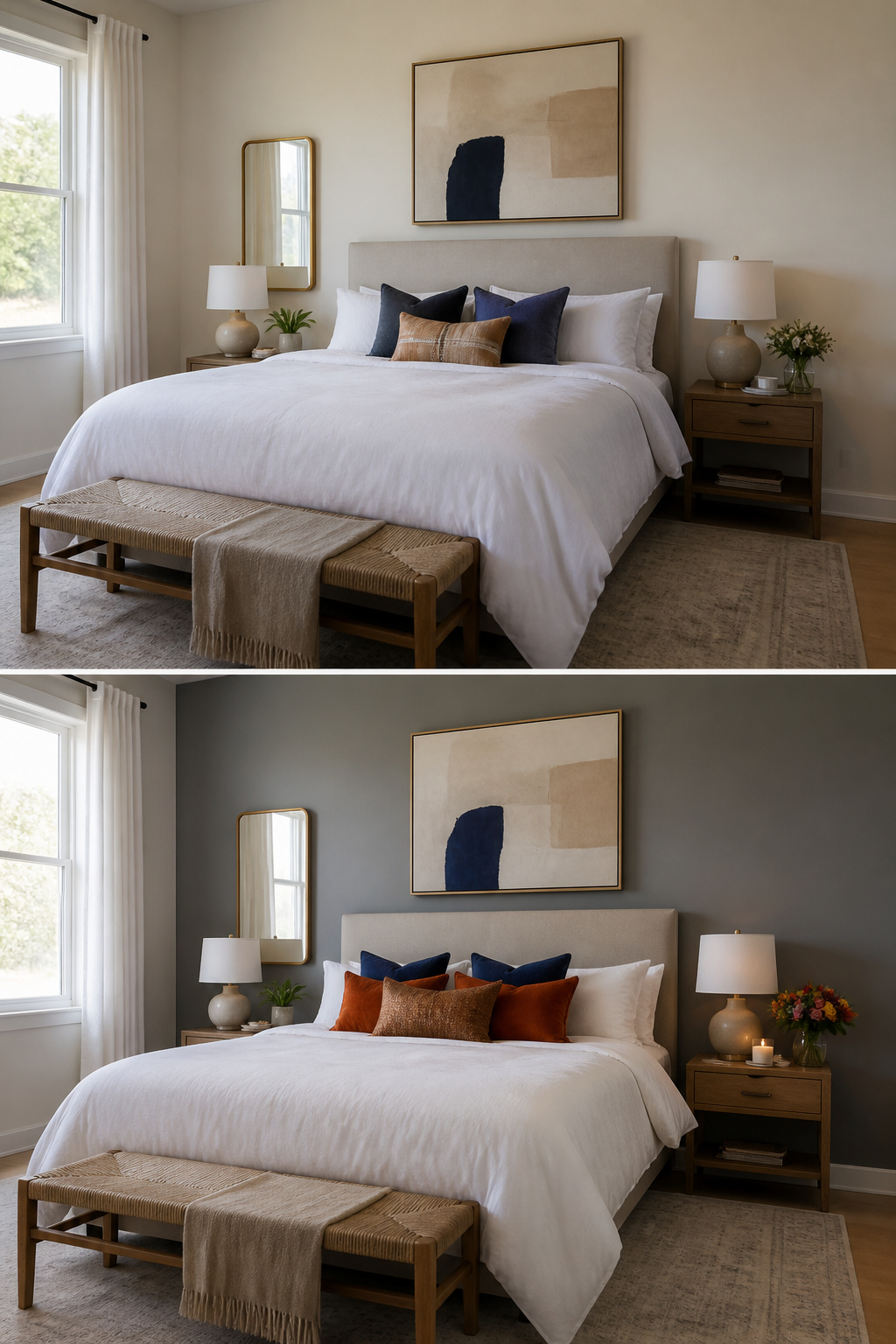
Paint is the cheapest way to change a room’s whole mood, but the wrong color under your actual light will feel like a mistake by day two. A $22 sample pot brushed onto a two-foot square, checked morning and evening, saved a full-wall job in a north-facing bedroom where the same warm gray read as cold concrete. Live with it forty-eight hours before you commit.
Removable wallpaper promises flexibility for renters, though the reality is messier. Peel it slowly, heat it with a hair dryer, and still expect to patch paint when the adhesive takes the topcoat with it. A year of steam from a nearby radiator weakens the bond enough that it all comes down in strips. For low-risk spots, backs of bookcases and closet ceilings give you pattern without the full-wall gamble.
8. Decorative Trays
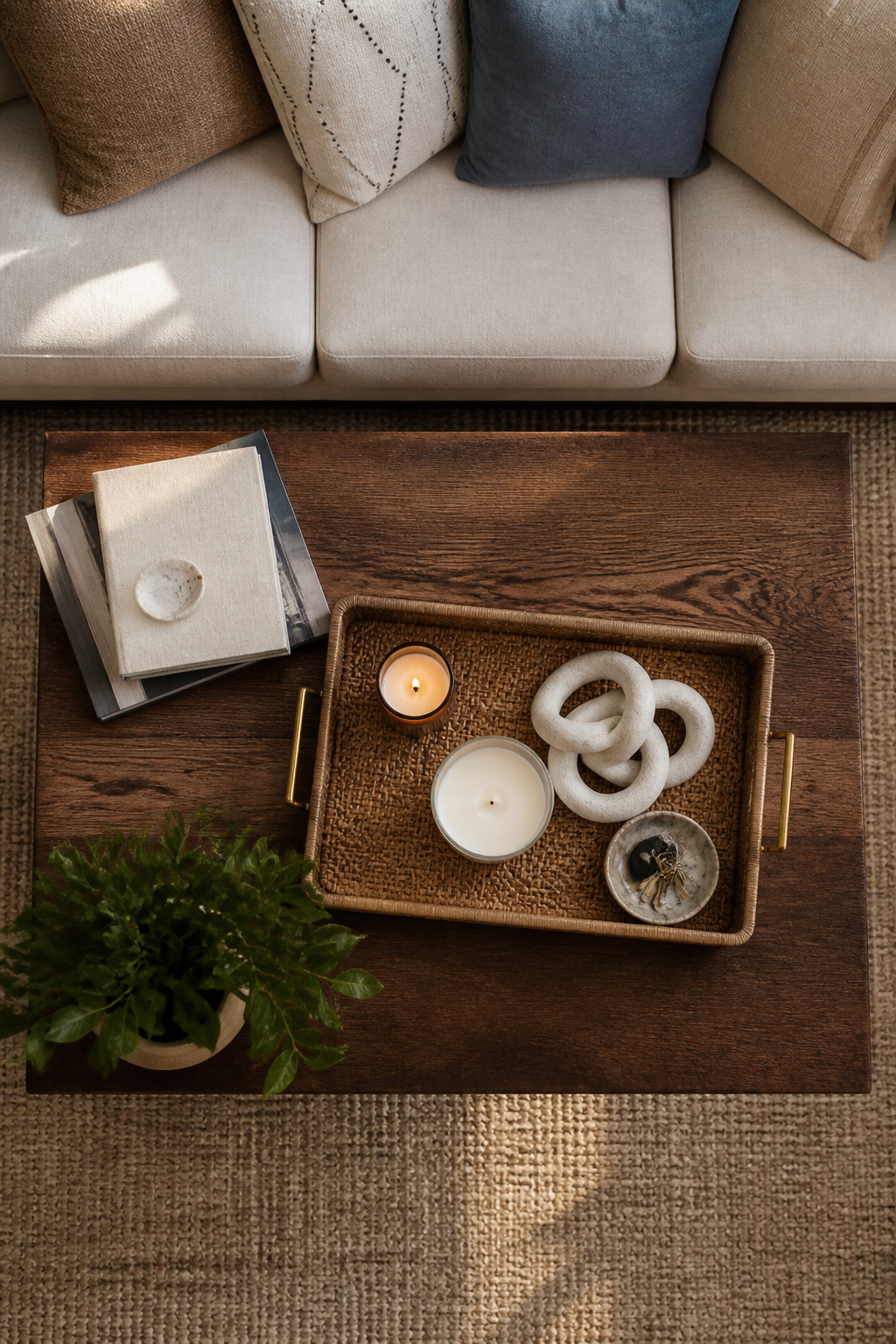
A tray corrals clutter into something that looks intentional. On a coffee table, that means the candle, the wick cutter, and the small dish you drop your earrings into all stay in one zone instead of drifting across the surface. Group objects this way and the table reads as designed, even if you gathered them in five minutes.
The mistake is buying for the table you wish you had. A tray that works on a dresser looks lost on a forty-eight-inch coffee table, like a postage stamp on a envelope. That fifteen-dollar thrift find I measured against the sofa proved the point. It measured twelve by eighteen inches, and the table swallowed it. The proportions looked wrong from every angle in the room. It found its home on the bedroom dresser, where it holds perfume bottles and a small ring dish, and the scale finally makes sense there.
Size the tray to about two-thirds the length of the surface so it anchors the space without floating in it. For a standard coffee table, that usually means twenty by twenty inches or larger. Anything smaller belongs on a smaller stage.
9. Curtains and Drapes
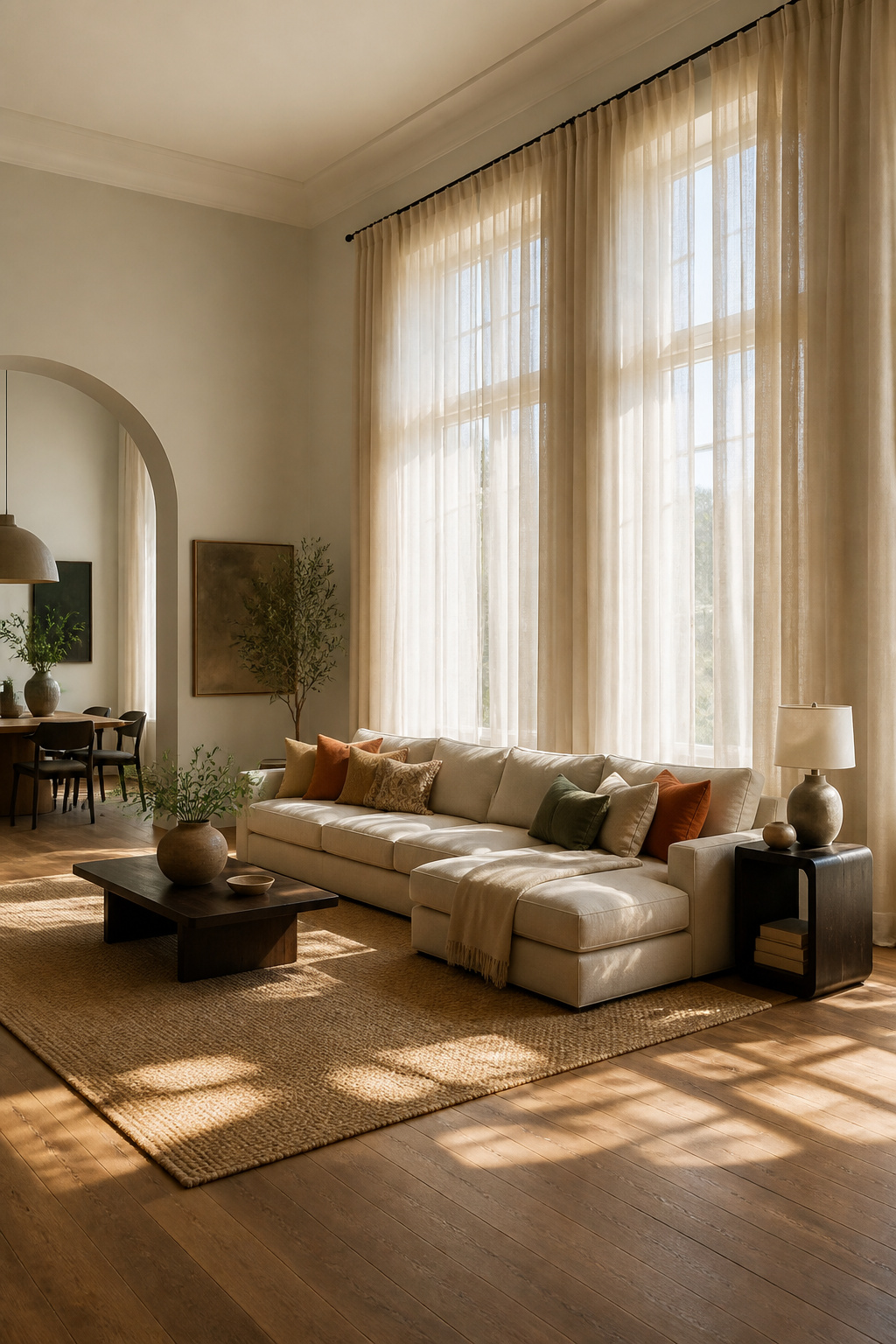
Window treatments reset a room faster than almost anything else you can swap in a weekend, and the hardware matters more than the fabric. Most people default to mounting the rod right at the window frame, which leaves the glass looking squat and the ceiling feeling lower than it is. Hang the rod 6–12 inches above the frame, or even closer to the crown molding if you have the wall space, and the same window suddenly reads as taller and more expensive. The shift costs nothing but an hour with a drill and filler for the old holes if you are patching in a rental. Sheer linen in a warm tone filters afternoon light without blocking it entirely, which is what you want in a living room you actually use. If you need darkness for sleeping, add a separate blackout liner on its own rod behind the pretty layer; it moves easier than replacing a whole panel and gives you two controls for light instead of one. The mistake most people make is treating the rod height as fixed by the window the builder cut. It is not. Move it up, let the panels skim the floor by a half inch, and the room changes shape for the price of lunch.
10. Books and Decorative Objects
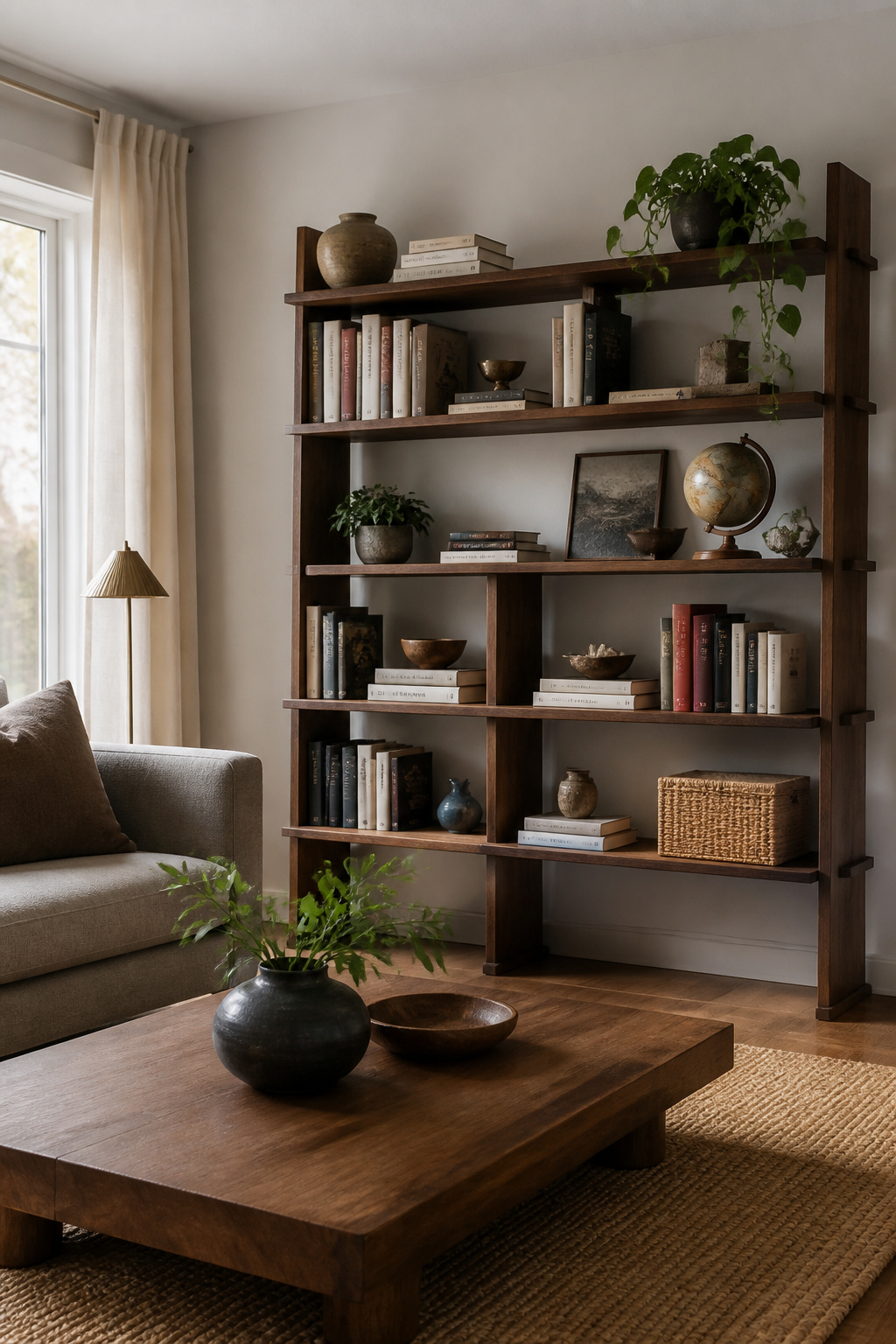
A shelf full of books arranged spine-out in tidy vertical rows looks like a catalog, not a home. What works better is a mixed display: some vertical, some stacked flat, a small object perched on top. The flat stack is the safer bet if you have ever watched a too-tall vertical row sway and lob a hardcover onto the floor at 2 a.m.
Books are free material if you already own them, and they travel. A stack moved from the living room to the bedroom changes both spaces without costing anything. If your shelves are thin, secondhand shops and resale sites run about $2–5 per hardcover for faded spines that read as color blocks rather than library. A ladder bookcase leans against the wall and holds more than books. Vases, a small framed piece, a ceramic object gathered on a trip, or a single potted plant fit on the rungs between stacks and break up the grid. Keep the flat stacks under four books; above that, they read as storage and start to look like you are avoiding the donate pile.
Color Schemes That Hold Together
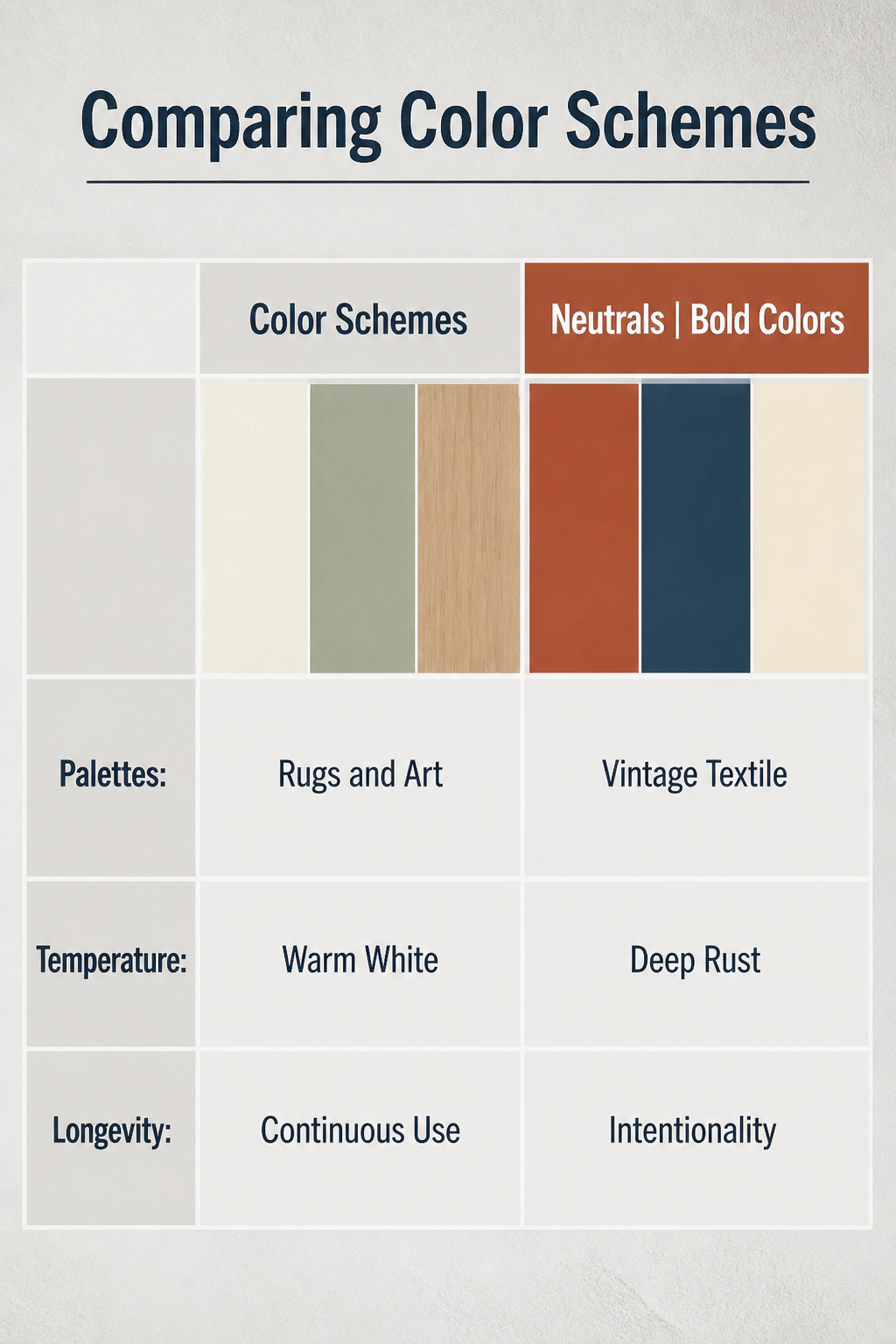
The fastest way to end up with a room that feels scattered is to start from a blank paint chip. Pull your palette from something you already own, a rug, a ceramic bowl, a piece of art, and limit yourself to two or three colors taken directly from it. That object already solved the problem of what looks good together.
Neutrals work when you need the room to quiet down. A warm white, a grayed green, and a raw wood tone will hold for years without going flat because the slight variation in temperature keeps your eye moving. Bold color needs the same discipline. A deep rust, a muted navy, and a cream pulled from a single vintage textile will read as intentional; the same three colors chosen independently tend to fight.
Start with your anchor piece. Tape paint samples next to it and live with them for a week under your actual light before you buy the first can.
Space Optimization for Small Rooms
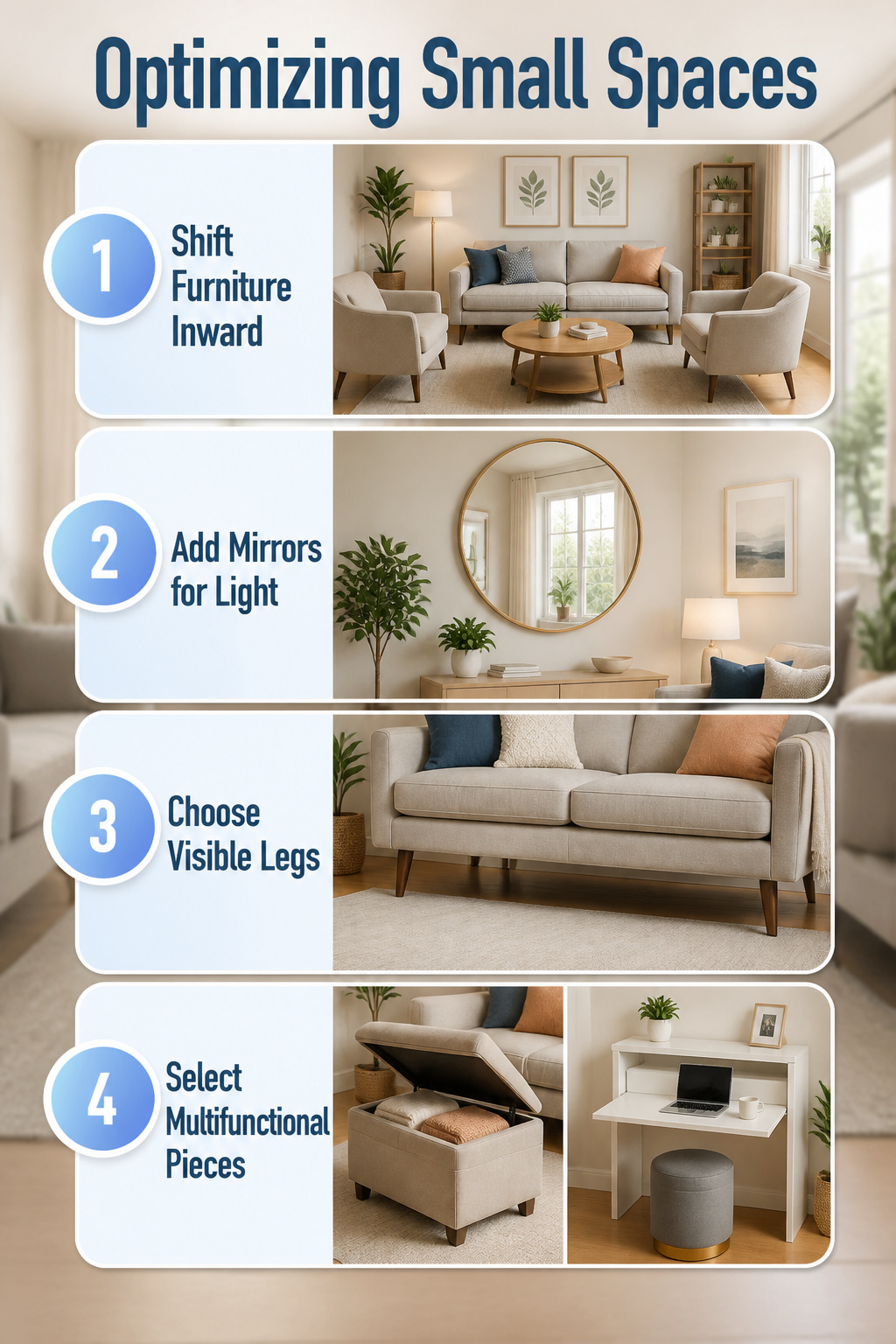
The first thing people do in a small room is shove every piece of furniture against the walls. It feels logical, like you are clearing a path through the middle, but the room ends up looking like a waiting area. Pull the sofa and chairs inward, even by just a foot, and the space gains a center. Suddenly there is a conversation area instead of a perimeter of furniture hugging the walls.
Mirrors do the heavy lifting after that. A mirror hung opposite a window bounces daylight back into corners that otherwise go dark, and the reflection itself becomes a kind of borrowed space. The trick is placement, not size. A mirror facing a blank wall just doubles the blankness.
For furniture, visible legs matter more than you would think. A sofa or chair that sits flat on the floor looks like a block. The same piece raised on legs lets your eye travel under it, and that continuous floor line reads as more square footage. Multifunctional pieces finish the job: an ottoman that stores blankets, a console that folds out to a desk. You are buying one footprint and getting two uses, which is the only real math that matters when every inch counts.
Seasonal Refresh Without Storage
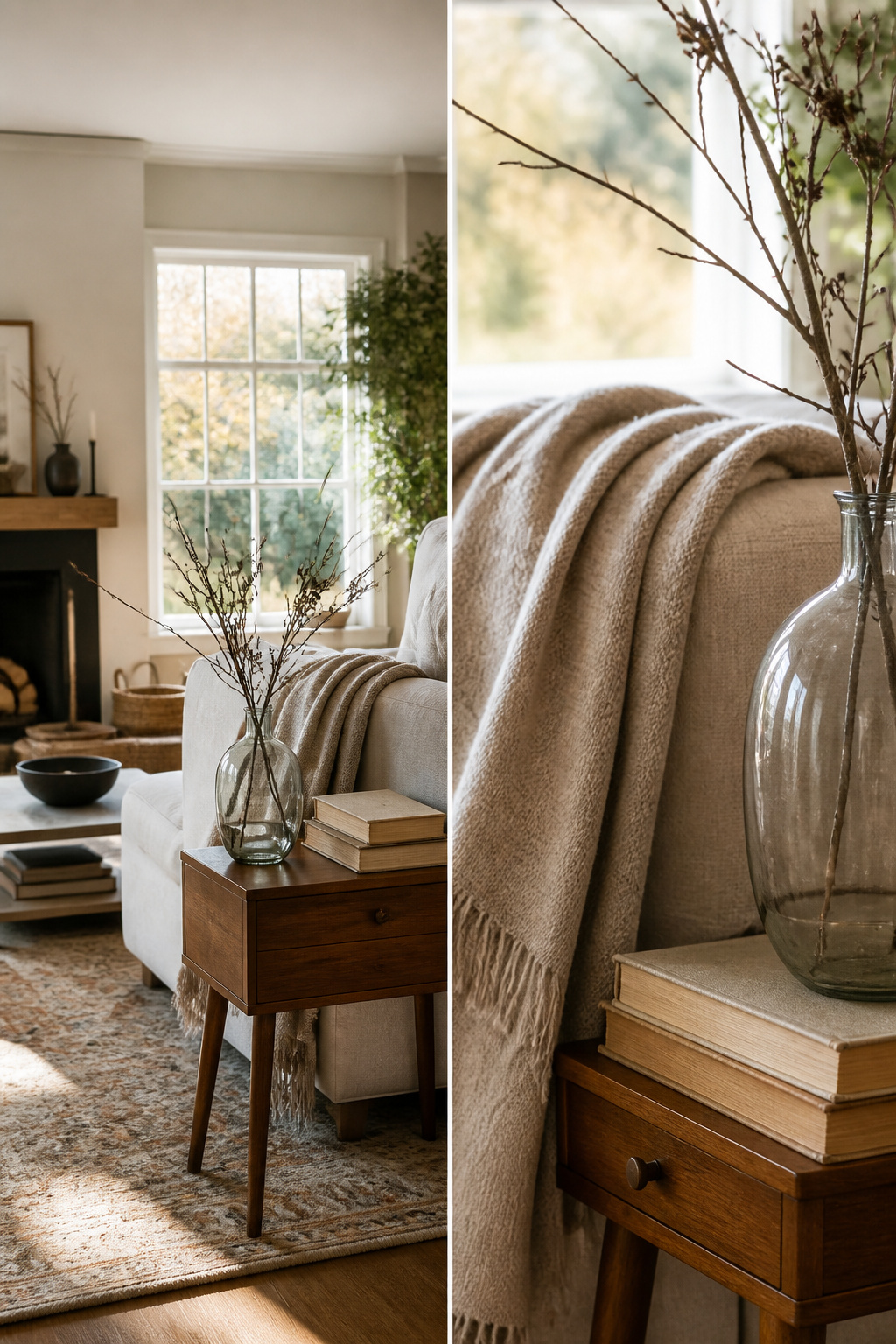
Storage space is the first thing renters and small-home owners run out of, so seasonal decorating has to work with what fits in a single drawer or the back of one closet shelf. Pillow covers are the easiest win here. They fold flat to almost nothing, and swapping a set takes under a minute. Linen covers in particular look more expensive than they cost and soften with washing rather than wearing out. One set in a warm neutral carries fall and winter; another in a lighter shade or small pattern handles spring and summer.
A single wide-mouth vase does the same job for months at a stretch. Bare branches in late autumn, forced bulbs in February, whatever is blooming at the grocery store by April. The vase never changes, so it does not need storing.
The same throw blanket moves between rooms by season, not by purchase. Heavy linen or wool lives on the sofa from October through March, then shifts to the foot of the bed or the guest room once the evenings warm. You are not buying four sets of bedding; you are moving one. That distinction is what makes the budget hold up across a year of small swaps.
DIY Projects That Finish in a Weekend
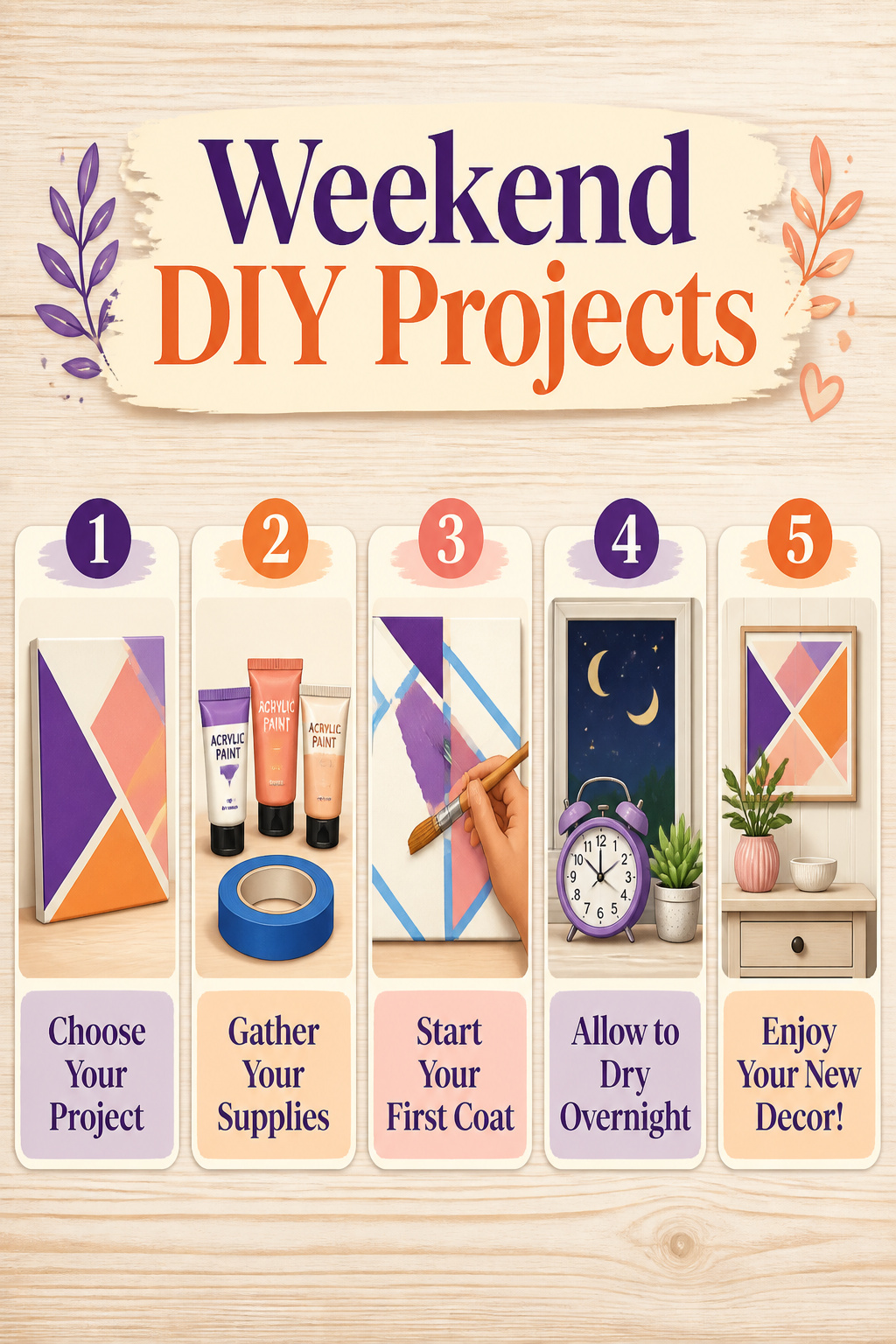
The best weekend projects are the ones that look expensive but cost almost nothing in supplies. A single stretched canvas, a few tubes of acrylic paint, and a roll of painter’s tape will run you about $8 and two hours to make geometric wall art that reads like a gallery piece. The mistake is starting Saturday afternoon with paint that needs overnight drying. By Sunday evening you are either sleeping on the couch or explaining smudges to guests.
Chalk paint on a thrifted side table works the same way. The brushing takes two hours, but three full days of dry time before you stack anything on it is what separates a refresh from a sticky regret. If you need the room usable by Monday, pick a project that finishes Friday, not one that finishes in theory on Sunday. Upcycling only saves money when the cure time gets the same respect as the paint time.
Frequently Asked Questions
What are some quick and easy home decorating ideas?
Simple swaps like new throw pillow covers, fresh wall art, and updated lighting give any room a fast refresh without a full renovation. Pillow covers run $15–40 each and store flat, while a new lamp or smart bulb changes both the look and feel of a space after dark. Moving existing items between rooms, like shifting a throw blanket or a stack of books, costs nothing and still reads as new.
How can I make my small room look bigger?
Pull furniture inward from the walls by even a foot to create a centered conversation area instead of a perimeter that reads like a waiting room. Hang a mirror opposite a window to bounce daylight into dark corners, and choose pieces with visible legs so your eye travels underneath and the floor line stays continuous. Multifunctional furniture, like an ottoman with storage or a folding desk, stretches every inch further.
What are the latest trends in home interior design?
Current trends lean toward functional layouts with minimal clutter, neutral palettes, and smart storage that keeps surfaces clear. Modern, Scandinavian, and minimalist styles dominate, with an emphasis on pieces that do more than one job and color schemes pulled from a single anchor object rather than assembled from scratch.