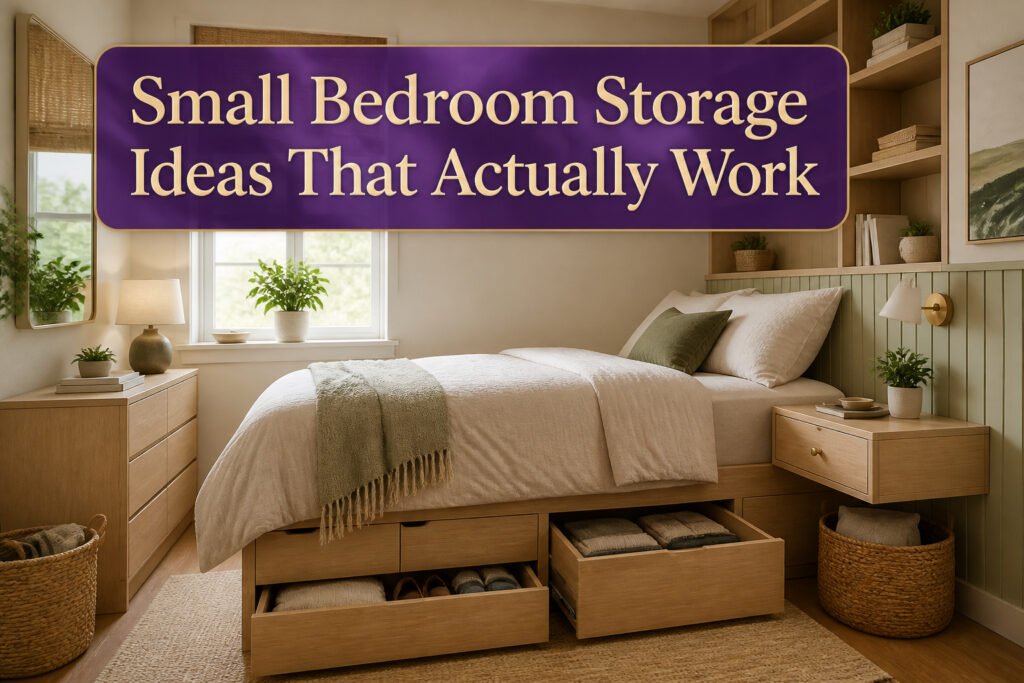
Small bedroom storage ideas range from a $25 Iris drawer you slide under the bed to custom built-ins priced by the job, and the one that fits yours depends on whether you rent, own, and how long you plan to stay. The real cost is not always the sticker price: the IKEA Malm’s drawers slide smooth for thirteen years but open easy enough that a cat can pry them, and a storage bed’s back drawer becomes useless unless you leave clearance or mount a floating nightstand.
1. Storage Beds
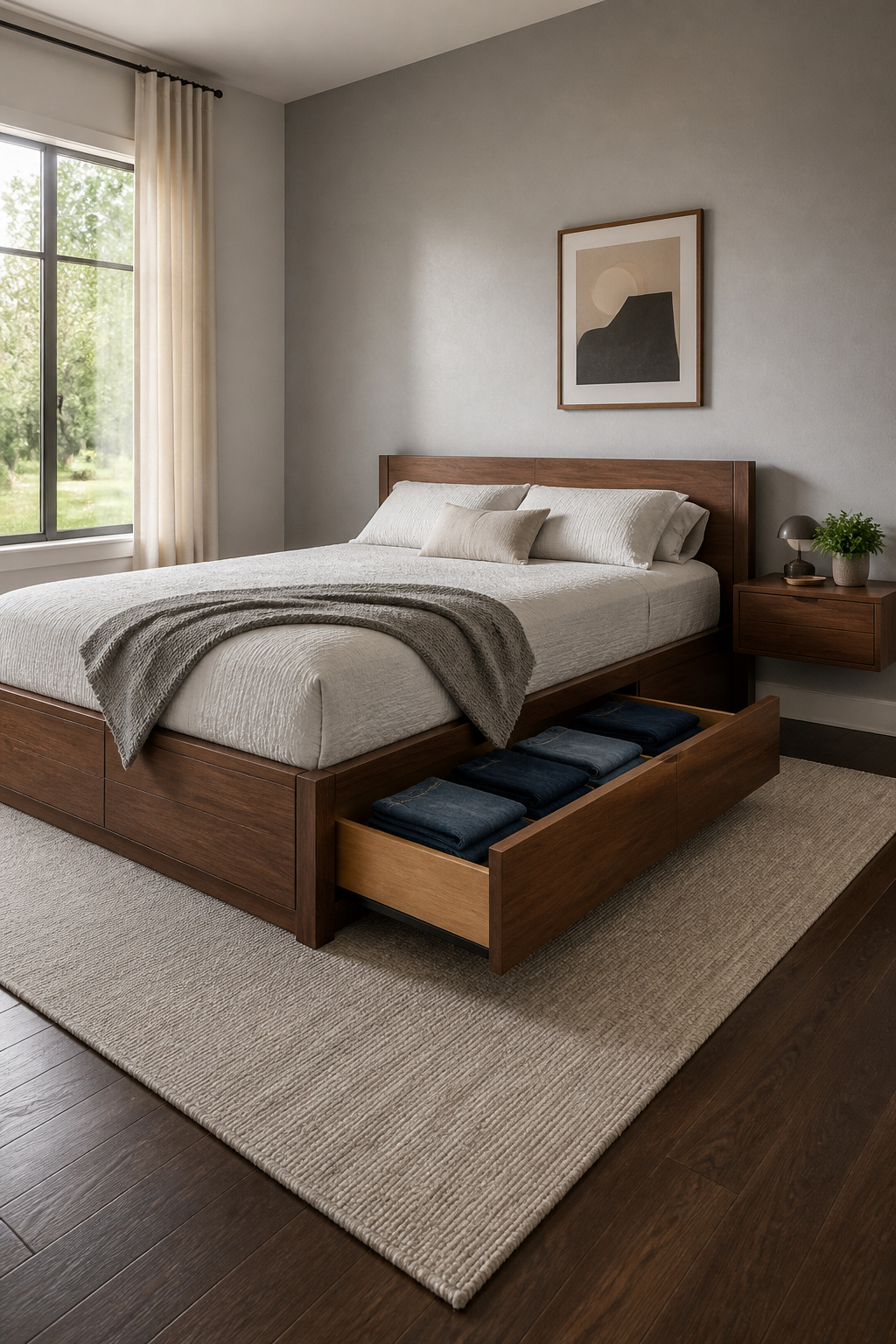
A storage bed replaces the dresser you probably do not have floor space for. The Room & Board Hudson Bed runs $2,799, is built from solid hardwood in West Virginia, and carries two drawers per side. One drawer holds six thick bath towels or ten pairs of jeans, with the drawer itself extending nearly two feet on the queen version. You will need to check clearance on both sides, and if you push the bed against a wall, a floating nightstand saves you from moving furniture every time you want the back drawer. The frame comes in nine stain options and every size down to twin, though the sharp corners mean padding them if small kids sleep or play in the room.
At the other end, the IKEA Malm Bed with drawers costs $369. Testers report the drawers still slide smoothly after thirteen years, though one noted they open easily enough that a cat can pry them. Assembly takes two people, and some beds develop squeaks after a few years. The hinge-top version trades drawer access for lifting the entire mattress platform, which works better for linens you do not grab daily than for clothes you rotate every morning.
Either way, you gain roughly the volume of a small dresser without sacrificing the footprint the bed already claims.
2. Storage Benches
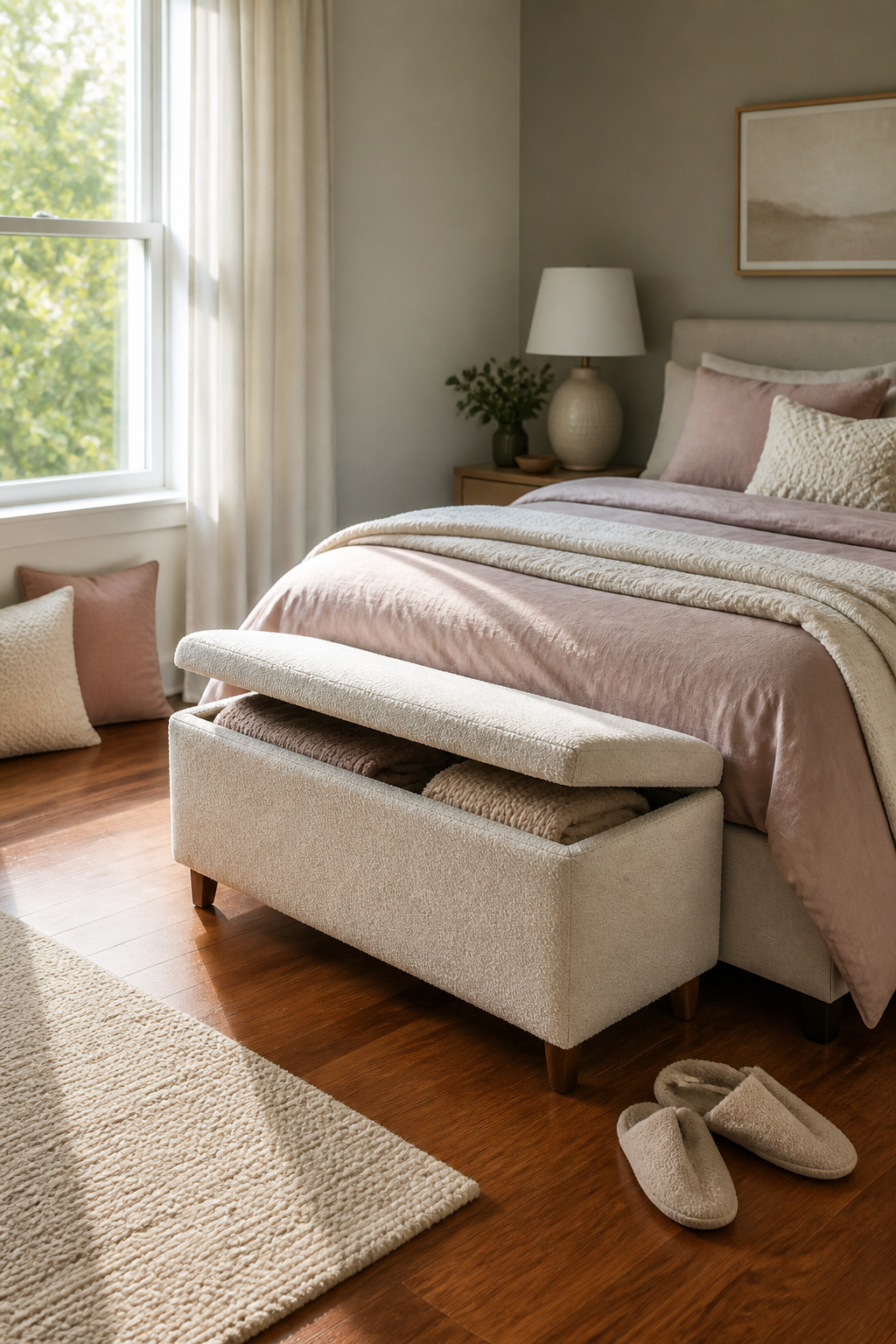
A storage bench at the foot of your bed earns its square footage twice: once as a place to sit while you pull on socks, and again as a hideaway for the items that clutter a small bedroom fastest. The Article Maribo Storage Ottoman runs $399 and comes in three sizes. The medium measures 18.5 by 32 by 15.5 inches, large is 18.5 by 48 by 15.5 inches, and a small ottoman version sits at 12 by 15 by 15 inches. The lid hinges up with one hand, and the bench’s slight forward pitch means you can open it even when it’s pushed against a wall.
That last detail matters more than it sounds. A trunk that lifts from the top needs clearance behind it, which in a narrow bedroom usually means pulling the whole thing out into your walking path just to grab a spare blanket. The Maribo sidesteps that entirely. The medium and large sizes hold duvets or pillows; the small handles throw blankets or a morning coffee tray. Fabric options run boucle, leather, or felt.
3. Wall-Mounted Shelves
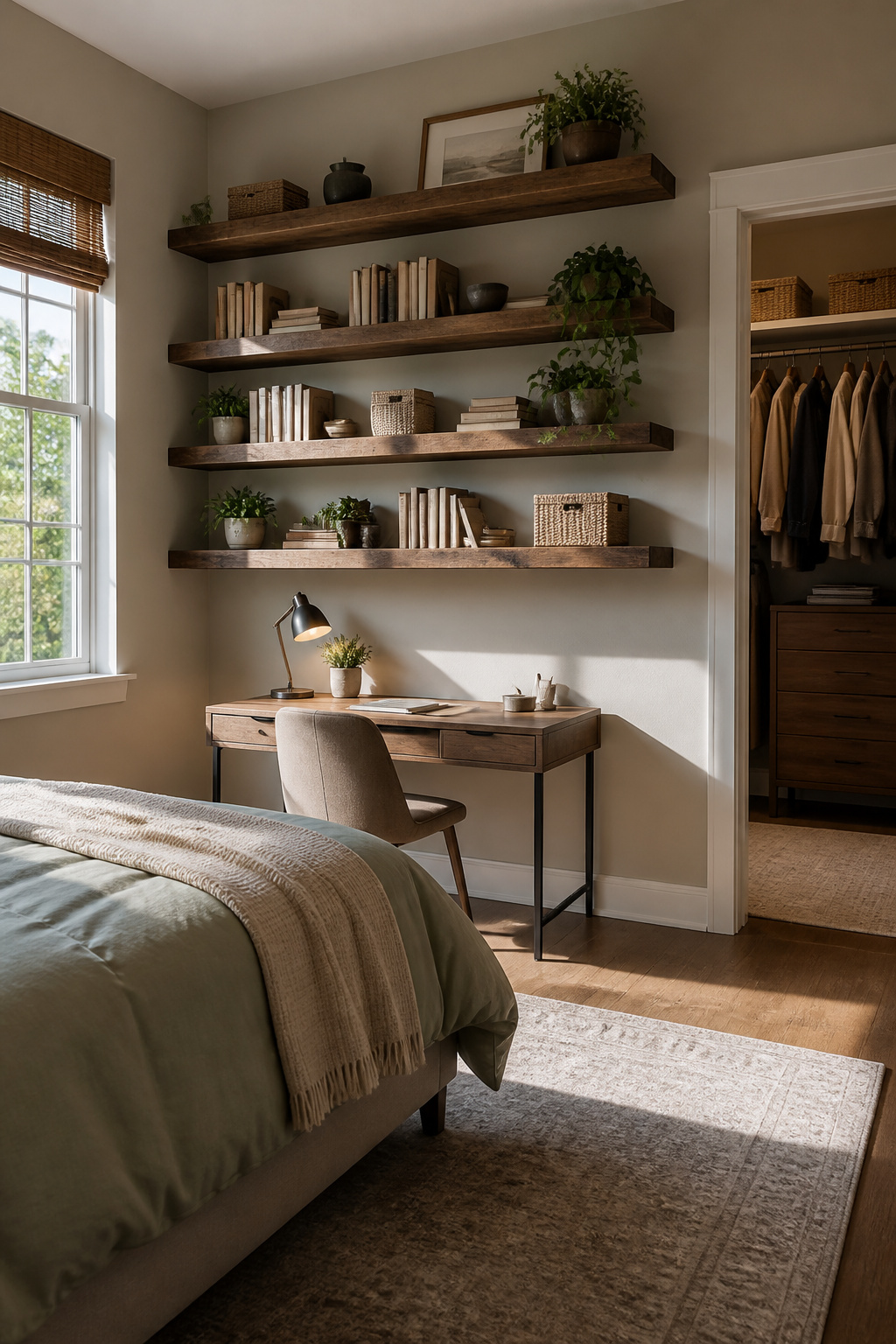
Wall-mounted shelves keep your floor clear and draw the eye upward, which is half the trick in a small bedroom. A floating setup built from wood runs about $40 per shelf if you are willing to cut and finish the boards yourself. For a ready-made option, The Container Store sells a spine-style bookshelf that claims no more floor space than a photo album yet stands five feet tall and holds roughly fifty books. Assembly means screwing a steel spine into a heavy base, then slotting in ten shelves. One buyer found a shelf bent at a wonky angle and had to straighten the metal using full body weight against the floor.
Keep the depth under about ten inches if your bedroom has narrow passages. Anything deeper becomes a shin-knocker on the way to the closet. Tall, narrow units that run floor to ceiling make the most of vertical space, and you can adjust shelf heights to fit what you actually own: tall for art books, tight for paperbacks.
4. Under-Bed Storage
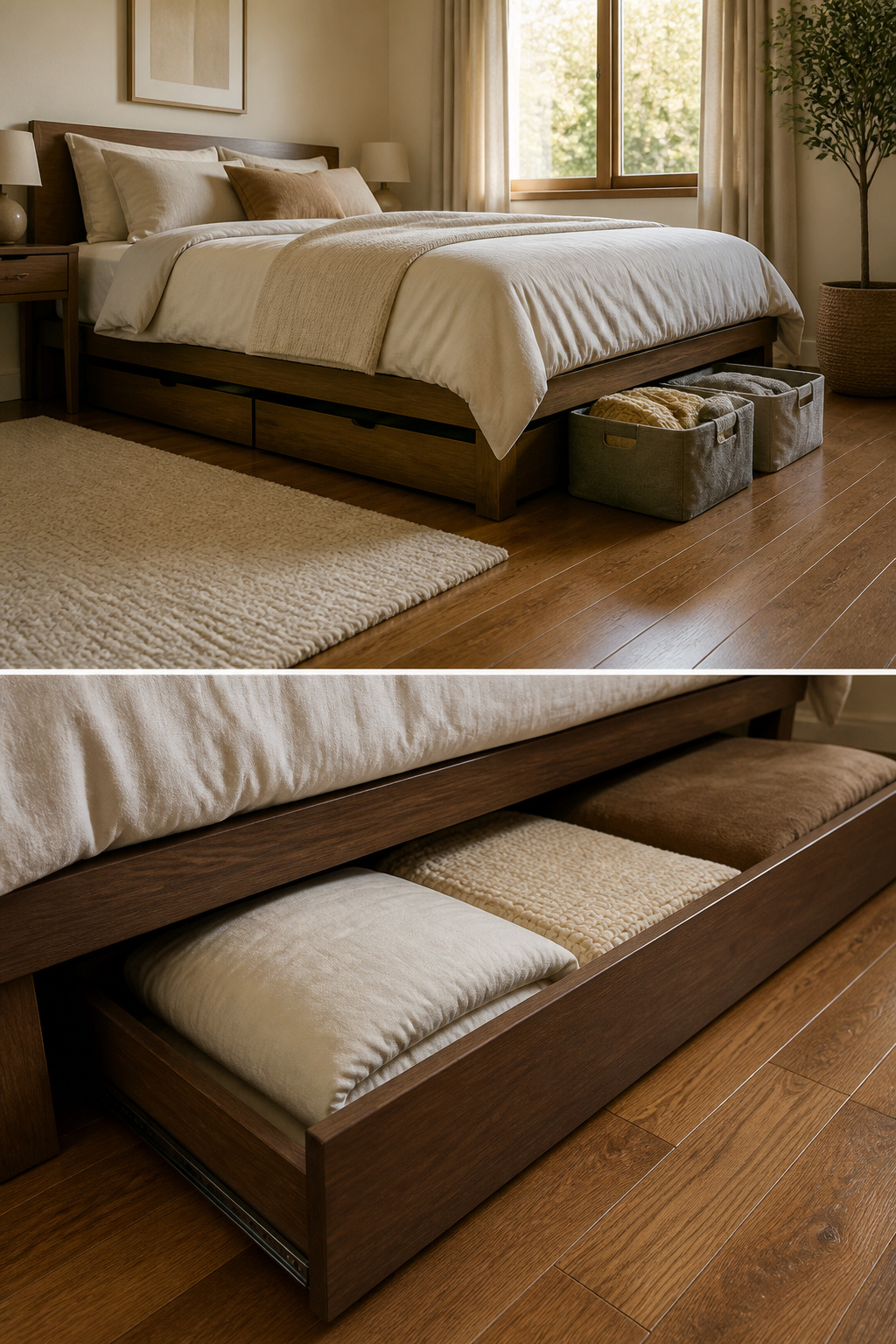
The space under your bed is usually dead space, and in a small bedroom that is space you cannot afford to lose. Slide-out drawers beat lidded bins for anything you reach for more than once a season, because pulling one handle beats dragging out a stack of containers and lifting lids.
The Iris Under Bed Drawer runs about six inches tall and thirty inches deep, with a smooth glide that lets you use it almost daily without frustration. It lists around $25–$30 at the usual big-box stores. One warning: pull it too far or overload it, and the unit tips forward. Keep heavier items toward the back and stop the pull before it hits that point.
Before you buy anything, measure your clearance. Most bed frames sit six to eight inches off the floor, while common under-bed bins run five to seven inches tall. That gap is narrower than people expect, and a drawer that is half an inch too tall means returning it or raising the whole bed. Check height at the frame rails, not just the center, since slats and supports can dip lower.
5. Hooks and Pegs
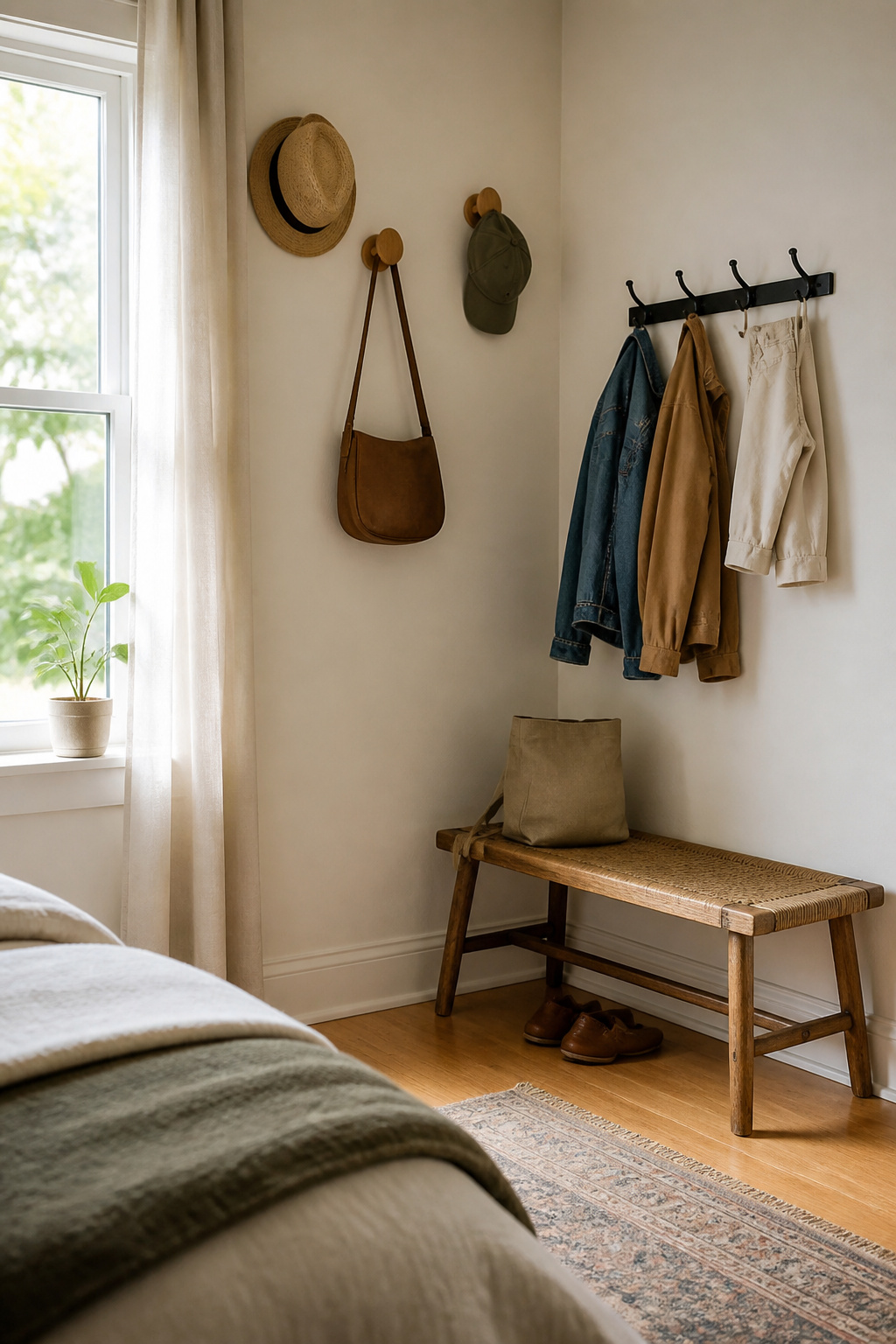
A wall hook beats a chair-drobe because the floor stays visible, and a visible floor is what makes a small bedroom feel like it still has room to breathe. You can mount a short row of hooks at standard door height for bags and tomorrow’s outfit, or run a longer rail higher for hats that doubles as color on an empty wall. Pegboards work the same territory with more flexibility: shelves, baskets, and individual pegs shift around as your storage needs change. For anything that holds real weight, find the stud or use a toggle bolt rated for the load; drywall alone will let a winter coat hit the floor by morning. A door rack on the back side handles robes and towels without eating wall space you might want for something else.
6. Narrow Nightstands
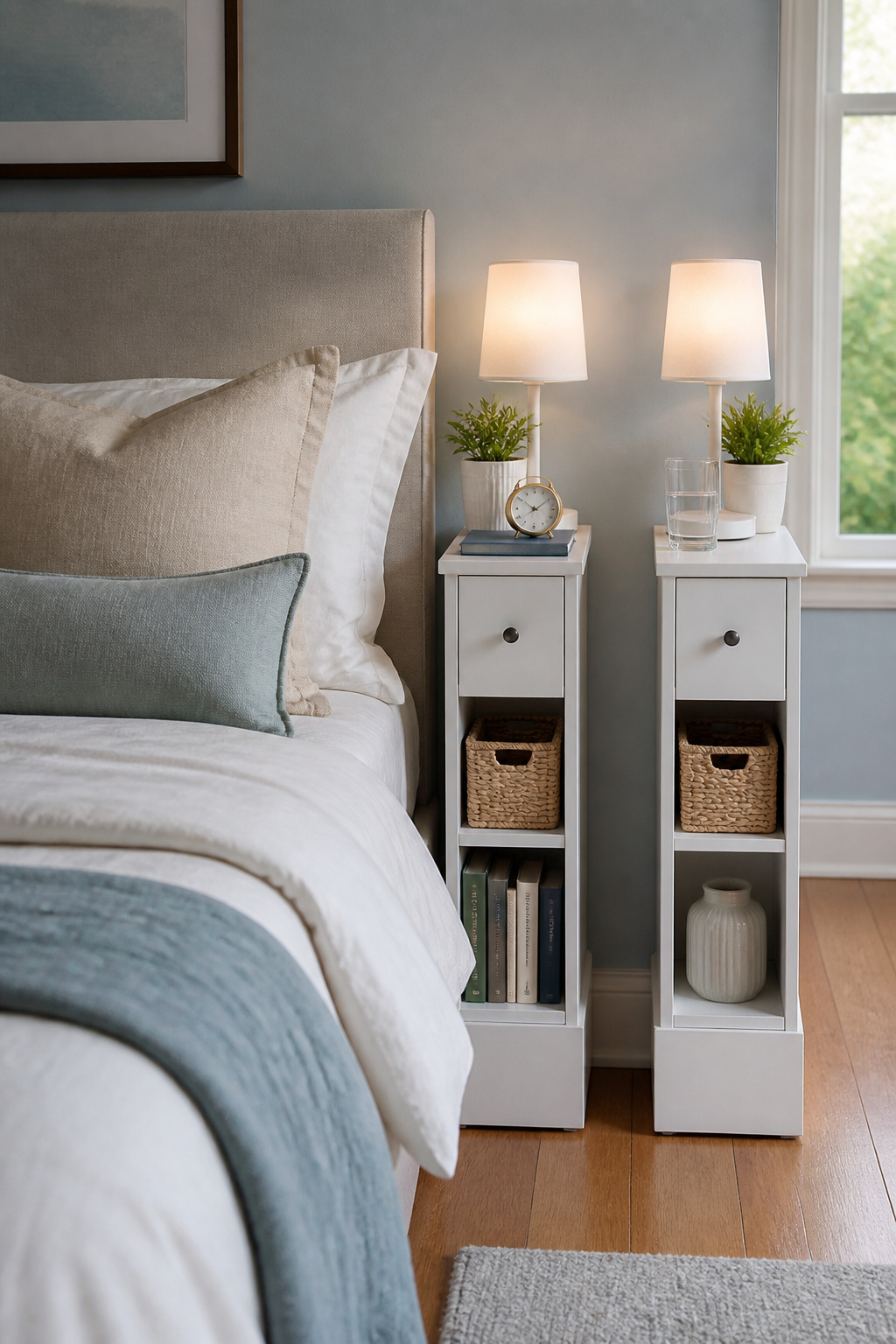
You can reclaim the dead zone between your mattress and the wall with nightstands that measure 10 to 12 inches across. Standard nightstands run 20 inches or wider, so halving that width buys back walking room without giving up a surface for your lamp, phone, and the book you will not finish tonight.
Floor space gone entirely is when a wall-mount nightstand starts to make sense. The Room & Board Alta mounts like a shelf but builds in a cutout interior for cords, so your charger and white-noise machine sit inside out of sight while the top stays clear for water and an alarm clock. It runs $299 in two wood finishes with thirteen steel color options. That price stings if you are furnishing a first apartment, but it beats the frustration of stubbing your toe on legs you do not have room for.
A slim vertical built-in pressed right up against the bed works too if you rent somewhere with awkward corners to fill. Stack books, a small bin for earplugs, whatever you reach for in the dark. The tradeoff is depth: anything over about a foot and you are climbing over your pillows to grab it.
7. Over-the-Door Organizers
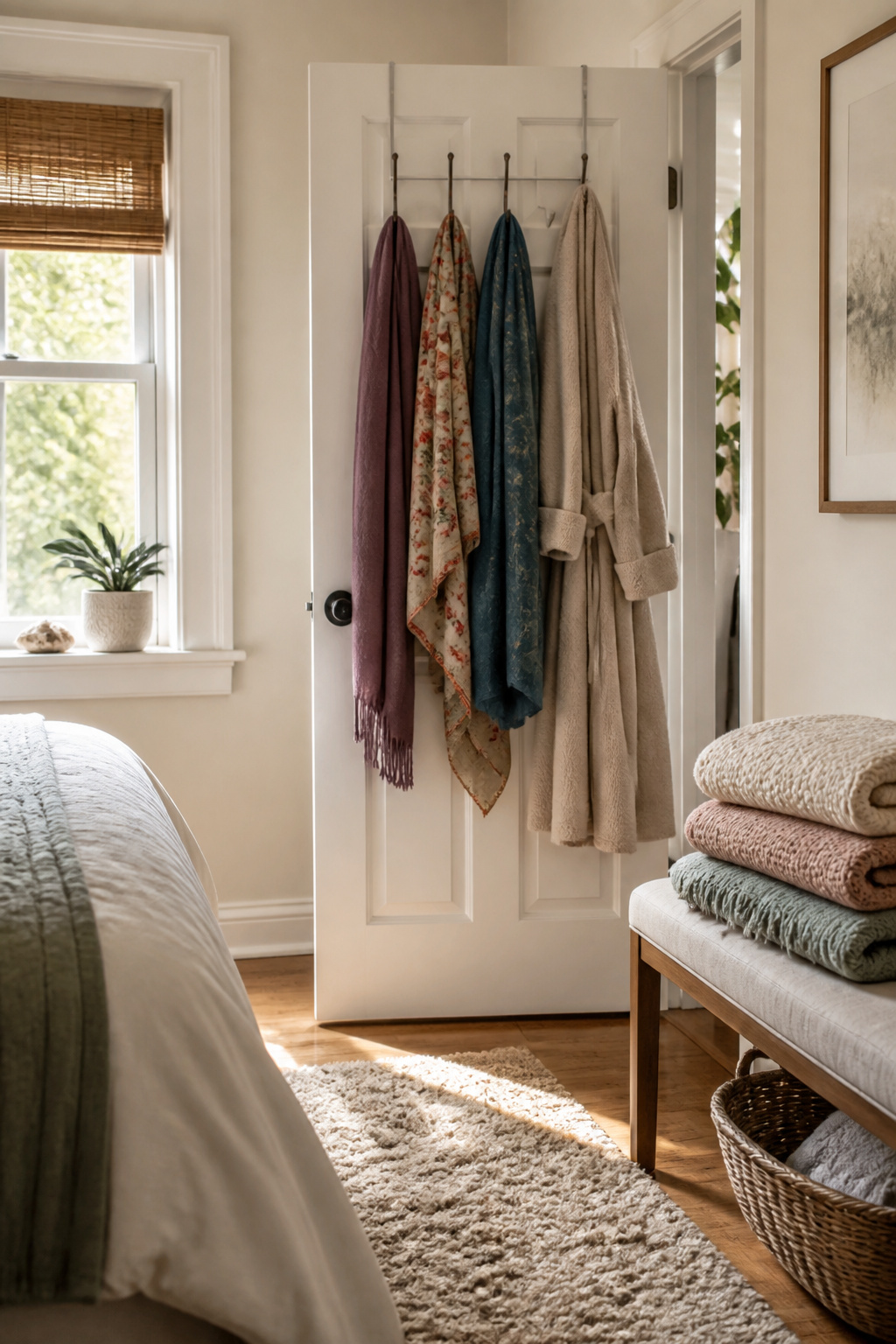
The back of a bedroom door is dead space until it isn’t. An over-the-door rack with eight hooks, powder-coated steel with wooden ball ends, runs about $18 and hangs bathrobes, tomorrow’s outfit, or the four sweaters you tried on and discarded. Doors on hollow-core slabs will need a firmer slam to close once weight is hanging there; solid-core doors handle the load without complaint. That slamming issue is why renters often hesitate, but the trade-off beats drilling into drywall you do not own.
Shoe organizers became the default over-the-door choice because they ship flat and fit every standard door. For bedroom storage, they are oddly shaped: a grid of deep pockets that swallow accessories whole and make you guess what is inside. Hooks or a slim rack use the same vertical plane for items you actually want visible and within reach. Double up if the door swings both ways; one rack facing the room for bags, one facing the closet for robes, and you have turned a single door into two distinct storage zones without a single hole in the wall.
8. Multi-Purpose Furniture
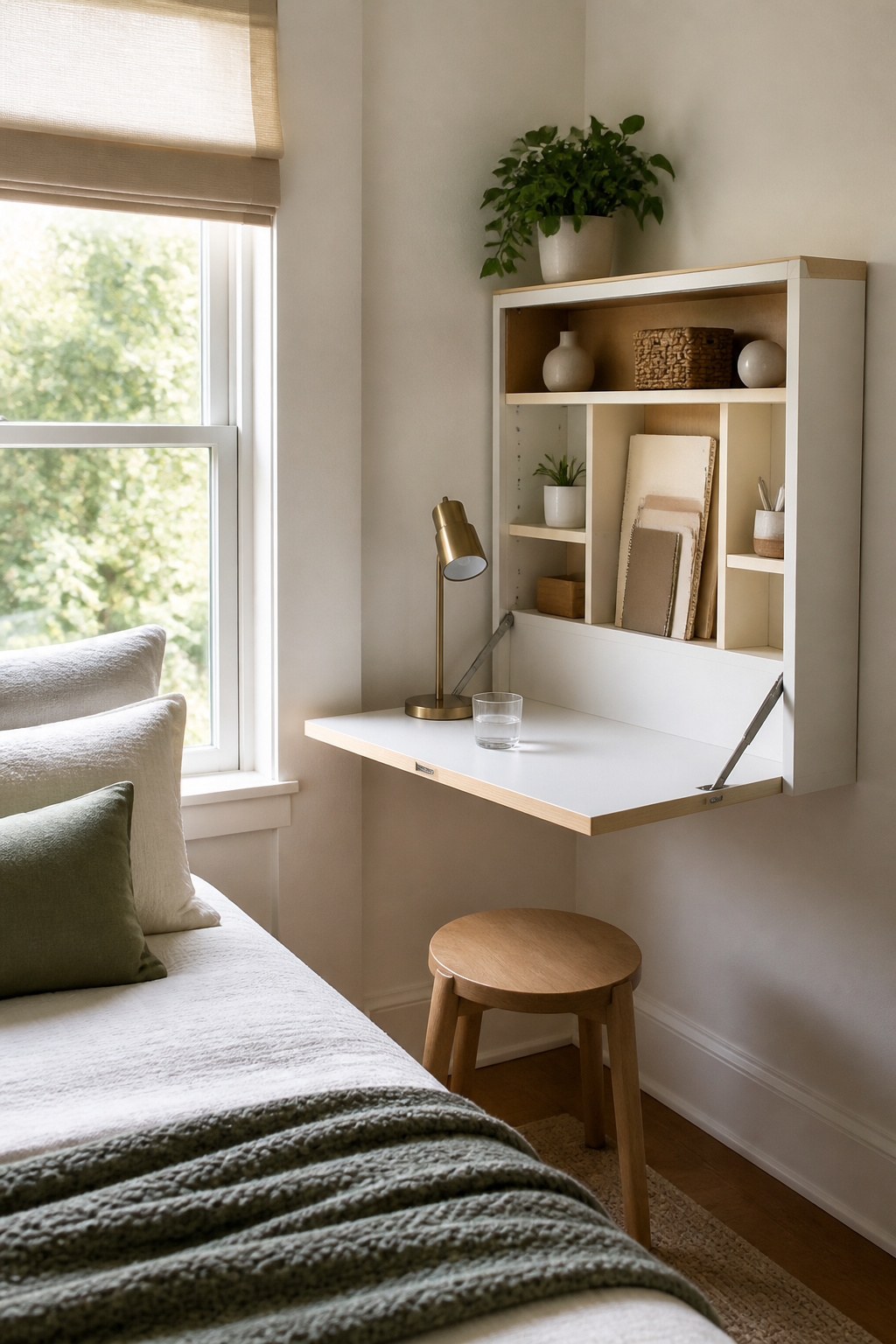
A writing desk pushed against the bed wall can replace a nightstand entirely. You gain a work surface and a place for the lamp and water glass, but both functions have to be real ones you use, or the desk becomes the clutter it was supposed to prevent. The same rule applies to bed frames with built-in drawers: they save the space a separate dresser would take, but only if you actually fill them with something you need nearby. A flip-down wall-mounted desk works the same way for a bedroom that doubles as an office. You keep notebooks and a laptop inside, fold it up when the work is done, and the room looks like a bedroom again. The mistake is buying the double-duty piece for the idea of efficiency rather than for a second habit you already have. If you never work in bed, skip the desk and use the wall for storage that matches what you actually do there.
9. Rolling Carts
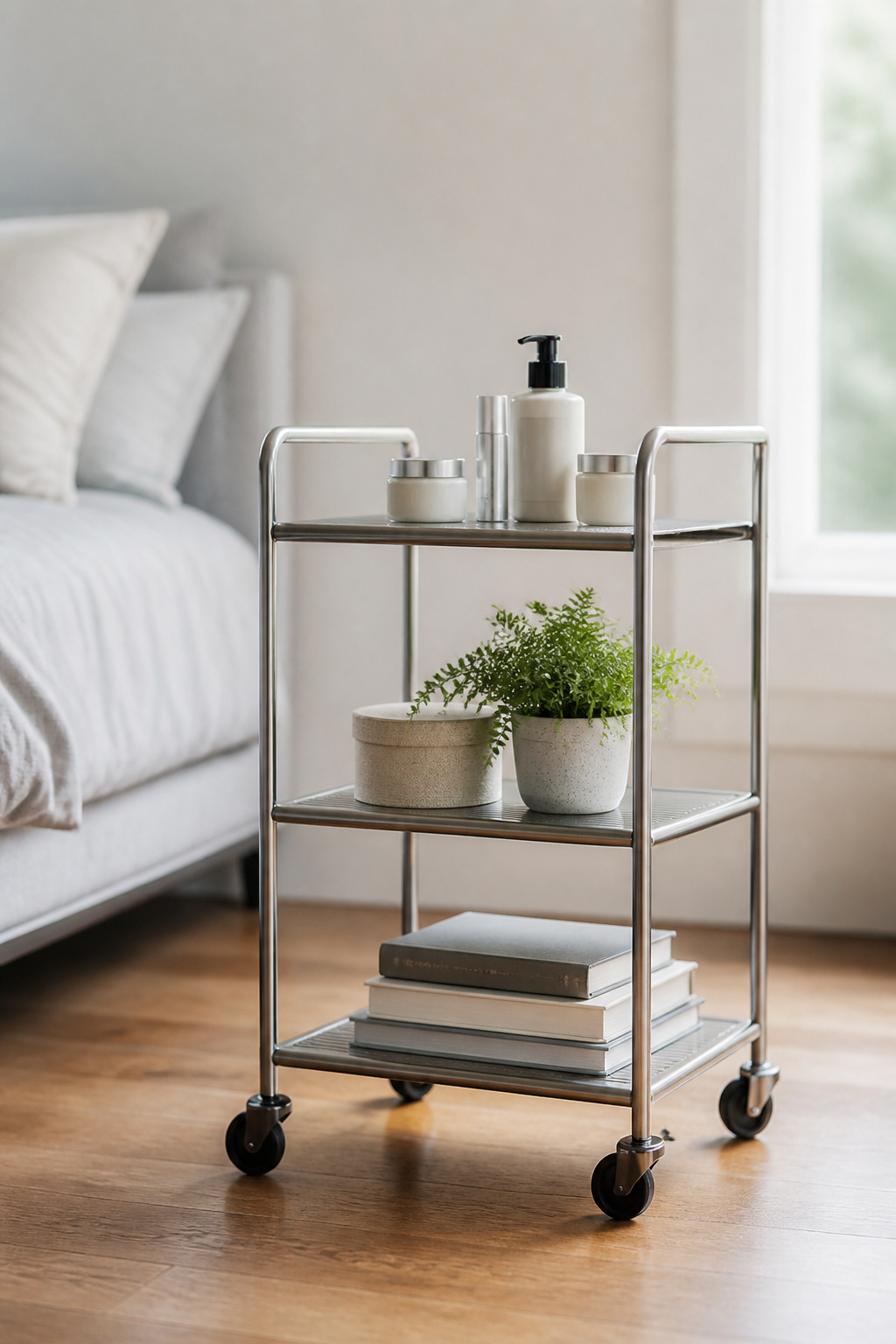
Wheels change how you use a small bedroom more than most storage upgrades. In a tight room you already shift things to vacuum, reach a window, or let someone squeeze past the bed. A cart on casters turns that rearranging from a project into a one-handed push.
The Burrow Dram Bar Cart works here because it was built narrow to slide behind sofas and along walls, and those same proportions fit bedside gaps a nightstand would choke. Repurpose it for lotions, a reading stack, chargers, the water glass. When you need the floor clear, roll it to the closet or the hall and roll it back at bedtime.
The real advantage is how little commitment it asks. Fixed shelves pin you to one layout; a cart lets you test three in a weekend. In rooms where every inch is borrowed space, mobility is the storage feature you use most.
10. Built-Ins
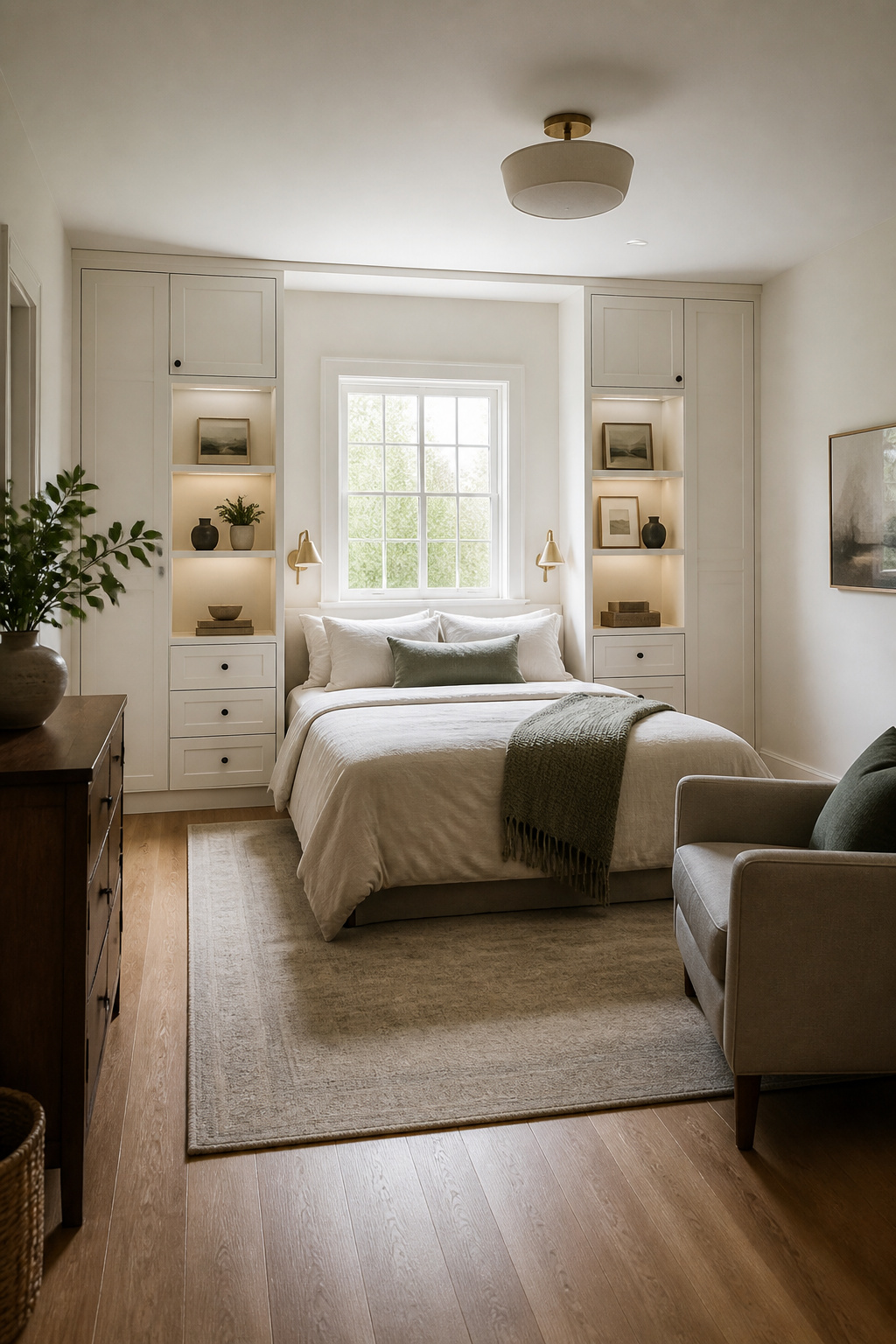
Built-ins replace freestanding furniture with storage that follows the exact lines of your walls and ceiling. A desk, shelves, cabinets, and a window seat with storage beneath it can give every item a designated place without the visual bulk of separate pieces. In rooms with irregular ceilings or awkward angles, custom built-ins can be cut shallower than a standard dresser or armoire, which saves the inches that matter in tight quarters.
They are also the most expensive option here, and the sources that mention them do not attach dollar figures. That silence is itself useful: built-ins are priced by the job, not the catalog, and the quote depends on your city’s labor costs, the condition of your walls, and whether electrical or HVAC needs rerouting.
For renters, built-ins only make sense if your landlord agrees to the work and you plan to stay long enough to justify the cost. Some landlords will permit them if you leave them behind, which turns your investment into a fixture you do not own. If you are in a place for a single lease cycle, skip this and spend the money on pieces you take with you.
"Under-bed storage is such valuable real estate… So don’t let the space beneath it go to waste."
That same logic applies to built-ins: they work when they reclaim space that standard furniture cannot reach. A full wall of ceiling-high cabinets flanking a bed, with a niche beside the mattress serving as a nightstand, gets more done than the same footprint in separate pieces. The trade is permanence for efficiency, and that trade only pays off if you know you will stay.
Declutter First

Adding storage to a room that still holds clutter just hides the mess and makes it harder to find anything. You end up buying bins for stuff you do not need, and the bedroom still feels cramped. Sort before you shop, or you will pay twice: once for the container, once for the regret.
- Pull every item out of the closet, drawers, and any storage you already have. Pile it on the bed so you cannot sleep until you finish.
- Sort into three groups: keep, donate, and relocate. The relocate pile is for the winter coat that belongs in the hall closet, the gift wrap that lives in the office. Do not let it creep back into the bedroom.
- For the keep pile, be specific about where it will live. No "somewhere in the closet." Name the shelf, the bin, the hook. If you cannot name a spot, you are probably keeping it out of guilt.
- Only after you know what remains and where it goes do you measure for bins, shelves, or under-bed boxes. The numbers will be smaller than you expected, and so will your shopping list.
Use the Walls

The wall above your door is dead space until it isn’t. A shallow ledge running that span adds storage for books you reach for before sleep, and it costs nothing in floor footprint. You already know about wall-mounted shelves, but the move most people stop short of is taking them floor to ceiling, or skipping the wall altogether and hanging storage from the ceiling joists.
Ceiling-mounted racks work for lighter items: seasonal bedding in labeled bins, a folded quilt you swap in twice a year. Keep the load under what your hardware can handle; toggle bolts into drywall alone will not hold twenty pounds of winter comforter. For the shelving route, vary the heights to fit what you actually own, not what the showroom displays. Tall openings for a woven basket, narrow slots for paperbacks.
A door rack for robes or tomorrow’s clothes keeps the chair clear, which matters more than it sounds. One garment on a chair becomes three by Thursday. Wall hooks for hats or bags do the same job with less depth, and they read as intentional rather than leftover. Budget floating shelves run about $40 in materials if you build them yourself, or less if you find a ready-made unit that fits your span. The test is whether you use what you store; anything above eye line tends to become archaeology.
Label What You Store
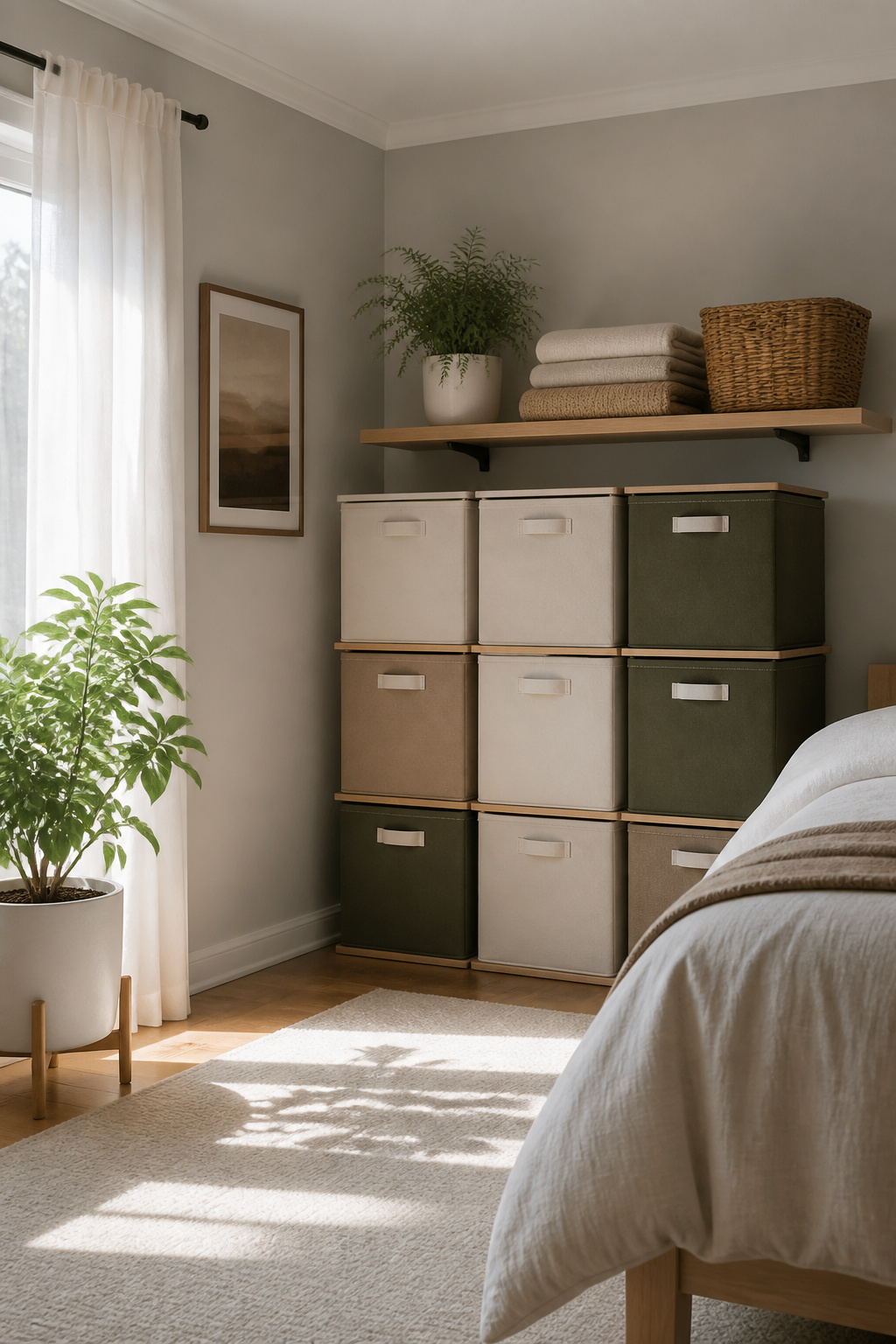
A bin system only works if you can read what is inside without pulling half of them off the shelf. Write the season and the category on the short end of the bin, not the top. Stack bins with the label facing out, and you can scan a whole column in a glance.
Use a label maker rather than tape and marker. Adhesive paper labels peel at the corners after a year of sliding bins in and out, and a Sharpie bleeds into textured plastic. Label maker tape stays flat and legible. If you are storing fabric items, add the month you packed them away. That single detail ends the debate about whether last winter’s sweaters have sat long enough to feel fresh again.
Place the label on the upper third of the bin’s end, never the bottom. Bins sink slightly under weight, and a low label disappears behind the lip of the shelf below. For soft-sided containers or vacuum bags, slide a 3×5 card into a clear luggage tag and loop it through the handle. The card survives compression that would crumple a stuck-on label.
Update the label when you repack. Crossing out "2024" and writing "2025" takes ten seconds. Leaving it lets you pretend you rotated last year when you did not.
Rotate Seasonal Items
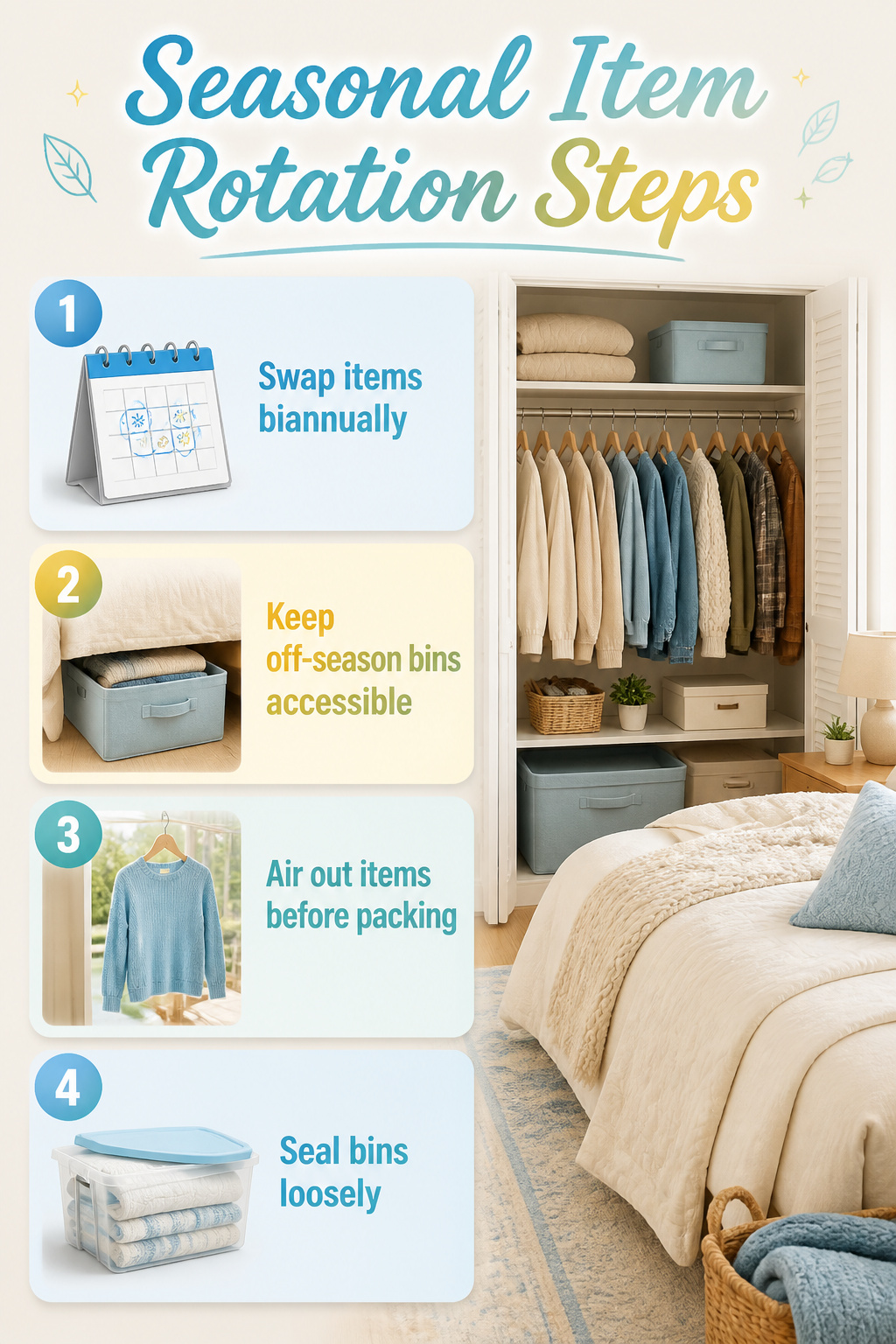
Swap your closet twice a year, once when the weather turns and again six months later. Keep the off-season bin within reach, not buried at the back of a storage closet where you will ignore it. Under the bed works if you have the clearance; shallow lidded bins slide flat and hide behind a bed skirt. Flexible bins compress better for bulky bedding than rigid ones do.
Mustiness is the main enemy. Let everything air out completely before you pack it away. A bin with a real seal traps moisture along with dust, so a lid that sits loose enough to breathe is often the safer call for quilts and flannel sheets. If you open a container and smell anything stale, wash it before it spreads to what is still clean.
Make Storage Look Good
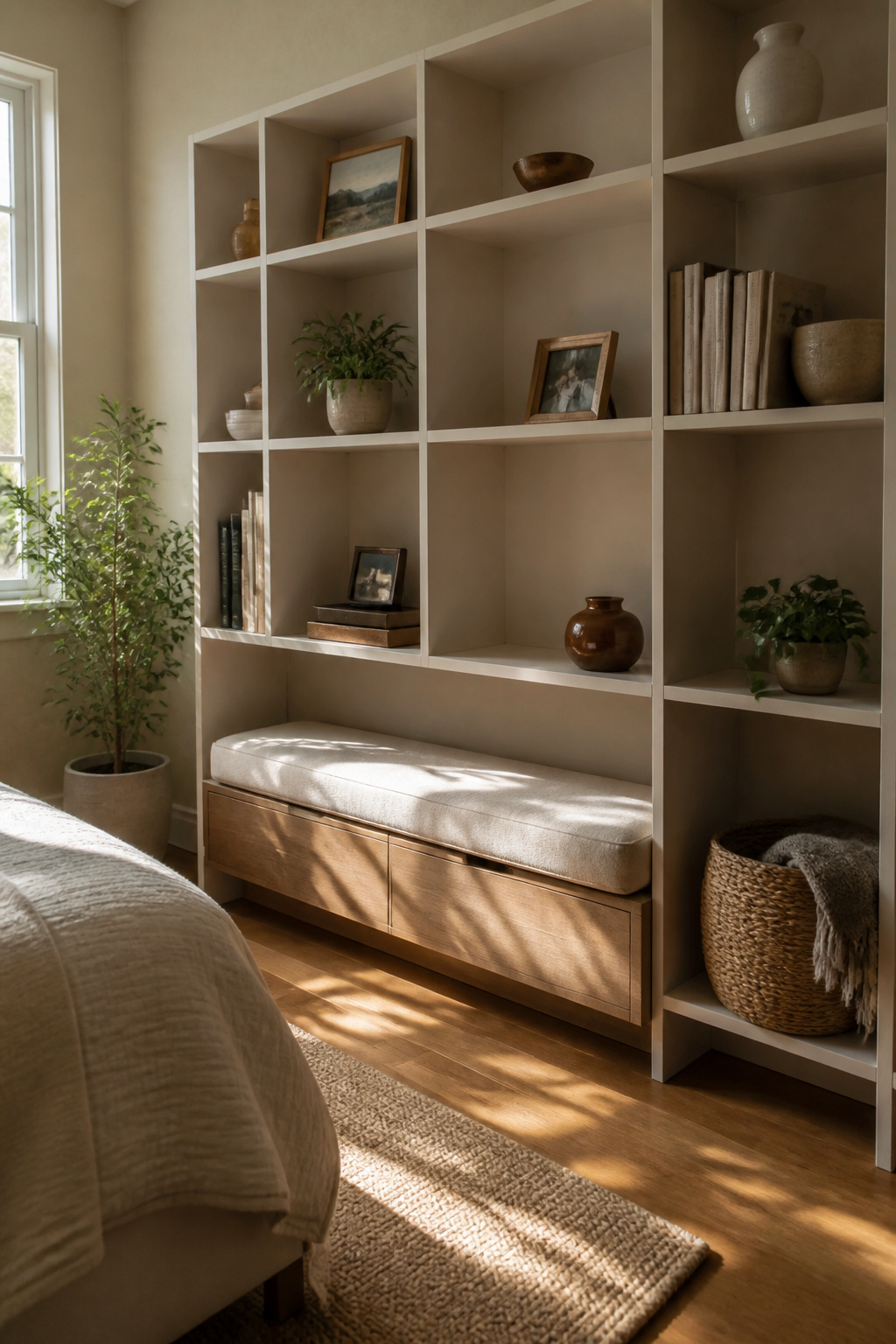
Visible storage stops being a problem when the container itself is worth looking at. Open cubbies lined with books, a small photo, and the odd keepsake turn your everyday clutter into the room’s actual decoration. Leave a few slots empty and you have a place for whatever shows up next week without starting a new pile.
A storage bench works the same double shift. It gives you somewhere to sit while you put shoes on and swallows the spare linens or the pajamas you did not fold. In a small bedroom, that second job matters more than how sleek the lid looks, but a clean-lined bench in wood or upholstery reads as furniture first and hideaway second.
The choice you face is whether to buy a piece that performs or to make an open shelf work harder. A bench with a lid keeps the mess out of sight, which helps if you know you will not style those shelves every morning. Open storage asks more of you and gives more back in return: the room feels lived-in rather than staged. Either way, stop treating storage as something to apologize for. Pick a piece you would leave in plain view even if the closet were triple the size.
Frequently Asked Questions
What are some small bedroom storage ideas?
Storage beds, benches, wall-mounted shelves, under-bed drawers, hooks and pegs, narrow nightstands, over-the-door organizers, rolling carts, and built-ins all work in tight quarters. The best choice depends on your floor plan: beds with drawers replace dressers you cannot fit, wall shelves free up walking paths, and wheeled carts let you rearrange without lifting. Start with what you already do in the room, then pick storage that matches those habits rather than forcing a new routine.
How can I maximize space in a small bedroom?
Use vertical space from floor to ceiling, choose furniture that does two jobs, and declutter before you buy anything new. Wall-mounted nightstands reclaim the gap beside your mattress, ceiling racks hold seasonal bedding, and a storage bench at the foot of the bed earns its footprint twice. The real gain comes from clearing the floor: visible open space is what makes a small room feel larger than its measurements.
What are the best storage solutions for small bedrooms?
Built-ins, storage beds, and benches with hidden compartments rank highest for efficiency, though they differ sharply in cost. A storage bed like the Room & Board Hudson adds drawer volume equal to a small dresser without claiming extra floor space. Built-ins follow your walls exactly and cut visual bulk, but they are priced by the job and only make sense if you plan to stay put. For renters or tighter budgets, under-bed drawers and wall-mounted shelves deliver much of the same function at a fraction of the price.