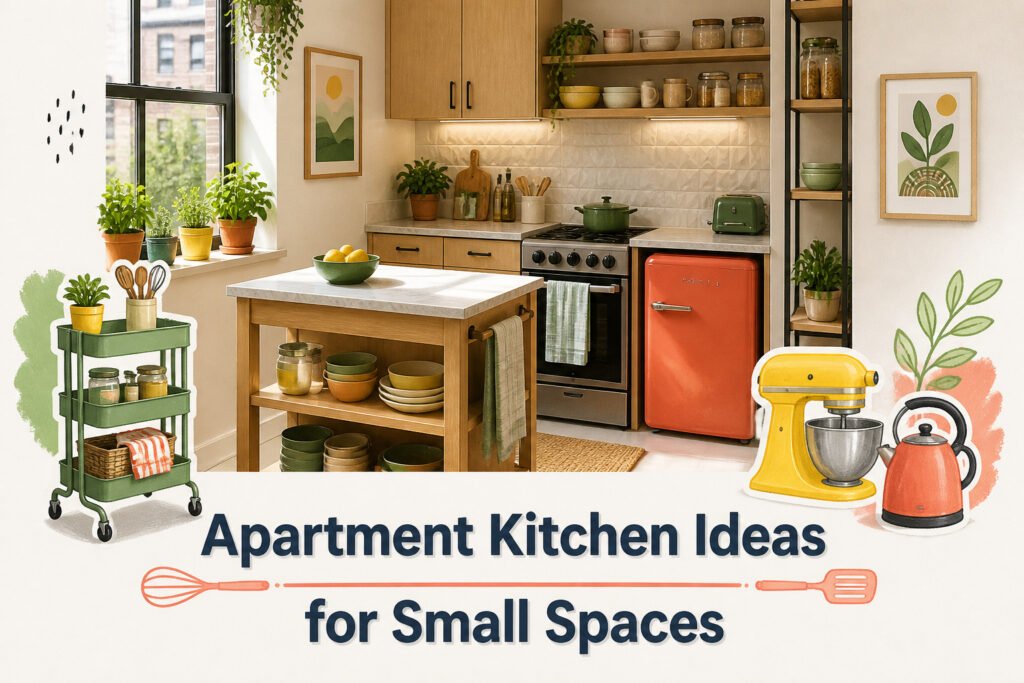
The best apartment kitchen ideas for small spaces in 2026 run from a $5 LED strip to a full appliance swap, and the one you pick depends on whether your lease lets you drill a single hole. Peel-and-stick backsplash and battery-powered under-cabinet lights work for strict landlords; hidden-bracket floating shelves and compact 24-inch European appliances need written permission or spackle at move-out. The $36 Amazon Basics rolling cart and the $33 Art3d tile panel both roll out with you, which is how renters in co-ops keep their deposits.
1. Open Shelving
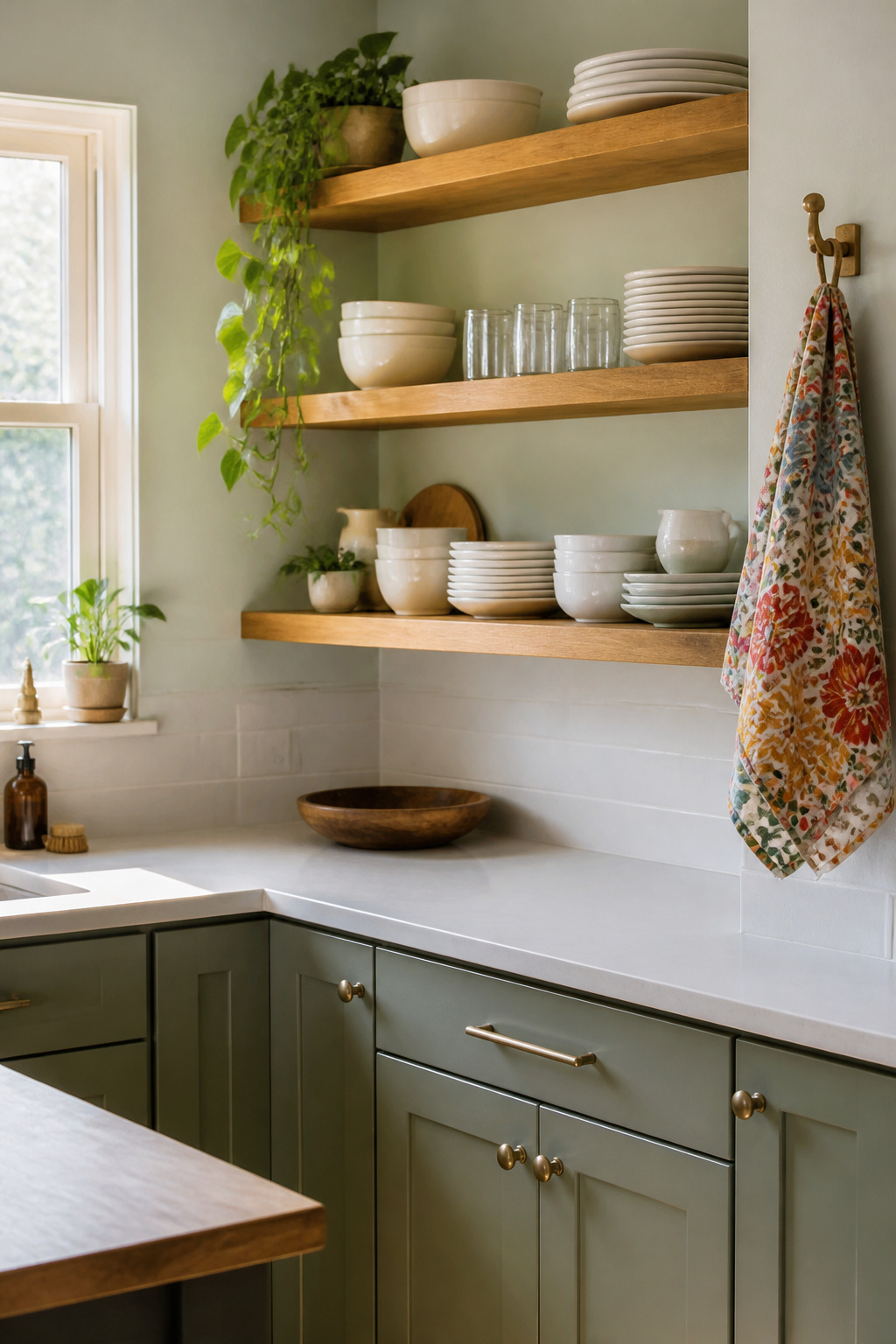
Open shelving trades the boxed-in feel of cabinets for wall space your eye can travel through, which is why small kitchens read larger once upper cabinets come down. The effect holds even when the shelves are packed: plates and glasses sit in plain view rather than behind slab doors, so the room gains depth without demanding more square footage.
For renters, the question is how to get that look back when the lease ends. Hidden-bracket floating shelves mount on rods drilled into studs, leave no visible hardware, and pull off in about ten minutes with a screwdriver and some spackle. If your landlord is strict, a temporary rail system with vertical standards clips in without anchors and carries light loads: mugs, a small stack of bowls, a trailing pothos. Check your lease first. Some agreements allow holes under a certain diameter; others ban wall attachments outright. A quick email before you shop saves a security deposit.
2. Vertical Storage Solutions
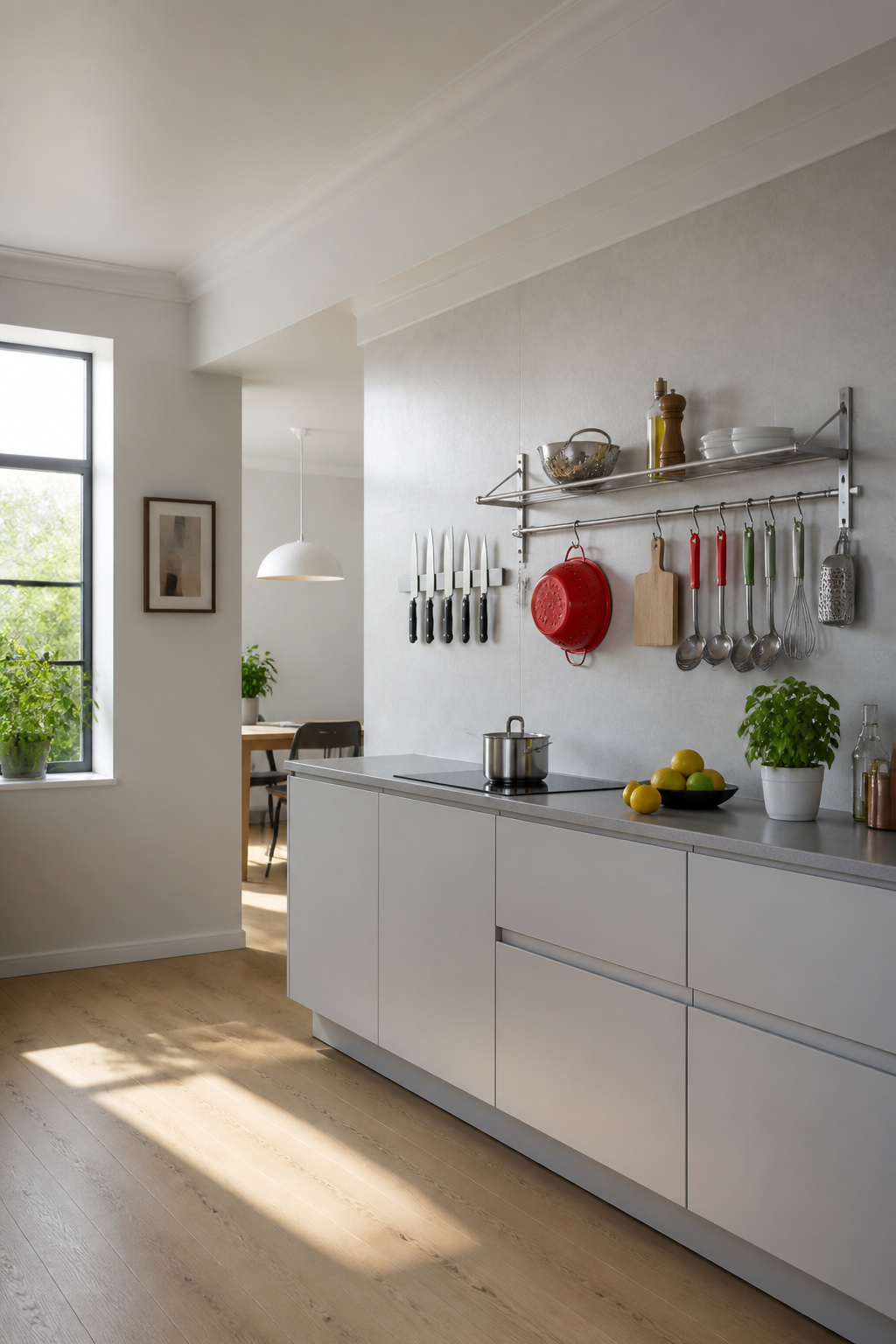
Wall-mounted racks give you back the counter space a small kitchen eats first. A magnetic knife strip clears the block from your prep area and keeps blades where you can grab them. Pegboards work for the rest: utensils, colanders, even a small cutting board hung on a hook. One renter in New York added shelving to her back wall alongside that magnetic strip and gained a full work zone without touching a cabinet.
Hanging rail systems, the kind you bolt or stick above the backsplash, hold the daily tools that otherwise clutter drawers. Mount them at eye level or just above, where your hand finds them without a reach. The goal is to reclaim the surfaces you actually use for cooking, not to fill every wall for the look of it. In a tight layout, vertical storage fails when it crowds the one stretch of counter where you set down a hot pan. Test the placement by walking through your usual routine before you commit the adhesive or drill the hole.
3. Compact Appliances
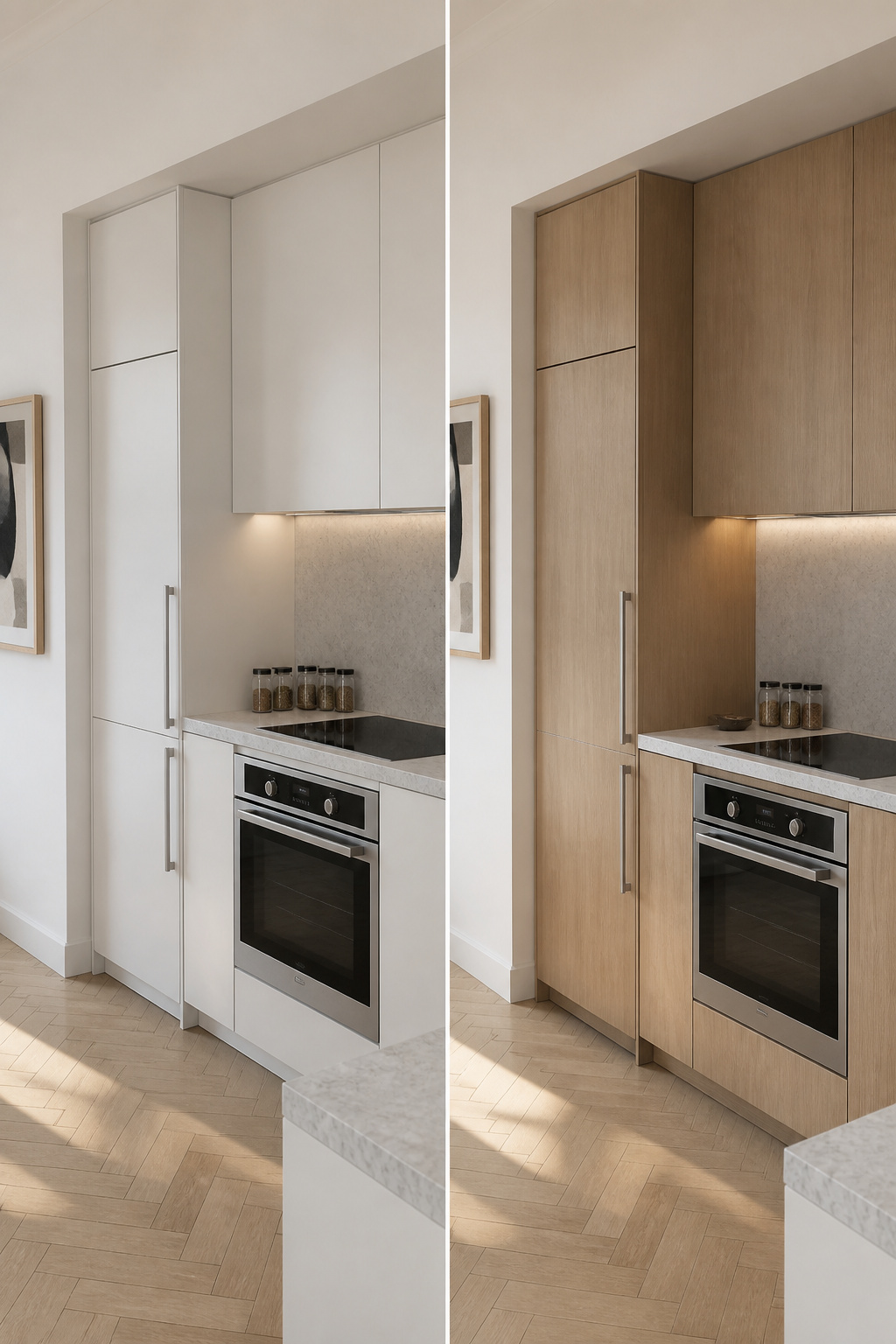
24-inch European appliances are the default for NYC apartment kitchens, and for good reason: they respect a limited footprint while keeping the counter run usable. Compact dishwashers, column refrigerators, and slim convection ovens fit standard cabinet openings without demanding a full renovation.
Combination units do the heaviest lifting here. A microwave-convection combo replaces two appliances in one slot. An induction cooktop with built-in ventilation removes the need for an overhead hood, which buys back both cabinet space and headroom in pre-war units with low ceilings.
Sourcing these without gutting the kitchen takes some planning. Panel-ready models let you attach a cabinet front directly to the appliance face, so the refrigerator or dishwasher reads as furniture rather than machinery. That visual quiet matters in a tight galley where every surface competes for attention.
You will need to check your existing cabinet dimensions against the appliance specs, but the swap itself is usually straightforward: remove a 30-inch range, slide in a 24-inch cooktop and wall oven pair, patch or replace the adjacent cabinet. Most building boards in co-ops and rentals care more about the gas line work than the cabinet sizing, so lead with the mechanical plan when you request approval.
4. Multi-Functional Furniture

A kitchen cart only earns its floor space if it solves more than one problem at once. The best ones add prep surface, hold the tools you reach for hourly, and roll out of the way when you need the room back. The worst become a landing pad for mail and unused appliances.
Start by measuring your clearance. A slim rolling cart, even a narrow console depth, can hold your mise en place or serve as extra counter space without blocking traffic. If you cook daily, prioritize locking casters and a surface you can actually chop on, not just a display shelf with a butcher block top. The Amazon Basics 3-Tier Cart at $36.08 works for dry storage and produce you want visible. The Hodedah Kitchen Island at $126.56 moves closer to real prep space with its counter height and closed storage below.
What separates the cart you use from the cart you eventually list for free is how the storage matches your actual habits. Open tiers keep produce from rotting hidden in a cupboard, as anyone who has found moldy potatoes behind the cereal can attest. Closed cabinets hide the stand mixer you use twice a month. If you never sit at it, skip the overhang for stools and claim that depth for drawers instead.
5. Bold Backsplashes
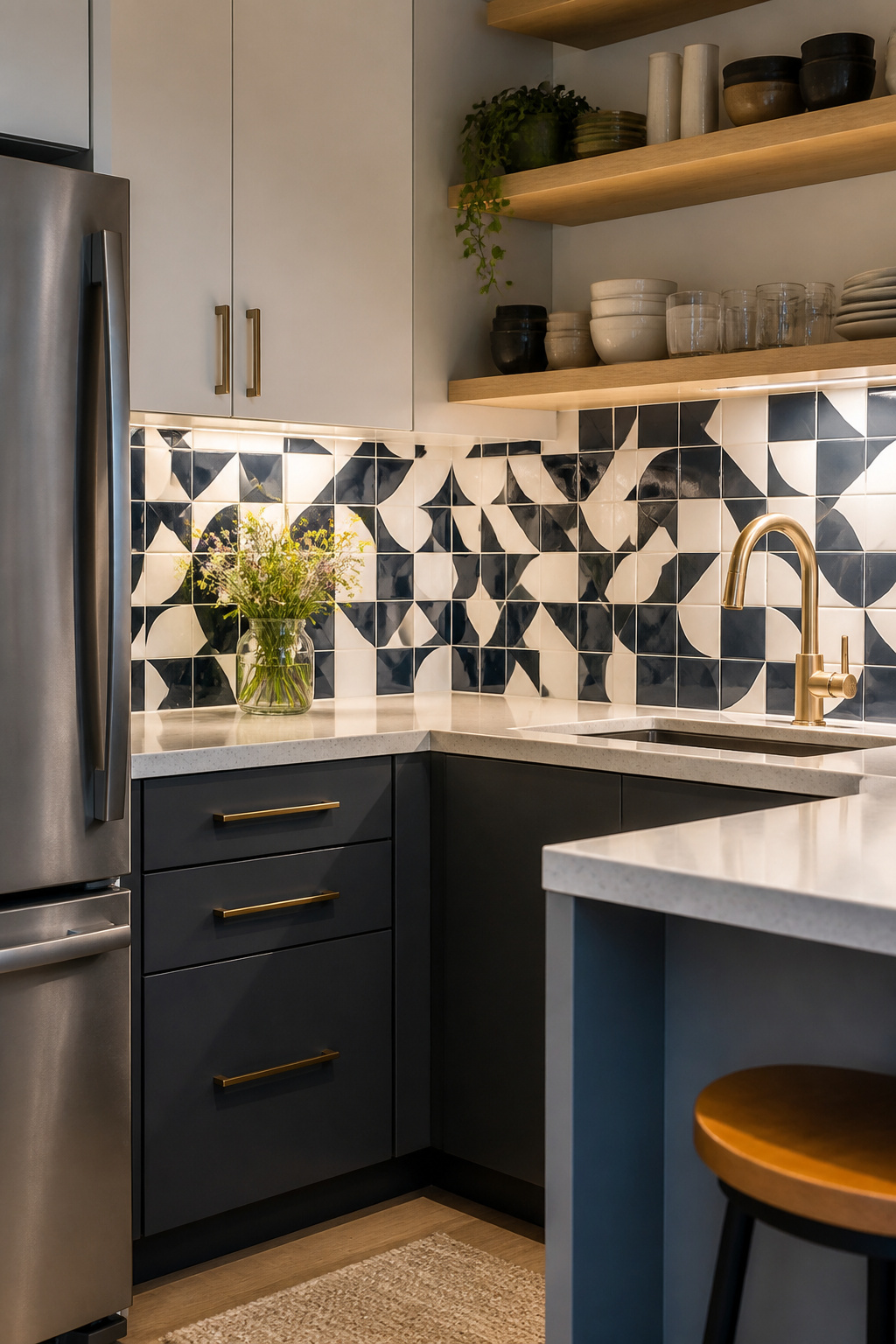
A backsplash is the one place in a small apartment kitchen where you can spend forty dollars and change the whole mood of the room. Everything else, the counters, the cabinets, the appliances, usually has to stay quiet so the space does not close in on itself. The backsplash wall is where you break that rule.
Peel-and-stick tiles are the renter’s real option here, and the good ones have gotten hard to distinguish from the real thing. You will find faux Carrara marble, glossy subway tile, even hand-molded looks that catch light the way zellige does, all for roughly the cost of a nice dinner out. Art3d and Hotiary both run about $33 for a panel set, and Vamos Gray sits at the same price point. The work takes a few hours, not a weekend, and the tiles come back up when you move.
The mistake people make is treating the backsplash like an accent that has to match nothing. It should talk to at least one other thing in the room: the hardware finish, the counter tone, the color of a shelf you added. In a small kitchen that connection matters more, because every visual relationship is up close and unavoidable.
One limit to know: keep peel-and-stick away from direct oven heat. Adhesive softens, and you will have a curling edge instead of a clean line. Behind the sink and along prep walls is where this material earns its keep.
6. Under-Cabinet Lighting
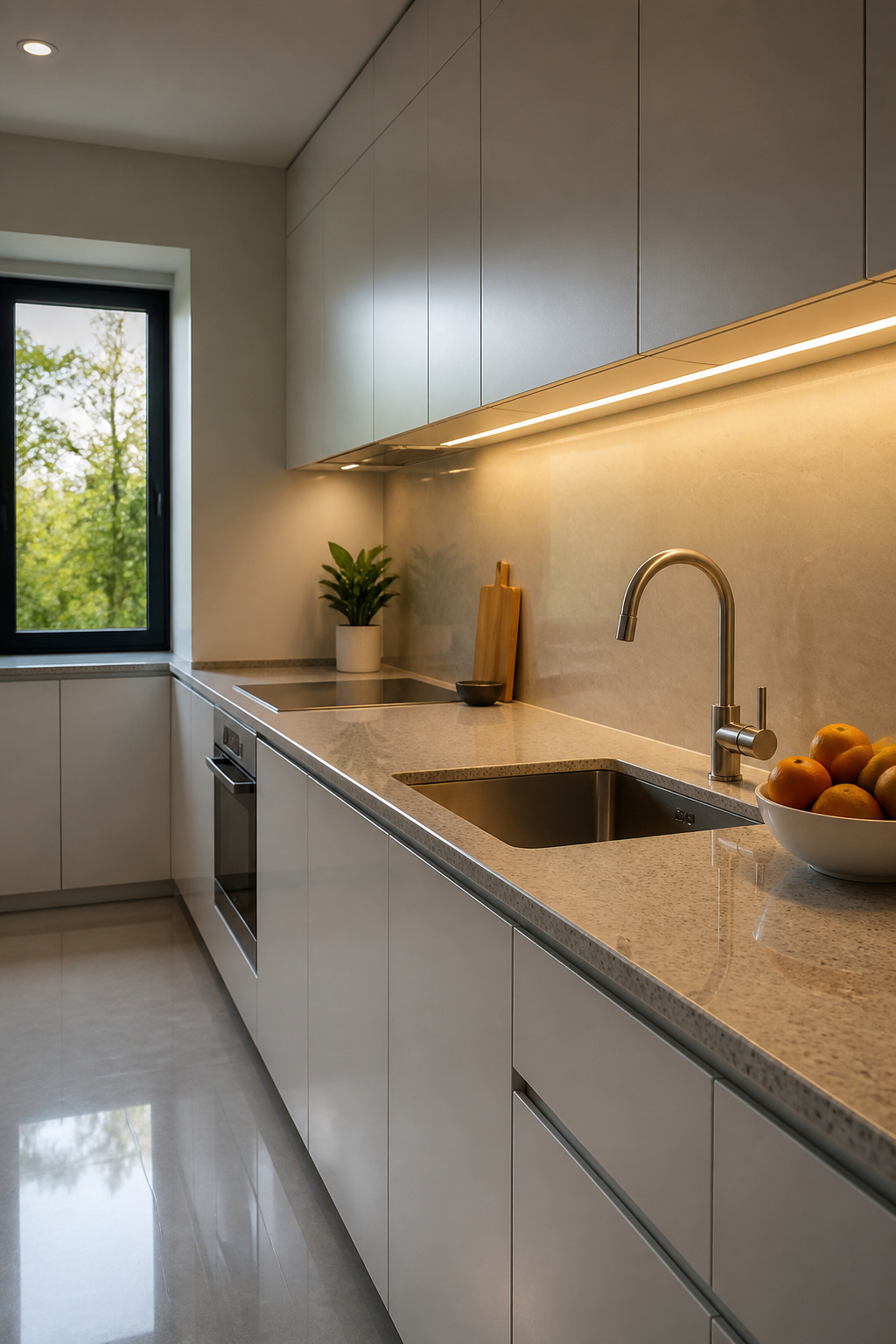
A rental kitchen almost always has one light in the center of the ceiling, which leaves your countertop in shadow the moment you stand at it. Under-cabinet lighting fixes this for under $40 and half an hour.
Battery-powered LED strips are the path of least resistance for renters. Peel-and-stick backing lets you run them the length of a cabinet bank in about ten minutes; most run on AA or rechargeable packs that need swapping every few months with daily use. The tradeoff is dimming as batteries fade, and the slight bulk of the battery housing tucked behind the light strip.
Plug-in puck lights suit spotty layouts or single work zones. Each disk mounts with a screw or adhesive, and the cord runs to the nearest outlet, often with a tap switch on the cord itself. The downside is cord management; running it neatly along the cabinet bottom takes patience.
Hardwired strips give the cleanest look and no battery anxiety, but they require an electrician or a landlord who permits the work. Most leases make this a nonstarter.
For color temperature, 4000K to 5000K is the useful range for food prep; it reads as clean daylight and shows true color in vegetables and meats. By evening, that same light feels clinical. A strip with a switch or remote to drop to 2700K, or warm white, keeps the kitchen from feeling like a clinic when you are just pouring wine.
7. Decorative Mirrors
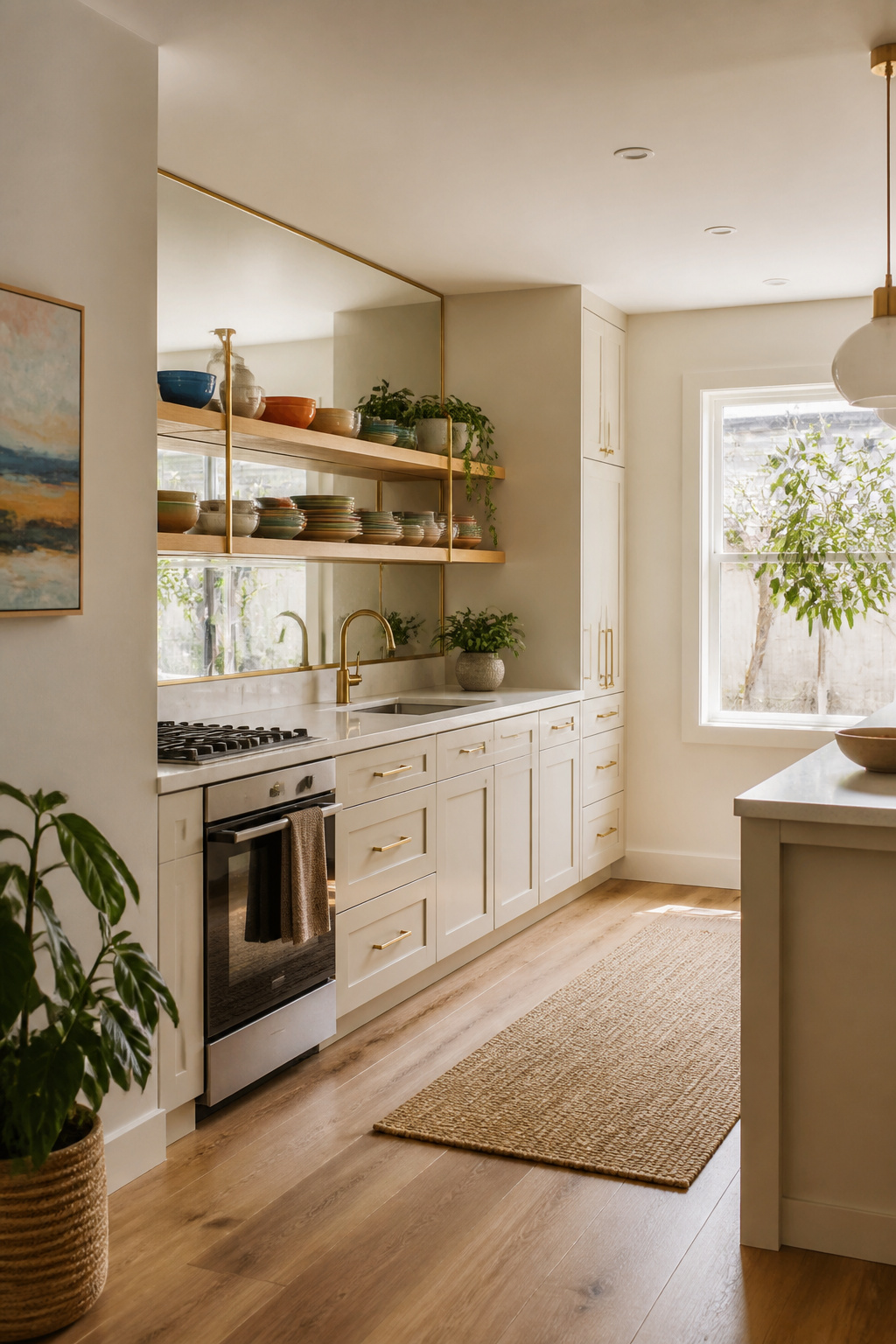
A mirror hung opposite a window doubles the daylight hitting your kitchen, and the effect is immediate. You notice it most in the morning, when a single reflected pane turns a dim corner into something you can actually work in. The placement matters more than the frame. Behind open shelving, a mirror adds depth without demanding wall space you do not have. It reads as backsplash that happens to catch light, not a vanity taken out of context. As an actual backsplash accent, a narrow mirrored strip works between standard tile runs, but a full sheet behind a cooktop collects grease and shows every water spot. The size that reads as intentional starts around the width of your range hood and stops well short of ceiling to counter. Anything smaller looks like an afterthought; anything taller risks the bathroom effect you are trying to avoid. Skip beveled edges and ornate frames in favor of a thin metal surround or clean clip mounting. Renter-friendly versions lean on adhesive mirror tiles, though the seams show and the adhesive softens near heat sources over time. A single framed piece on a proper hook is easier to take with you when the lease ends.
8. Color Themes
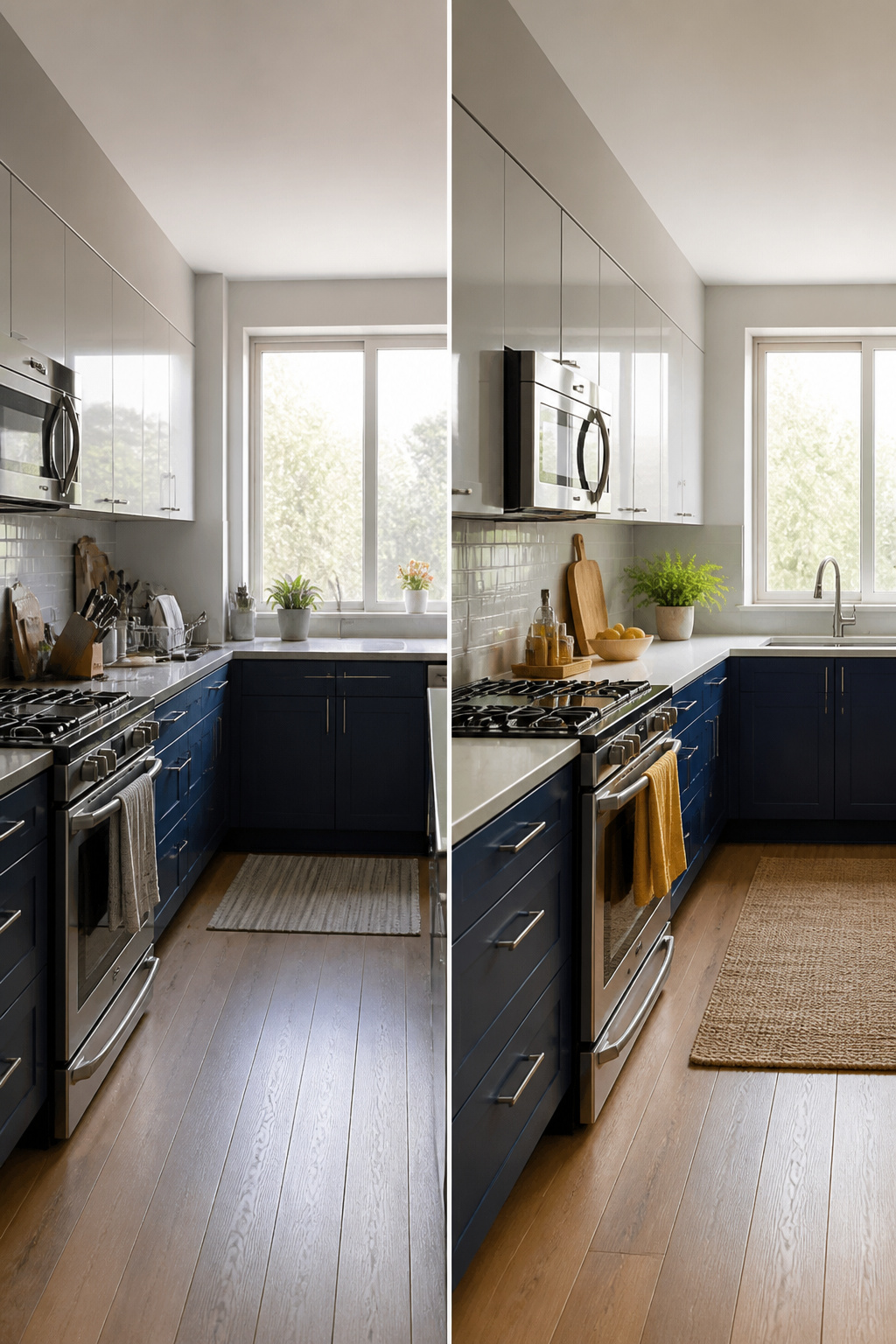
Light colors on your cabinets and walls reflect daylight back into the room instead of swallowing it, which is how a 70-square-foot galley kitchen stops feeling like a closet. If your lease leaves the walls alone, paint the backs of glass-front cabinets or the inside of a single pantry door in a pale grey or warm white. It reads as a full design choice without triggering a landlord conversation.
The two-to-three color rule keeps small kitchens from turning busy. Run your lightest tone across the largest surfaces: upper cabinets, walls, maybe the countertop if you are replacing it. Bring in one warmer accent through wood cutting boards or a slim breakfast bar in light oak. Reserve any third color for something you can change when you move, like a dish towel or a peel-and-stick panel behind the stove. Dark lower cabinets with light uppers can ground the space without closing it in, though in a rental with existing dark brown cabinets, leaning into that warmth with faux-wood countertops and oak accessories often looks more intentional than fighting the color you have been given.
9. Hanging Pots and Pans
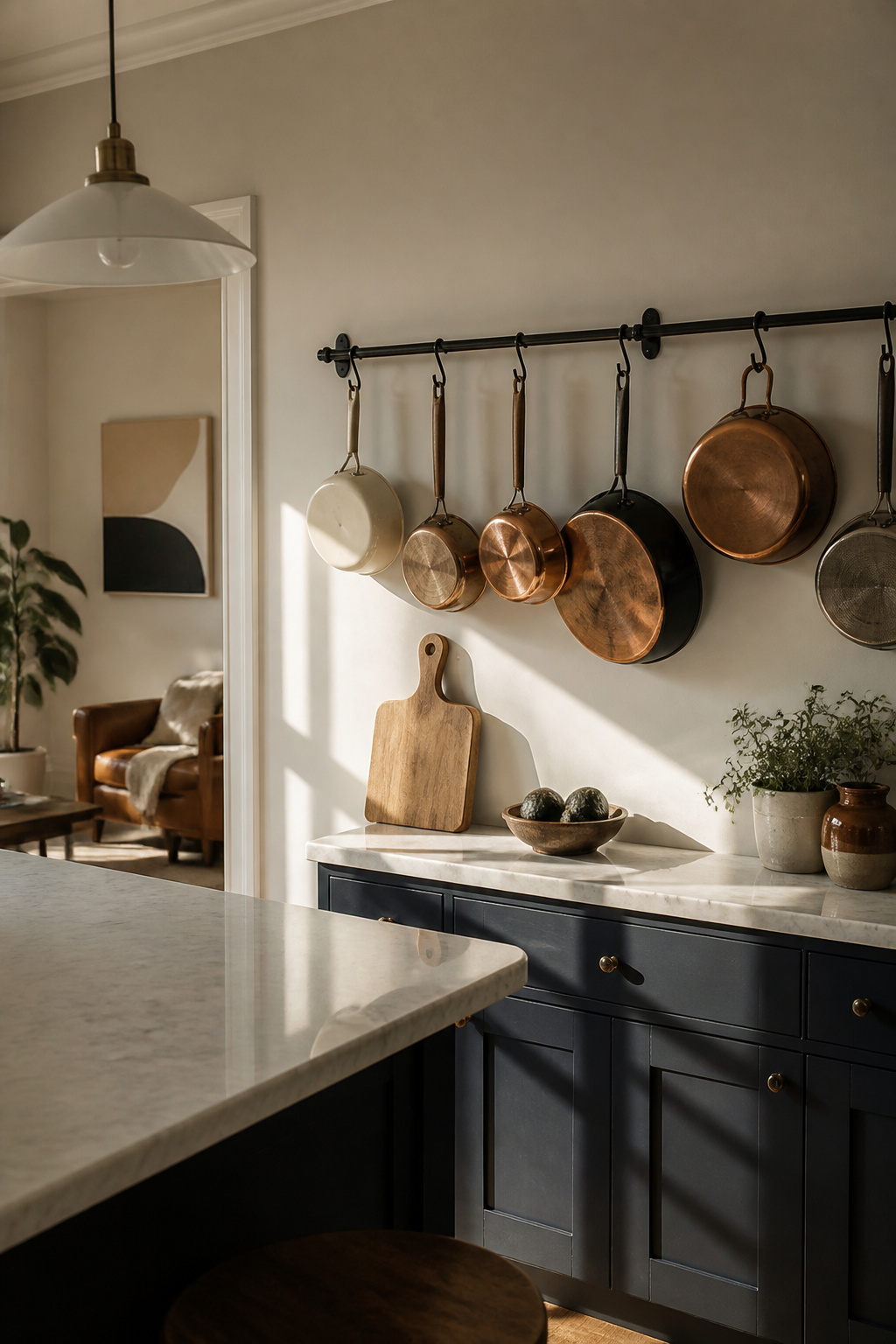
Hanging cookware buys back your cabinet space for the things that actually need hiding: the mismatched lids, the dented sheet pan, the appliance manual you will never read again. What hangs in the open becomes part of the room, so the choice of rack matters as much as what you hang from it.
Ceiling-mounted racks look dramatic in photos and work well if your kitchen has the headroom. In a rental, check what your lease allows before drilling upward; many apartment ceilings are drywall over lightweight joists that were never meant to hold forty pounds of cast iron swinging in midair. A wall-mounted rail with S-hooks is the safer bet, screwed into studs the way you would a towel bar. It keeps pots at arm’s reach and shifts the weight to a surface built for it.
Not every pan earns its place on display. The enameled Dutch oven in cream or deep blue, the copper sauce pan that has aged to a soft bronze, the carbon steel skillet with its mottled patina—these read as intentional. The nonstick skillet with the flaking rim, the warped aluminum stockpot, the lidless wok you keep meaning to replace: these stay behind the cabinet door. The rule is simple enough. If you would not leave it out on the counter, do not hang it on the wall.
10. Drawer Dividers
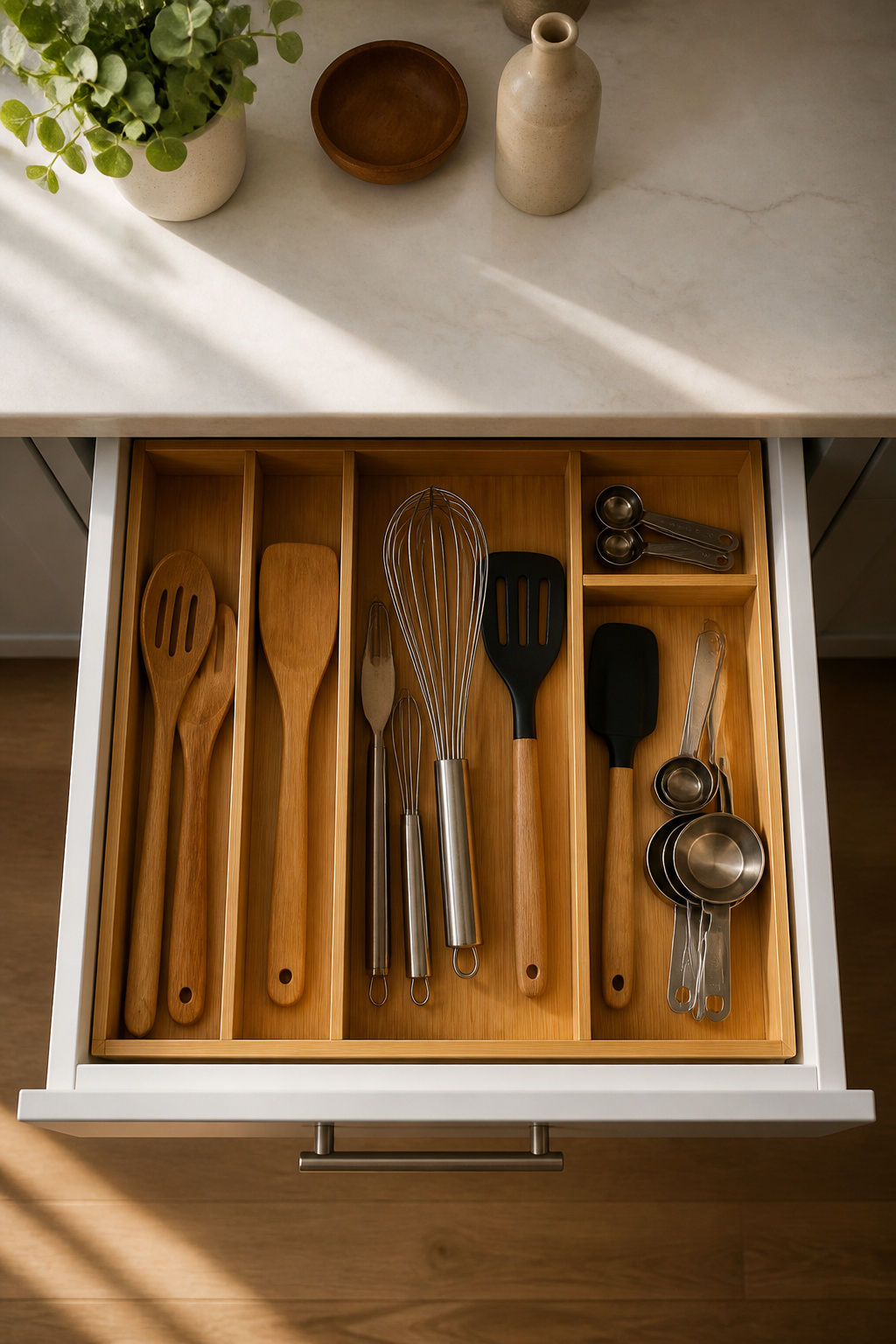
You open a drawer and three spatulas slide under the back rail, gone until you pull the whole thing apart. Drawer dividers fix that by giving every utensil a parking spot that stays put. Adjustable versions expand to fit the width you actually have, while fixed ones cost less and rattle less if your drawer dimensions happen to match. Bamboo holds up to damp silverware better than the lightweight plastic sets that crack at the corners within a year. Measure the interior width and depth before you buy, including any hardware or rails that eat into the space. A divider that sits half an inch too wide will tilt, gap, or get returned. Most renters find one adjustable set and one small fixed tray for the shallow front drawer handles everything they reach for daily.
Storage Solutions That Survive a Move
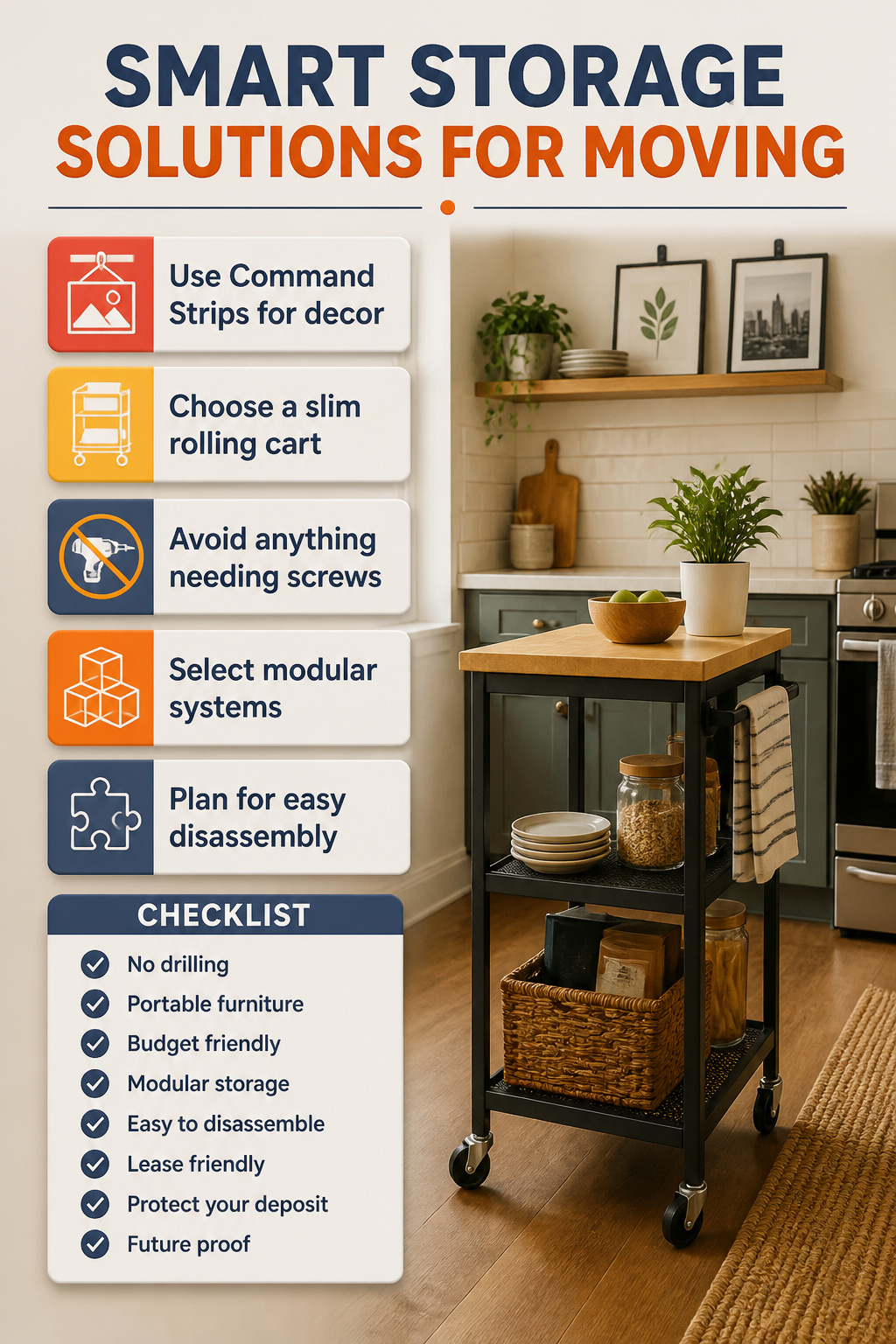
The storage that actually survives three leases looks different from the built-in systems that pin you to one wall. Command strips hold frames and light shelving without drilling, which matters when your deposit hinges on the paint condition. A slim rolling cart, around three feet tall and narrow enough to clear most galley walkways, rolls into the next apartment as-is. The cheap wire ones start near $26; a sturdier kitchen island with a wood top runs closer to $127 and buys you a cutting surface too.
Draw the line at anything that requires cabinet modification. Pull-out pantry hardware and corner carousels turn dead space into usable volume, but the brackets mount with screws that leave visible holes. If your lease runs two years, the math shifts: a $36 cart you keep beats a $200 retrofit you abandon. Modular systems win because they disassemble. Fixed installations look better in photos, but you are not photographing the kitchen, you are cooking in it until the boxes come out again.
Light and Color Without Painting Walls

Most landlords who ban painting do not think about cabinet interiors, which is where removable wallpaper on the back panel of an upper cabinet buys you a lot of visible color for about the effort of gift-wrapping a box. Peel-and-stick backsplash gets the attention, but that same material on a cabinet back surprises you every time you open the door, and it costs less than a single pendant light. The trick is ordering a swatch first; some papers read darker at scale than they do on screen, and a cabinet back is not a place you want to fight a pattern that turned muddy.
For countertops, contact paper has come far enough that faux wood grain can lean into brown cabinets you otherwise cannot change, turning a dated rental color into a deliberate warm tone. It will not survive a dropped cast-iron skillet, but it survives normal prep and wipes clean. Plan on replacing it every couple of years, or budget for that from the start.
LED strips plug straight into an outlet and stick under cabinets or behind a kettle station. The DAYBETTER white strip runs about $20, the Tenmiro music-sync set closer to $17, and a basic Monster multi-color strip under $5. The cheap one is fine for midnight-snack navigation; the pricier ones matter more if you are lighting a work surface where you actually chop. Either way, a plug-in strip beats hardwiring in a rental, and the adhesive backing means no bracket holes to patch later.
A flat-weave rug under the sink area adds the last layer of color and defines the kitchen zone in an open plan. Pick synthetic or performance cotton so you can throw it in the wash. Low pile clears cabinet doors and does not trip you.
Layouts That Flow Into Living Space
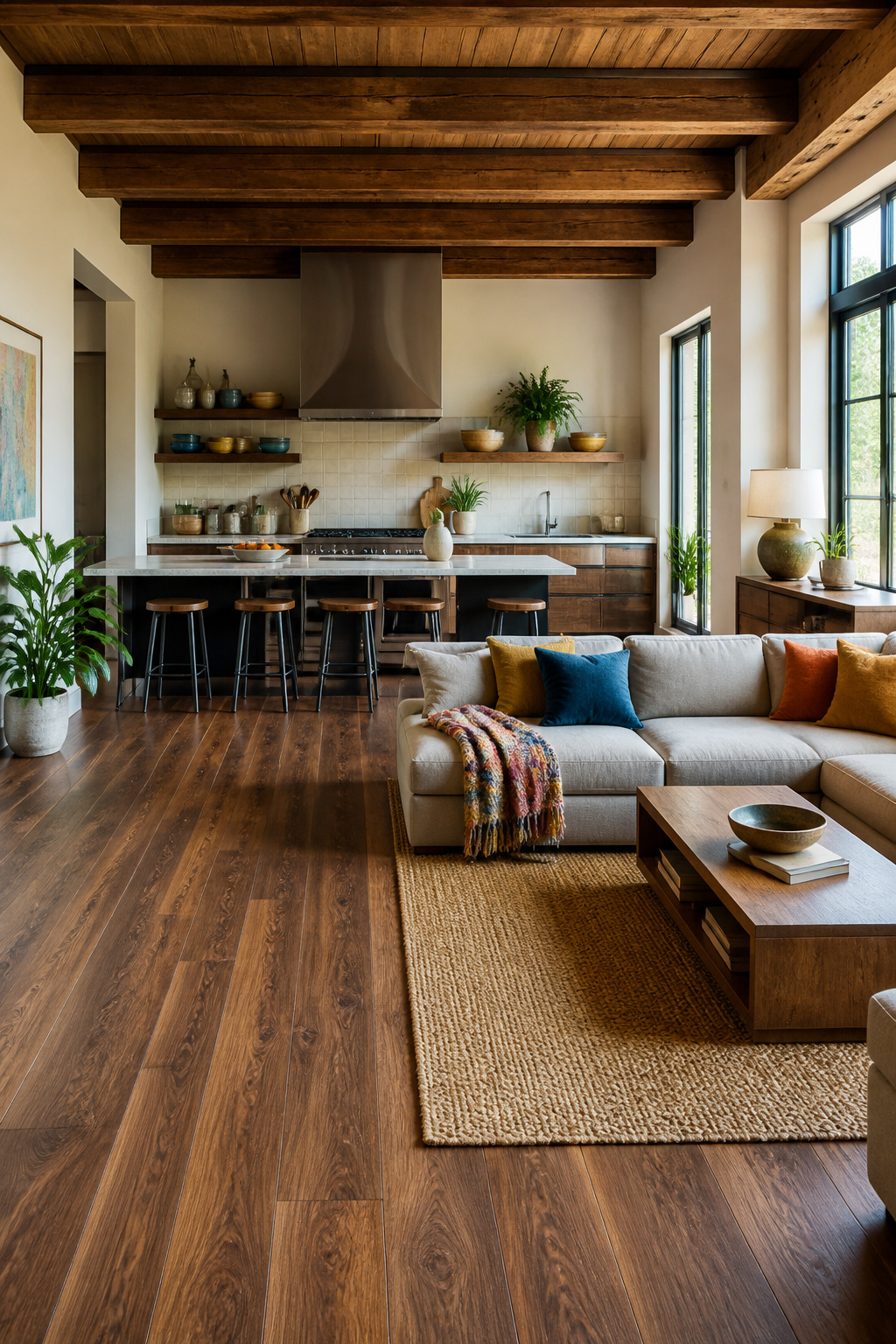
Open-plan apartments leave the kitchen exposed to the living room, which can make the cooking zone feel like clutter on display. The fix is a single flooring material running wall to wall, preferably something tough enough for kitchen spills: wood, laminate, or luxury vinyl tile. When the eye meets no threshold or change in material, the two rooms read as one larger volume instead of two small boxes.
Carry that logic upward. If the living area has a wood-clad ceiling or exposed beams, echo that material on a kitchen beam, a range hood surround, or open shelving. Susana Simonpietri, creative director at Chango, builds small kitchens this way:
"When designing small kitchens to blend into a larger space, we incorporate as many finishes as we can [for continuity]…If there is something like a clad ceiling with wood planks, for example, we carry that into the kitchen so it feels like a built-in."
For you, that might mean matching the living room’s wood tone on a single floating shelf above the sink, or choosing cabinet hardware that nods to the living area’s light fixtures. Furniture placement matters too: a sofa or console with its back to the kitchen kills the sight line and shrinks both spaces. Float the seating perpendicular, or choose pieces low enough to see over. The goal is not to hide the kitchen but to let it participate in the same visual sentence as the room beside it.
What Renter-Friendly Actually Means
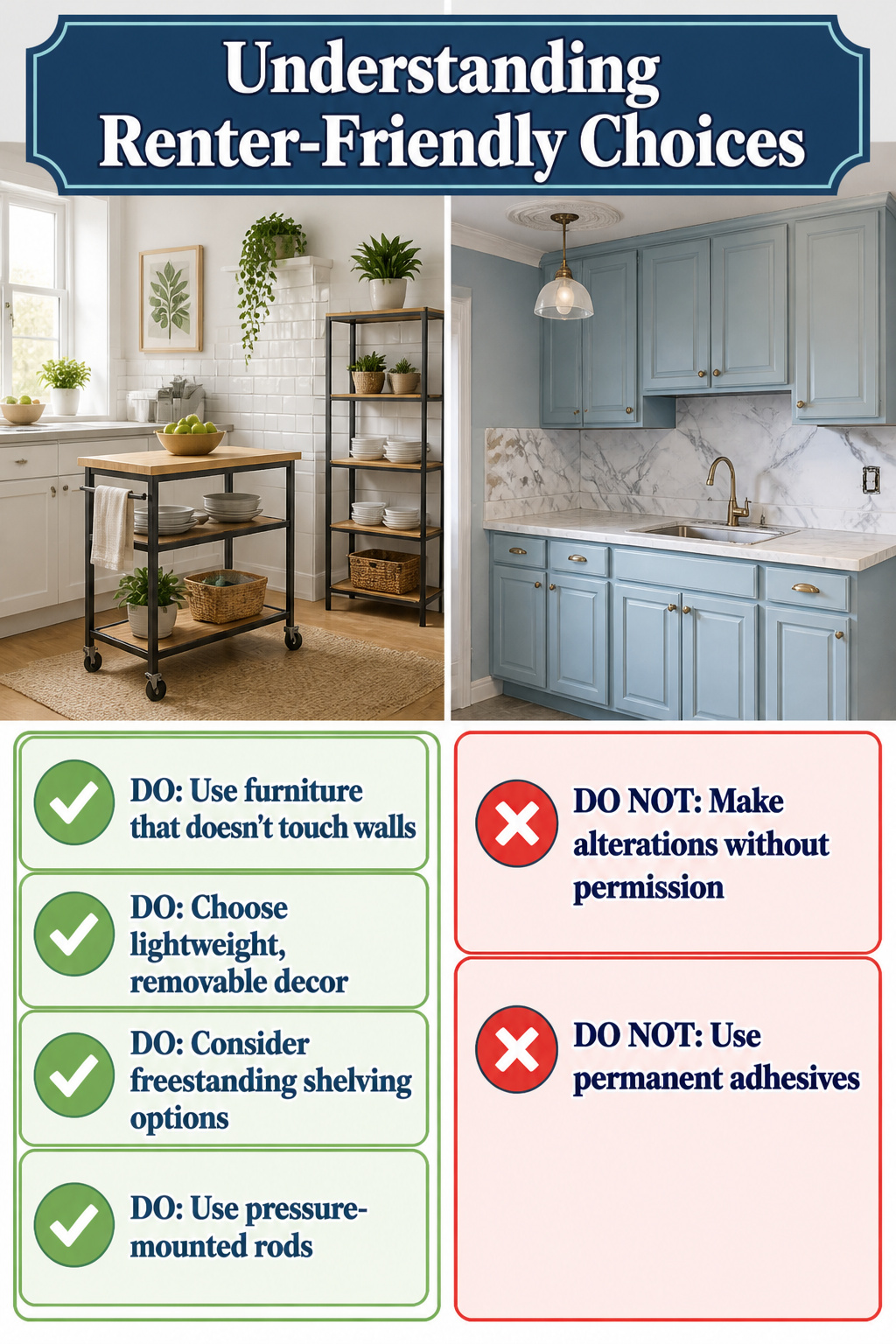
The phrase "renter-friendly" gets stretched thin online. Peel-and-stick tile that rips off drywall paper in one building leaves no trace in another, so the real test is not the product label but what happens when you pull it loose.
What leaves no trace sits in the category of furniture and hardware that never touches the permanent structure. Rolling kitchen carts, freestanding shelving, and pressure-mounted rods fall here. A slim cart from West Elm, the Kaloh Storage Cart, runs $90 on sale and adds counter space without a screw.
What leaves a trace you can fix covers anything secured with removable adhesive or small nail holes you will spackle before move-out. Ceiling medallions and pendant lights, like the ones a contributor added to her kitchen, sit in this zone if you patch the ceiling anchor and match the paint.
What counts as a conversation with the landlord starts at cabinet paint and runs through anything that alters the existing finish. Light blue cabinets in Farrow & Ball’s Lulworth Blue look sharp, but that is deposit territory unless you have written permission. Faux wood peel-and-stick countertops land here too, especially if the underlying laminate is old and might lift with the adhesive.
Skip anything that requires plumbing or electrical disconnection unless your lease explicitly allows it, and avoid countertop coverings that promise "easy removal" on a surface they have never met.
Frequently Asked Questions
How can I maximize storage in a small kitchen?
Mount racks and rails at eye level above your backsplash to reclaim counter space for actual cooking. A magnetic knife strip, pegboard for utensils, and open shelving all add usable volume without eating into your floor plan. Test your usual routine before you commit to placement so you do not block the one stretch where you set down a hot pan.
What colors make a small kitchen feel bigger?
Light colors on cabinets and walls reflect daylight back into the room instead of absorbing it. Run your lightest tone across the largest surfaces, add one warmer accent through wood, and keep any third color to items you can swap when you move. Dark lower cabinets with light uppers can ground the space without closing it in.
What are some renter-friendly kitchen upgrades?
Peel-and-stick backsplash tiles, removable wallpaper inside cabinets, and battery-powered LED strips under cabinets all change the look without altering the permanent structure. Command strips hold light frames and shelving without drilling, and a slim rolling cart rolls into your next apartment as-is. Check your lease before any wall attachment; some agreements allow holes under a certain diameter while others ban them outright.
How do I make my kitchen more functional?
Add a kitchen cart that gives you prep surface, holds daily tools, and rolls out of the way when you need the room back. Choose one with locking casters and a surface you can actually chop on. Pair it with compact appliances like a 24-inch cooktop or microwave-convection combo to respect your limited footprint while keeping the counter run usable.