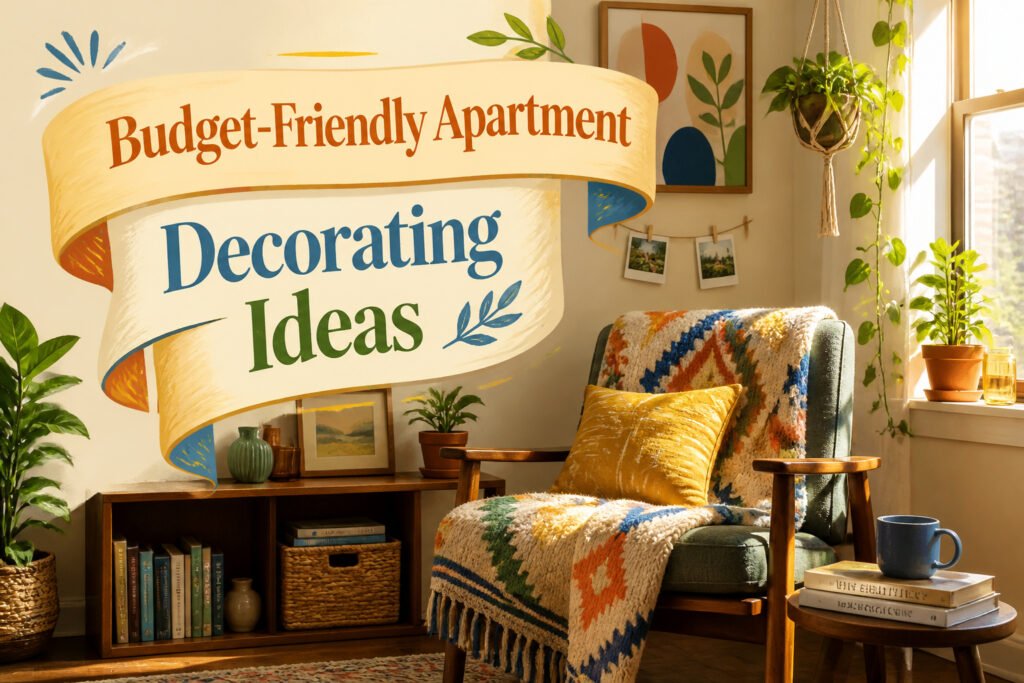
You can make a rental feel finished for about $500 if you treat that number as a hard ceiling before you shop instead of a rough estimate. The articles ahead all start from that constraint, whether you are stretching a single roll of $30 removable wallpaper across a bathroom wall or splitting a $34 peace lily into several plants once it outgrows its pot.
1. Multi-Functional Furniture

A sofa bed that actually sleeps a guest and still lets you sit upright through a movie is findable around $300 if you shop the mid-range lines at major retailers and catch a floor-model markdown. The trick is testing the seat before you buy: pull it out, lie on it, and check whether the bar hits your spine. Storage ottomans run cheaper and do the heavy lifting of hiding the cables, extra bedding, or the shoes you have nowhere else for. Folding tables and modular shelves work the same way. A drop-leaf console against the wall becomes your dining table when someone stays over; stackable cubes rearrange when you move and your next rental has a different corner to fill. The mistake is buying the convertible piece first and planning around it. Measure your doorways and your actual storage problem, then pick the shape that solves it.
2. Plants

Plants do more for a room than most accent pieces twice their price. A spider plant, peace lily, or areca palm will each pull common toxins from the air while filling the dead corners that make an apartment feel temporary. You can usually leave them in the grower’s pot and set it inside whatever container you already own.
The real budget move is buying small and waiting. A $33.99 peace lily from a big-box garden center splits into several plants once it outgrows its pot, or you can keep it compact for years with nothing more than water when the soil dries. Succulents only if you travel often; otherwise you get more atmosphere from something leafy that actually grows. Skip the designer ceramic. The plastic nursery pot hides inside a basket, a spare mixing bowl, or even the paper bag it came in if you fold the top neatly.
Areca palms run larger and need brighter light, so they work best near the one good window most rentals have. Spider plants tolerate dim hallways and forgive missed waterings. Start with one of each and you have greenery for three zones without spending more than a single throw pillow would cost.
3. Mirrors

A mirror hung directly across from a window will bounce daylight into the corners that never see it otherwise, and the bigger the mirror, the more light you pull in without adding a penny to your energy bill. That reflected light opens the room up the same way an actual window would, which matters in apartments where the architecture is fixed and the windows are not.
If the window itself feels small, hang your curtain rod a few inches higher than the frame. The fabric falls from above, and your eye reads the wall as taller than it is. The mirror then catches that extended vertical line and doubles it. Sheer curtains help here more than heavy ones; they filter the light instead of blocking it, so the mirror has something to work with through the full day.
For rooms with almost no natural light at all, a mirror still helps, but pair it with lighter colors on the walls and the larger furniture pieces. The mirror amplifies what exists. Give it something bright to reflect, and it will.
4. Second-Hand Shopping
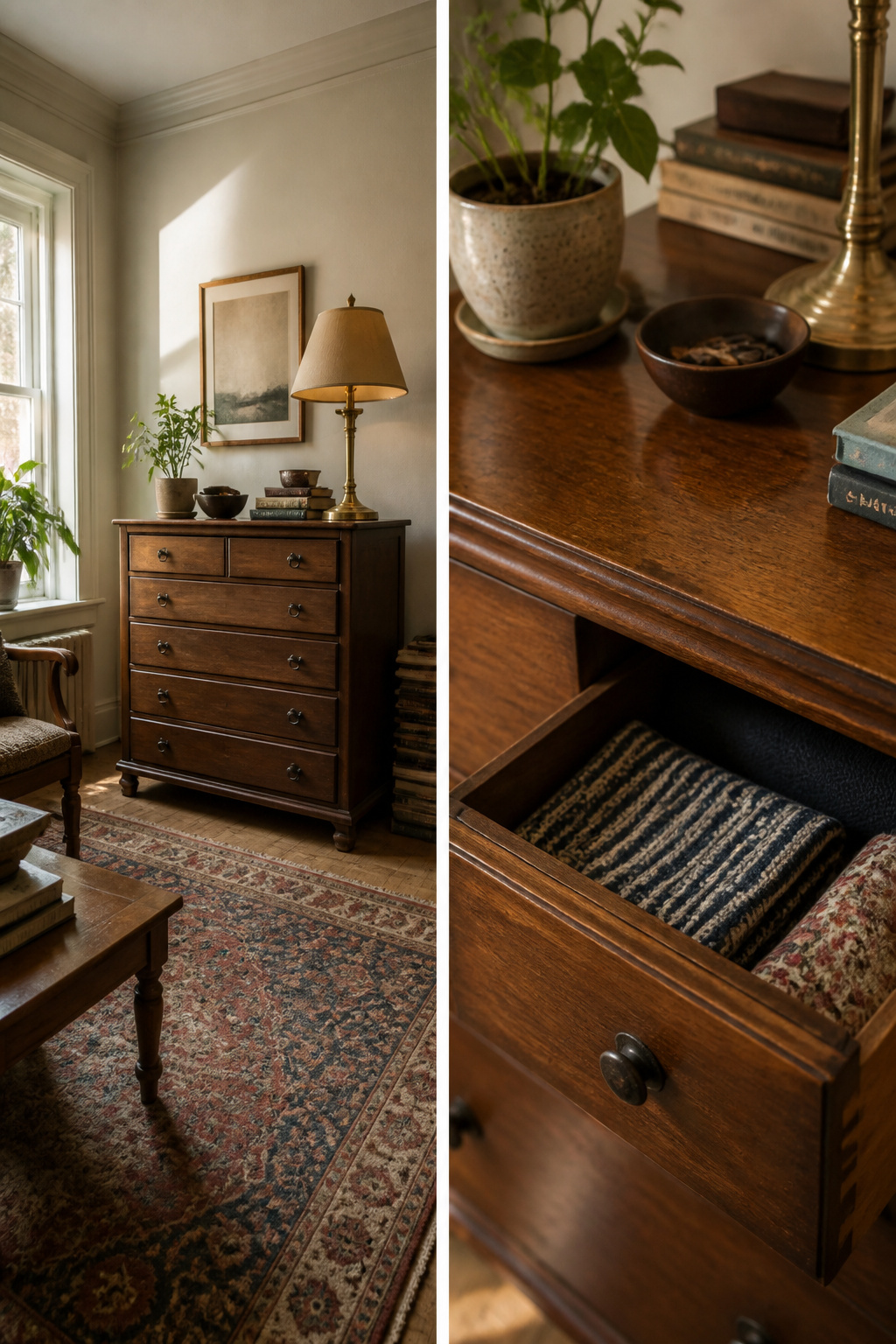
The best second-hand finds hide in plain sight because sellers just want the piece out of their house. Check how the drawers glide before you buy; smooth mechanics matter more than surface scratches you can paint over. Solid wood and metal frames survive moves between apartments far better than particle board, and woven fabrics reupholster cleanly if you are willing to cut up an old jacket or sweater for material.
Yard sales and local Facebook sale pages move faster than thrift stores but demand quicker decisions. Skip anything with deep gashes or broken hardware unless you already own wood filler and know how to use it. A chalk paint job and new pulls take about an hour on a small chest, and the result reads as a signature piece rather than a hand-me-down. Free cast-offs from family can start you out, but do not become the dumping ground for clutter you do not need.
5. DIY Decor
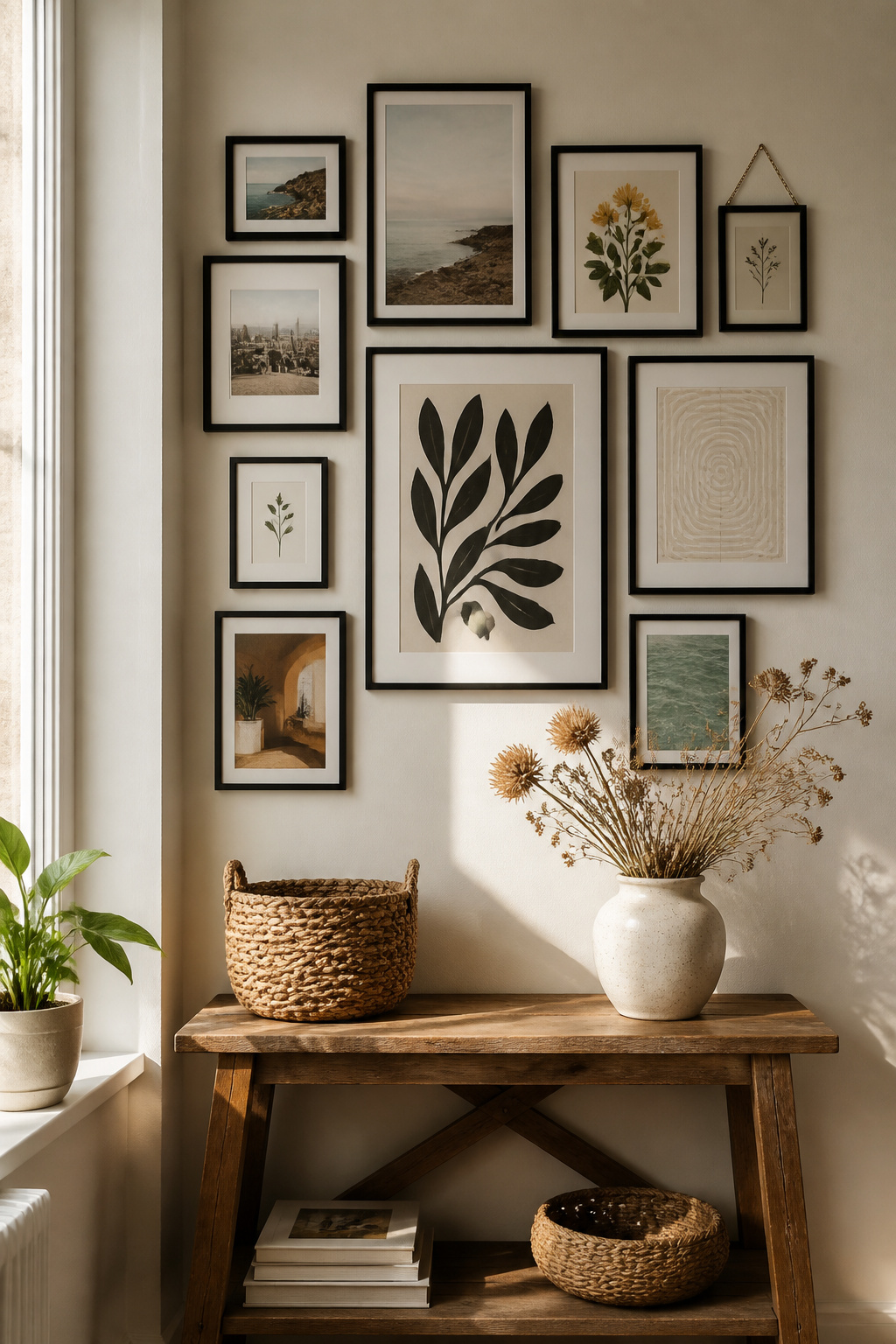
The fastest way to make a rental feel like yours is to stop waiting for the right art and start building it from what you already have. A DIY gallery wall runs under $80 if you skip the gallery markup and source your own frames, prints, and backing.
Free botanical prints online will fill a frame for the cost of paper and ink. Postcards, album covers, or black-and-white travel shots you took yourself carry more weight than anything bought to match a sofa. The trick is keeping the arrangement tight: clean, straight lines on a narrow wall read as intentional, not temporary.
This is where renters often stall, thinking they need a full collection before they hang anything. You don’t. Start with three pieces that actually mean something, add as you find or make more, and let the wall grow with you. The personalization comes from the material, not the budget.
6. Layered Textiles
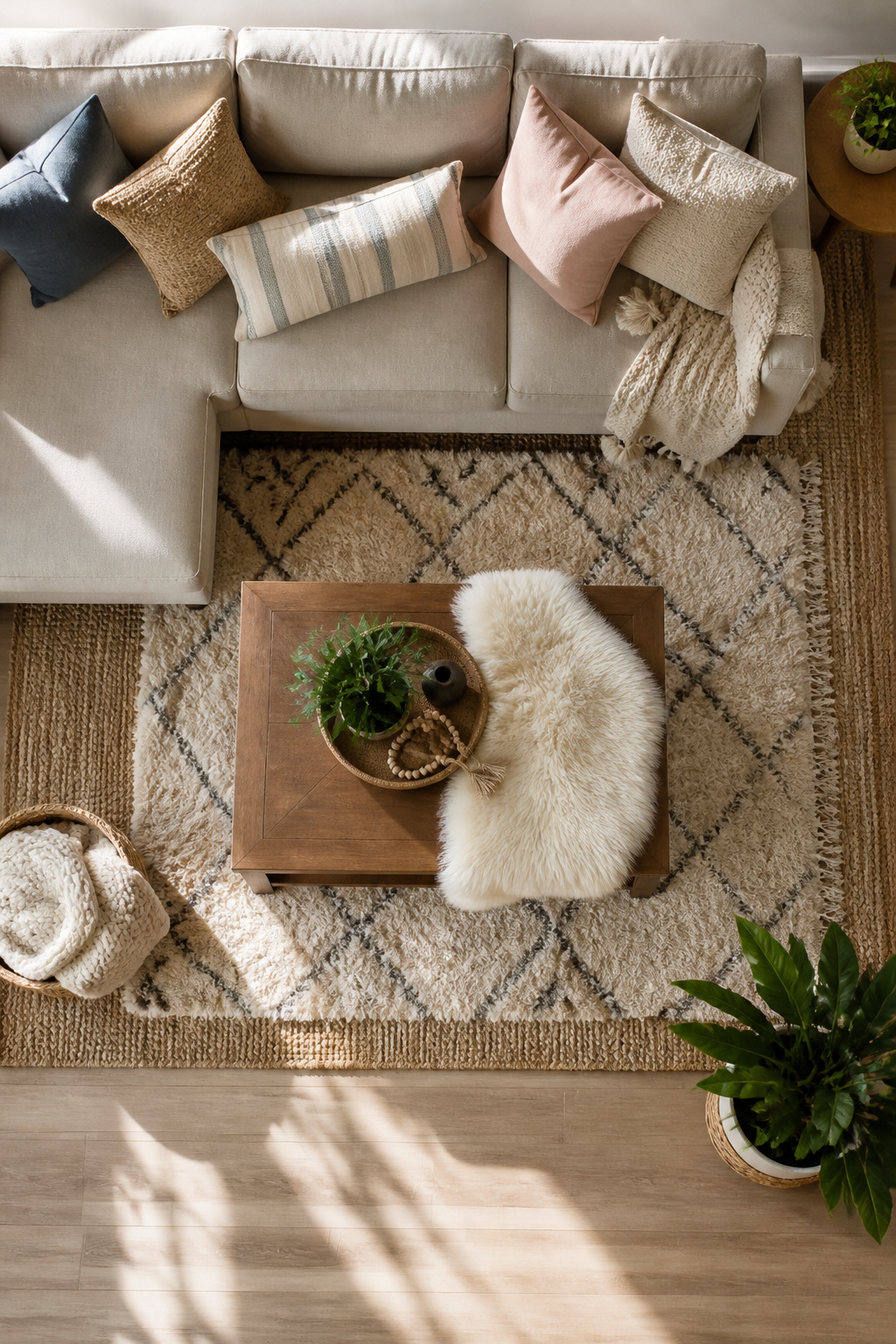
A flat rug, flat pillows, and a flat throw read as a single surface that does nothing for the room. Layering textiles means mixing a low-pile indoor/outdoor rug at $50 or less with a woven cotton throw and a couple of pillows in different weaves. The indoor/outdoor weave is worth knowing about: it vacuums clean, survives a spilled drink, and the newer ones no longer read as patio turf.
Stack a smaller textured rug on top of a larger flat one to anchor a seating area without wall-to-wall carpeting you cannot install. Drape a faux fur throw over a coffee table edge, not the back of the sofa where it disappears; the drop breaks up the dark plane and gives the eye something to register between the table surface and the floor. Add a basket on top if you need storage, but the throw still works alone.
The limit is three textures in one sight line. A fourth starts looking like you emptied a bin at a discount store. Keep the palette restrained and let the weave do the work.
7. Paint and Temporary Wallpaper
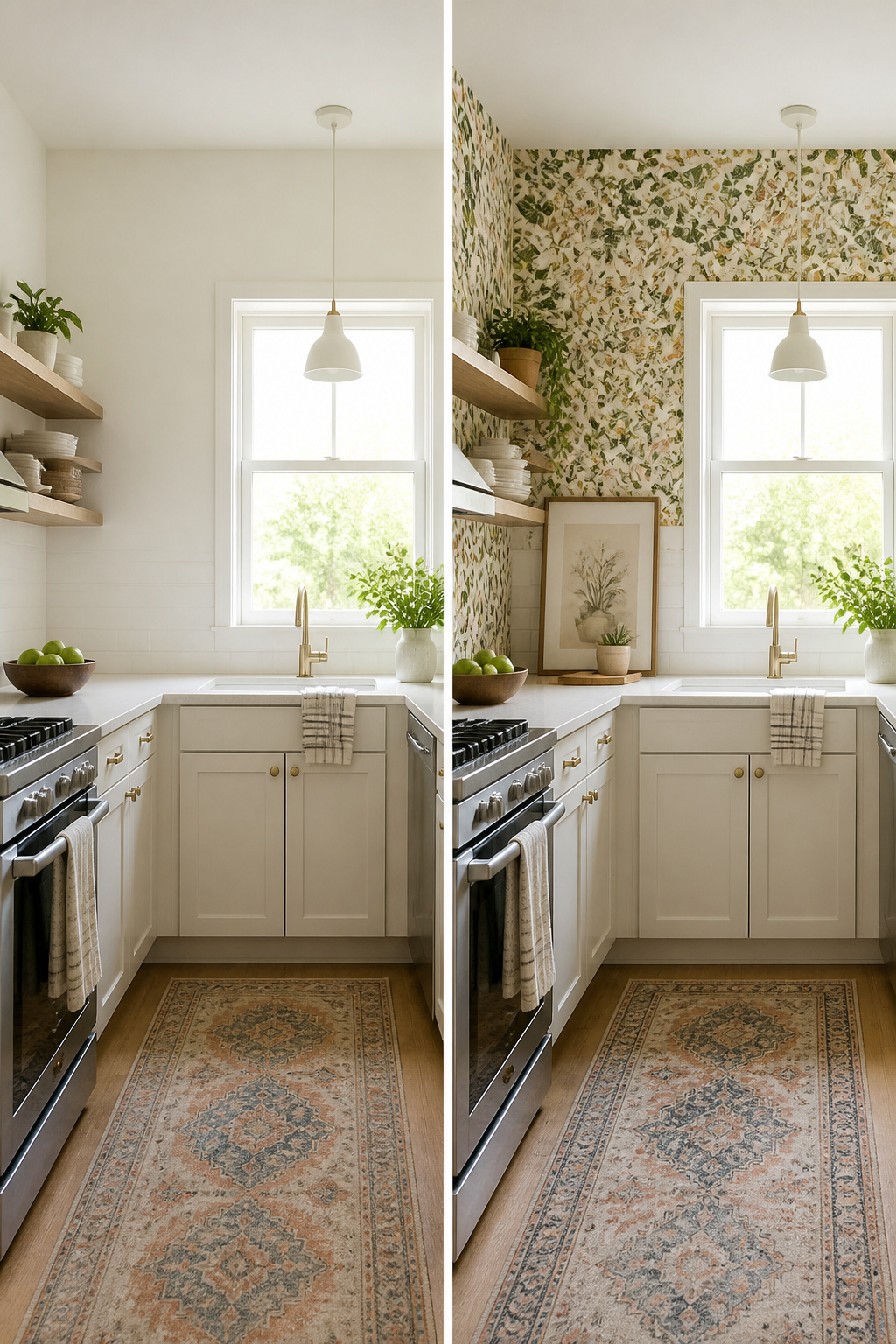
You probably cannot repaint your apartment, but removable wallpaper runs $30 to $36 a roll and peels off when you move. Stick it to one wall in the bathroom or run it as a makeshift kitchen backsplash. The Bungalow Rose Ethan-Jay pattern sits at $35.99, the Opalhouse Jungalow Fiesta Animals at $34, and NuWallpaper’s Maui print at $30.28. Large-scale patterns work best in small spaces, which sounds backward until you see it: a bigger repeat tricks the eye into reading the room as larger.
If even peel-and-stick feels like too much commitment, lean a large framed print against the wall instead of hanging it. Felt pads on the legs keep both the frame and the paint intact. For lighter pieces, poster putty or Command strips hold without holes. Either way, you keep the security deposit and the option to change your mind next weekend.
8. Declutter and Organize
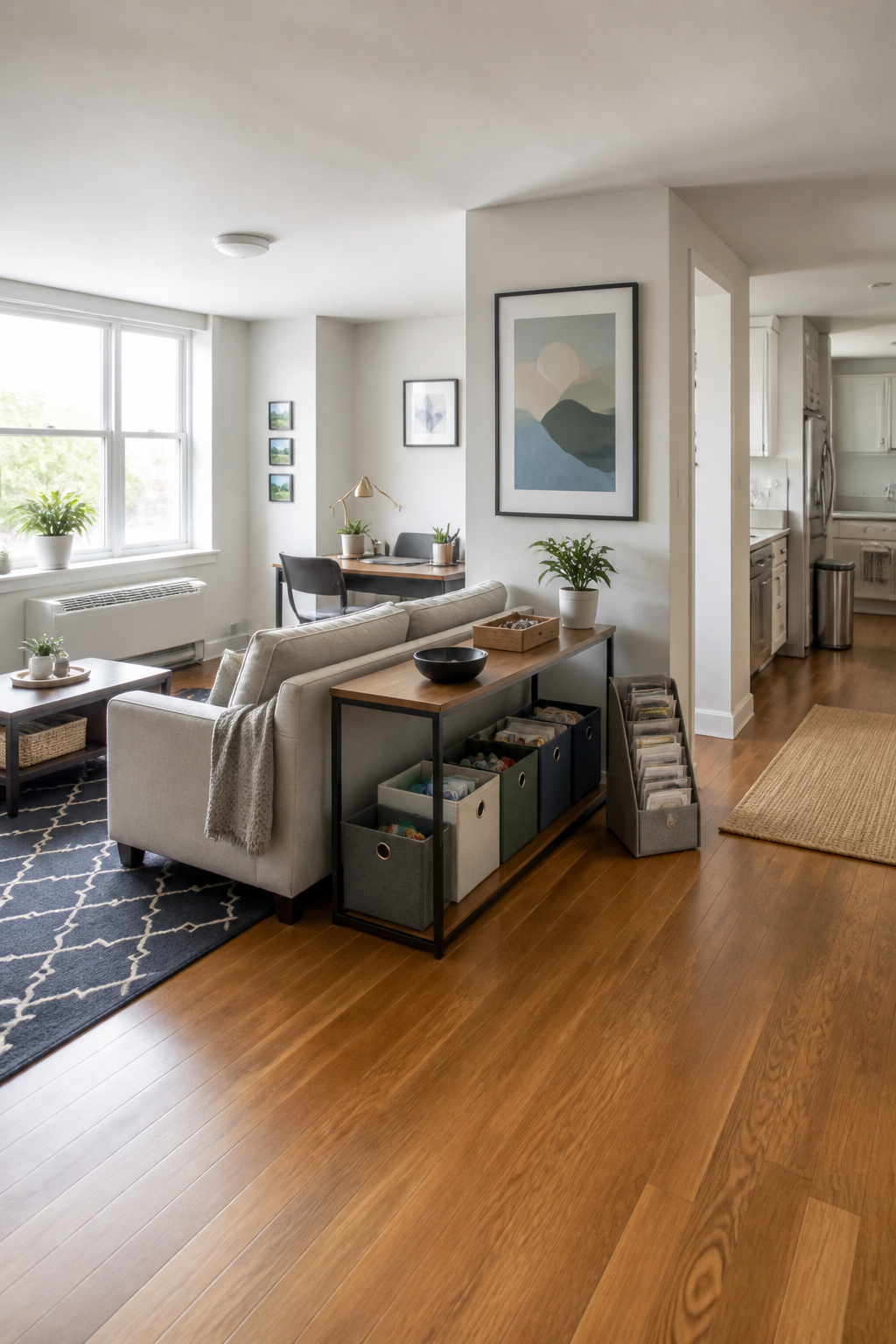
Rearranging what you already own costs nothing and often does more than buying something new. Start by pulling everything away from the walls and grouping pieces by function: sleeping, working, eating, unwinding. In a small apartment, one piece of furniture can serve two zones if you angle it right. A sofa backed toward a desk carves an office out of a living room without a single divider.
Once the layout holds, tackle the surfaces. Dollar store bins, shower rings for scarves, and over-door shoe organizers run a few dollars each and keep the floor visible. That visibility is what makes a room feel larger, not the square footage itself. Magazine holders corral lids and paperwork; matching containers in the bathroom turn clutter into something you do not mind seeing.
Light matters here too. Keep windows clear, add a mirror across from the best daylight, and the same walls feel deeper. If the light is poor, pale textiles on the furniture you already have brighten the space without a paint can.
The mistake is organizing before you rearrange. You will box up items that belong in a different room entirely, or worse, store things you no longer need. Move first, purge second, contain last.
9. Accent Pieces
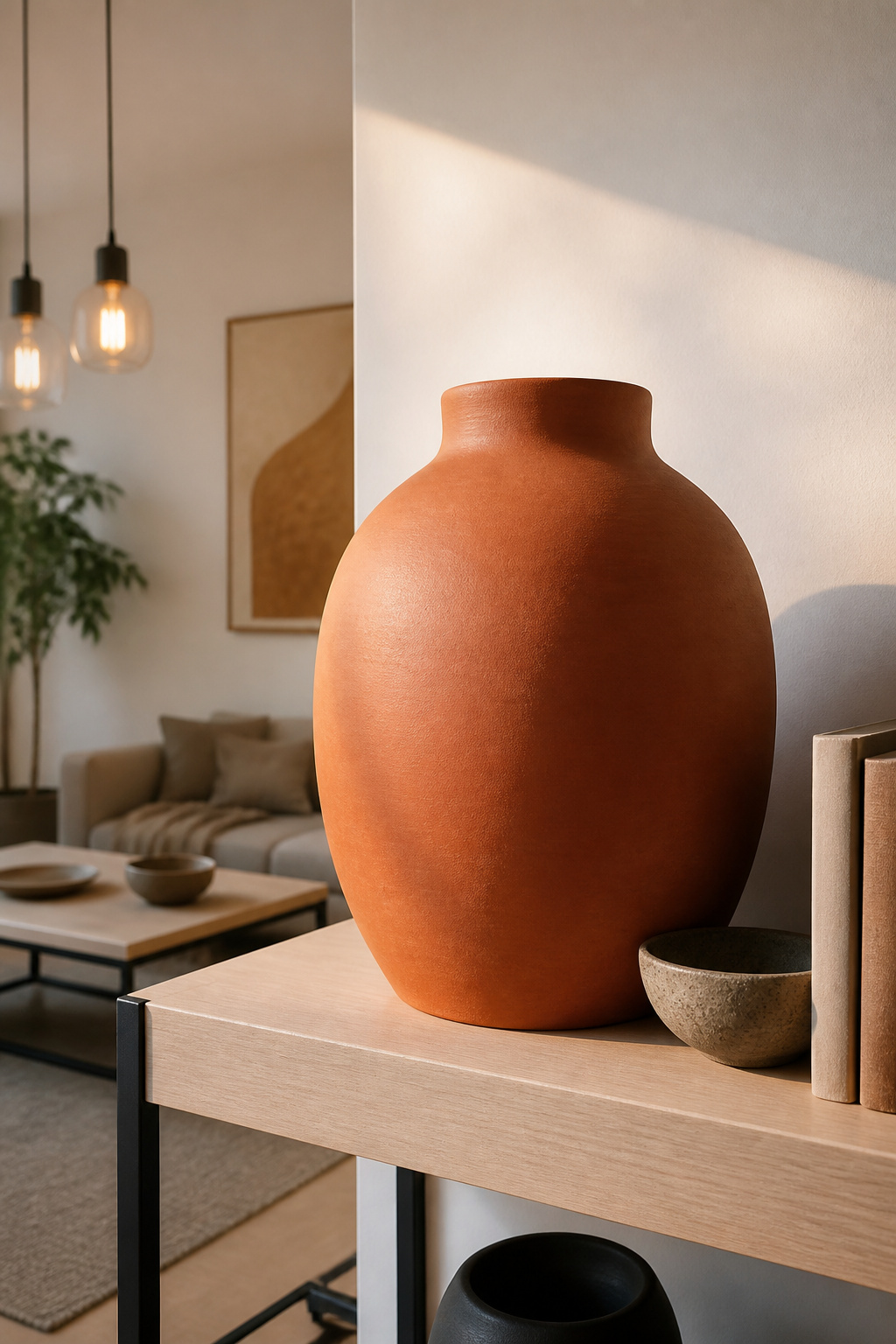
A single bold vase on a bare shelf does more for your room than a cluster of small trinkets that read as clutter from across the room. Spend your accent budget on one piece with clean lines and a neutral finish, then let it breathe. A terracotta bookend set at $49 or a handcrafted glass sunset vase at $28 anchors a surface without demanding more purchases around it.
The common mistake is filling the gap immediately. Live with the one piece for a week. If the wall still feels empty, that is the moment to add, not before. A single statement piece pulls the eye and reads as intentional; three small items bought to hit a free-shipping minimum read as what they are.
Color follows the same rule. Cream, sand, or soft gray in your accent lets you move the piece between rooms as your layout shifts. The one place to bend: a single bold pattern in a rug or a framed print, used where you want the eye to land. Everything else stays quiet. The room looks considered, and more expensive, because you stopped one step sooner than you wanted to.
10. Light Colors

Light colors do more than match a Scandinavian mood board. In a small apartment, pale walls and furnishings bounce what natural light you already have, so the same window feels like it belongs to a larger room. One approach is to keep the big pieces neutral and quiet, then add color through small items you can swap out later, like throw pillows or cabinet knobs. If your windows face another building and the light is scarce, this matters even more; a light-colored sofa or rug becomes your secondary light source when the sun drops behind the brick wall across the courtyard. Heavy drapes compound the problem. Sheer or light-filtering blinds let the daylight in without the bare feeling of an uncovered window. For rooms with decent exposure, a mirror placed across from the window doubles the effect, but the mirror only has something to reflect if the walls and furniture are pale enough to catch it.
Setting a Real Budget
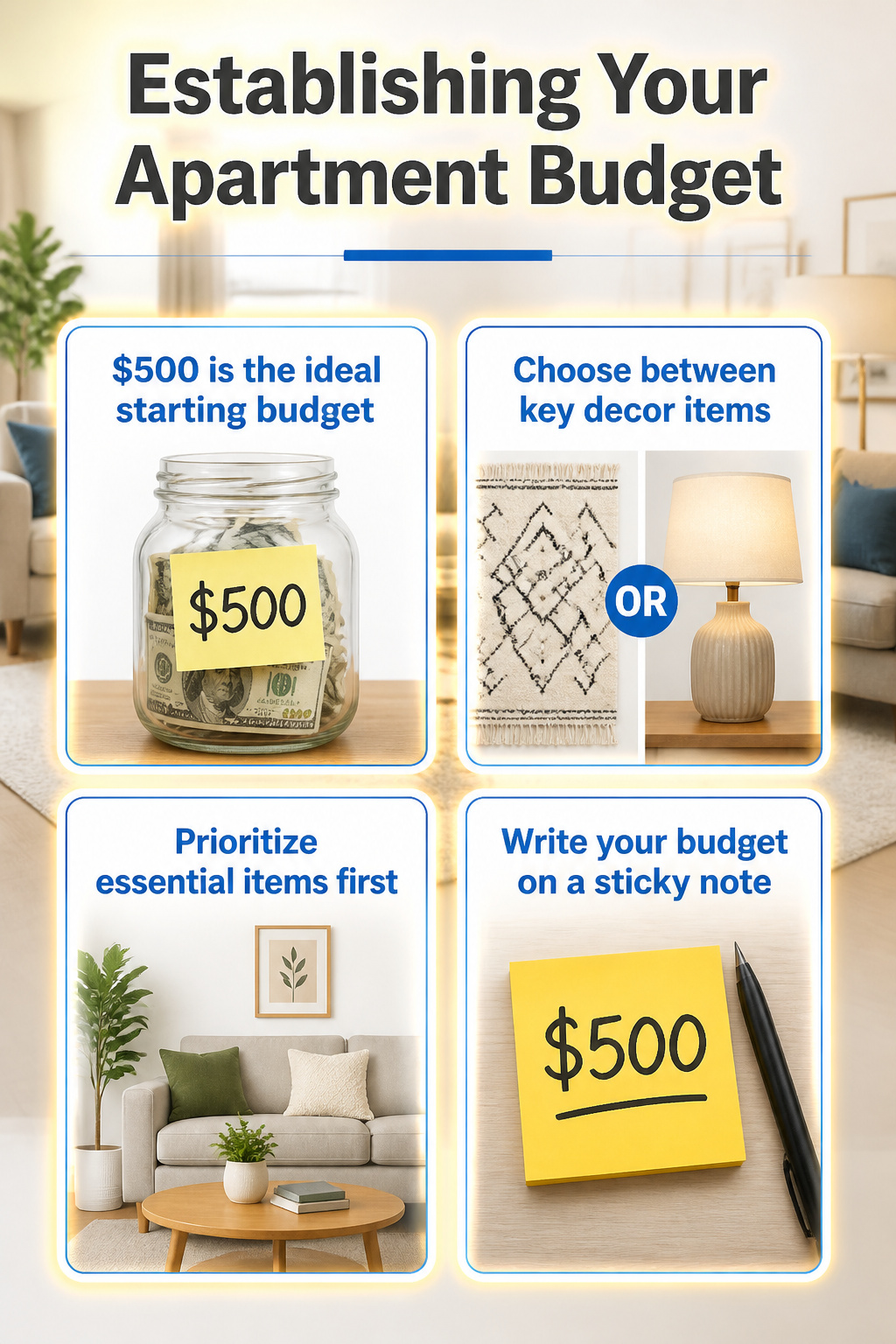
Most people start apartment decorating by picking a paint color or scrolling furniture sites. That is backward. Set the dollar amount first, then hunt inside it.
Five hundred dollars is the figure that keeps coming up, and for good reason: it is enough to change the bases in one room and add new decor, not just reshuffle what you already own. At $500 you are forced to choose between a new rug or a new sofa cover, between art for the wall or a lamp that actually works. Those constraints are what produce ideas worth stealing.
The ten projects ahead all assume you have locked this number down before you shop. Some run closer to $50, others eat most of the $500. None of them work if you spend the budget in your head before you check the cart total. Start with the cash, write it on a sticky note, and let it argue with you while you browse.
Natural Light Tricks

Heavy drapes steal light and square footage in one move. Sheer curtains cost about the same as cheap blackout panels, and they keep a window working for you all day. Hang the rod four to six inches above the frame and let the fabric fall to the floor. The eye reads the wall as taller, and the room opens up vertically without touching the architecture.
If you own one large mirror, place it directly across from your best window. It bounces daylight into corners the sun never reaches, and the bigger the glass, the more ground it covers. No wiring, no bulb to replace, no line item on the electric bill. For apartments with thin or few windows, pair the mirror move with pale upholstery on your largest pieces; a light sofa reflects what light you have instead of drinking it in.
The two tricks stack. Sheers soften the light coming in, the mirror multiplies what gets through, and together they do more than either manages alone.
Layering Without Clutter

Layering works best when you can name every item in the stack and why it is there. A woven basket set on a faux fur throw across a coffee table gives you three textures, but the throw also breaks up a dark surface and keeps the basket from looking like it is floating. The same logic holds on a shelf: a small plant on a book on a tray reads as one intentional group, not three things crowding together.
The mix matters more than the price. A rattan chair, glass-top table, and beaded light fixture in one dining setup created what reads as a luxe, layered look without an expensive single piece.
An eclectic mix of materials and furnishings, such as the rattan chair, glass-top table, and beaded light fixture in interior designer Tanya List’s Canadian home, creates a luxe, layered look for your dining room without breaking your bank account.
For your own space, choose one hard material and one soft per layer: wood base plus textured glass lamp, or natural basket against a soft throw. Repeat that pairing in three places and the room holds together without matching. If a layer does not add texture or fix a visual problem like too much dark paint or too much empty flat surface, leave it out. Extra items are clutter; extra materials are depth.
Making Rental Space Yours

The walls you inherit are never quite yours. That is the first thing that stings, and the thing you fix first.
Removable wallpaper runs about $30–$36 a roll and turns one flat rental wall into something you chose. Hunte, who advises renters regularly, puts it behind a bathroom vanity or across a kitchen backsplash where paint would never be allowed. The pattern does the heavy lifting; your effort is peeling and smoothing for an afternoon.
Photos work the same way without the commitment. A straight line of frames on a narrow wall reads as intentional gallery space, not leftover hallway. Postcards, album covers, prints you pull from books: the framing costs more than the art, so buy frames secondhand and spray them one color if you want cohesion. The rule is density. Three pieces look accidental; nine, even small ones, look like a decision.
Upcycling fills the gaps where your budget runs out before your rooms do. An old dresser with fresh paint becomes the piece people ask about. A wooden pallet cut and sanded works as a coffee table if you seal it properly. The materials run cheap because the labor is yours, and the result carries weight no flat-pack shelf does.
What fails is waiting until the space feels right to start. Live in it bare and you learn what you actually need; live in it too long bare and you stop noticing. Start with one wall, one shelf, one thing you made or found. The rest follows once you see what that single change does to the light.
Zoning Small Rooms

The hardest part of a studio or one-bedroom is not the square footage. It is deciding what happens where, and then keeping those decisions visible once you move in.
Start by watching your own morning. Where do you actually sit to answer email? Where does clean laundry land before it gets folded? Most small apartments fail not because they lack space, but because they pretend to be one big room when they need to be three or four small ones. A rug under the desk chair, even a cheap flatweave, marks that patch as work territory in a way a wall never could. The same goes for a floor lamp angled over a reading chair, or a narrow console behind the sofa that catches keys and mail.
Multi-functional furniture earns its keep here, but only if the functions stay distinct. A storage ottoman can hold blankets and still read as "footrest" if you keep the lid closed. Let it become the junk drawer, and the zone collapses. Light colors help the boundaries read as open rather than cramped: pale curtains that filter instead of block light, a neutral sofa you can shift with throw pillows, furniture simple enough to move when guests come over.
Decluttering is not a weekend project you finish. It is the habit of putting the laptop back in its designated spot instead of letting it migrate to the kitchen table. The table stays a table that way. The apartment stays several rooms.
Frequently Asked Questions
How can I decorate a small apartment without spending much?
Rearrange what you already own before buying anything. Group furniture by function, pull pieces away from walls, and let one item serve two zones. A sofa angled toward a desk carves an office out of a living room without a single divider. Dollar store bins and over-door organizers then keep the floor visible, which makes the room feel larger than the square footage itself.
What are the best cheap furniture ideas for apartments?
Look for sofa beds around $300 from mid-range lines and floor-model markdowns, but test the mattress first for bars against your spine. Storage ottomans run cheaper and hide cables or extra bedding. Folding tables, drop-leaf consoles, and modular stackable cubes rearrange when you move and fit whatever corner your next rental offers. Measure your doorways and your actual storage problem, then pick the shape that solves it rather than buying the convertible piece first.
How do I make my apartment look more expensive?
Spend your accent budget on one piece with clean lines and a neutral finish, then let it breathe alone for a week. A terracotta bookend set at $49 or a handcrafted glass vase at $28 anchors a surface without demanding more purchases around it. Keep the palette to cream, sand, or soft gray so the piece moves between rooms as your layout shifts, and stop one step sooner than you want to. The room reads as considered because you showed restraint.