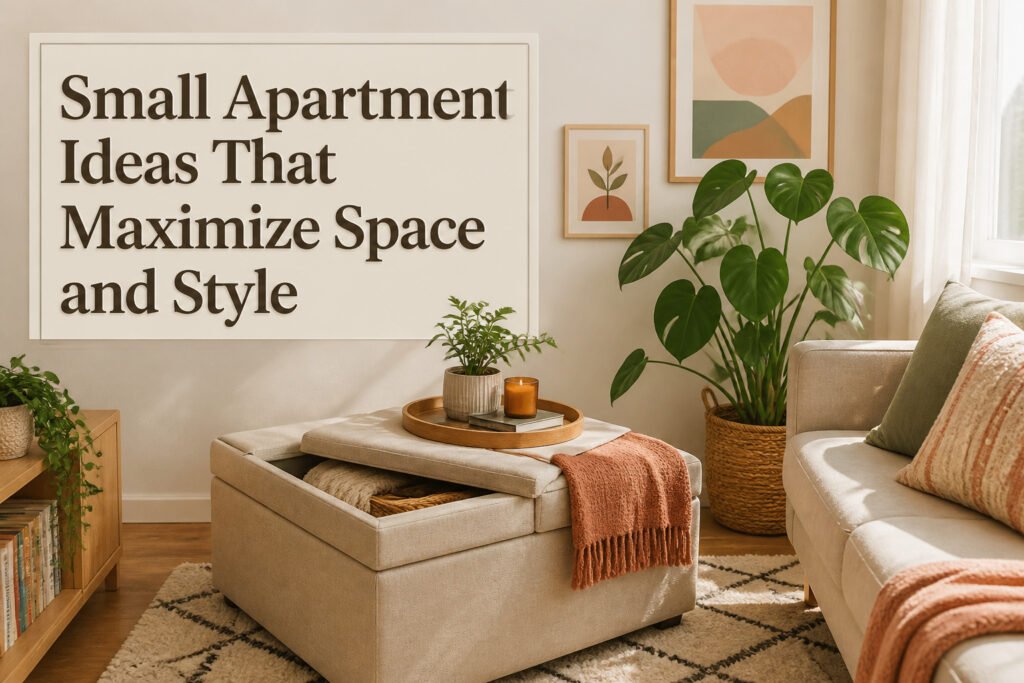
Small apartment ideas span from a $15 set of bed risers to custom built-ins that require landlord permission and a budget that survives move-out day. The deciding factor is square footage. In studios under 300 sq ft, a storage ottoman as coffee table plus linen closet beats adding one more footprint. Near 500 sq ft, the same piece functions more as clutter control, and you might prefer the cleaner line of a slim table with a shelf below.
1. Multi-Functional Furniture
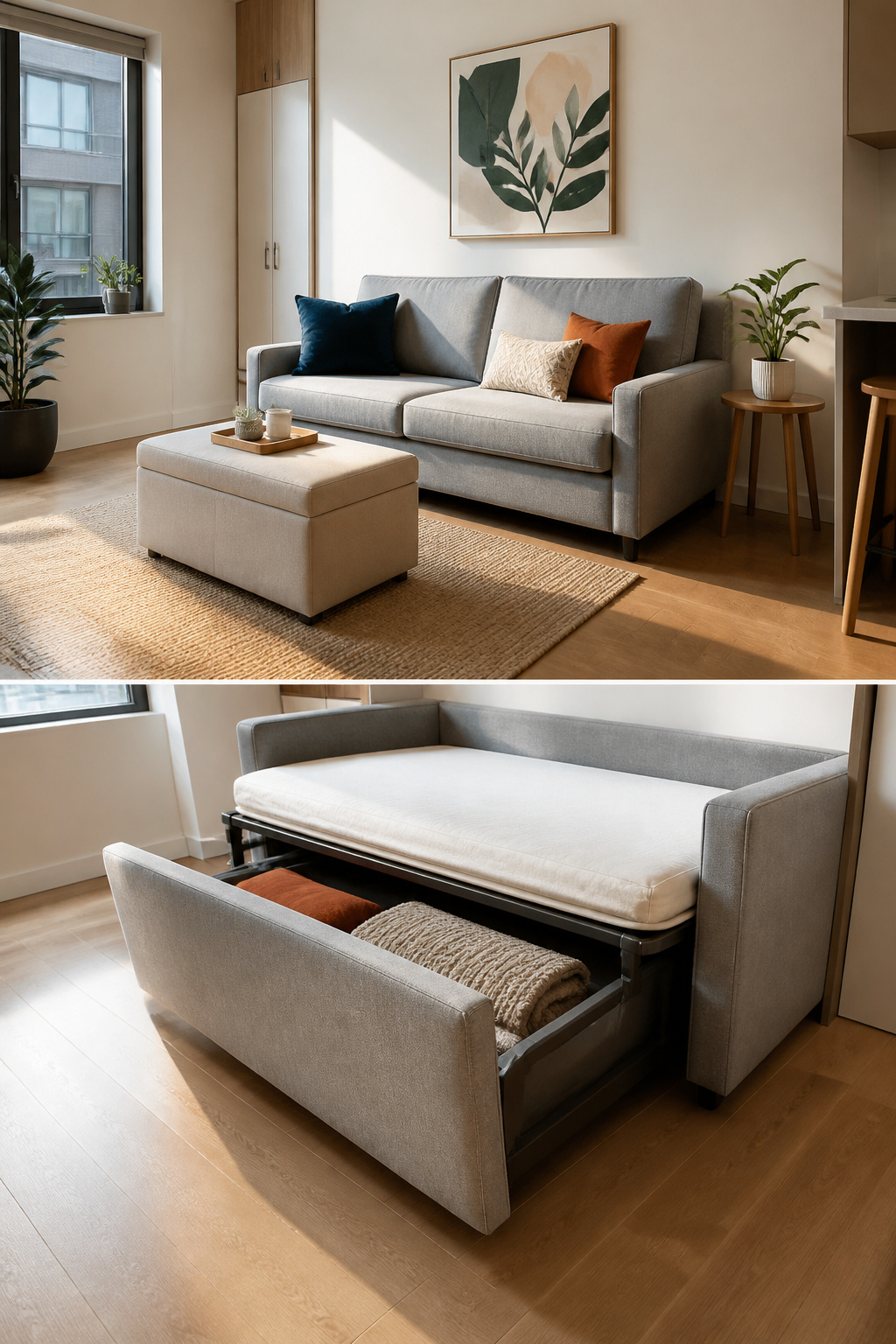
Sofa beds, storage ottomans, and daybeds each earn their floor space by handling two jobs at minimum. In Julia Stevens’ 235 sq ft New York studio and Eleanor Peres’ 290 sq ft Sydney studio, a single piece that shifts from seating to sleeping removes the need for a separate bed frame or couch. That same tradeoff matters differently in Cristiana Felgueiras’ 333 sq ft Porto studio or the 538 sq ft Melbourne Small Grand Apartment, where a daybed against the wall can still read as a sofa by day without the mechanical folding that tighter spaces demand.
Storage ottomans work on the same principle across all four sizes: they hold what a second shelf or cabinet would otherwise require. The gap here is real. Product dimensions vary enough that you will need to measure your own doorway clearances and floor space before ordering, since no standard sizing governs how these pieces compress or expand. In studios under 300 sq ft, a storage ottoman as coffee table plus linen closet beats adding even one more footprint. Near 500 sq ft, the same piece functions more as clutter control than as space rescue, and you might prefer the cleaner line of a slim table with a shelf below. Either way, the rule holds: every large piece should carry two functions, or it is costing square footage you do not have.
2. Vertical Space Utilization
Walls are the last free real estate in a small apartment. Once the floor fills up, the only move left is up.
Tension rods are the renter’s fix for storage without drilling. A standard rod wedged inside a closet or between cabinet sides holds cleaning bottles, extra hangers, or a curtain that hides clutter. No patching later, no deposit risk.
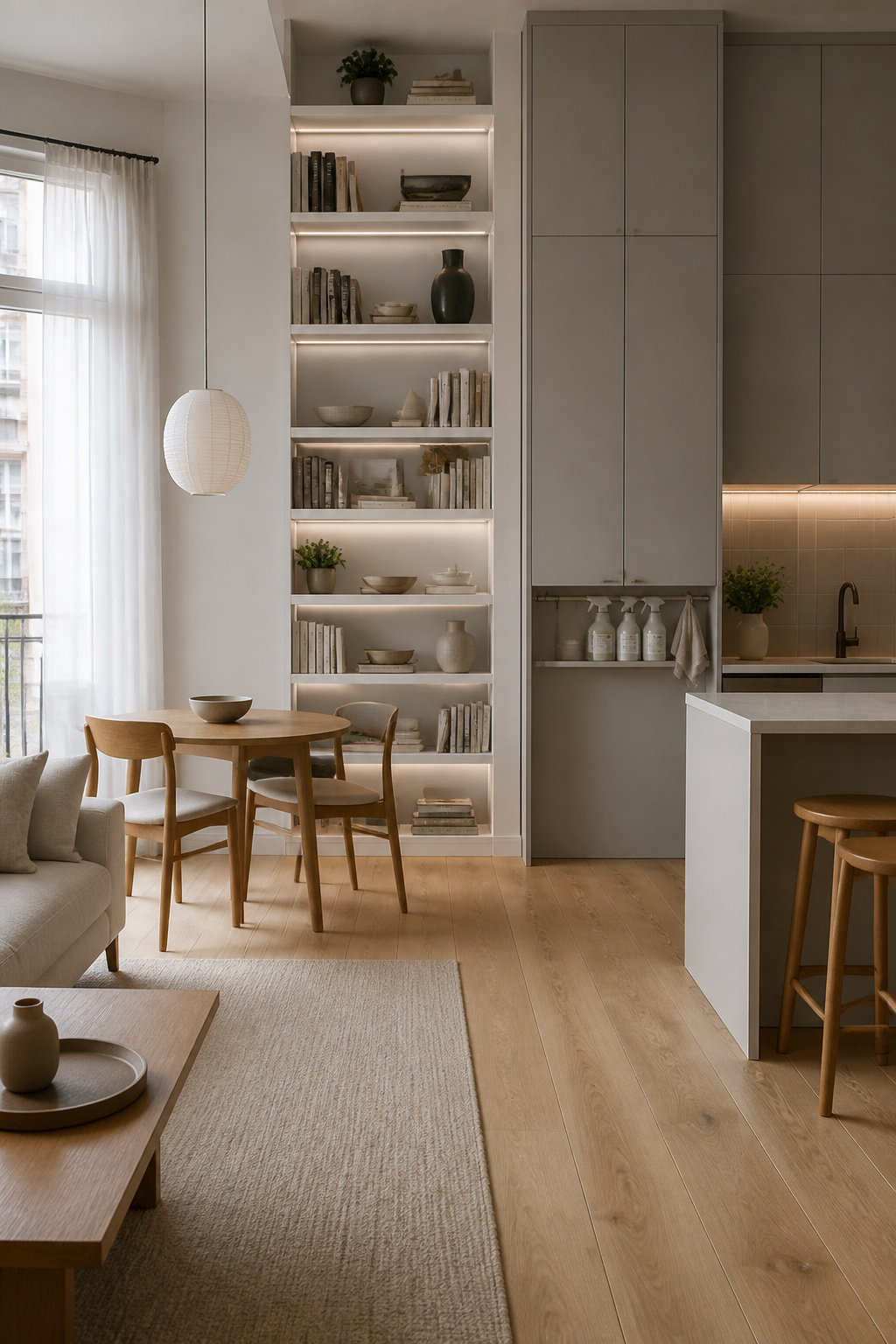
Wall-mounted shelving pulls double duty: it stores what you own and draws the eye upward so the ceiling reads higher. The trick is height. Mount shelves with the center around 57 to 60 inches from the floor, roughly average eye level, so you are not reaching overhead every time you need a book. In a narrow kitchen, open wall shelves above the counter keep dishes visible and close without swallowing the work surface.
Tall cabinets work the same vertical line. A slim bookcase beside a window frames the glass without boxing it in, and the height adds structure that a low credenza never could. The eye travels up, the room feels taller, and you gain storage that does not touch the floor.
Skip the urge to fill every shelf to the edge. Leave breathing room between objects or the wall starts to look busy, which undoes the spaciousness you just built.
3. Light Colors and Reflective Surfaces
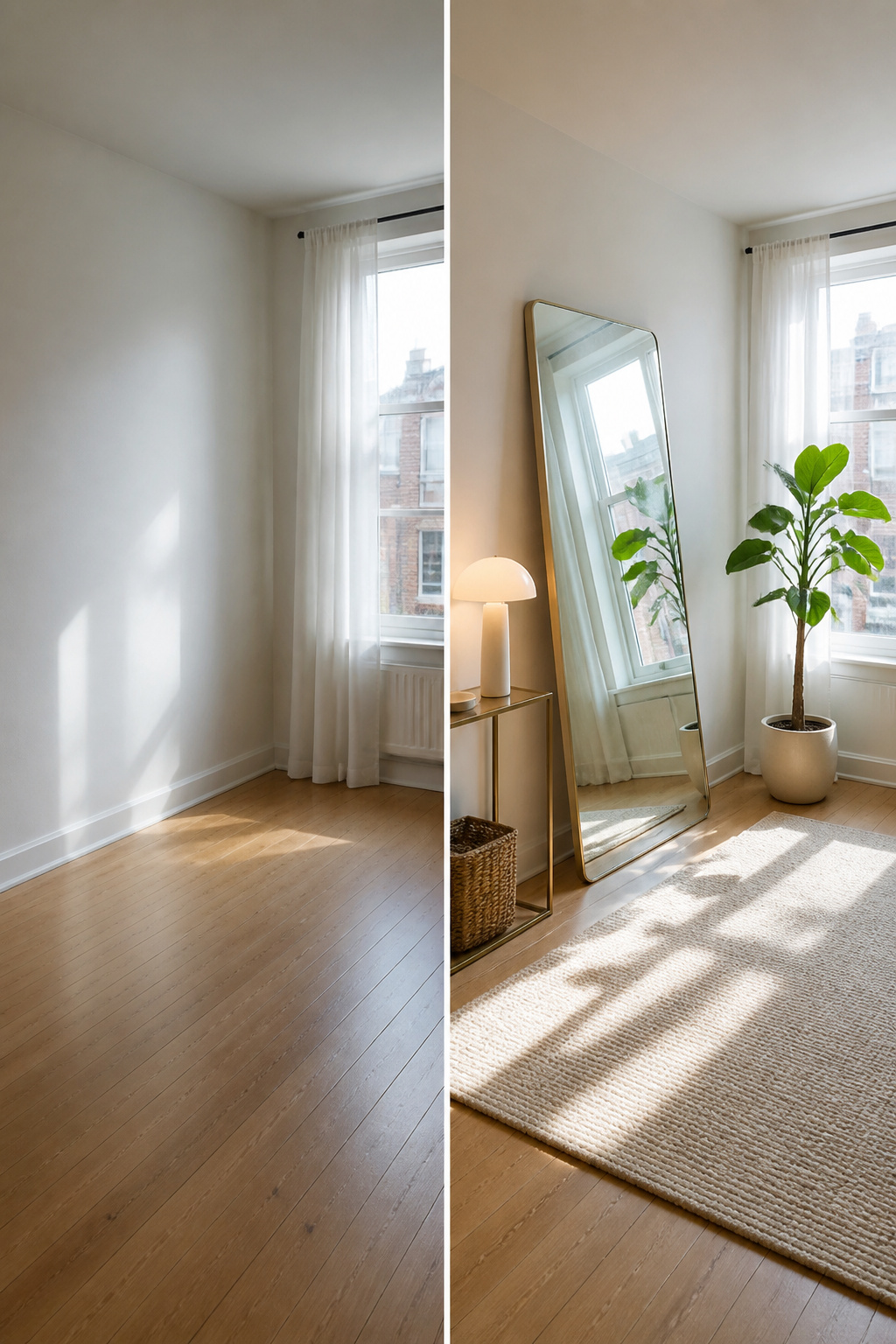
White paint on the walls and light white oak floors reflect daylight back into the room instead of swallowing it. That is the single fastest way to make a small apartment look bigger without renovating, and it costs the price of a can of paint, not a contractor.
Sheer curtains keep the treatment visually light and let natural light through. Heavy drapes block it and close the space in.
One large mirror on the biggest wall doubles perceived depth, especially placed across from a window. A full-length mirror leaning against the wall works without drilling.
After sunset, warm white bulbs keep the room open. A $20 under-cabinet lighting kit adds task-level brightness where overhead fixtures fall short, and you install it with adhesive strips in ten minutes.
4. Zoning with Rugs and Furniture
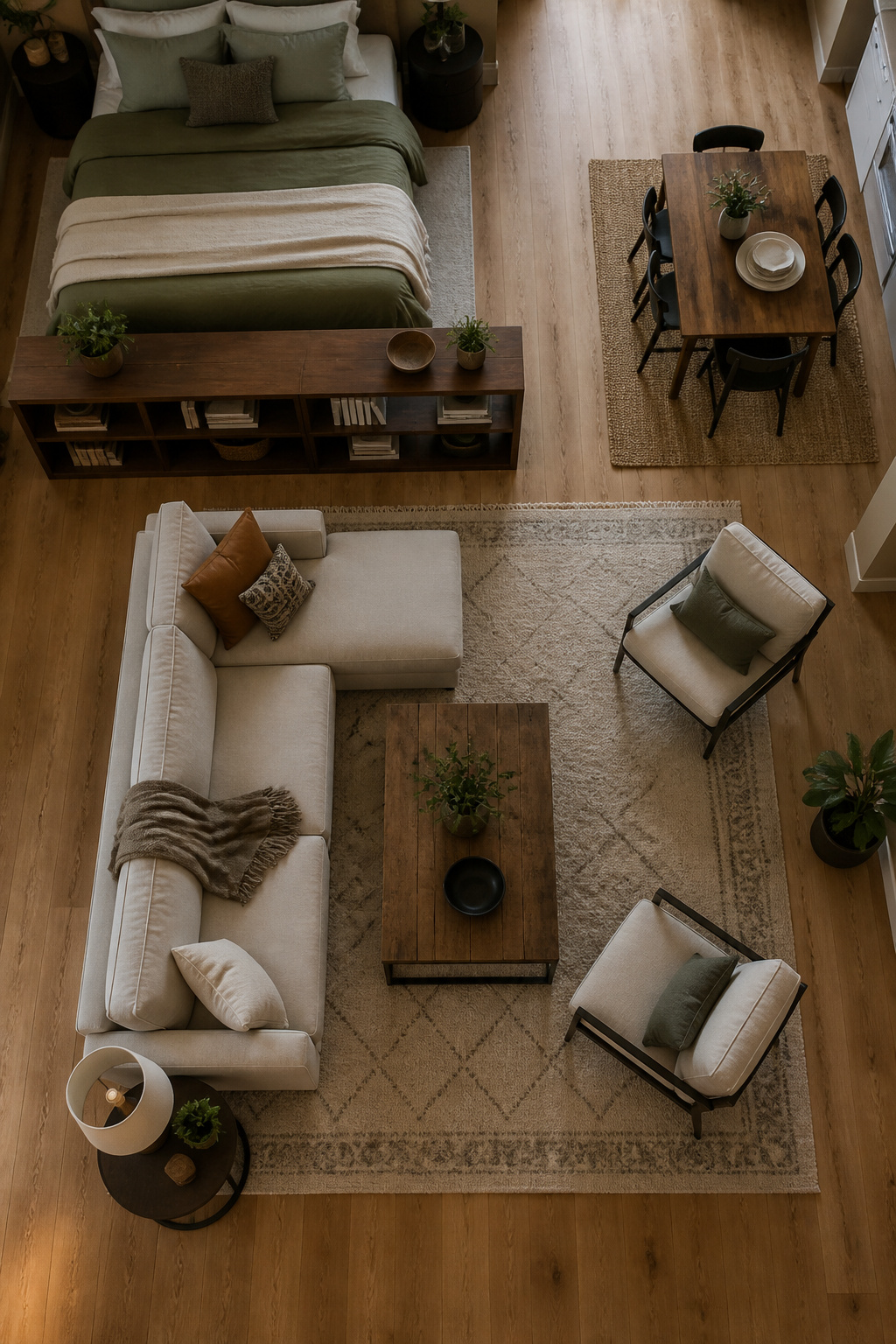
A studio apartment is one room pretending to be four, and the pretending is your job. Rugs do the heavy lifting: a rug under the front legs of your sofa group tells your eye that the living area starts here and stops there, no wall required. A smaller rug beside the bed does the same for sleep, and a third under a compact table claims dining territory from the same open floor.
Furniture placement finishes what rugs start. Float your sofa away from the wall so it faces a coffee table and chairs; angling a piece breaks the boxy feel of a rectangle room and creates natural pathways that read as separate zones. A bookshelf at the foot of your bed, trimmed to look built-in, stores on both sides and divides without blocking light.
For the moments when you need actual privacy, ceiling-mounted curtains beside the bed close off a sleeping area in something like a 150-square-foot studio. They cost less than a partition, leave no holes to patch, and draw back when you want the openness back.
Lighting seals the deal: a desk lamp in one corner, a pendant over the table, a floor lamp by the sofa. Three zones, three temperatures of light, and your studio stops feeling like one undifferentiated box.
5. Decluttering and Minimalism
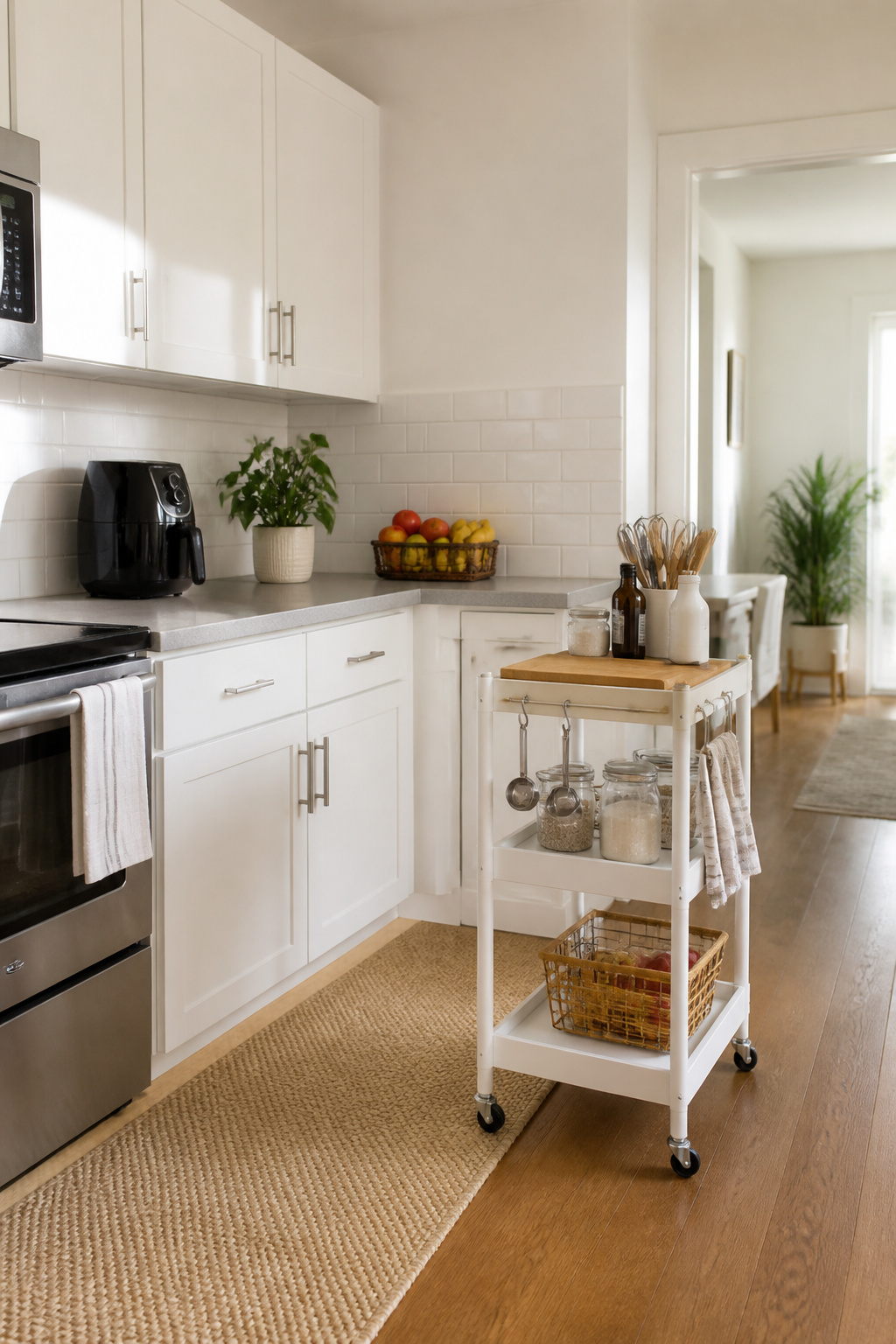
Decluttering a small apartment starts with the honest admission that most systems fall apart by March. The rolling cart that solved your kitchen overflow in January becomes the shelf where mail goes to die, and the minimalist counter you cleared in one Saturday slowly reclaims its territory in loose change and coffee mugs. What works better is treating organization as a seasonal project, not a permanent state.
Budget one weekend each season to walk through with a laundry basket and the rule that anything without a current job leaves. The three-tier cart that costs around $25 is worth keeping precisely because it moves; when it stops moving, that is your signal that it has accumulated too much purpose and needs clearing. Vertical storage and hidden compartments help only if you open them with intention rather than treating them as black holes for the stuff you feel guilty throwing out.
The gap between wanting less and living with less is where most advice stops short. You do not need a capsule wardrobe or a meditation practice. You need a bin, a recurring calendar reminder, and the willingness to admit that the storage ottoman full of things you have not touched in two years is just a more comfortable landfill.
6. Smart Storage Solutions
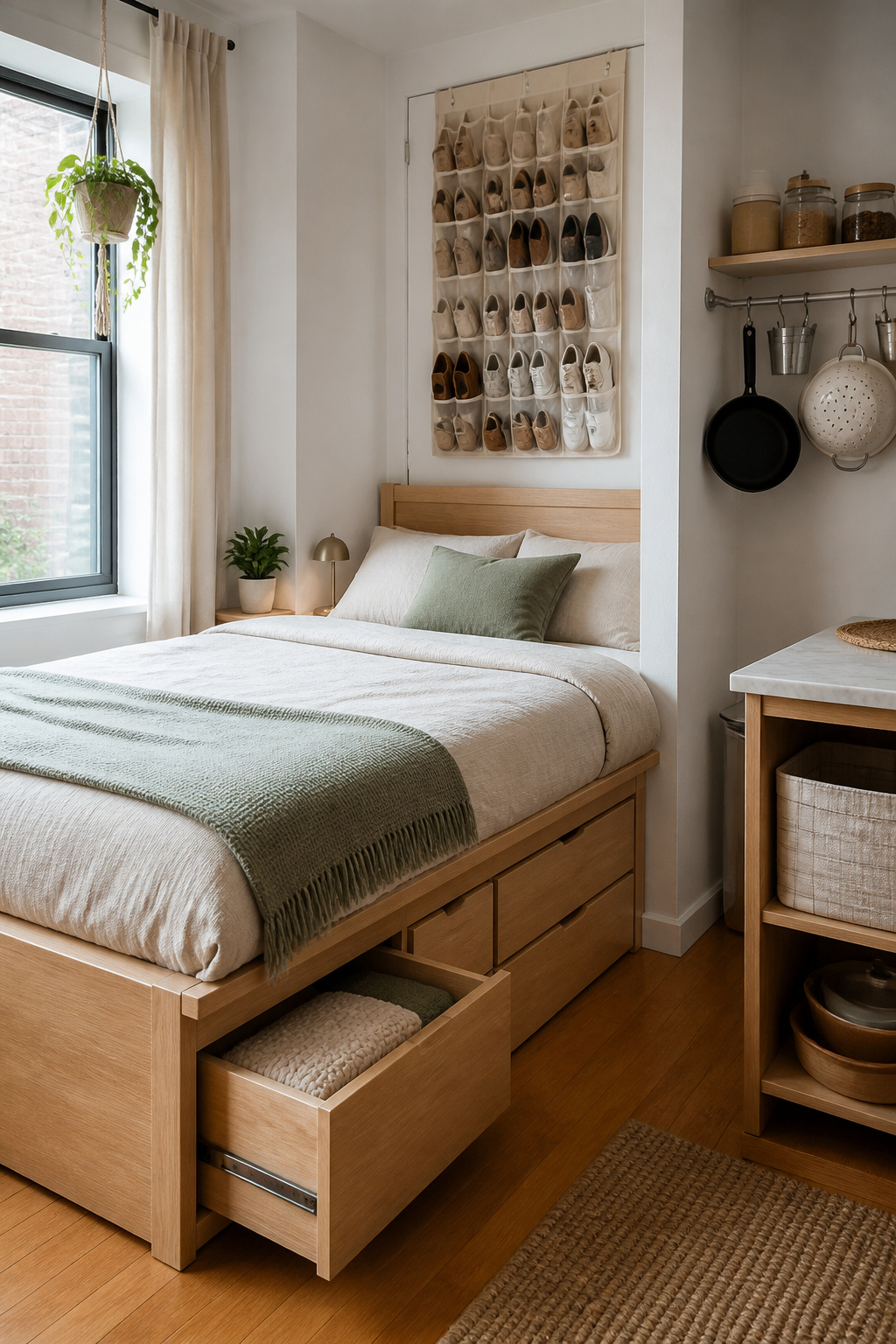
The space under a queen bed covers roughly 30 square feet, about the same footprint as a small closet, and most renters leave it empty. A storage bed frame with drawers turns that volume into organized space for off-season clothes or spare linens. If you already own a frame, bed risers run about $15 and lift it high enough to slide rolling bins underneath, no tools needed.
For walls you cannot drill, over-door organizers, tension rods, and freestanding shelves carry the load. A standard over-door organizer alone holds around 20 pairs of shoes or a full pantry’s overflow, and everything moves with you when the lease ends. Those five no-drill options, rolling under-bed bins included, install in minutes and leave no trace.
Freestanding shelves work anywhere the floor allows, while tension rods squeeze storage into the gaps between walls and furniture. Custom built-ins are the higher-effort path, wall-to-wall in a nook or wrapped over a doorway, but they demand permission from a landlord and a budget that survives past move-out day.
7. Layered Lighting
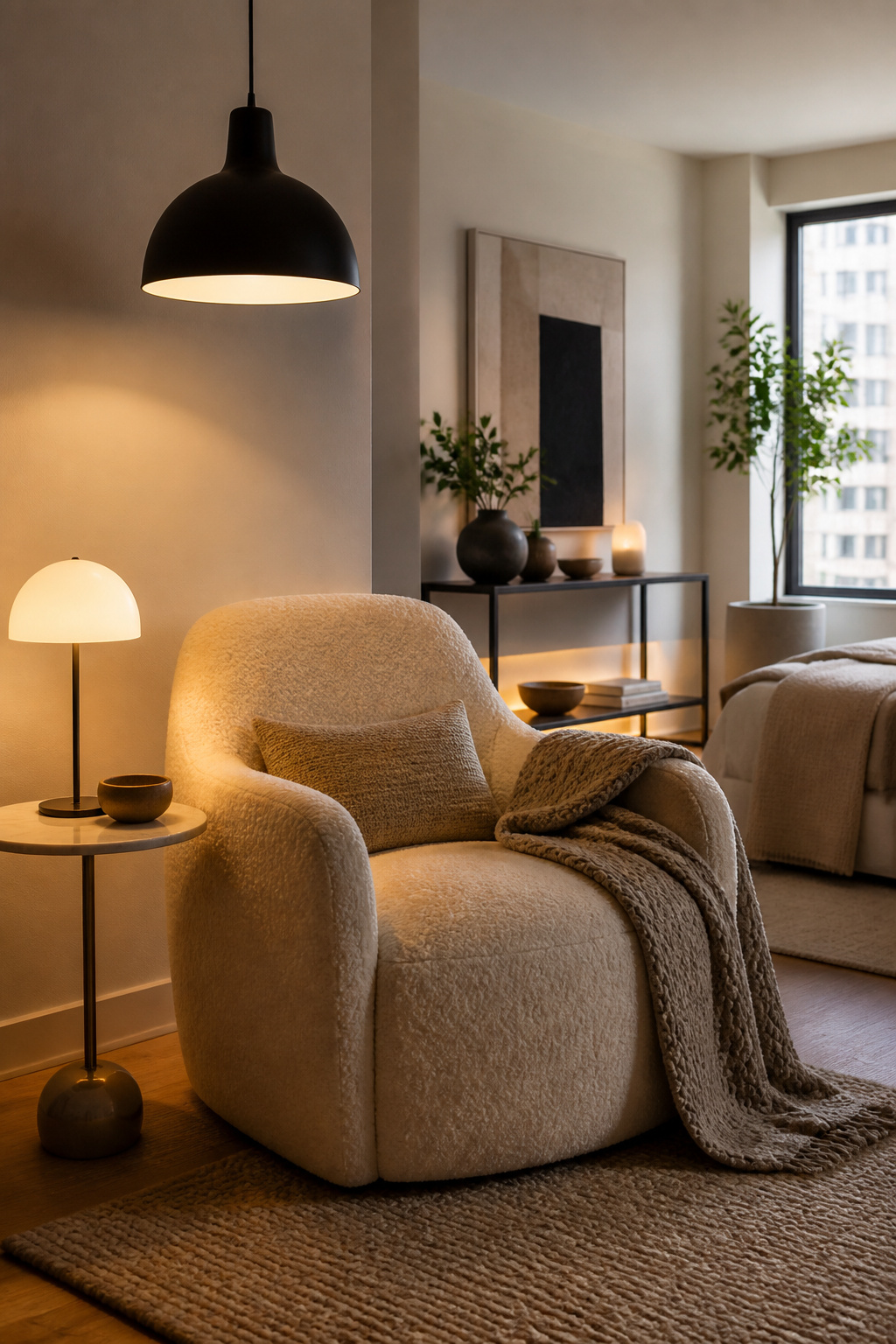
One overhead fixture flattens a room and makes it read smaller than it is. You want three sources at different heights instead: overhead for the wash of light, mid-level from a table lamp or plug-in sconce, and low from a floor lamp or LED strip tucked behind furniture. The layered shadows add depth, and depth is what registers as space. Warm bulbs around 2700K make a room, and everyone standing in it, look better.
In a studio with no walls to separate sleeping from living, those three levels do the zoning for you. A pendant or ceiling fixture over the sofa area, a table lamp beside the bed, and a low strip behind the headboard carve out distinct territories without a single divider.
The cheapest of the three to add is the low layer. Stick-on LED strips or rechargeable puck lights under kitchen cabinets install in about twenty minutes and cost around $20. They turn a dark counter into something that looks designed instead of cramped, and they are fully removable, so the upgrade travels with you when you leave.
8. Furniture with Exposed Legs
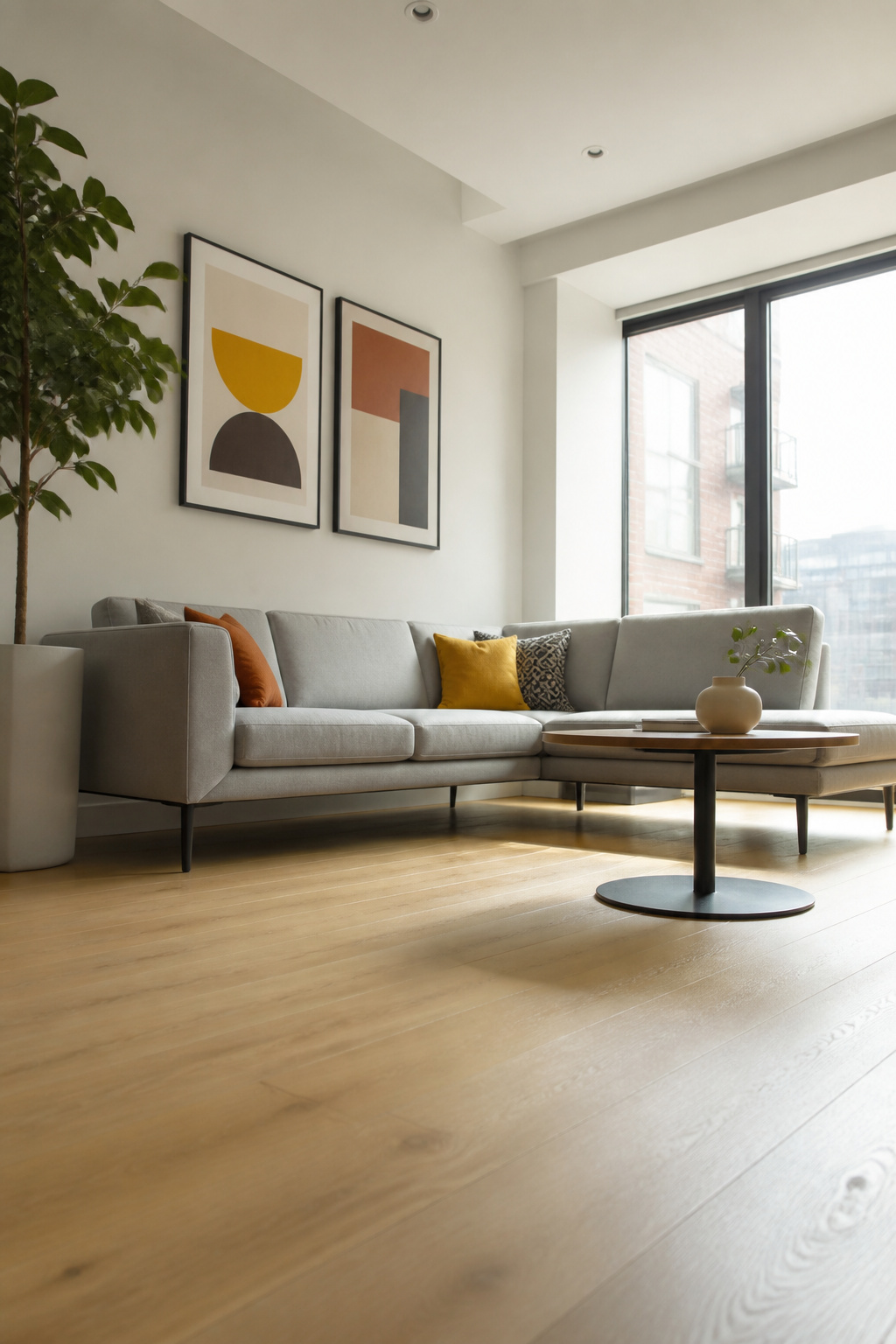
A sofa that sits flat on the floor acts like a visual anchor. The room feels heavier than it is. Furniture with exposed legs lets your eye travel underneath, which reads as open floor even when the square footage has not changed.
Look for a leggy sofa, a bed with clearance underneath, a dresser raised on feet. The gap does not need to be dramatic; four to six inches is enough for the effect. Avoid skirted upholstery or block bases that erase that strip of visible floor. The same rule applies to tables: a round top on a slim pedestal wins over a solid rectangular box in tight quarters, since you lose the corners you would otherwise walk around.
This is one of four moves that shift how big the room reads without moving a wall. Pair it with a large mirror hung across from a window and a single light wall color that carries onto the ceiling. The furniture does the work of expansion, not your security deposit.
Natural Light and Sheer Curtains
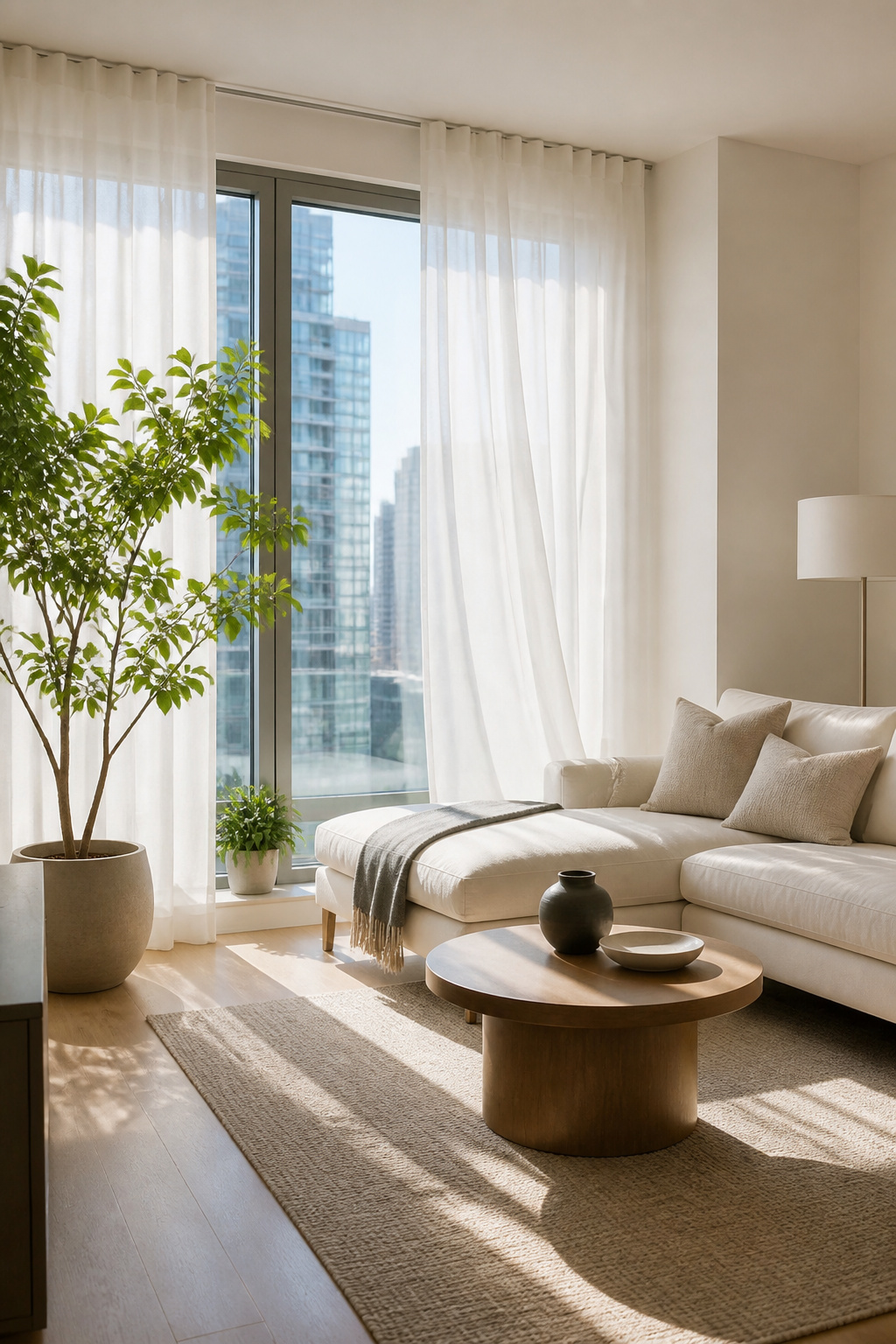
Where you hang the curtain rod matters more than the fabric itself. Mount it 2 to 4 inches below the ceiling and run the panel straight to the floor. Your eye follows the line upward, the ceiling reads taller, and the window looks close to double its real width.
Sheer fabric is the right call here. It filters light without blocking it, and the visual weight stays low. Heavy blackout drapes on the same long run do the opposite; they turn the room dark and dense, more bunker than apartment.
If you already went with light walls and cream or white oak furniture, this is where that choice pays off. The sheers bounce daylight across those surfaces instead of trapping it at the window. Skip dark liners entirely, even as backing. They cancel out the effect you just built, and in a small space you feel the difference immediately.
Neutral Color Palette with Pops of Color
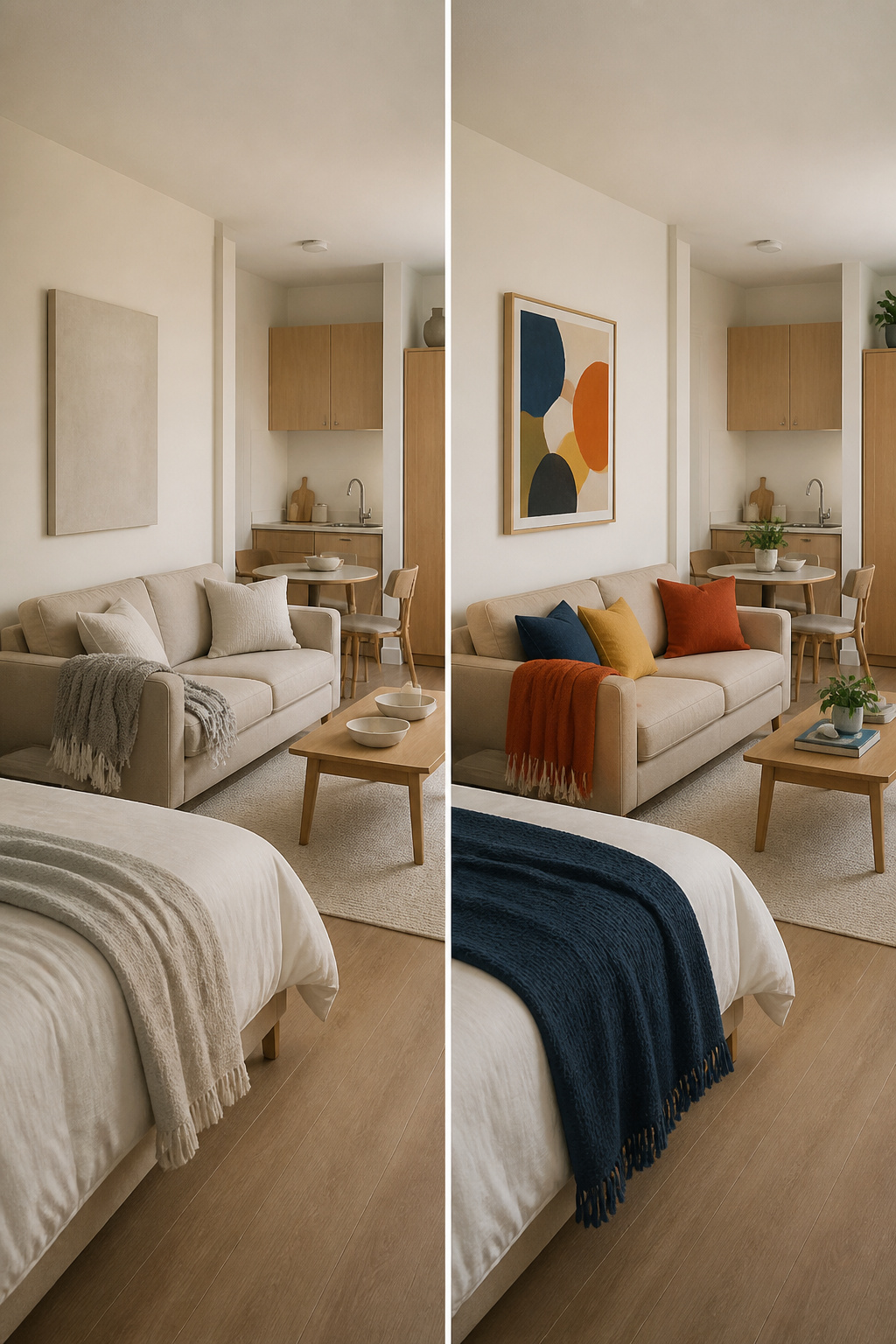
A neutral base of cream walls, white oak furniture, and beige bedding gives a small apartment room to breathe. Lighter colors reflect more light, which makes the walls feel farther apart than they are. The trick is keeping the big pieces quiet so the space does not lock into one mood.
Add color through accessories that move, not through furniture that stays. Throw pillows, a woven throw, a small rug, or a piece of wall art can shift the whole feeling of a room without adding clutter. In a studio, that matters because one bold sofa fabric can dominate everything in view.
Rotate those accents with the seasons or whenever the space starts to feel stale. A warm terracotta pillow in October, a cooler blue-gray in January, and the room resets without a trip to the furniture store. That same impulse, the seasonal refresh, is what keeps the decluttering cycle honest: new color in, old color out, nothing accumulating in corners. Build the collection slowly. A few well-chosen objects usually look better than a rushed set that never quite matches.
Furniture Arrangement Tricks

Pulling furniture off the wall feels wrong until you see it work. In a 500-square-foot one-bedroom, floating your sofa six to twelve inches out adds depth the eye reads as extra space. Furniture showrooms do this deliberately; the gap creates intention rather than a hollow ring of pieces pushed flat.
The trick collapses in rooms narrower than ten feet. There, the sofa stays on the longest wall and you float smaller pieces instead. A dresser floated behind a bed carves a sleeping nook from open floor. An angled banquette replacing a straight sofa lets you pull up a table and gain a dining spot without adding furniture.
Under 300 square feet, every angle matters more. Wall-mounted desks and shelves free floor space entirely, which reads as square footage you do not actually have. The judgment call: pull out when the gap improves traffic flow, push flat when walking space is already tight.
Plants and Personal Items Without Clutter
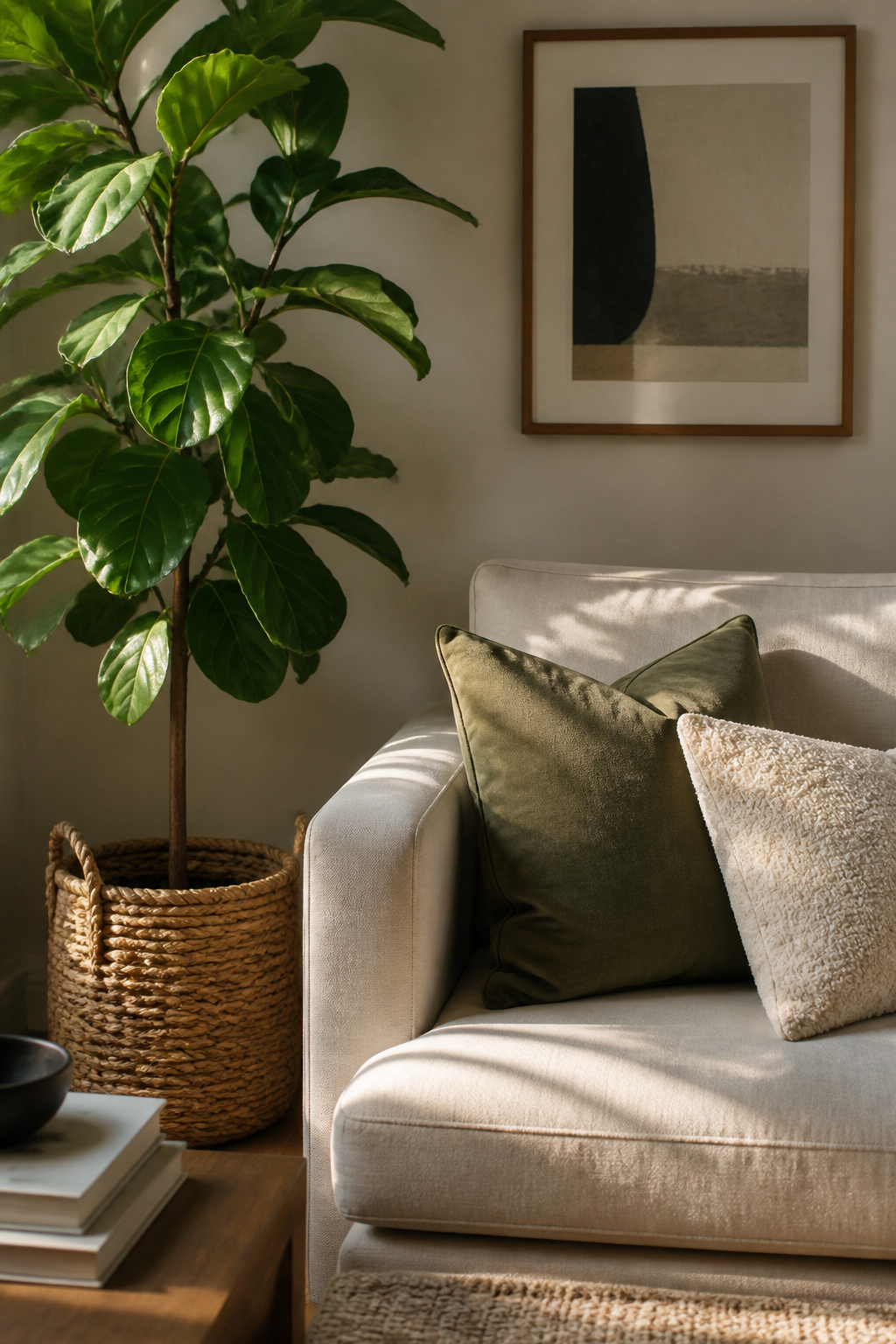
Small spaces fall apart when every surface competes for attention. Ten small prints, six little plants, and a shelf of trinkets read as noise. One large statement per room beats twenty small ones. A single dramatic floor plant or one bold piece of art over the sofa lets everything else settle into a supporting role.
For greenery, scale works the same way. A tall fiddle-leaf fig or a sprawling pothos draws the eye upward and fills a corner without scattering clutter across every windowsill. Snake plants handle low light and low effort if you’re prone to forgetting water.
Personal items need the same discipline. A couple of framed thrifted pieces, a stack of books, and one woven basket warm a room without crowding it. Odd-number groupings look more natural than even pairs, and rotating a pillow or a print seasonally keeps the space fresh without new furniture. The main pieces, sofa, rug, lighting, do the heavy work, so accessories can be where you save. A room built on those three strong foundations handles affordable accents easily.
Frequently Asked Questions
How do you make a small apartment look bigger without renovating?
Paint walls and ceiling the same light color, hang one large mirror across from a window, mount curtain rods 2 to 4 inches below the ceiling, and choose furniture with exposed legs. These four moves shift perception without touching a wall. The mirror alone doubles perceived depth, while the raised curtain line draws eyes upward so the ceiling reads taller.
What is the best way to add storage to a small apartment without drilling?
Use over-door organizers, tension rods, freestanding shelves, rolling under-bed bins, and adhesive lighting rails. A standard over-door organizer holds about 20 pairs of shoes or a full pantry overflow, and everything moves with you when the lease ends. Tension rods wedged inside closets or between cabinet sides work for cleaning bottles, extra hangers, or hiding clutter with a curtain.
How do you divide a studio apartment into zones?
Rugs, lighting, and furniture placement do the work of walls. One rug under the seating area and another under the bed read as separate rooms; a bookshelf placed perpendicular to a wall stores on both sides and divides without blocking light. Three light sources at different heights, a desk lamp, a pendant, a floor lamp, seal the separation by giving each zone its own temperature.
What furniture works best in a small apartment?
Pieces that handle two jobs minimum: sofa beds, storage ottomans, daybeds, bed frames with drawers, drop-leaf tables, and slim rolling carts. Round tables beat rectangular ones in tight layouts because you lose the corners you would otherwise walk around. In studios under 300 sq ft, a storage ottoman as coffee table plus linen closet beats adding even one more footprint.
How much does it cost to maximize a small apartment?
Most changes cost little or nothing. Layout shifts like floating furniture or angling a piece are free. Under-cabinet LED kits run about $20, bed risers about $15, rolling carts around $25, and cabinet racks under $40. You can work through the full list of upgrades for under $200 total, with the biggest expense usually being a can of paint.