
A console table behind a couch is a narrow surface that turns the dead zone between sofa and wall into usable space, but only if you get the proportions right. A table deeper than 20 inches blocks traffic, and one shorter than two-thirds your sofa length looks like a raft floating behind a ship. On an 84-inch couch, that means 56 inches minimum, with the top sitting level to the back frame or an inch below it.
Getting the Size Right
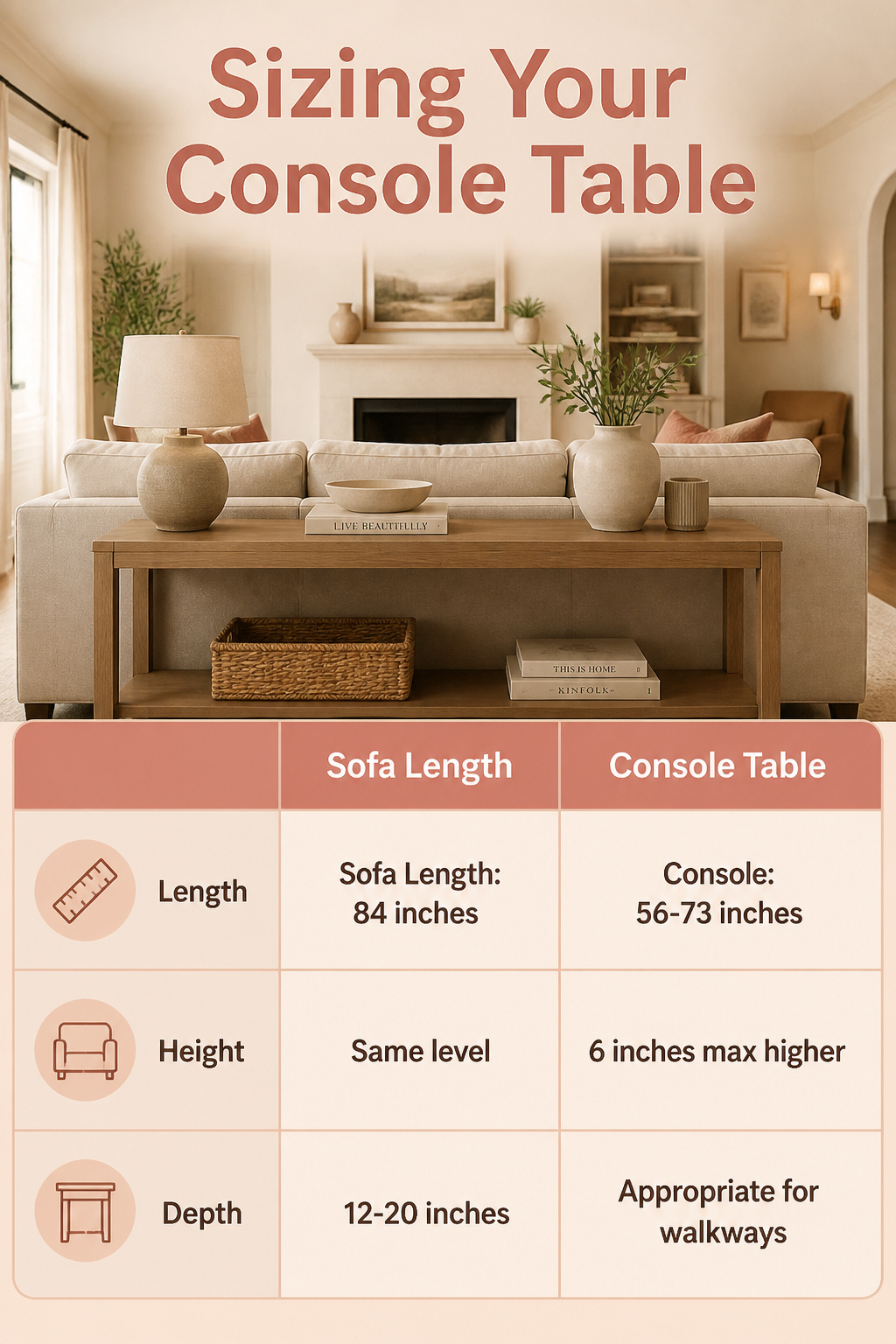
A console table that is too short makes your sofa look like it is floating, and one that is too tall blocks the sight line across the room. Aim for a table that is at least two-thirds the length of your sofa so the two pieces read as one layer instead of separate objects. On an 84-inch couch, that means 56 inches minimum, with an upper limit around 73 inches to keep a few inches of breathing room at each end.
Height is where you protect the function of the space. The table should sit at the same level as the sofa back or an inch or two below it, and never more than about 6 inches higher. Go above that and you are bumping your elbows every time you lean back or reach for a drink.
Depth matters for the walkway you are leaving behind the sofa. A 12- to 20-inch depth is the workable range. At 12 inches you still have room for a lamp and a shallow tray; at 20 inches you are pushing into traffic paths in most living rooms. If you cannot find one long table in your budget, two smaller tables with flat sides pushed together will read as a single piece without the custom price tag.
1. Symmetrical Styling
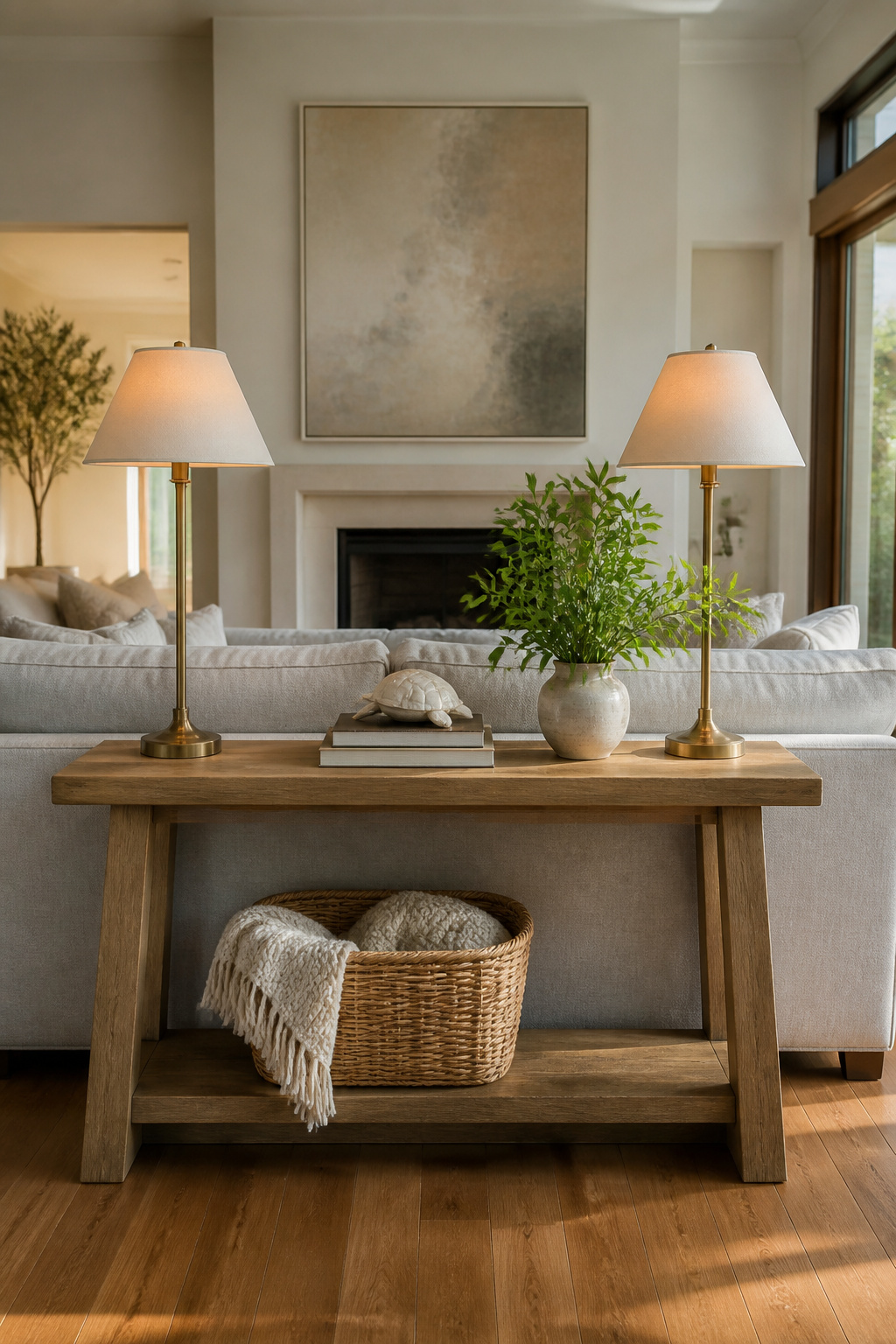
The most reliable console table behind couch ideas still start with two matching lamps on either end, a short stack of books dead center, and one object on top of those books to anchor the whole line. This is the setup you reach for when the back of your sofa faces a room you actually live in, not a wall you hide against something else.
It works because the lamps give you light where overhead fixtures miss, and the matching shapes do the visual heavy lifting so the middle can stay simple. A brass turtle, a small bowl, a single ceramic form, anything with a little organic weight keeps the arrangement from reading like a hotel lobby. The books add height variation without introducing a second competing shape.
The one risk is rigidity. If everything above the table surface mirrors too perfectly, the effect goes flat. The fix sits below: a basket on one side with a blanket trailing out, a plant on the other, something that breaks the line without breaking the calm. This is the formula that survives a Saturday afternoon and a couple hundred dollars, and it is the one you will actually turn on every evening.
2. Asymmetrical Styling
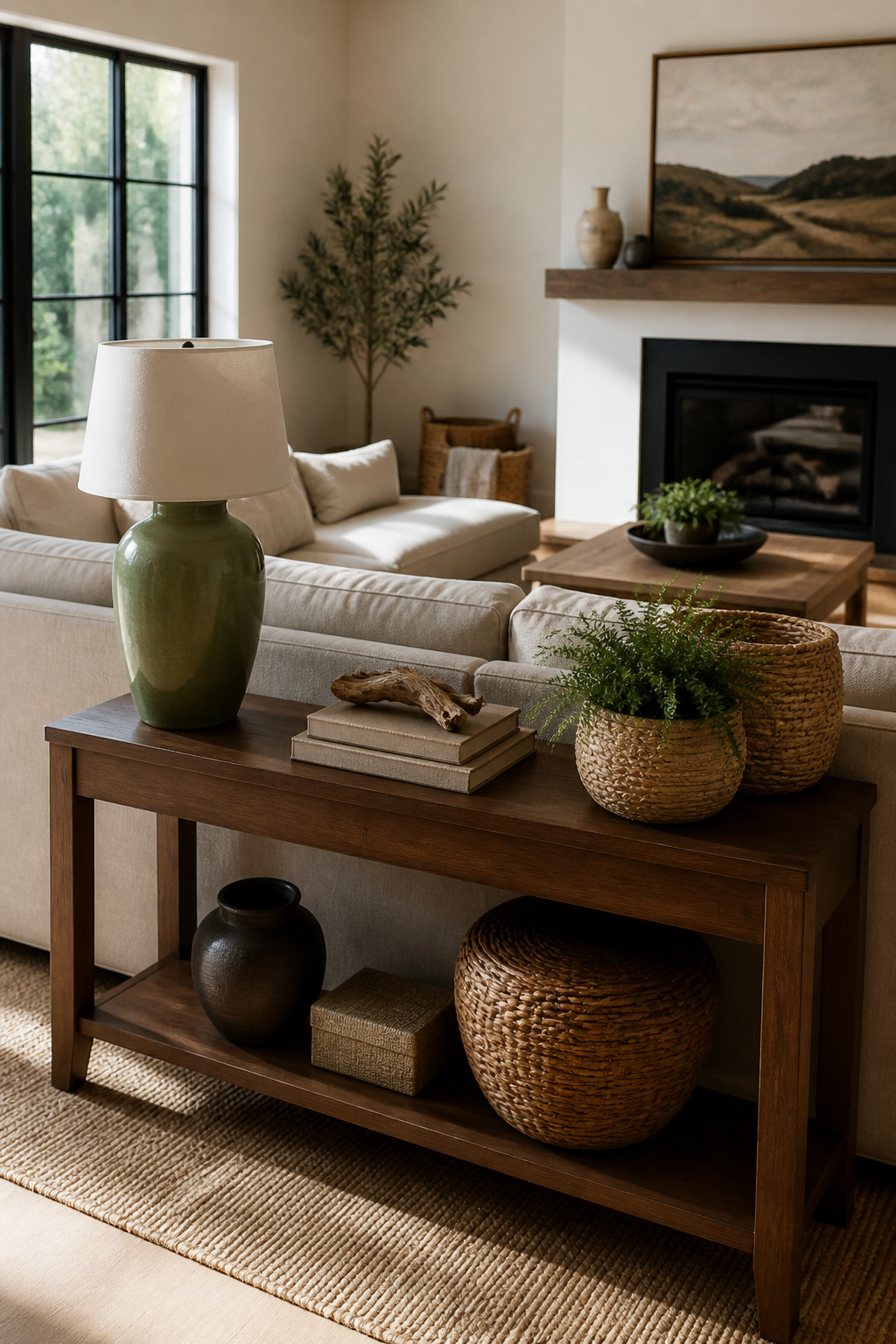
Asymmetrical styling works best when you commit to one anchor piece and build outward. Start with a single lamp on one end of the console. It sets the height and gives you somewhere for the eye to land first. On the opposite side, stack two baskets of different sizes, one tucked slightly behind the other. This keeps storage within reach without mirroring the lamp’s visual weight.
Fill the middle gap with three to five books, laid flat rather than upright, and top them with something soft and irregular. A piece of driftwood, a small potted fern, or a rounded ceramic form all do the same job: they break up the straight lines of the table and the couch back. The mix only looks intentional if you vary texture at every level — smooth ceramic against woven basket, matte paper against glossy leaves.
The mistake most people make is treating asymmetrical as another word for scattered. What saves this arrangement is the triangle of height: the lamp tall, the stacked baskets medium, the low horizontal books and organic shape in between. Step back and that triangle should read clearly, even though nothing matches. If one side feels heavier, move the lamp closer to center or add a second small object to the lighter side. Trust the adjustment more than the first placement.
3. Minimalist Styling
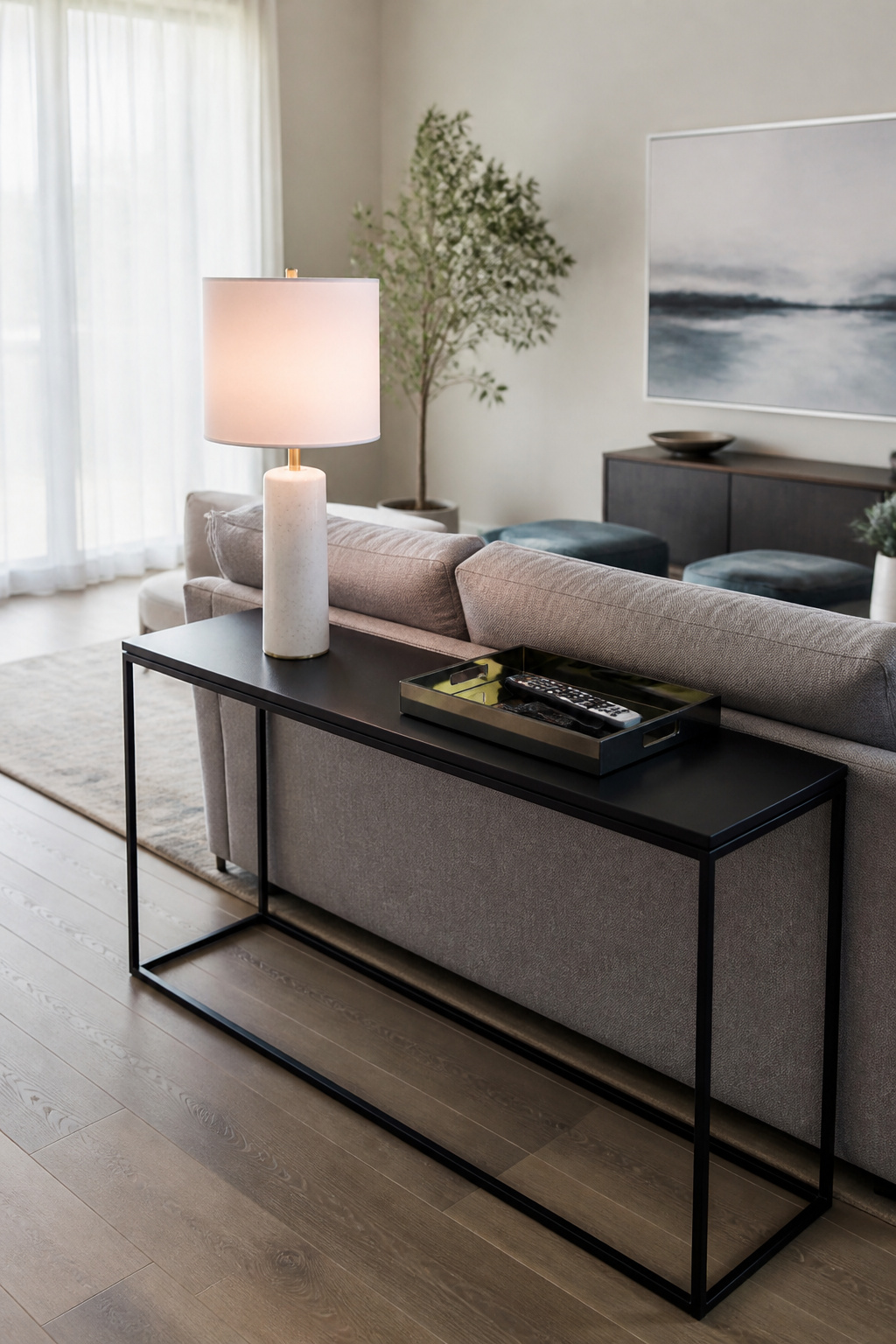
A single lamp and a small tray for remotes is all you need on a console table behind a couch. The discipline is in stopping before the surface feels full. In a small living room or a space with a lot of visual noise from a TV wall, this restraint matters more than the objects themselves. The lamp gives you height and a warm pool of light for reading, and the tray keeps the one thing you actually use, the remotes, from sliding around. Everything else is negative space, which lets the wall behind the table breathe and makes the room feel larger than it is.
The hardest part is leaving the rest of the surface empty. Most people add a plant, a stack of books, a candle, and suddenly the table is a clutter magnet. If the room is already busy with patterned upholstery, open shelving, or kids’ toys in sight, that spareness is doing work for you. For renters who move often, this approach also travels well. You are not investing in a curated shelf of objects that may not fit the next apartment’s proportions or light.
4. Seasonal Styling
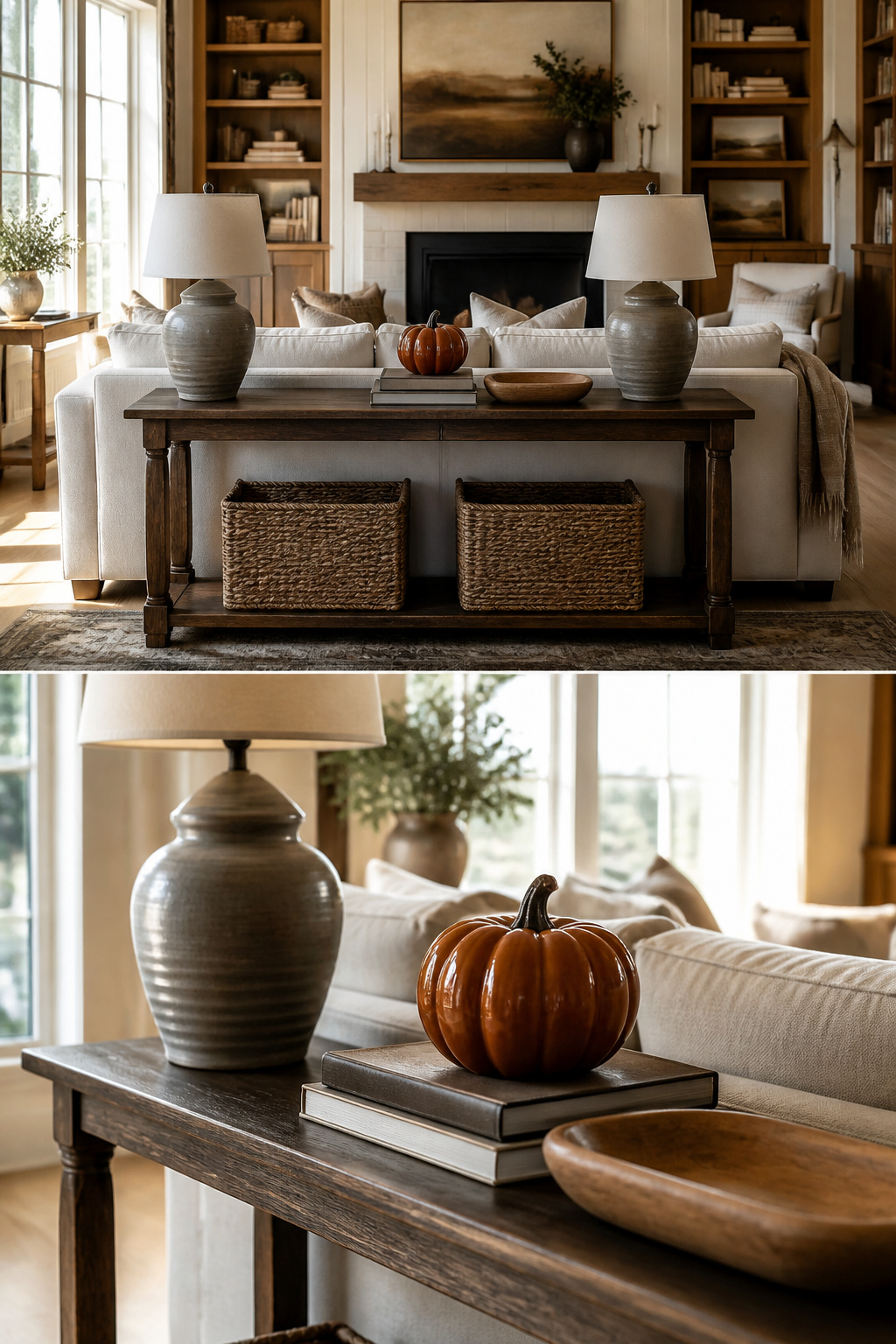
A console table behind the couch is the easiest place in the living room to swap out a few objects and call it a new season. You do not need a second table or a storage closet full of props. One ceramic pumpkin in October, a bowl of pinecones after Thanksgiving, a few clipped branches forced in a jar by February, and the same surface reads completely different. The sources rarely spell this out, which is strange, because it costs almost nothing and takes ten minutes.
Keep the base layer neutral: a pair of lamps, a stack of books, a tray. Against that, one seasonal piece does the work. In spring, a single burgundy hydrangea bloom in a pretty vase is enough; in summer, swap in yard clippings or a few faux stems if you travel weekends. The greenery or floral element finishes the arrangement without asking you to rearrange furniture or hang anything new. A tall single vase keeps it clean, or group smaller vessels if you already own a few that share a color. The mistake is treating the console like a mantel that needs a full rebuild each season. One change, maybe two, and you are done.
5. Functional Decor
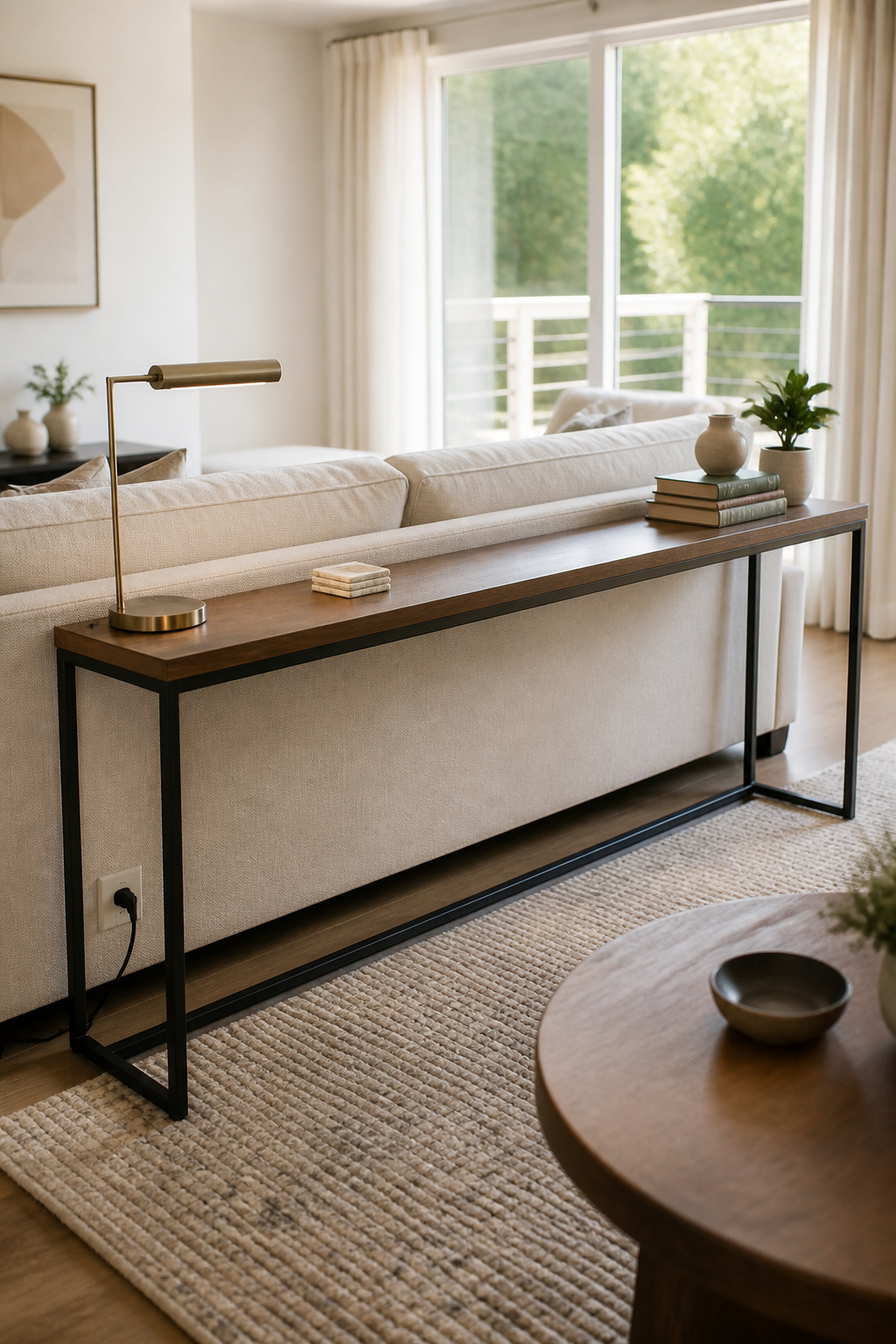
A console table behind the couch earns its keep only if it handles daily life without looking like a junk drawer. The tension is real: you want a lamp that reads well from the dining area, but you also need somewhere to set a drink when the coffee table is three strides away. The compromise is giving each function its own territory.
Run coasters in a small stack at one end, a deliberate signal that wet glasses belong there and not on the wood finish you spent Saturday oiling. Pile reading on the other end, two or three books deep, spines facing the room so the stack reads as color block rather than clutter. A slim task lamp between them handles light without the bulk of a table lamp, though a pair of candlestick lamps wins if you plug both into a behind-sofa table that hides its own outlets. The global multifunctional furniture market hit $15.9 billion in 2024 for exactly this reason: buyers want surfaces that carry lamps, decor, and daily essentials without looking like afterthoughts.
Charging stations are where most setups fail. A phone cable snaking across the tabletop undoes every styling choice you made. Tuck a slim power strip behind the table, feed cords through the back rail, and accept that one visible cable to the wall beats three visible cables to three devices. The table works hardest when it looks like it works least.
6. Storage Solutions
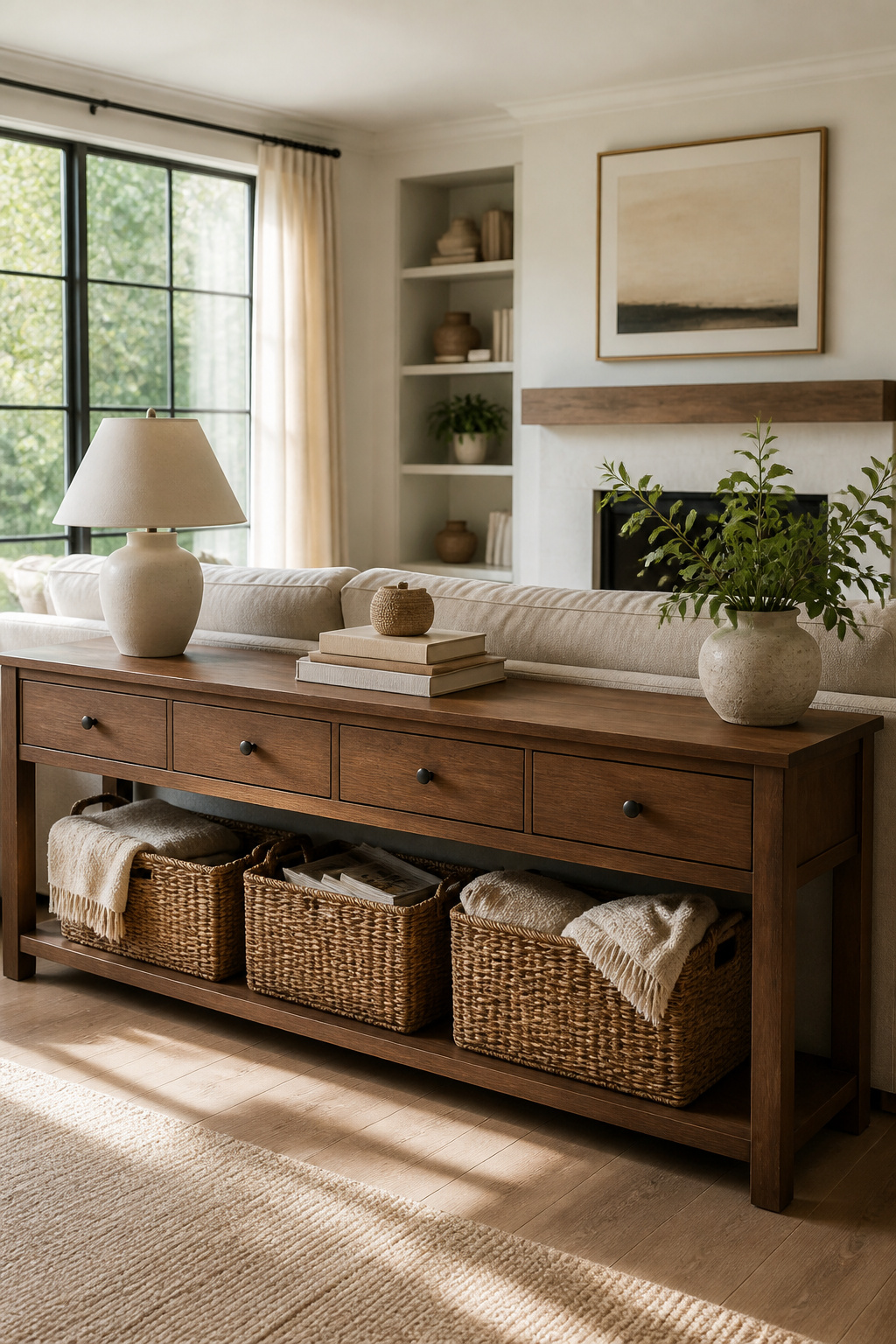
Open storage and closed storage read as two completely different moods behind a couch. A lower shelf stacked with woven baskets signals lived-in warmth, while sliding barn doors or drawers keep the visual noise to zero. The weight limit matters more than you think: a console tabletop rated for 180 lbs can handle a lamp and a stack of books, but if you are loading the lower shelf with heavy board games or pottery, check whether the whole unit lists a separate capacity for shelves, not just the top.
Drawers work best for the small chaos of daily life: controllers, remotes, chargers. A console with side cabinets plus a center cubby gives you both options, and a three-level adjustable shelf lets you reconfigure as the clutter changes. Open shelves demand tighter editing, since every blanket or toy stays visible, but they win for speed: you can grab a throw mid-movie without standing up.
Access from the back of a sofa is already awkward. If the table sits flush against the cushions, sliding doors beat hinged doors, and baskets you can pull from the side beat ones you have to lift over the top. For floating sofas in open plans, this matters double: the storage faces the room, so closed storage keeps the dining side looking intentional rather than accidental.
Two Tables as One
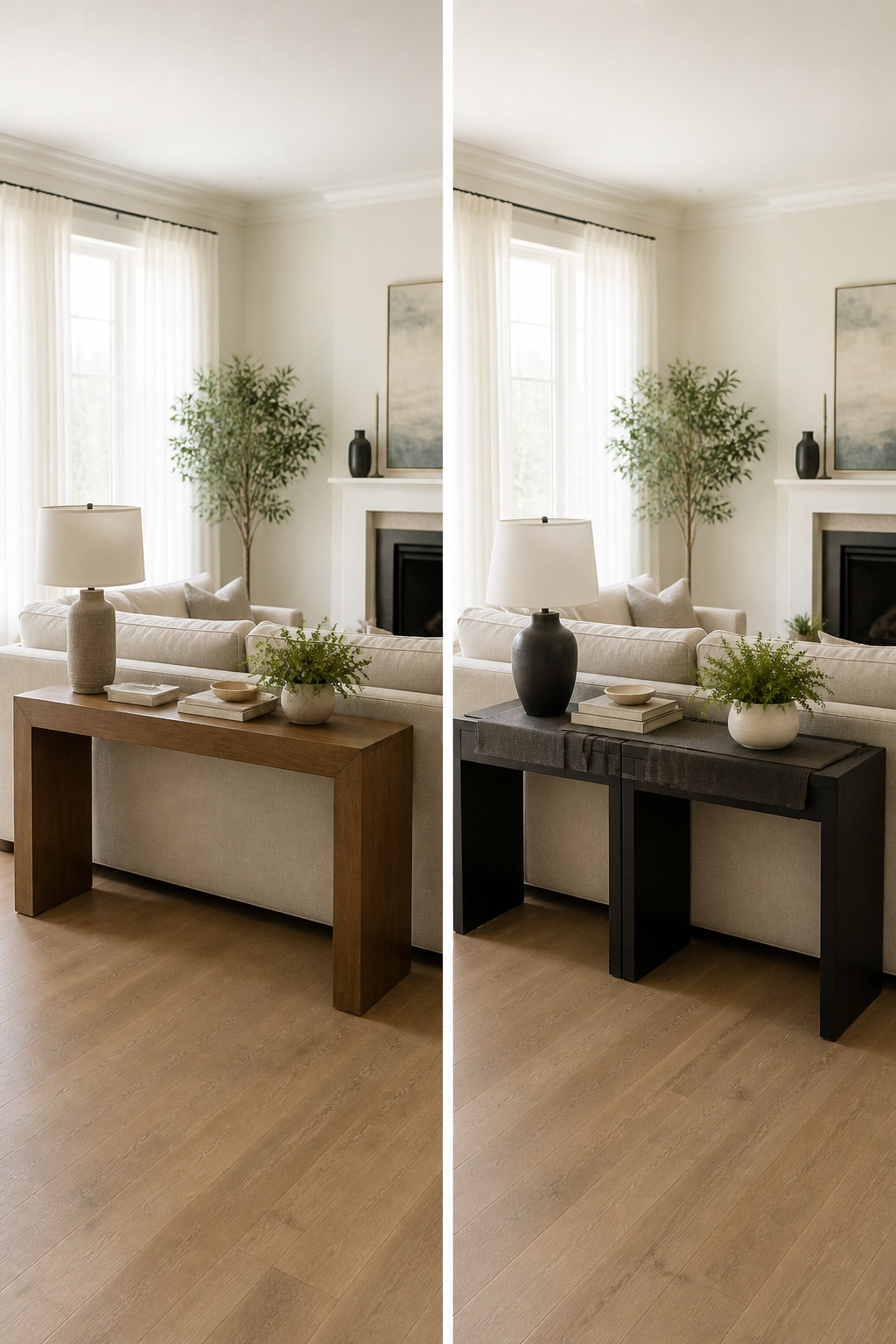
Two smaller tables pushed together can solve the problem a single long console table creates. Long sofas often run 84 inches or more, and a console behind one should stretch at least two-thirds that length to look balanced. The right table at that size may not fit through your door, your budget, or your car.
The trick is in the sides you cannot see once they meet. Tables with flat side panels sit almost flush, while turned legs or tabletops that overhang the frame leave a visible gap you will notice every time you walk past. Push the pair tight and check the seam from sofa height, not standing over it. A dark mat or runner laid across both tops buys you a little forgiveness if the join is not perfect.
Inherited pieces you already own, a pair found secondhand, or two budget buys split across paychecks all work here. Keep the heights within an inch of each other or the low one reads as a mistake. Depth matters too: stay between 12 and 20 inches front to back so your walkway stays open.
What to Avoid
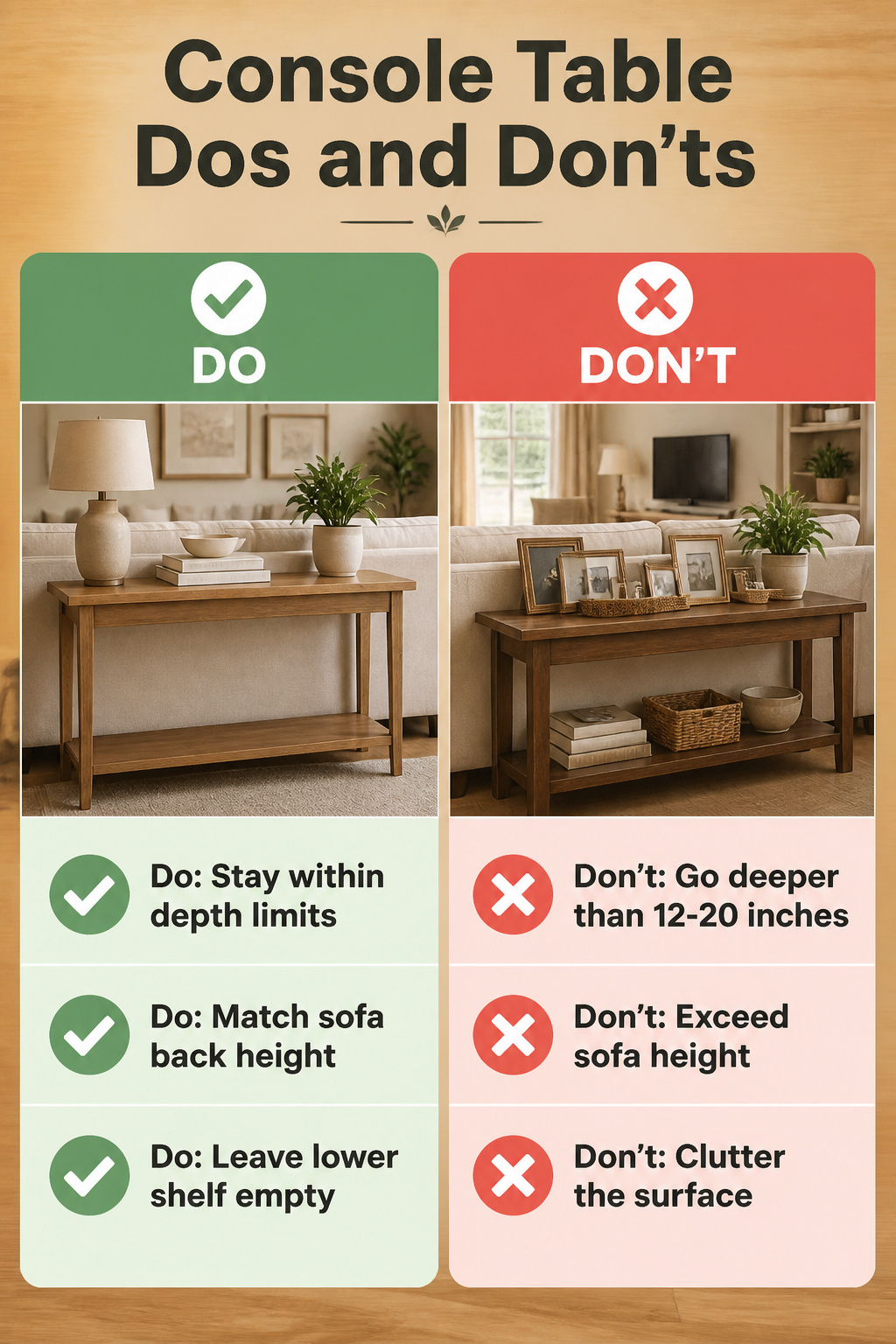
A console table behind the couch can turn a dead zone into useful space, but the wrong proportions make it a daily nuisance. A table deeper than 12 to 20 inches will jut into your walkway and catch hips every time someone passes behind the sofa. Depth is where most people overreach: they want surface area and end up with an obstacle.
Height is the second place a setup fails. The table should sit at or slightly below the back frame of the sofa, never rising above the cushions where it becomes a hard shelf against your shoulders. Go lower rather than higher if you must choose. As for length, a table shorter than two-thirds the sofa length looks like a mistake, a small raft floating behind a long couch. On an 84-inch sofa, that means 56 inches minimum.
The last trap is treating every inch as storage. A console lined edge to edge with frames, plants, and trays reads as clutter from across the room. Leave the lower shelf empty if it sits in sight. The breathing room costs nothing and makes what you do place there matter more.
Frequently Asked Questions
How long should a sofa table be?
A console table behind the couch should be at least two-thirds the length of your sofa. On an 84-inch couch, that means 56 inches minimum, with an upper limit around 73 inches to leave a few inches of breathing room at each end. A table shorter than that looks like a small raft floating behind a long couch.
What height should a table behind the couch be?
The table should sit at the same level as the sofa back or an inch or two below it, and never more than about 6 inches higher. Go above that and you will bump your elbows when you lean back or reach for a drink. Go lower rather than higher if you must choose.
Can I use two tables instead of one?
Yes. Two smaller tables with flat sides pushed together will read as a single piece without the custom price tag for a long console. Keep the heights within an inch of each other and check the seam from sofa height, not standing over it. A dark mat or runner laid across both tops helps if the join is not perfect.
What’s the best style of table for small spaces?
Look for a narrow depth between 12 and 20 inches so your walkway stays open, and consider open shelving if you want the room to feel larger. A minimalist setup with just a lamp and a small tray keeps the surface from becoming a clutter magnet, which matters most when the room itself is tight.
How can I style a console table behind my couch?
The most reliable approach is two matching lamps on either end, a short stack of books dead center, and one organic object on top to anchor the line. For asymmetry, start with a single lamp on one end, stack two baskets of different sizes on the other, and fill the middle with flat-laid books topped with something soft and irregular like driftwood or a small fern.