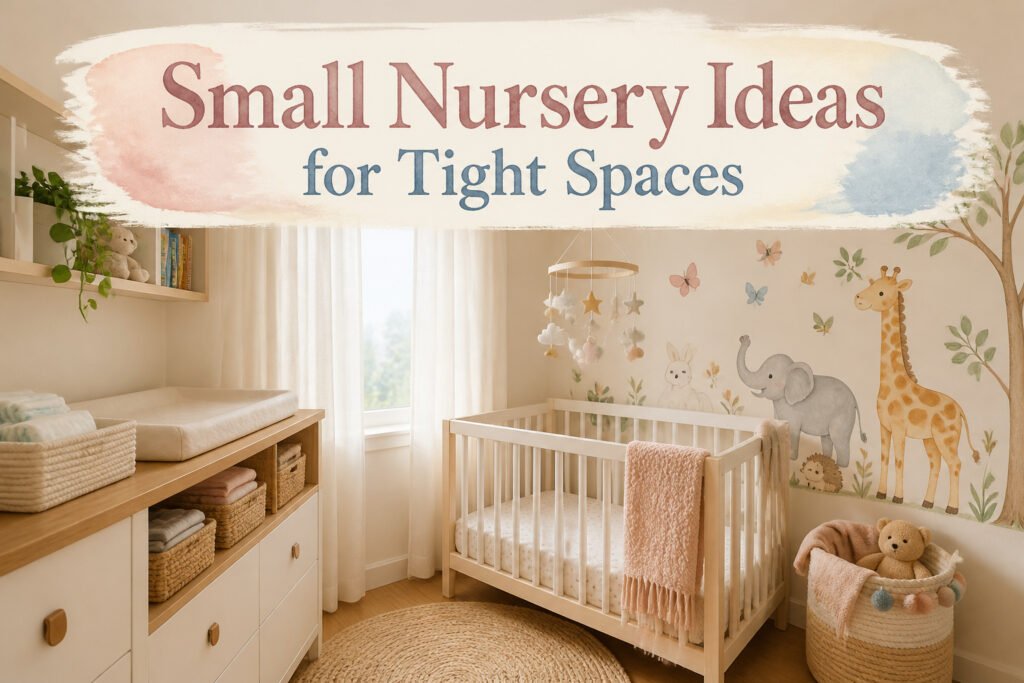
The right small nursery idea depends on how long you will stay in the space and whether the baby sleeps in your room first. A mini crib at 24 by 38 inches converts to a toddler bed and fits where full-size cribs will not, while a bassinet only buys you four months before the baby outgrows it. The real discipline is stopping at two pieces: one place to sleep and one surface for diapers and clothes, with floor space left for the door to swing and for you to kneel beside the crib at 3 a.m.
1. Limit to Essential, Space-Saving Furniture
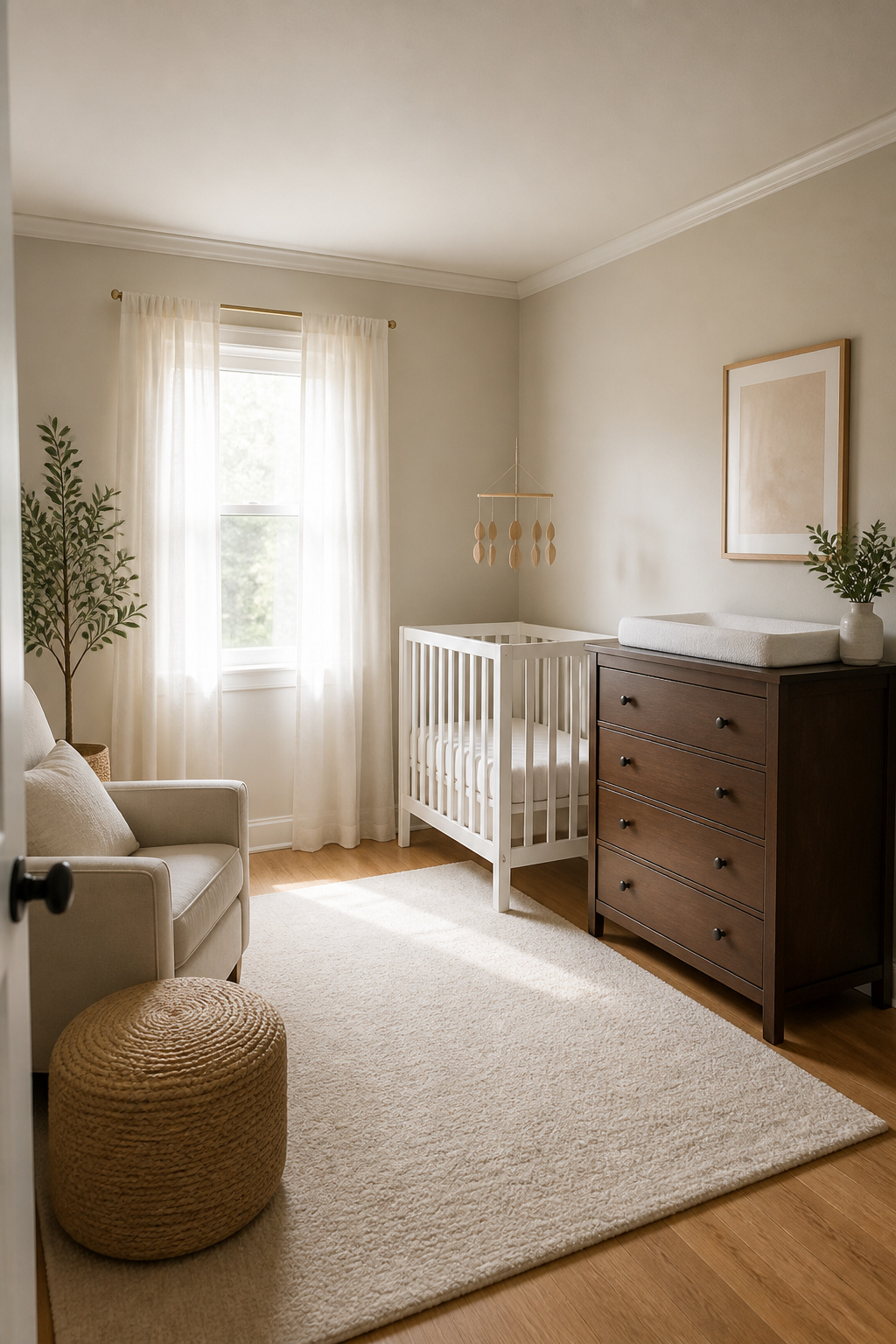
Start with the furniture you will actually use in the first year. A standard crib eats floor space you do not have, and a bassinet buys you only a couple of months before the baby outgrows it. A mini crib at 24 inches wide and 38 inches long fits where a full-size crib will not, and many models convert to a toddler bed so the same piece carries you past the nursery stage.
The changing table is where most small nurseries get crowded. Skip the standalone version and put a changing pad on top of a four-drawer dresser. You keep the storage, you lose the extra footprint, and you are not bending over a low surface six months in. A crib with a built-in changing table works too, though you lose flexibility if you ever want to rearrange.
The real discipline is stopping there. One place to sleep, one surface for diapers and clothes, and floor space left over for the door to swing and for you to kneel beside the crib at 3 a.m.
2. Choose a Mini Crib or Bassinet
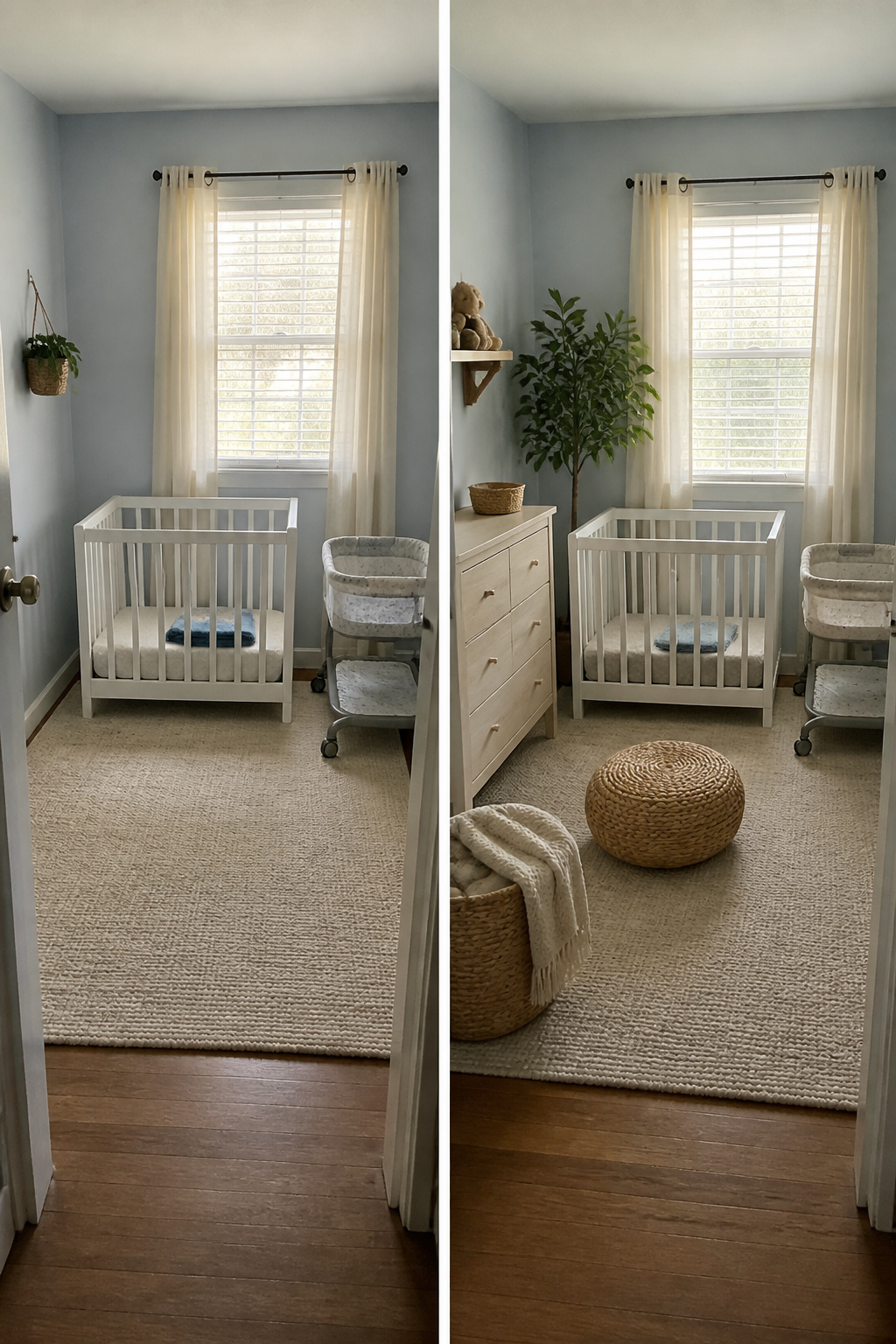
A 24-by-38-inch mini crib buys you about two years of sleep in a footprint most dressers beat. Bassinets make sense only if your timeline is short: you are in a studio for six months, or the baby starts in your room and the nursery build waits. They fold smaller, they wheel, and they feel less like furniture you are already outgrowing. The catch is the exit date. Most babies hit the bassinet wall by four months, sometimes sooner if they roll early or sleep restless.
Mini cribs with conversion kits stretch further. Some convert to a twin headboard, which matters if this room becomes a toddler room later or if you move and the piece moves with you. Watch the mattress fit either way. A safe fit means no more than two fingers between the mattress edge and the crib frame, and the mattress itself needs to be firm. Breathable materials help with temperature and the suffocation risk, but the certification to look for is the CPSC and ASTM standard on the crib itself, not the marketing language. Conversion kits often sell separately, so factor that cost before you commit to the base price.
3. Incorporate Storage Under the Crib
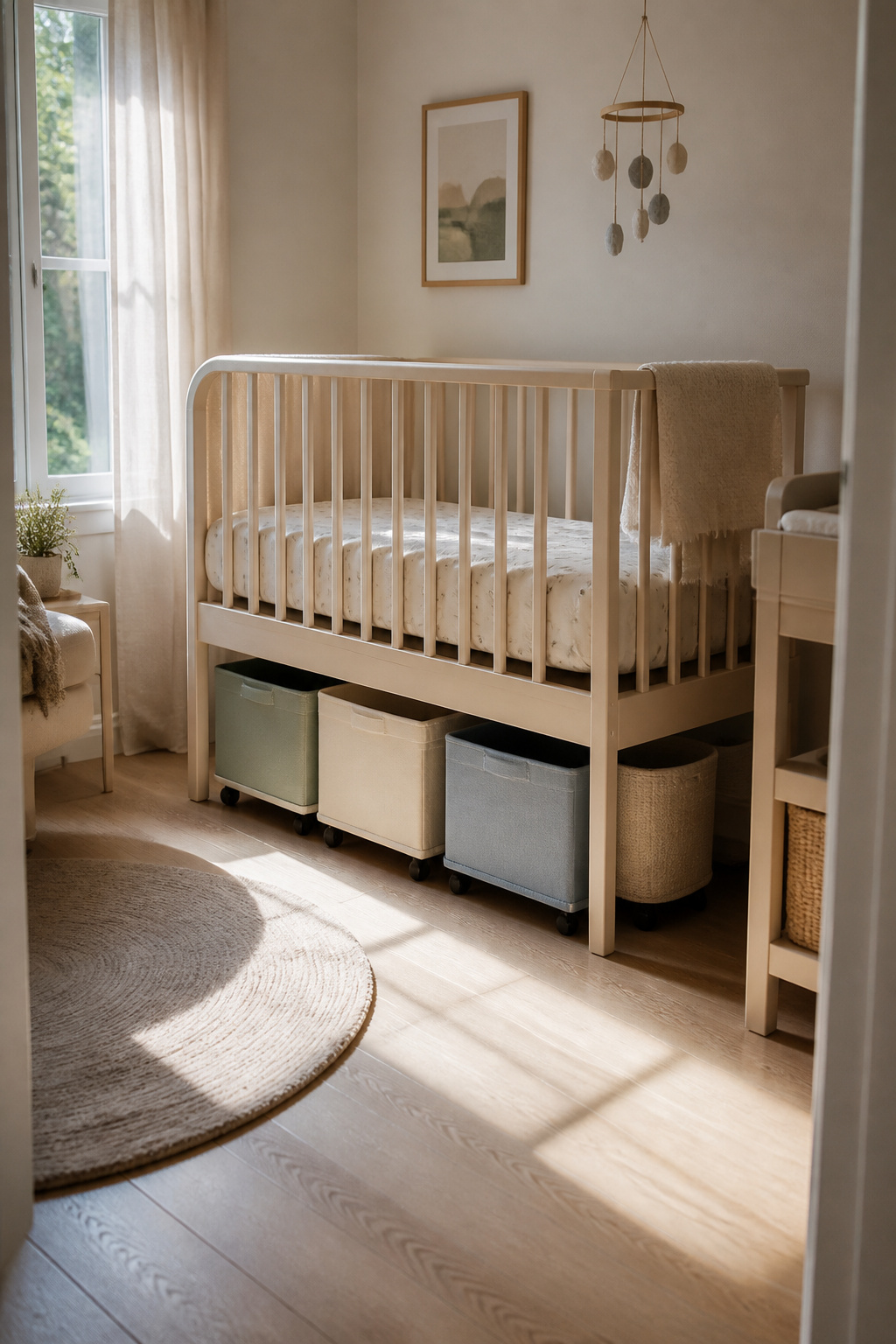
The space under a crib is usually empty because people forget to measure it. Pull out a tape measure and check the clearance from the floor to the bottom rail before you buy anything. Most cribs leave enough room for rolling bins, fabric baskets, or low-profile containers that slide out with one hand while you are holding the baby with the other.
Rolling bins work best for heavier items like extra diapers and wipes. Fabric baskets fit odd corners and can hold out-of-season clothes or soft toys. Low-profile containers keep the silhouette clean if the crib skirt is short or missing.
Do not pack the space solid. Air needs to move under the mattress, and the support hardware needs room to do its job. Leave a gap between containers and the crib frame, and skip anything that lifts the crib even slightly. Out-of-season clothes and backup supplies belong here; anything you reach for at 3 a.m. should live closer to the changing station.
4. Utilize Multi-Purpose Furniture
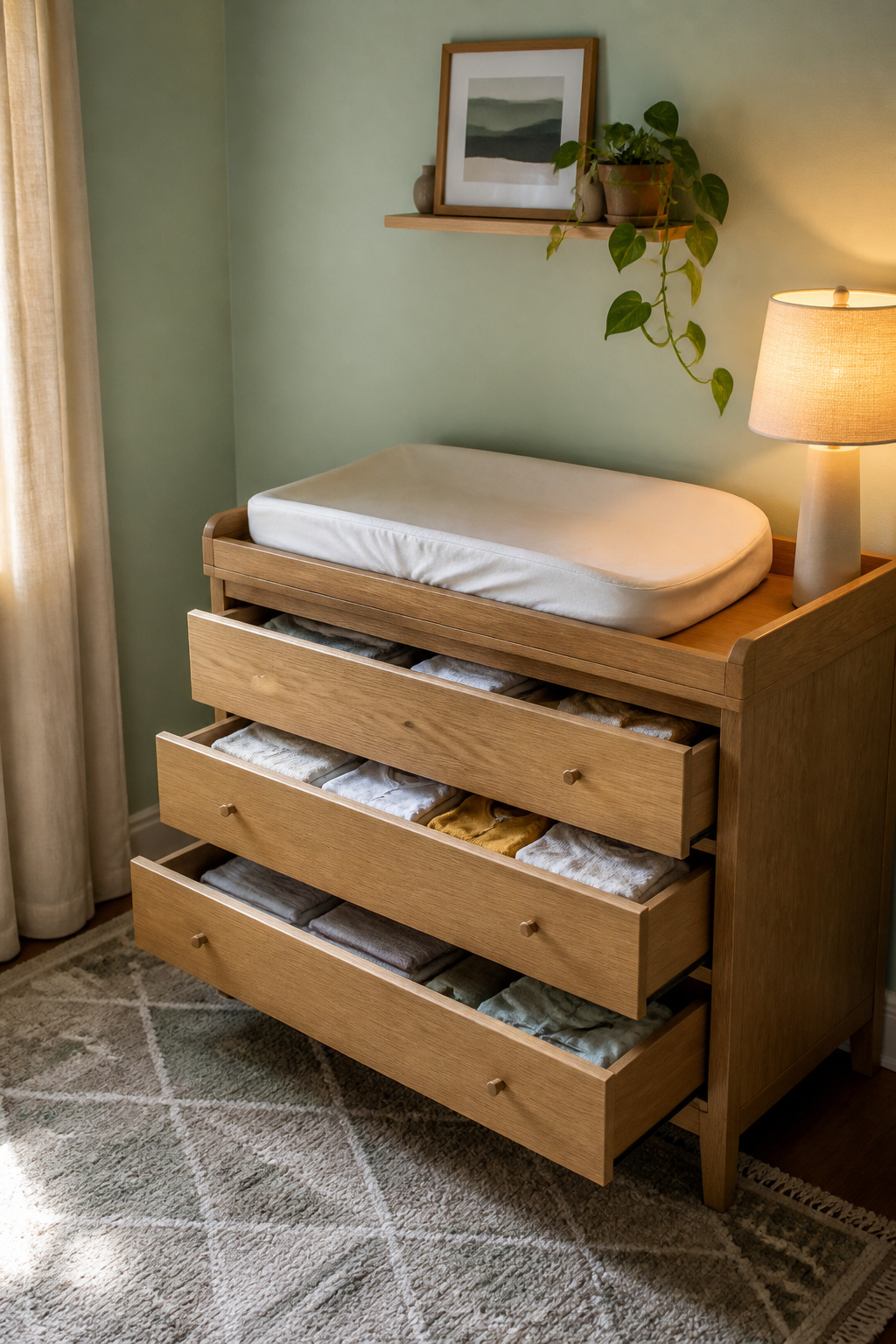
A changing table built onto a four-drawer dresser gives you one footprint instead of two, and the drawers stay useful long after diapers end. Look for a unit roughly 48 inches wide by 36 inches tall; anything deeper than 20 inches starts stealing walkway you do not have. The changing topper should detach so the piece reads as ordinary furniture later, which matters in a rental you might leave or a room that will become a toddler bedroom.
Skip gliders that promise hidden storage but deliver a seat so shallow you cannot nurse comfortably, or ottomans with lids that slam and need two hands while you are holding a baby. One well-made dual-purpose piece beats two that each do half a job. A storage ottoman around 18 inches square, hinged to open from the top, keeps blankets inside and gives you a place to set down a bottle or your feet. Side pockets on the glider work for burp cloths and the remote, but test that they do not catch on doorframes when you carry the chair through a narrow nursery door.
If you are already using your own dresser as the changing station, a crib-top changing table that stores underneath when not in use keeps the floor completely clear. Just measure your crib rail height first; not every model fits every crib.
5. Maximize Wall Space for Storage and Decor
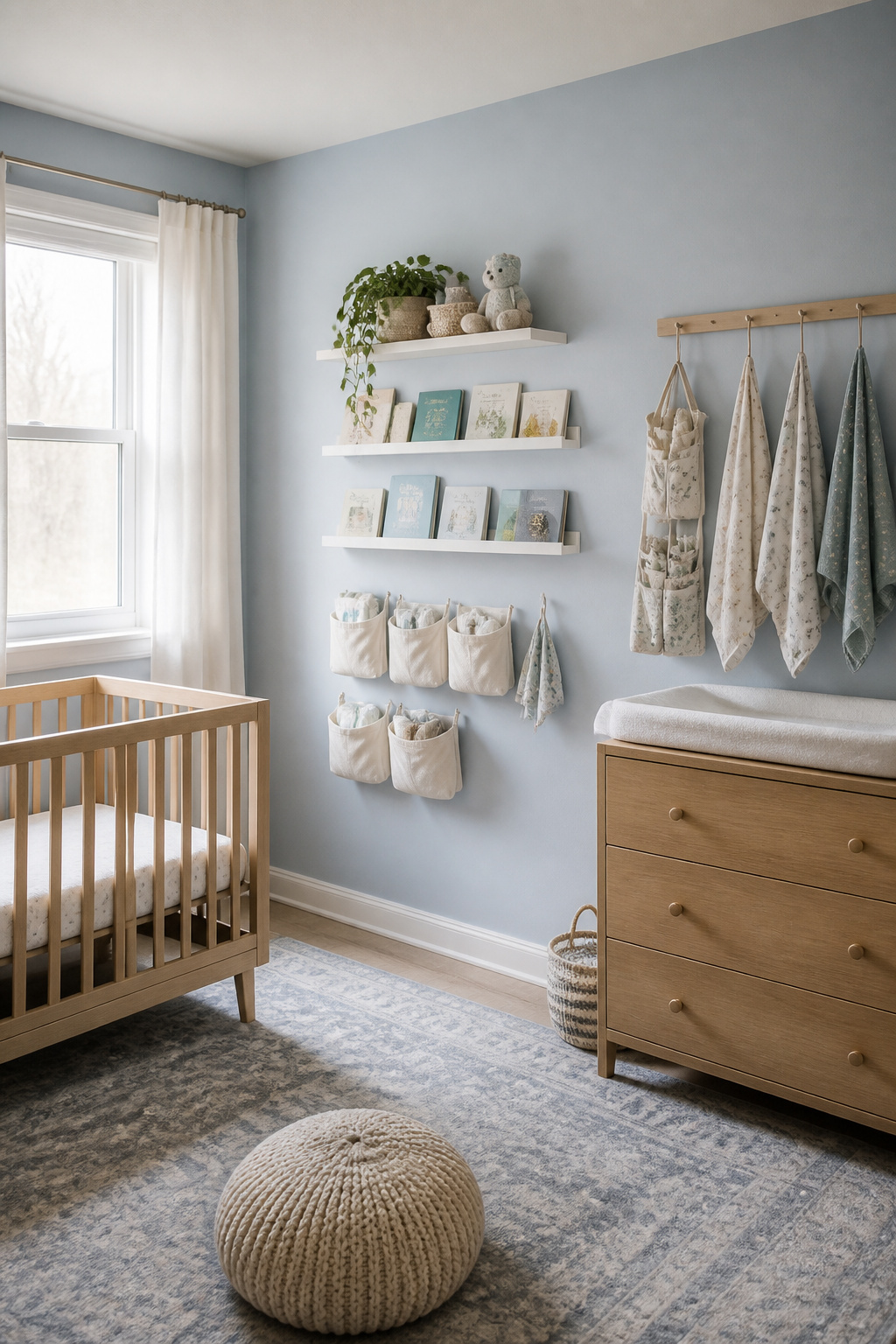
In a small nursery, the walls are the only square footage you actually gain. Everything else shrinks when the crib goes in.
Start with wall-mounted storage that stays flat. Narrow ledge shelves, pegboards behind the changing area, and hanging organizers with rope baskets keep diapers and wipes off the dresser and out of your path. Hooks for swaddles or tomorrow’s outfit do the same job in inches rather than feet.
Safety is where this gets specific. Floating shelves need a stud finder and lag bolts into framing, not drywall anchors, if they will hold changing supplies or books. For anything above the crib or changing table, assume a 30-pound dynamic load minimum and use anchors rated for it. Decorative canisters and wall art should sit flush or nearly so; nothing protrudes that a grabbing hand or a wobbly parent hip can catch.
Wall-anchored units are your friend in any nursery, but in a tight room they are essential because the furniture sits closer to traffic paths. The same goes for keeping the floor clear. A mobile hangs high and adds color without taking space; ledge shelves hold a few stuffed animals for personality without the footprint of a bookcase.
"I consider the safety of storage solutions first and foremost (wall-anchored units are your friend!), as well as the importance of incorporating soft surfaces throughout that babies can safely crawl around on. Don’t overcrowd kids’ spaces with furniture."
That last part matters in a small nursery more than anywhere. A wall system fails if you need a wide clearance zone to use it.
6. Install Floating Shelves

Floating shelves at ten inches deep hit the sweet spot for a small nursery. They hold a row of board books, a small woven basket for pacifiers, or a framed print without jutting into the room. Twelve inches starts to feel like a ledge you bump into when you reach for the baby.
Mount them above the changing area for wipes and cream within arm’s reach, or run a short shelf beside the glider for the bottle you’ll set down at 2 a.m. Stuffed animals stay put until the child is old enough to pull them down. Heavy toys do not go up there. Neither does anything that could tip if the glider bumps the wall.
The mistake to avoid is mounting without finding studs first. A shelf loaded with books and a ceramic bank will pull straight out of drywall anchors. Use a stud finder, or keep the shelf short and the load light. The nursery needs to stay cute and stay on the wall.
7. Remove Closet Doors for More Space
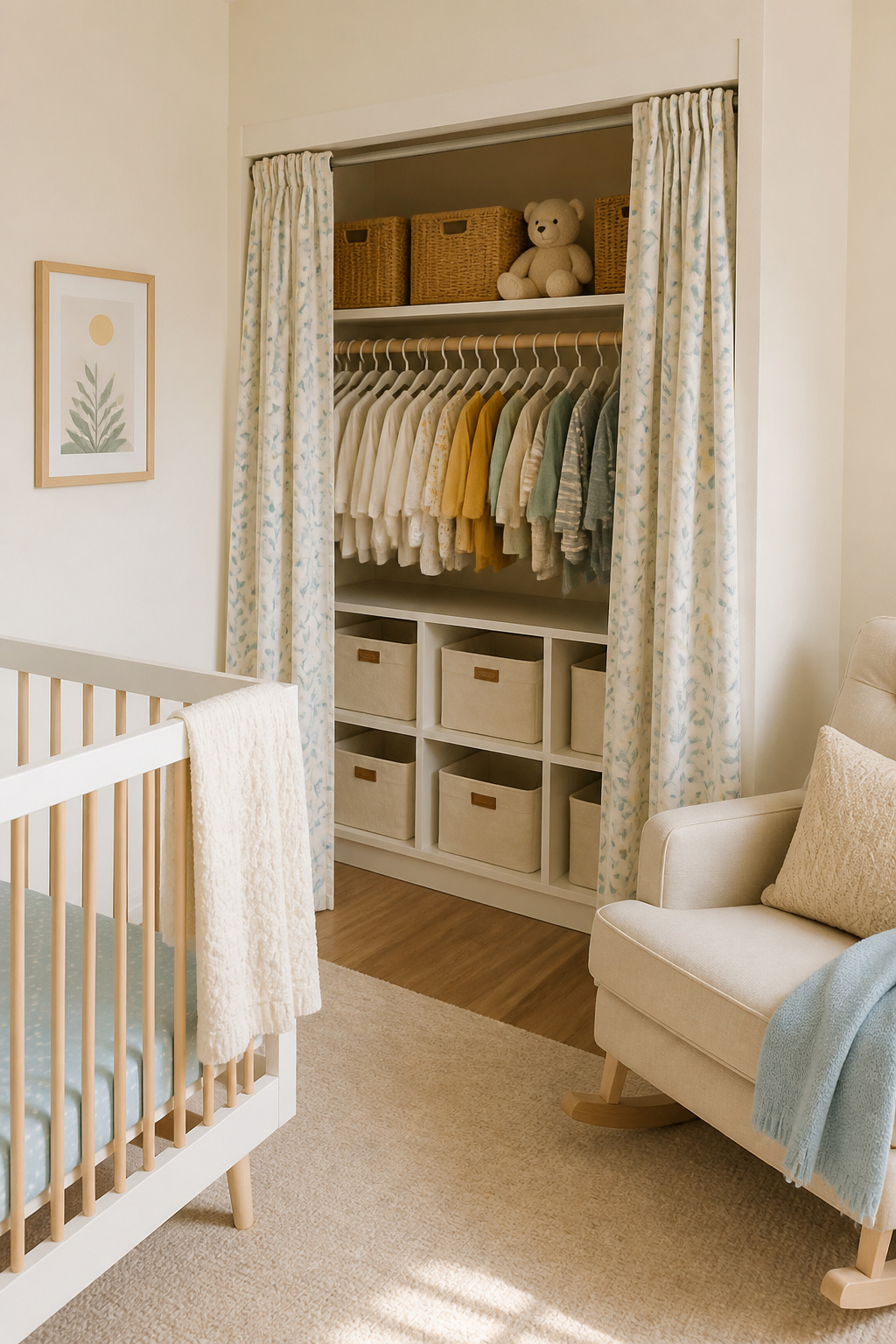
Swinging closet doors need roughly two feet of clearance to open. Sliding doors stack half their width over the opening and block whatever sits behind them. Either way, you’re losing floor you paid for by the square foot.
Pull the doors off entirely and you reclaim six to twelve inches of clear floor, depending on the hardware. What replaces them shapes how the room lives. A simple curtain on a tension rod adds color and softens the space, though you’ll want that rod mounted securely; a toddler who can pull to stand will eventually pull on whatever hangs at crib height. Open rods keep everything visible and reachable, which saves time during a 2 a.m. change but means the closet interior stays in constant view. Built-in shelving turned outward, with no cover at all, reads as intentional architecture when the contents stay neat and becomes visual noise when they don’t.
The trade is straightforward: floor space against privacy and dust protection. Curtain fabric collects less dust than open shelving but more than a solid door. Without any cover, onesies and blankets need washing more often, or at least shaking out.
This works best when the closet interior earns its visibility. Uniform hangers, grouped by size, and bins for the small stuff turn open storage into something you want to look at. A jumble of gift bags and outgrown clothes defeats the point.
8. Create Zones for Functionality
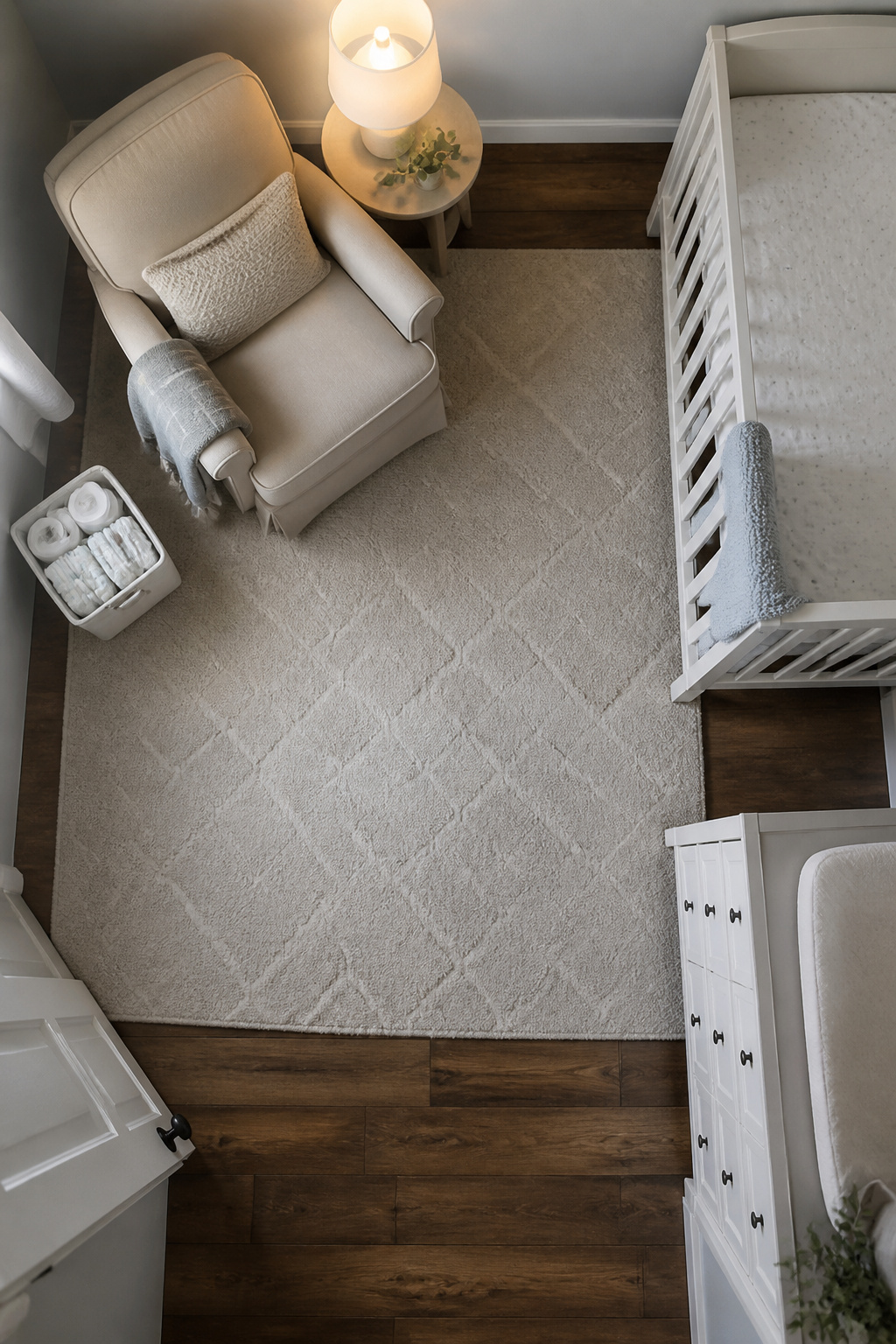
You do not need walls to keep sleep, changing, and feeding separate in a small nursery. A rug under the glider marks the feeding corner. A wall-mounted light or a small lamp beside the crib keeps the sleep zone dim. The changing station belongs closest to the door, because that is where you enter with a dirty diaper.
The real problem starts when zones drift together. You will end up changing the baby on the glider cushion because the station is eight steps too far at 2 a.m., and then you are washing upholstery instead of sleeping. Keep diapers and wipes within one arm’s reach of every place you sit. If the glider is your night feeding spot, park a slim caddy with two diapers and a small pack of wipes right behind it. The same caddy can move to the changing table by day.
Overlapping happens most where storage is thin. A compact dresser used for both clothes and changing supplies collapses the clothing zone into the changing zone, which works fine if the top drawer holds diapers and the lower ones hold onesies. Light fixtures help more than people expect: an overhead light you can dim supports sleep training, while a brighter clip-on lamp at the changing table keeps you awake for the task.
9. Use Light Colors to Make the Space Feel Larger
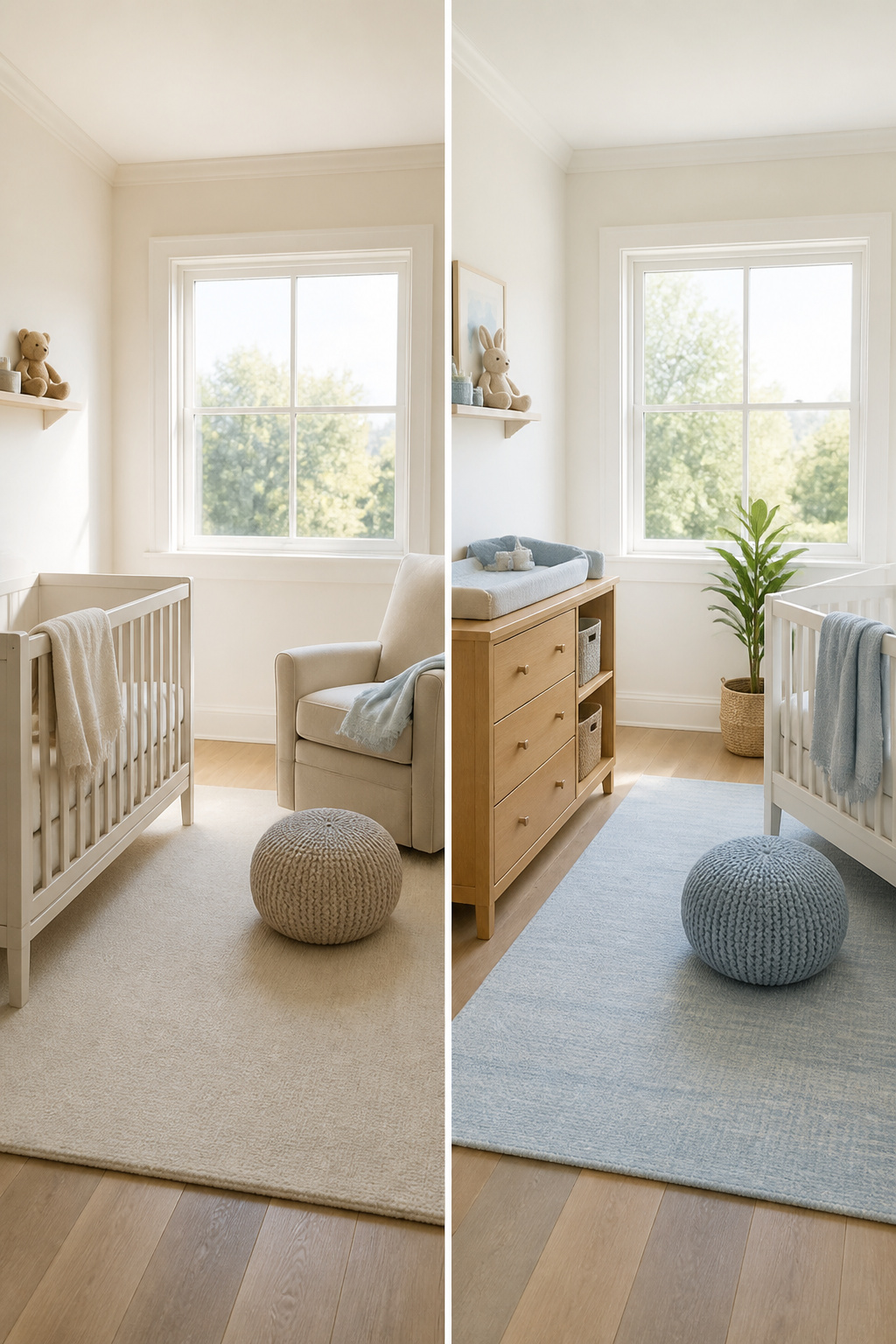
White, cream, and soft pastels do the heavy lifting in a small nursery because light colors reflect more of what daylight the room gets and push the walls back visually. Dark paint absorbs light and pulls surfaces toward you, which is the last thing you want when the floor plan is already tight.
The ceiling matters here too. Carry the pale tone up and the room loses the visual hard stop that a darker ceiling creates. But you need contrast somewhere, or the space goes flat and you stop reading the architecture entirely. One way that goes wrong: painting everything, trim and all, in the same pale blue. The molding disappears, the window casings flatten, and the room starts feeling like a box rather than a space with shape.
Add your contrast through texture instead of competing color. A natural wood changing table, a woven lampshade, or matte black hardware on the dresser gives the eye something to rest on without breaking the light. Keep the walls and ceiling in the same family, then let the furnishings bring in the weight.
10. Add a Cozy Rug
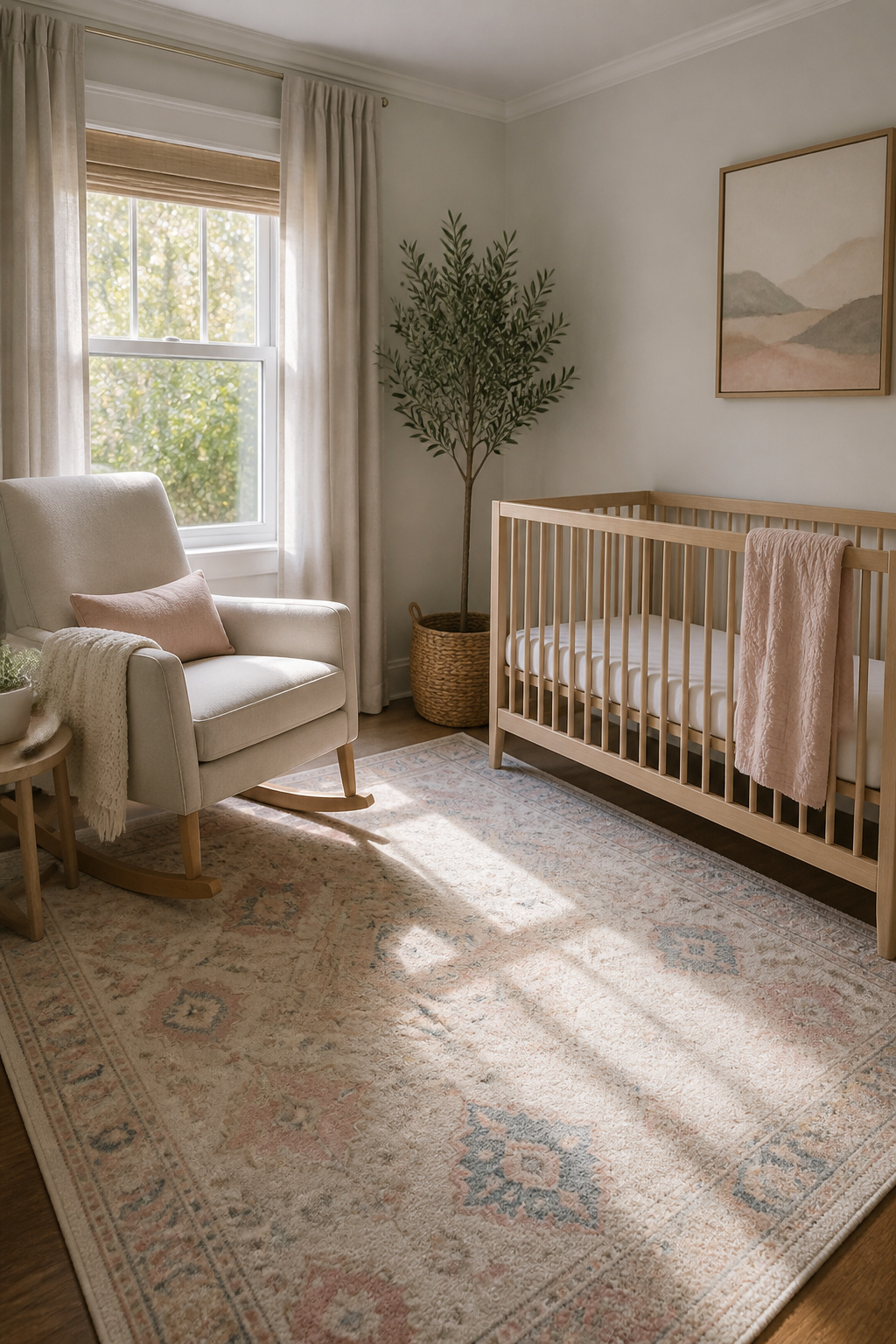
A rug in a small nursery does two jobs at once: it softens the floor for bare feet during 2 a.m. feedings and it marks out a zone without walls. Size matters more than pattern here. Pick something large enough that you can walk all the way around the crib and still have both feet on it, not a small accent piece that floats in the middle of the room like a postage stamp.
Material choice is where practicality wins. Low-pile rugs clean faster and do not trap dust the way thick shag or tufted styles do, which makes them the better fit for a tight space where every surface works harder. Washable is the priority if you can find it.
Place the rug to anchor your seating area, the rocker or glider where you will spend hours, not tucked underneath the crib where no one stands. A non-skid backing or a separate rug gripper underneath keeps it from sliding when you are carrying the baby half-asleep. Skip the bold statement piece that fights the rest of the room; an all-over pattern or solid color that coordinates with your walls and ceiling will make the space feel larger instead of chopping it up.
Safety Checklist for Small Nurseries
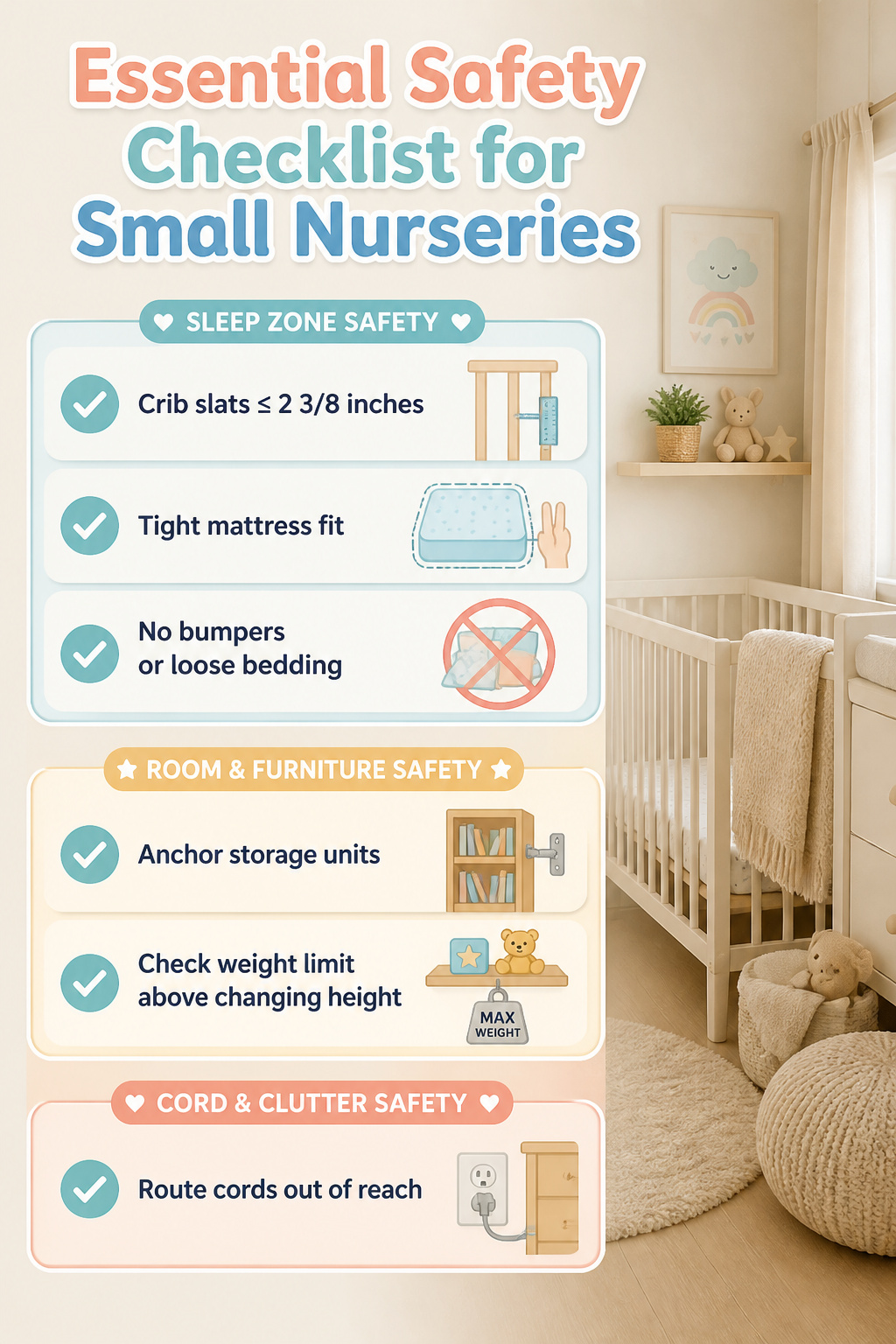
Small nurseries tempt you to cut corners on safety because every inch feels borrowed from somewhere else. That is exactly when the rules stay fixed.
Crib slats need to sit no more than 2 3/8 inches apart, the standard gap that keeps a baby’s head from slipping through. Mattresses must fit tight to all four sides with no more than two fingers of space. In a tight room, the temptation is a mini crib pushed against the wall or draped with a canopy to define the space. Keep the sleep zone clear: no bumpers, no loose bedding, no monitor cords within arm’s reach of the crib. Cord length matters more in small rooms because outlets sit closer; route them behind furniture or use a cord shortener so nothing hangs within three feet of the mattress.
Every storage unit that leaves the floor needs a wall anchor. Tall bookshelves save square footage but tip when a toddler pulls to stand. Check the weight limit on anything mounted above changing height. A mirror opens a small room visually, yet one placed over the crib risks direct fall. Mount it on a side wall instead, or skip it for a print secured with museum putty.
Soft surfaces help, but clutter hurts. One anchored bookshelf beats two that wobble. The space shrinks; the checklist does not.
Decor That Works in Tight Quarters
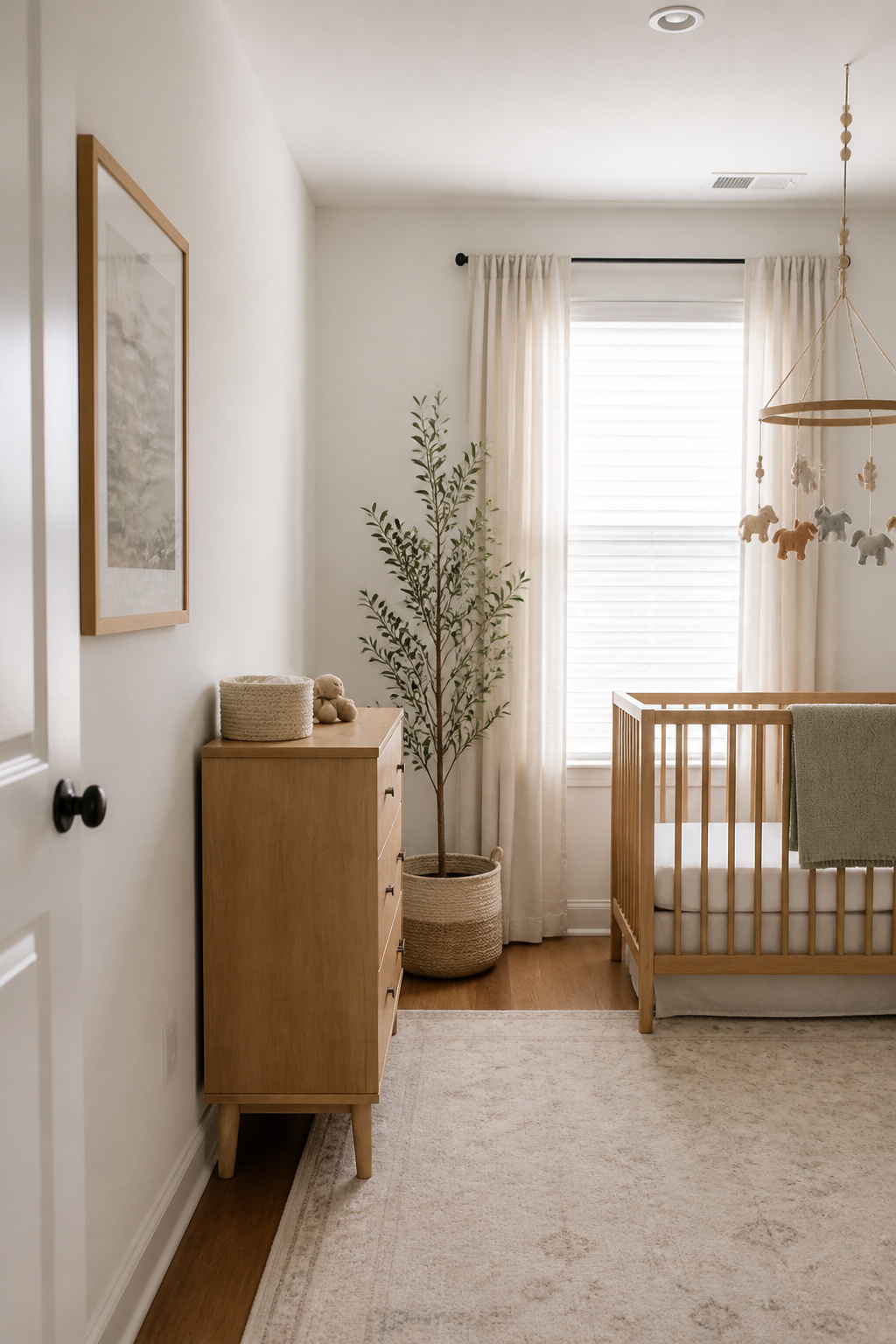
Wall-mounted mobiles free up crib space and keep the visual interest where a baby actually looks, not where the camera stands. The same logic applies to growth charts that roll up after the measurement is taken; they mark the years without claiming permanent wall territory. For a name sign or a few framed photos, skip the shelf and hang them directly. A narrow ledge looks tidy in a photograph but collects dust and becomes a catch-all by week three. A framed family print hung at eye level when you walk in beats a shelf you will clear daily. If you are renting, lean into pieces that leave nothing behind: wall art hung on removable strips, a mobile anchored to a single small bracket. The mirror that bounces light around the room is worth more than the one styled for a corner you do not have. What photographs well is often what sits still; what survives is what stays out of the way.
Organization Systems That Hold Up
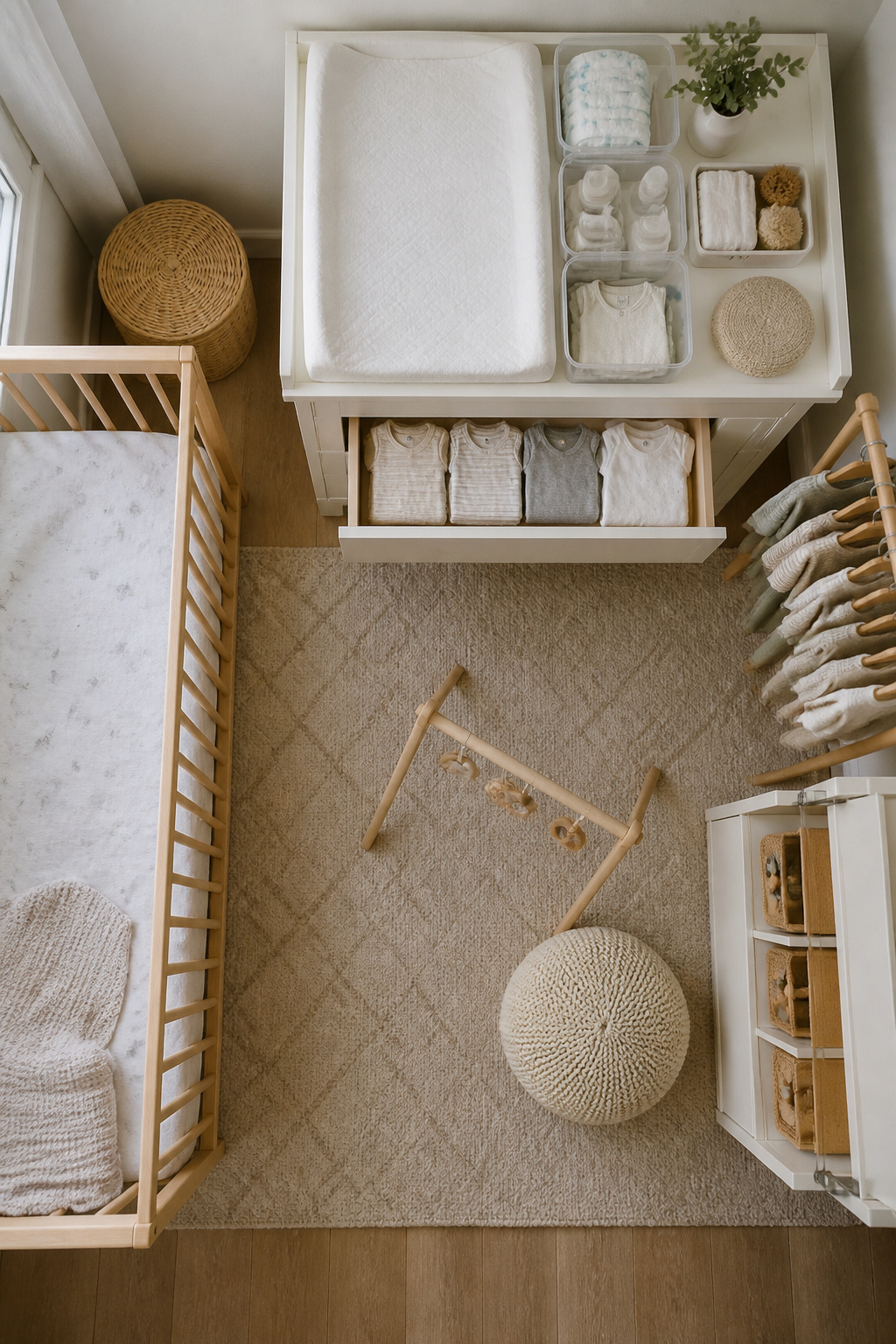
Baskets and bins only work if you know what goes in them without thinking. In a small nursery, organize by time of day, not by type: one basket for the 3 a.m. feeding, another for the morning change, a third for bath time. When you are half-awake, you reach for the basket that matches the moment, not the one with the perfect label.
Drawer dividers help with tiny clothes, but the mistake is getting too granular. Dividing by size and sleeve length and brand works for about a week. Then the baby hits a growth spurt at 2 a.m. and the system collapses. Better: current size in the top drawer, next size in the bottom, everything else stored elsewhere. A tension rod added low in the closet holds the next size up on hangers, ready to rotate.
Labeled containers fail when the label is the only thing telling you what is inside. Clear bins win here. For outgrown clothes, keep one open bin in the closet; the moment something does not fit, it goes straight in. No lid to remove, no category to check.
The one DIY that outperforms store-bought: a simple rod mounted on the wall for hanging next-day outfits or a laundry bag. Faster than a pegboard, no baskets to pop in and out, and it costs the price of a hardware-store bracket.
Frequently Asked Questions
What furniture do I need for a small nursery?
Stick to three pieces: a mini crib at 24 inches wide and 38 inches long, a dresser with a changing pad on top, and a seat for feeding. A mini crib that converts to a toddler bed stretches your investment past the nursery years, and skipping a standalone changing table frees up the footprint you need for the door to swing and for kneeling beside the crib at night.
How can I make a small nursery feel bigger?
Paint walls and ceiling in white, cream, or soft pastels to reflect daylight and push surfaces back visually. Add contrast through texture rather than dark color: natural wood, woven shades, or matte black hardware give the eye a place to rest without breaking the light. Carry the pale tone up to the ceiling so the room loses the hard stop that a darker ceiling creates.
What are some storage solutions for a small nursery?
Slide rolling bins or low-profile containers under the crib, leaving a gap for air circulation and hardware. Mount narrow ledge shelves or pegboards on walls to keep diapers and wipes off the dresser and out of your path. Organize by time of day rather than item type: one basket for 3 a.m. feedings, another for morning changes, so you reach for the right container half-asleep.